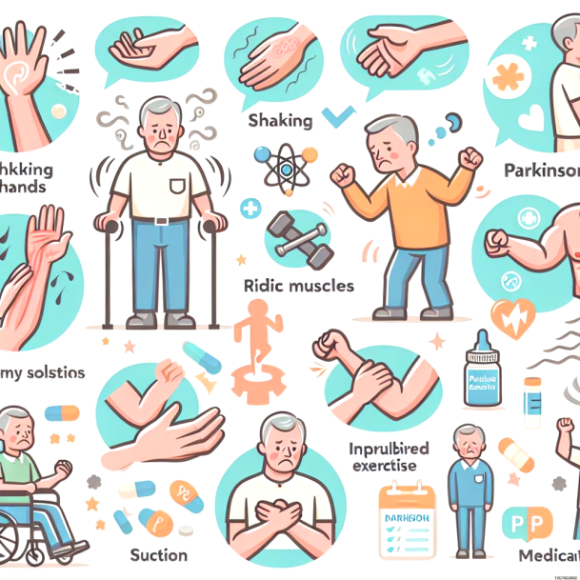
Parkinson’s disease is a chronic progressive disorder that affects the nervous system, and it occurs due to a decrease in dopamine, a neurotransmitter. This makes motor control more difficult, leading to symptoms such as tremors and stiffness. Parkinson’s disease mainly occurs in older adults, but it can also develop earlier in some people, so it is important to recognize and manage the early symptoms.
The early symptoms of Parkinson’s disease often begin with subtle tremors. One of the main symptoms, tremor, is usually felt in the hands and fingers and tends to appear more when a person is feeling tense. However, tremor can also be present at rest. Because it may start in one hand and gradually spread to other areas, it is easy to miss in the early stages.
Another early symptom is muscle stiffness. Muscles often feel stiff when moving, or movement may become slower. This can make it difficult to carry out daily activities, and especially when moving around, steps may become smaller or it may be harder to keep balance.
Finally, slow movement is another characteristic symptom of Parkinson’s disease. Movements become slower, and it takes more time to complete actions that were once part of everyday routine. Facial expressions may also become less pronounced, making the person appear expressionless, and handwriting may become smaller and less clear.
When it comes to managing the early symptoms of Parkinson’s disease, the first important step is to receive a professional neurological diagnosis. This is essential for establishing an accurate diagnosis and treatment plan. Medication is a necessary part of slowing disease progression, and levodopa or dopamine agonists may be prescribed.
Physical activity plays an important role in symptom management. Appropriate exercise helps reduce stiffness, improve balance, and enhance overall health. Yoga and tai chi are considered especially beneficial exercises for people with Parkinson’s disease, and they can strengthen flexibility and balance.
Mental health should not be overlooked either. Because Parkinson’s disease progression can lead to depression or anxiety, counseling or participation in support groups may be helpful. Support from family and friends is also an important factor.
In summary, Parkinson’s disease can begin with subtle changes in the early stage, so it is important to observe and manage the early symptoms closely. With professional medical advice and appropriate treatment, symptoms can be eased and quality of life maintained. Let us work toward a better daily life through both physical and mental care.