Short, upturned nose due to inflammation and contracture after rhinoplasty (crooked nose correction, nasal tip lengthening, autologous rib cartilage)
Hello, this is Chamin Plastic Surgery.
Today, we would like to show you the case of a patient who came to Chamin for revision rhinoplasty because contracture developed even after having the implant removed due to inflammation that occurred after nasal surgery.
Contracted Nose Revision Surgery CASE
Chamin Plastic Surgery
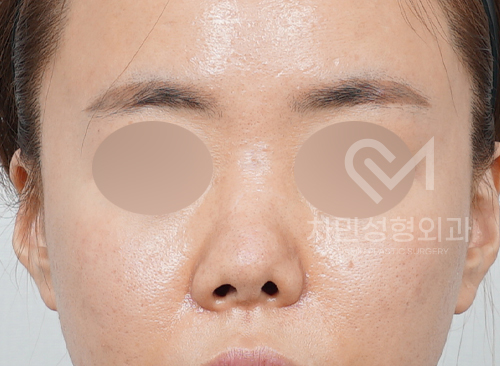
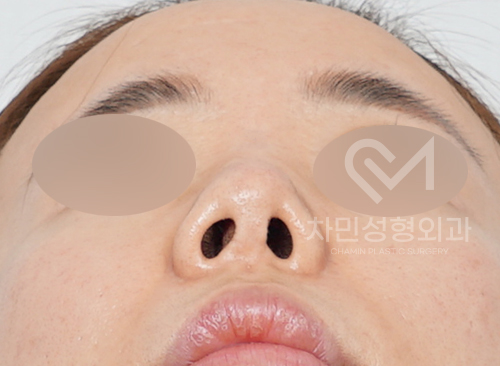
History Before Revision Rhinoplasty
The patient had rhinoplasty using silicone for the bridge and septal cartilage for the nasal tip.
As time passed after the surgery, inflammation developed, and the Gore-Tex implant in the nose was removed.
However, even after implant removal, contracture occurred, causing the nasal tip to become upturned and shortened, resulting in a contracted nose.
In addition, the nose appeared crooked.
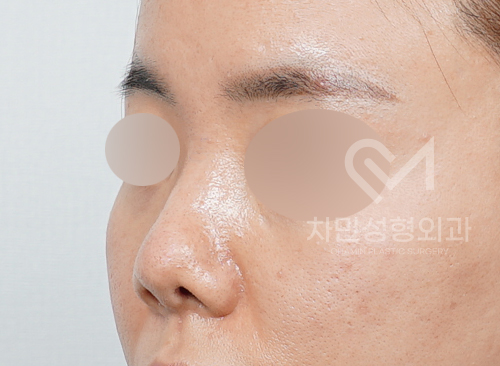
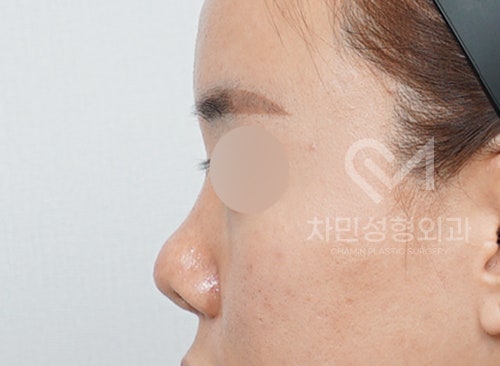
Condition of the patient’s nose before surgery
Chamin Plastic Surgery Surgical Plan
Bridge: Megaderm (Alloderm)
Nasal tip: Autologous rib cartilage
Columella: Megaderm (Alloderm)
The surgery focused on lengthening the contracted nose and correcting the crookedness.
Operating surgeon: Min Seong-gi, CEO and board-certified plastic surgeon
What were the results of Chamin’s contracted nose revision surgery?
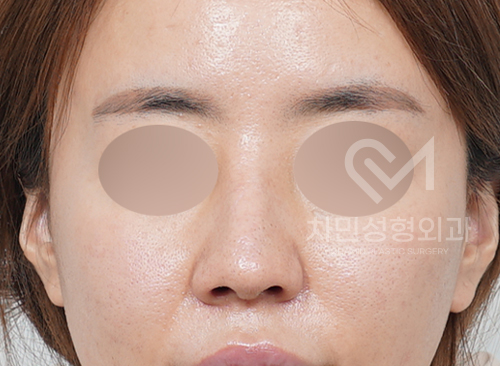
Front view before / 1 month after
These are the front-view photos before surgery and one month after surgery.
Even taking into account that the remaining swelling has not fully subsided yet,
you can see that the short, upturned nasal tip has come down well.
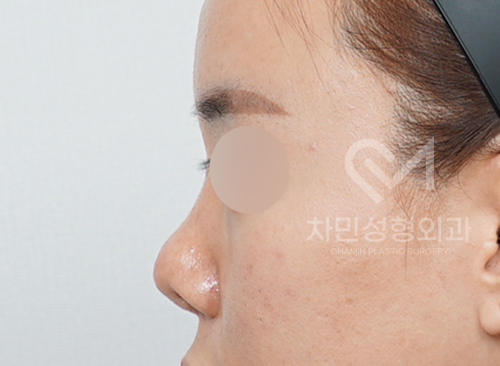
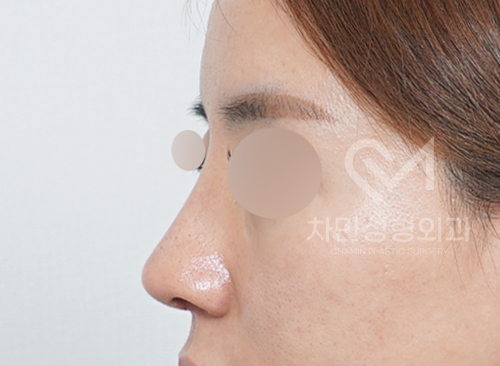
Side view before surgery / 1 month after
The shortened nasal tip caused by contracture after rhinoplasty was lengthened as much as possible using autologous rib cartilage, which has strong support.
In cases of contracted noses, materials with strong support such as autologous rib cartilage are needed, but
during surgery, scar tissue inside the nose, adhered cartilage, and contracted soft tissue must each be released one by one, and the skin tissue of the nasal tip must be lowered for the tip to come down naturally like this.
That is why contracted nose surgery is extremely difficult.
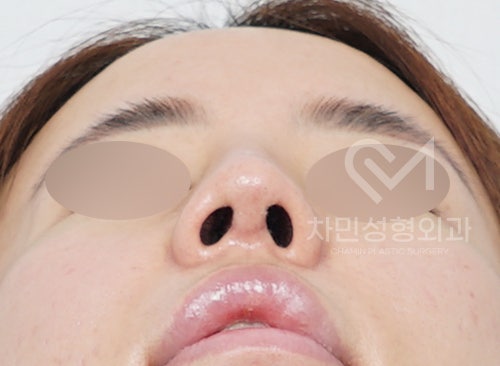
Before surgery / 1 month after
You can see that the nasal tip deviated to one side and the nostril asymmetry were corrected.
If inflammation and contracture after rhinoplasty are continually left untreated,
not only can symptoms such as an upturned and shortened nasal tip and hardened skin occur,
but the condition of the nose can worsen to the point where skin grafting or columella reconstruction may be needed.
For that reason, inflammation and contracture require prompt treatment.
Selfie photos before surgery + 2 weeks after
Photos were posted with the patient’s consent. Unauthorized use and distribution are prohibited.
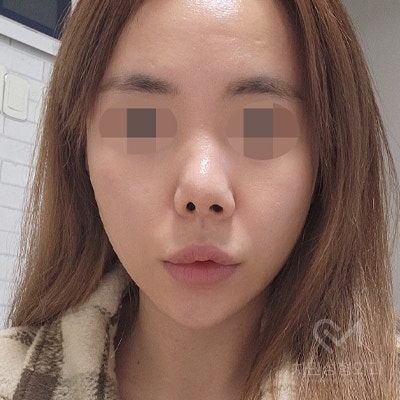
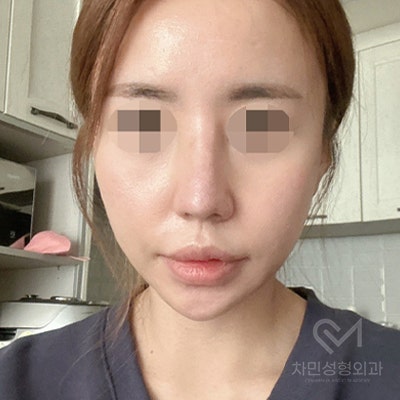
Before surgery / 2 weeks after
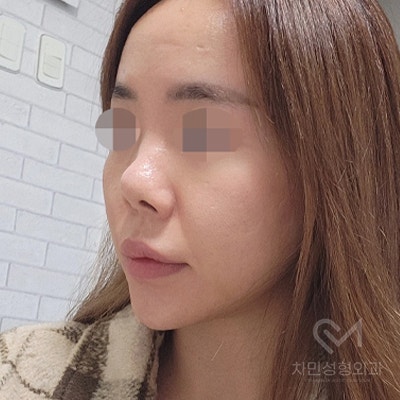
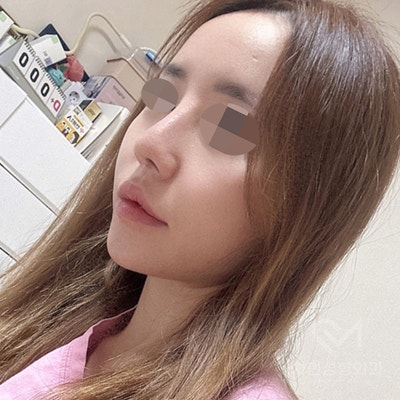
Before surgery / 2 weeks after
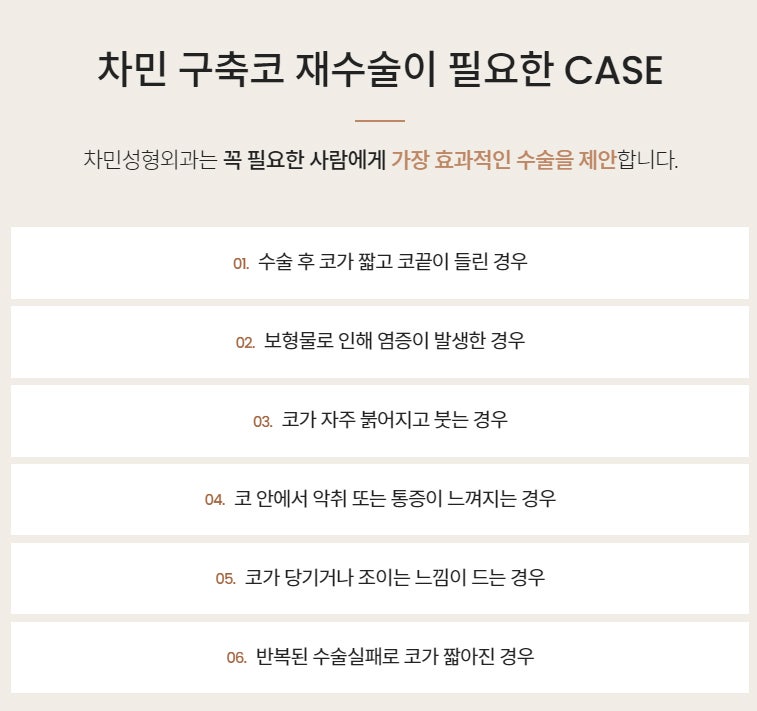
If, after rhinoplasty, you notice any abnormalities in your nose such as redness, a pulling sensation, an unusual smell inside the nose, or pain, do not leave it untreated,
and visit the hospital quickly to receive appropriate treatment.
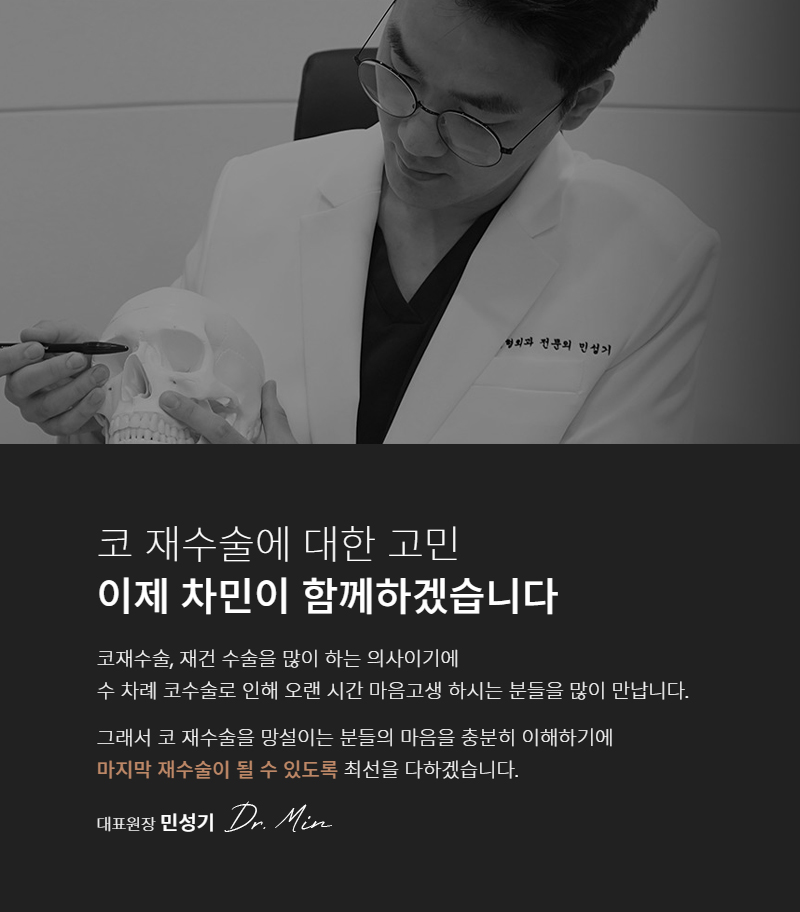
Because we fully understand the distress of those suffering from inflammation and contracture after rhinoplasty,
we will do our best so that this can be your final revision surgery.