Flat warts, milia, skin tags
CO2 laser treatment
Hello, this is Jamsil On Dermatology at Jamsil Station :)
If you have unexplained rough bumps on your face and are worried about them, it’s best to get treatment as soon as possible, right? There is a high chance they are flat warts, skin tags, or milia. If left untreated, these lesions can rapidly spread to other areas beyond the face. So how should they be treated? Let’s take a look at CO2 laser treatment, one of the simplest and most effective treatment methods.
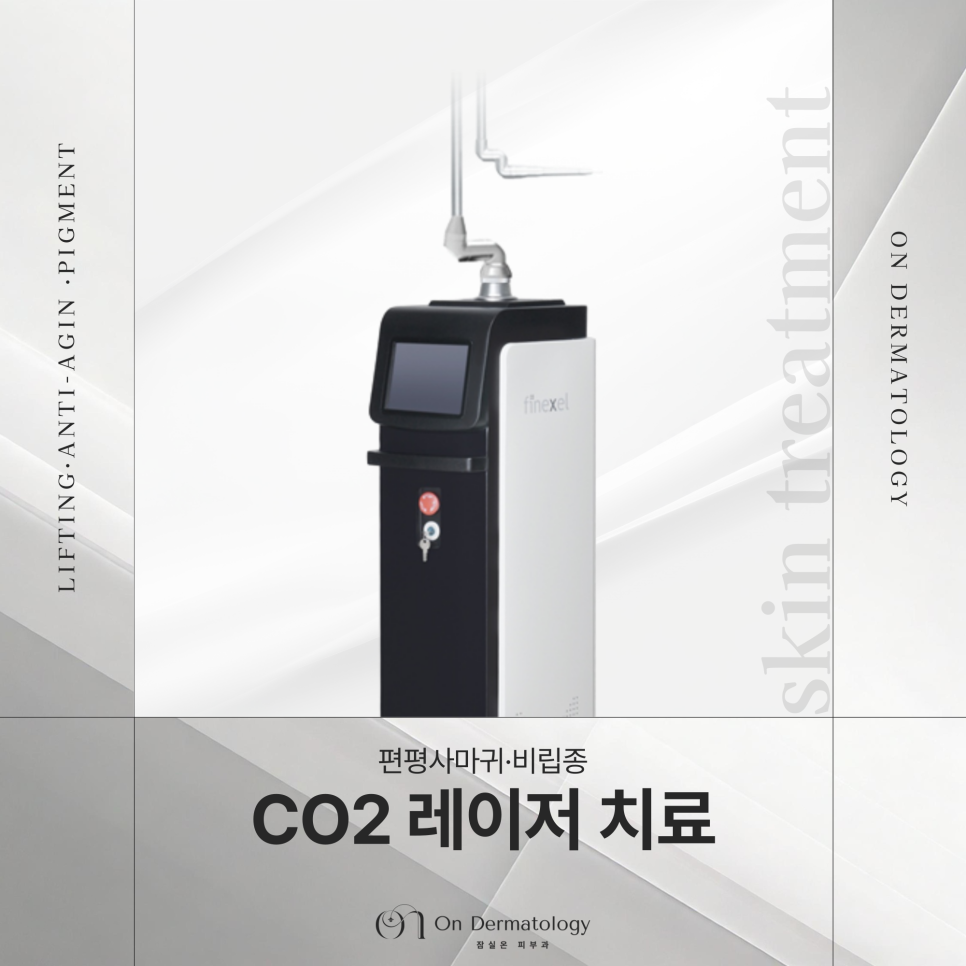
CO2 laser treatment
What are flat warts?
Flat warts are a viral skin condition caused by the human papillomavirus (HPV), and they commonly appear on exposed areas such as the face, neck, and forehead. Because they appear as small, flat bumps on the skin’s surface, they may look like acne or blemishes at first glance, but they differ significantly from ordinary skin troubles in that they are highly contagious and prone to recurrence. In particular, if you have a habit of shaving or scratching with your hands, the virus can easily spread to other areas, so caution is needed!
Although they often do not seem serious in appearance and are therefore left untreated, over time they can increase in size and number or become darker, making them more noticeable. Since the likelihood of occurrence rises as immunity declines, early treatment is important beyond just cosmetic concerns. In particular, because they are contagious diseases that can spread to family members or others, they should not be taken lightly.
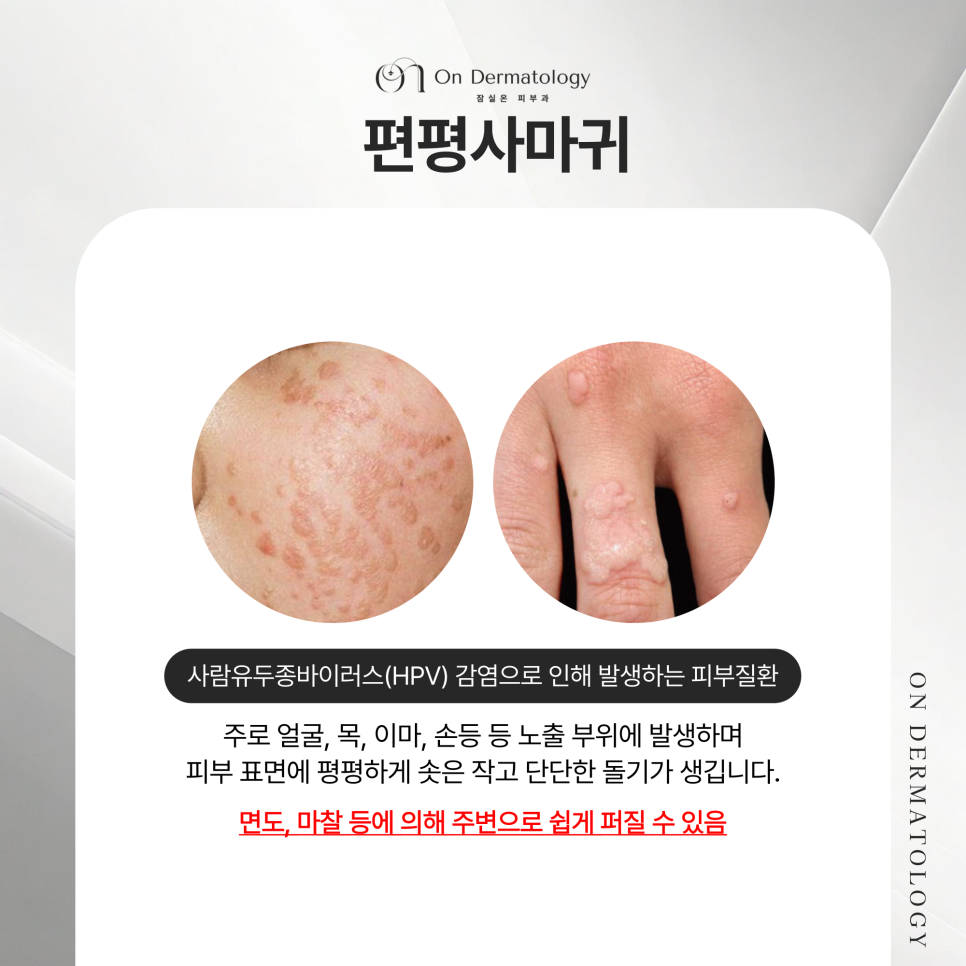
What are flat warts?
Why treatment is necessary
The reason flat warts need treatment is not simply because they are unattractive. The biggest issue, as mentioned on the previous slide, is their high potential for transmission! Lesions that begin on the face or neck can spread to the hands or other parts of the body, and they can also be easily passed to others through contact among family members. If left without proper treatment, the number and extent of the lesions can continue to expand.
They are also vulnerable to repeated irritation or external injury. If a wound develops after shaving or if you scratch them absentmindedly, the lesions can become deeper and spread more easily. Because they often occur on visible areas such as the face and neck, the cosmetic stress can also be significant. In practice, they can be mistaken for other skin conditions, so accurate diagnosis and treatment must go hand in hand. To avoid suffering from repeated recurrence, prompt action at an early stage is necessary :)
<Reasons why early treatment is needed>
-
Can spread to other areas of the body or to family members
-
High risk of repeated recurrence
-
Unattractive in appearance
-
Vulnerable to irritation and can worsen easily
-
Can easily be confused with other conditions
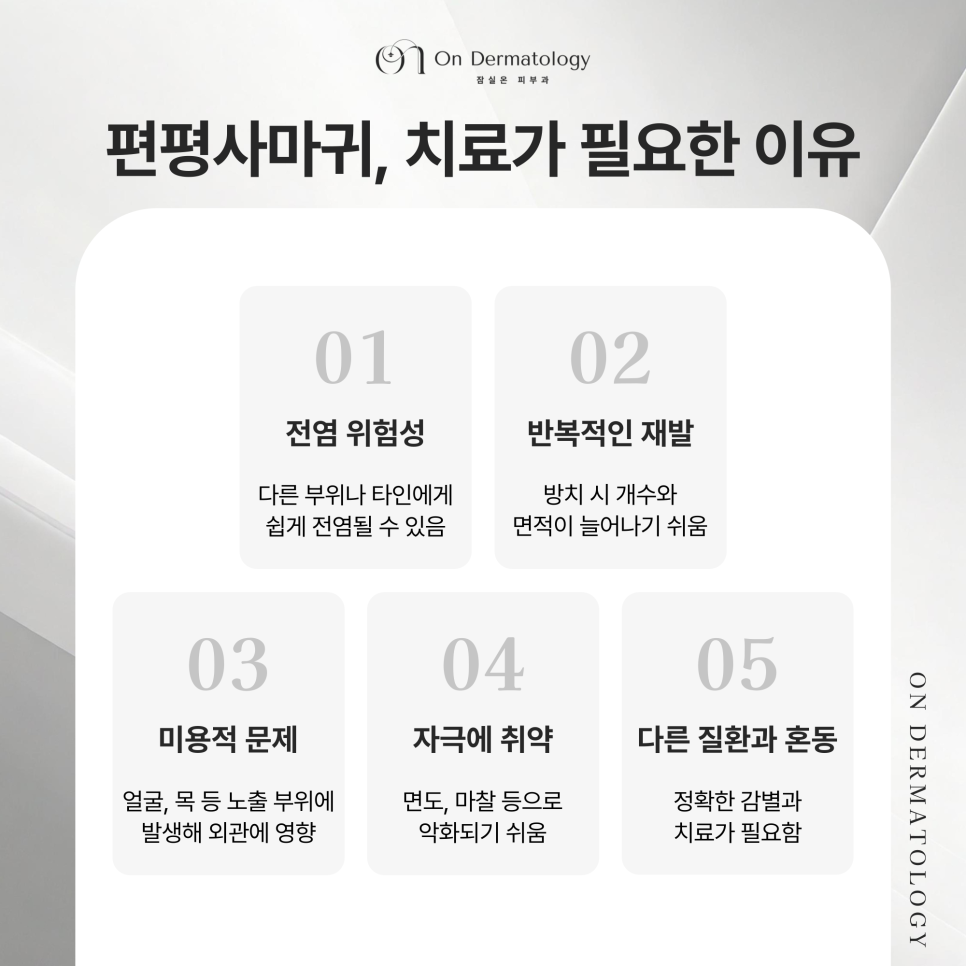
Why treatment is necessary
What are milia?
Meanwhile, unlike flat warts, milia are benign raised lesions unrelated to viral infection. They occur when dead skin cells are not properly shed and become trapped beneath the pores, appearing as small, white, firm seed-like bumps. They most commonly form in areas with well-developed sebaceous glands, such as around the eyes and on the cheeks. Although they look like tiny white bumps on the surface, in most cases they do not disappear on their own over time.
They are not painful, but they can be bothersome in appearance, and when many appear together, they may look like blemishes and make the skin texture seem rough. In particular, when they appear on thin and sensitive areas such as the skin around the eyes, attempting to remove them forcefully by hand can cause secondary damage or pigmentation. During treatment, a precise approach matched to the depth of the lesion is needed rather than simple extraction, and skin care to reduce recurrence should also be carried out.
<What are milia?>
-
Occur when dead skin becomes trapped in pores
-
Small, firm white bumps like seeds
-
Mainly appear around the eyes and on the cheeks
-
Not painful, but visually bothersome
-
Do not disappear naturally, so treatment is necessary
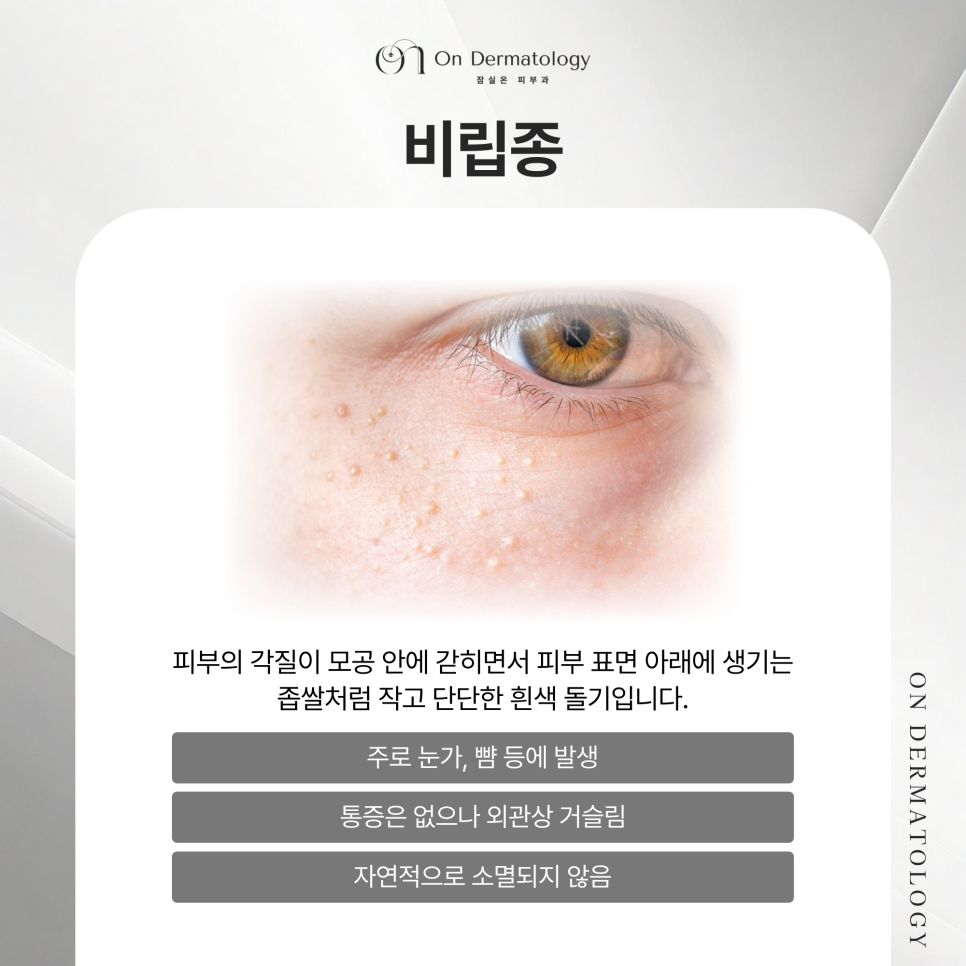
What are milia?
CO2 laser
For treating epidermal lesions such as flat warts, milia, or skin tags, CO2 laser is the most commonly recommended option. A CO2 laser uses carbon dioxide and can precisely remove only the lesion tissue! In particular, because it can deliver heat not only to the skin surface but also to the upper dermis, it is effective for safely removing the root of the lesion as well. Since damage to normal skin is minimized, the risk of scarring is low and recovery after treatment tends to be relatively quick.
Because it can precisely remove the lesion while minimizing the extent of tissue damage during laser exposure, it is also suitable for treating sensitive areas such as around the eyes! Since it can target only the lesion while protecting the surrounding tissue as much as possible, more stable results can be expected than with conventional extraction or cryotherapy. To reduce recurrence after treatment, it is important to accurately assess the depth and width of the lesion and provide customized treatment by area.
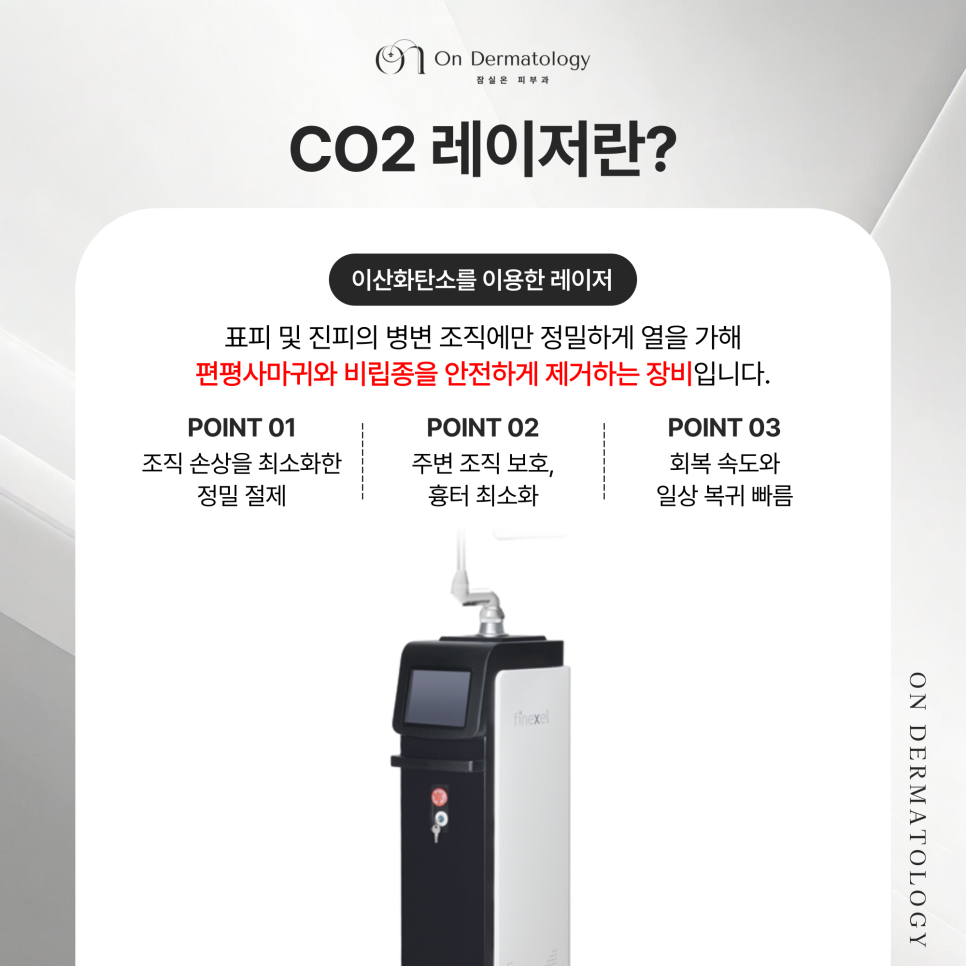
CO2 laser
How to care after treatment
After treatment, care to prevent infection and pigmentation is very important. In particular, because the skin barrier is weakened immediately after treatment, it is best to wait 24 hours before cleansing and then gently wash with lukewarm water. You should also avoid exfoliants or scrubs that cause strong irritation. If a scab forms, avoiding touching it until it naturally falls off will help prevent scarring.
When going outside, it is essential to apply sunscreen carefully. Pigmentation lasts longer than the treatment itself, so prevention is especially important. To help the skin recover, use enough regeneration cream or moisturizing products, and it is best to avoid products containing fragrance or alcohol. Proper aftercare alone can make recovery much faster and safer :)
<Post-treatment care?>
-
Gently cleanse with lukewarm water after 24 hours
-
Sunscreen is essential
-
Do not touch scabs until they fall off naturally
-
Apply regeneration cream and moisturizer carefully
-
Avoid using irritating cosmetics
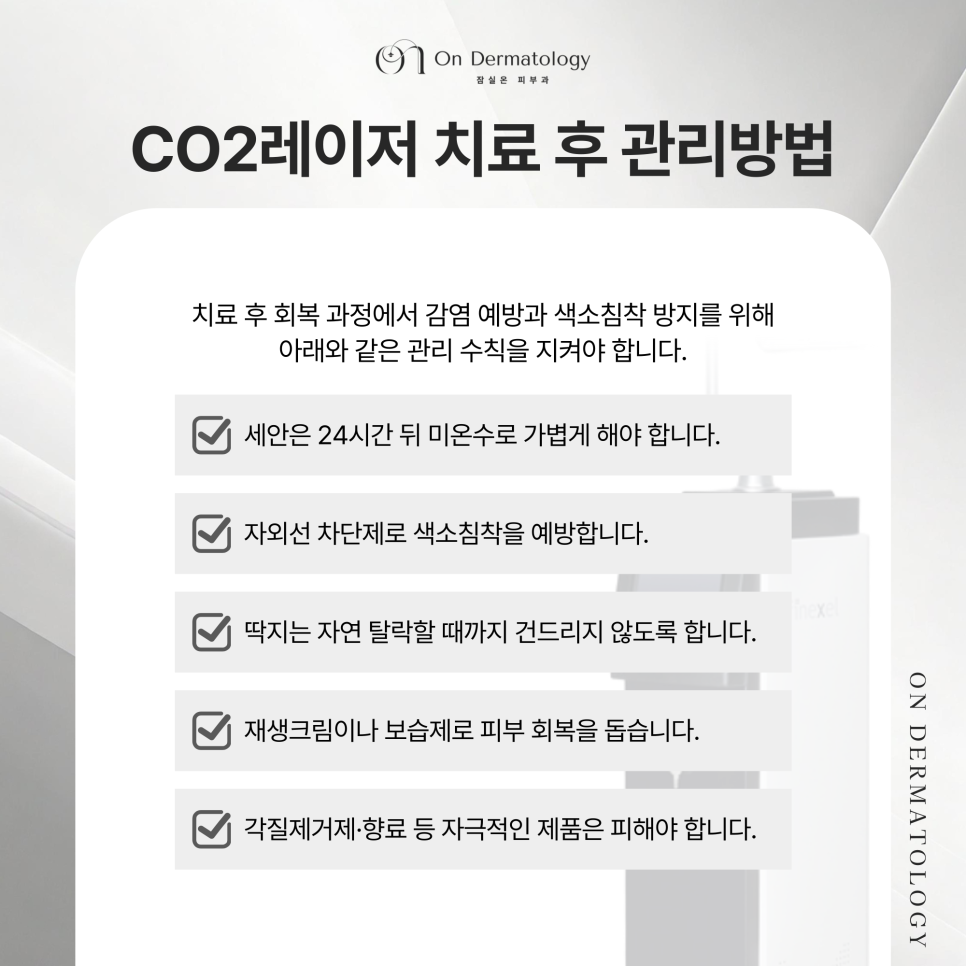
How to care after treatment
CO2 laser treatment in Songpa-gu