Tattoo Removal by Color
Hello, this is Jamshil On Dermatology in Songpa!
Even with the same tattoo, the speed and response of removal can vary widely. Whether the ink is one color or multiple colors, whether it is a line lightly traced on the skin or a filled-in area deep in the skin, the results will differ! The risk of post-inflammatory hyperpigmentation also varies depending on skin tone and constitution. That is why tattoo removal is hard to explain simply as, “We used this laser this many times.” It must be approached by considering the color, depth, area, and skin condition together for safe and clean fading. In this post, we will go through color-specific approaches and techniques that improve efficiency, one by one :)
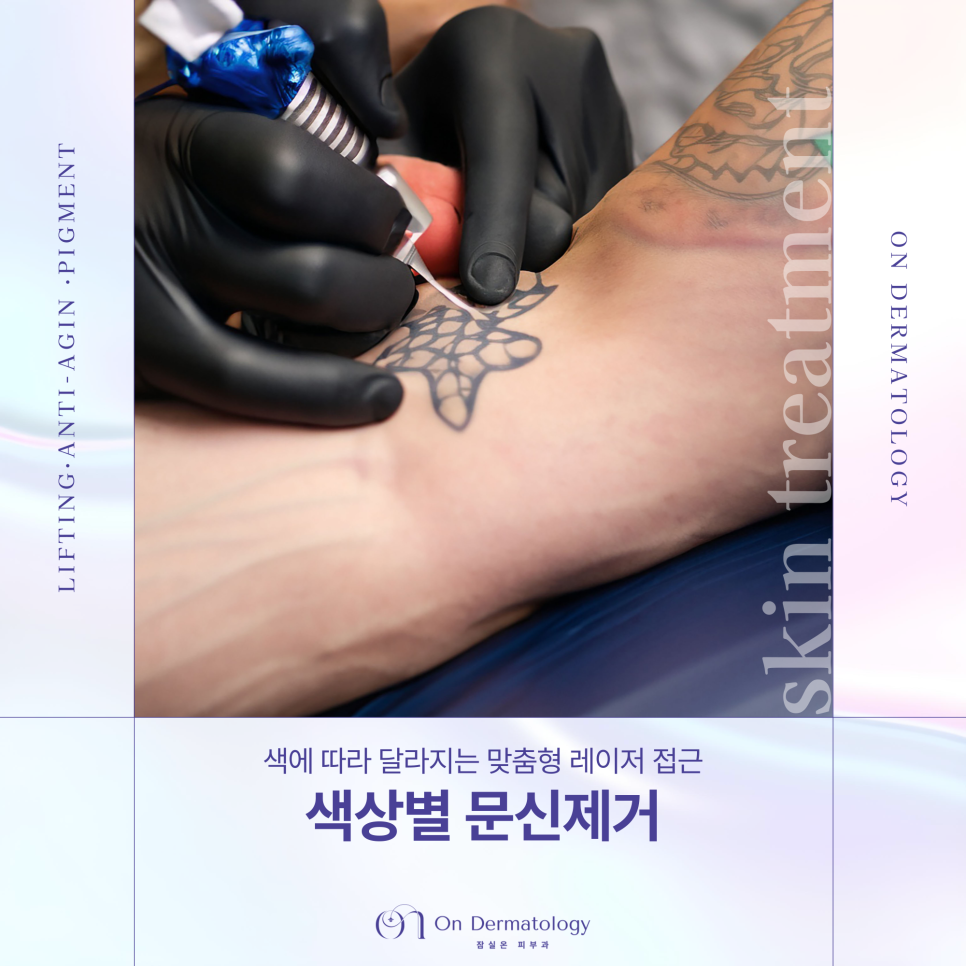
Tattoo Removal by Color
Why Is Tattoo Removal Difficult?
What is the biggest reason tattoo removal is difficult? It is due to the physical and chemical properties of the ink. Even with the same black ink, particle size and absorption spectrum differ depending on the manufacturer and concentration. The depth reached by the needle, the area covered, the number of overlapping layers, and whether there is an old scar also have a major impact. In the end, even if the same device is used with the same energy, the response can differ.
Skin type also adds another variable. Skin with more melanin, such as that of many Koreans, is more likely to develop temporary pigmentation after laser treatment! For this reason, we leave enough time between treatments and adjust the energy while monitoring the response. Device output stability, spot size, beam uniformity, and the practitioner’s pass spacing and overlap must all be carefully adjusted for safety.
<Why Tattoo Removal Is Difficult>
- Response differs depending on color / depth / ink concentration
- The darker the skin tone, the higher the risk of pigmentation
- Device output / spot size / pass spacing affect the result
- Accurate diagnosis / customized plan is important
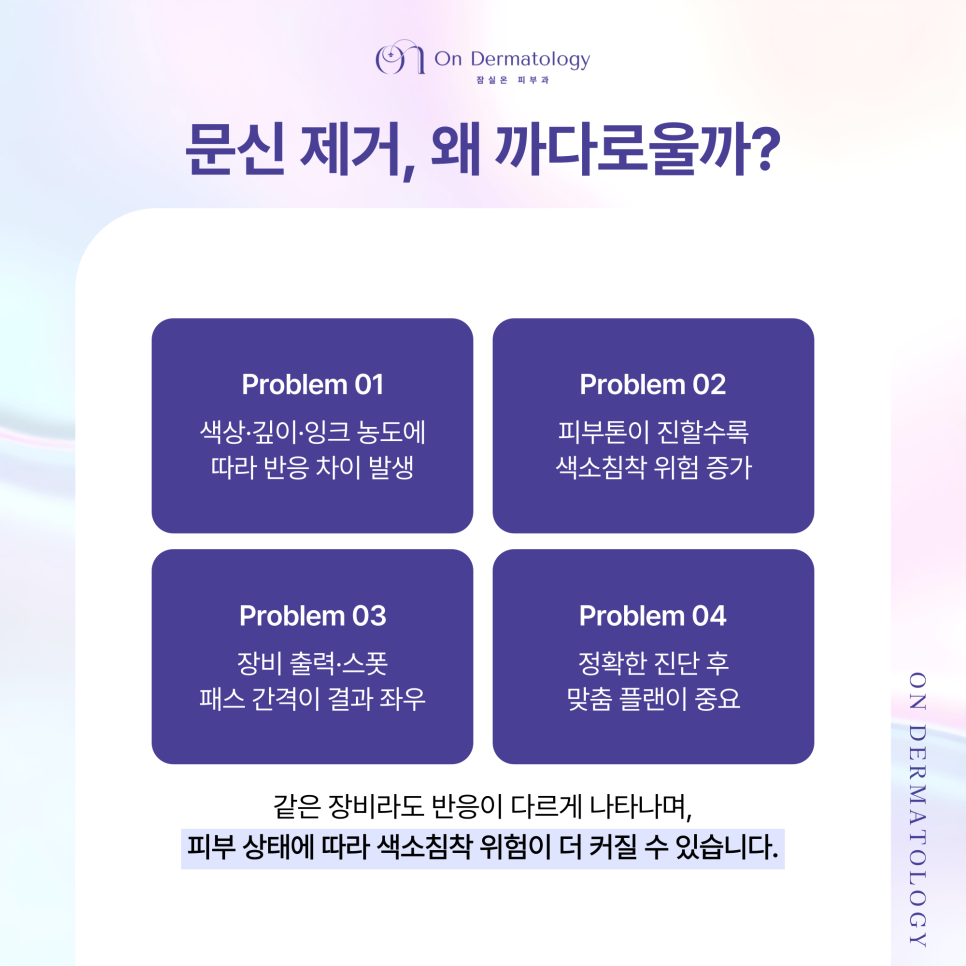
Why Is Tattoo Removal Difficult?
Why Is Color-Specific Tattoo Removal Necessary?
Another important point is that different approaches are needed depending on the color. That is because the wavelengths absorbed vary by color! For example, black and navy respond well to the 1064 nm wavelength, while red and orange are better treated with 532 nm. Green and sky blue require support from special wavelengths such as 595 / 650 / 660 nm, so a strategy that combines multiple wavelengths is effective. In the end, it is not just about looking at one color, but planning for the entire “palette.”
Also, not all colors disappear completely. In particular, yellow, light orange, and white tend to respond poorly, so the number of sessions may increase or some residual color may remain. Pigments based on iron or oxides may, in rare cases, turn black! In such cases, the wavelength is changed, the interval is extended, and if necessary, other techniques are combined while prioritizing safety. That is why a customized plan for each individual is key :)
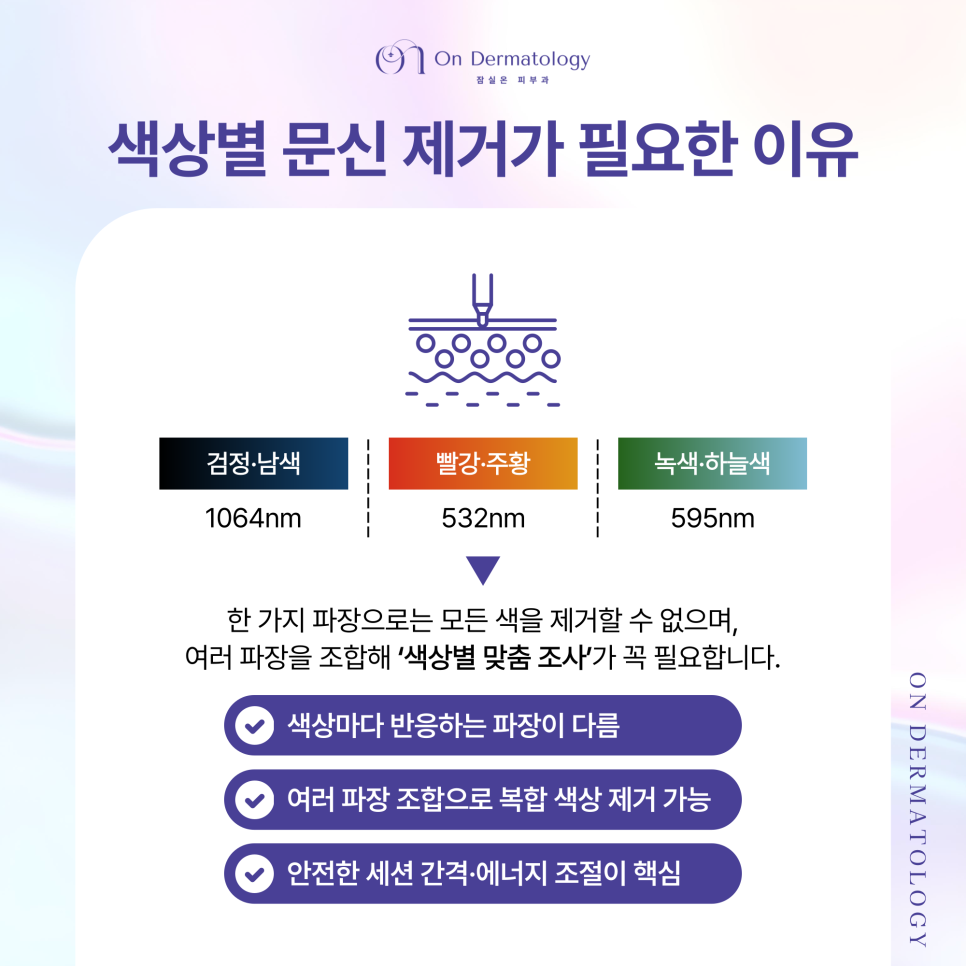
Why Is Color-Specific Tattoo Removal Necessary?
Frax Zero Technique
Jamsil On Dermatology’s “Frax Zero Technique” is an approach that improves efficiency by combining the R0 and FraxTat (MLA) methods. R0 involves applying a special liquid to quickly settle the white bubble layer that forms after laser treatment, making it possible to repeatedly irradiate the same area with multiple passes. It is advantageous for increasing the initial response by breaking up the treatment more evenly on the same day!
FraxTat uses MLA to create microscopic channels, helping energy enter more uniformly and facilitating gas release to reduce overheating and diffusion. When the two methods are combined appropriately for the situation, you can expect a balance that improves breakdown efficiency per session while lowering epidermal irritation. Of course, the intensity and number of passes are adjusted according to skin tone, color combination, and whether scars are present! For safety, cooling, recovery care, and sun protection must also be carried out carefully.
<Frax Zero Technique>
- Repeated irradiation / maximized efficiency with R0 technology
- Uniform energy delivery with FraxTat
- Minimize epidermal irritation / safe removal / support for various colors and skin tones
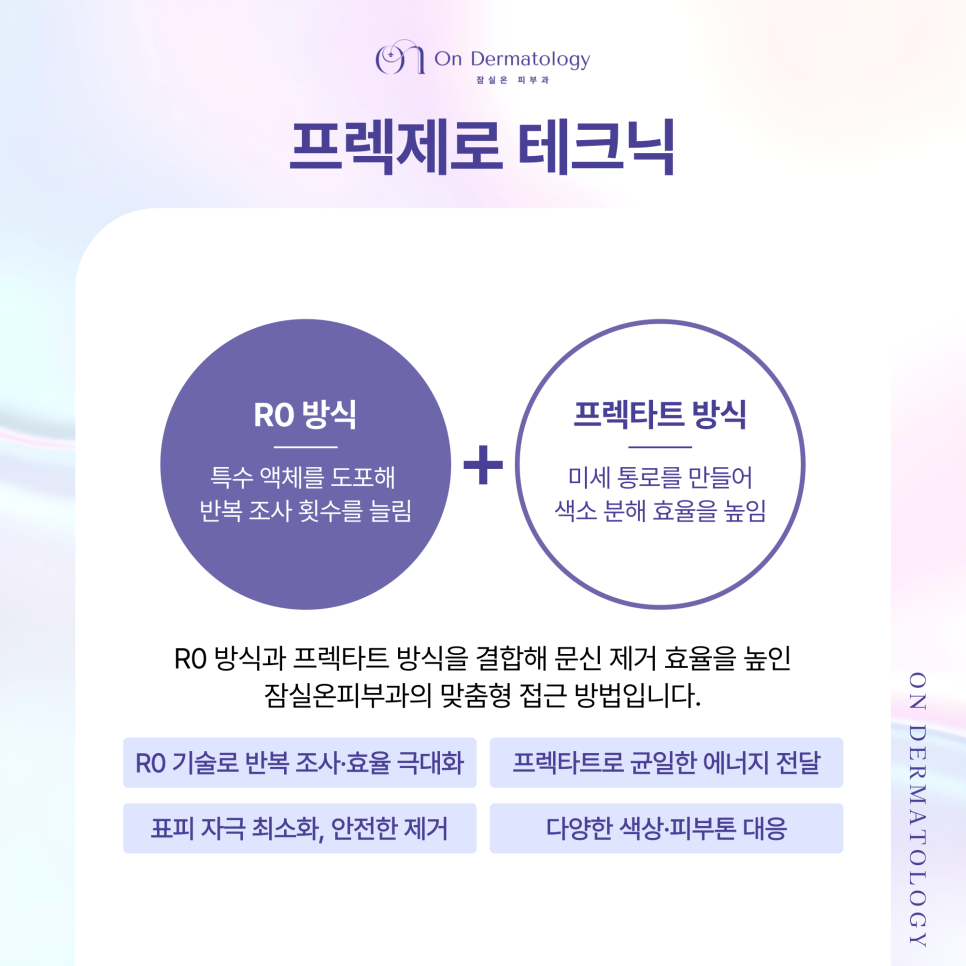
Frax Zero Technique
Hollywood Spectra
Let’s also look at some of the lasers actually used in practice. First, Hollywood Spectra supports multiple wavelengths to address various pigments, and with its large spot size and stable pulse output, it is strong at treating large tattoo areas evenly. A uniform beam profile helps reduce overheating hot spots and improve efficiency even with the same energy! It is well suited for achieving consistent results in designs with multiple colors mixed together and in high-density line work.
In addition, when combined with MLA mode, it allows fine control of energy delivery in difficult areas. It can speed up treatment for colors with good responsiveness, such as black and red, while using additional wavelengths and different protocols to address more challenging colors such as green and sky blue. By checking the progress after each session and adjusting the options little by little, treatment effectiveness can be maximized.
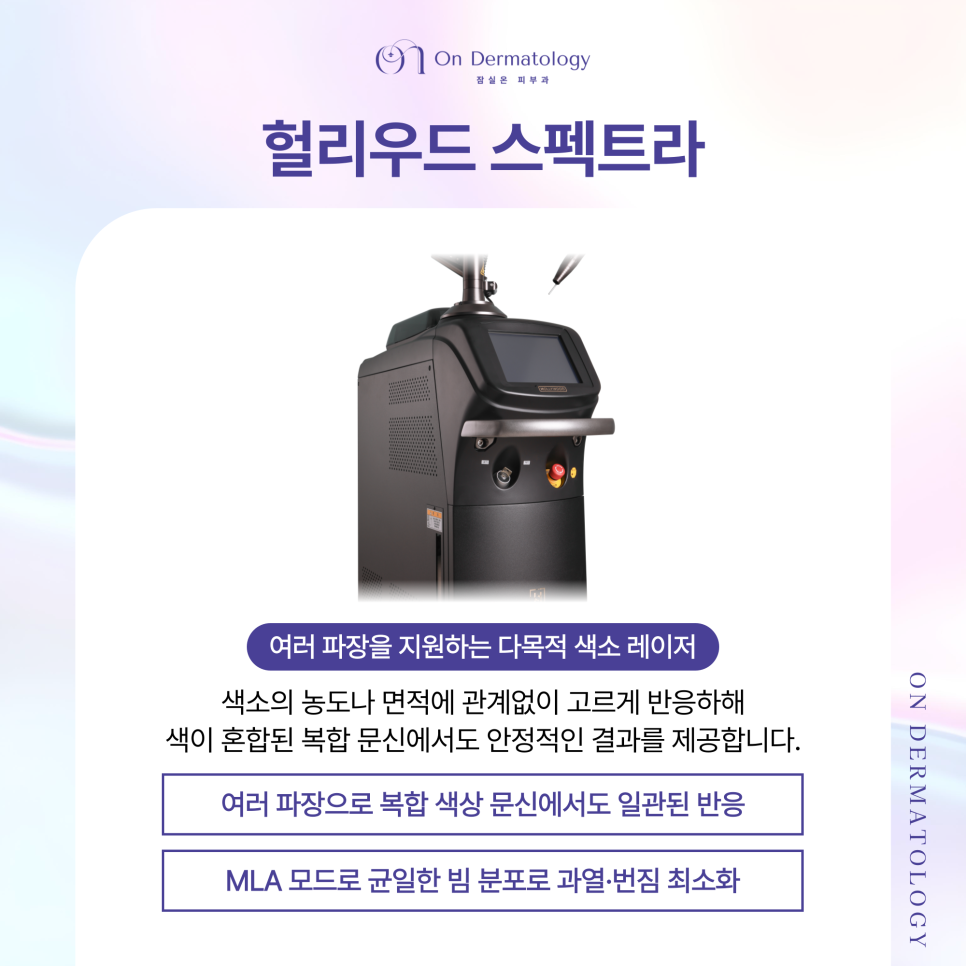
Hollywood Spectra
Pico Plus
Pico Plus can be said to be the most essential laser for tattoo removal. Its advantage is that it uses ultra-short picosecond pulses to break pigment particles into finer and more uniform pieces. The smaller the particles are broken down, the easier it becomes for macrophages in the body to process them! Even in stubborn residual pigment or old, dense tattoo ink, meaningful responses can be expected. It may also help reduce the number of sessions.
However, even with pico technology, it does not mean it is “done in one treatment.” The number of sessions varies depending on the color combination, ink depth, and skin tone. Therefore, through consultations with the doctors, it is most important to set up a treatment plan that is suitable for you, right? If proper planning is combined with at-home care after treatment, safe and effective tattoo treatment will be possible :)
<Key Tattoo Removal Device, Pico Plus>
- Fine pigment breakdown with picosecond pulses
- High response rate for residual pigment / stubborn tattoos
- Fewer sessions / reduced downtime
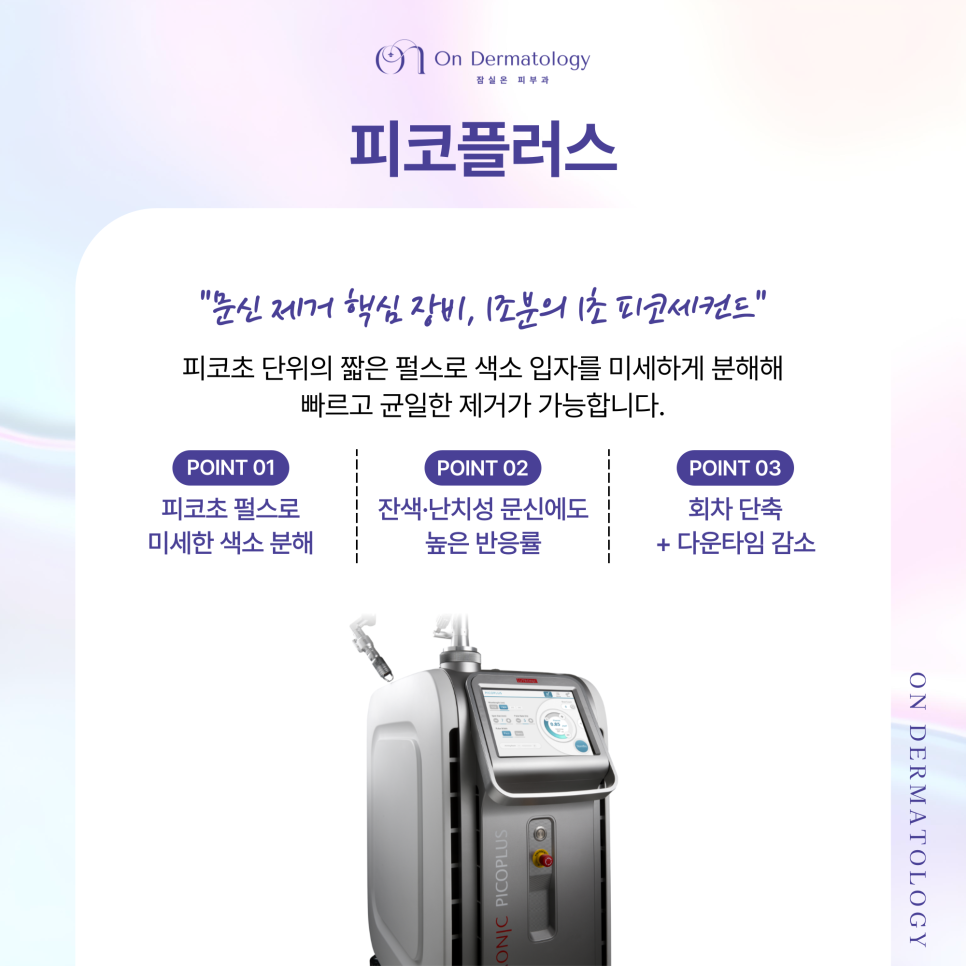
Pico Plus
Color-Specific Tattoo Removal: Customized Laser Treatment That Changes According to Color