Lentigines, Pigment Laser Treatment
Hello, this is Jamshil-on Dermatology in Songpa :)
One of the factors that greatly affects the impression of the face is an even skin tone. However, as we age, brown spots often appear across the face due to sunlight, hormones, and aging, creating a dull appearance. Among them, lentigines are a pigment disorder that stands out because the color is dark and the borders are clear! In many cases, the pigment settles deep in the dermis, so treatment is not easy. That is why an accurate diagnosis before treatment and consistent management are more important than anything else.
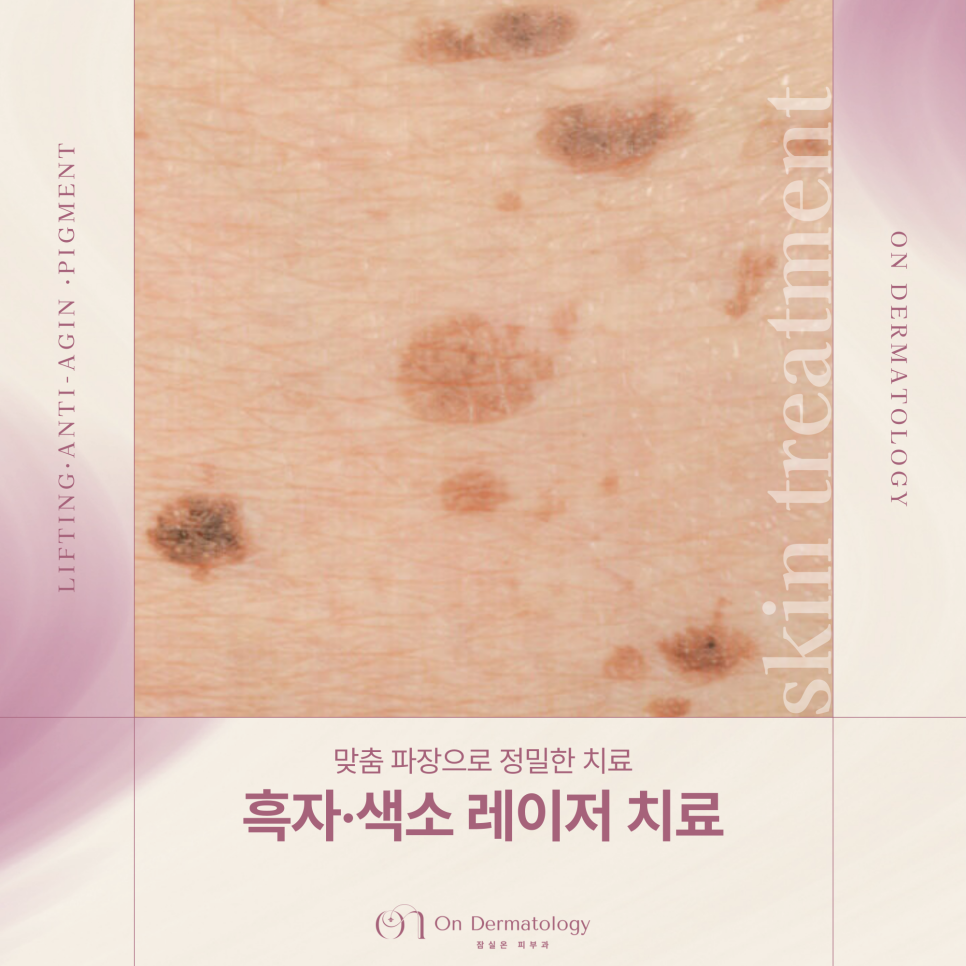
Lentigines, Pigment Laser Treatment
What Are Lentigines?
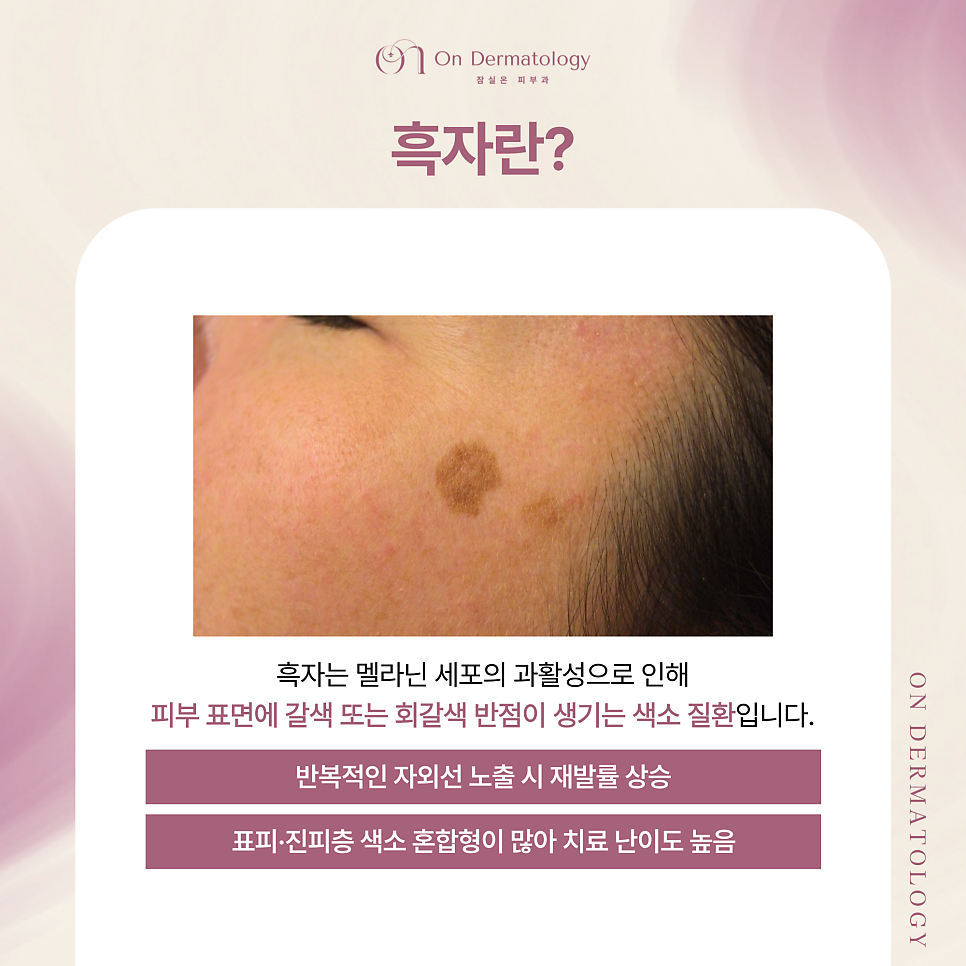
Lentigines are a representative pigment disorder caused by the overactivation of melanin cells in the skin. They mainly appear on the cheeks, forehead, and bridge of the nose, and genetic factors and sun exposure have the greatest influence. Ultraviolet rays promote melanin production, causing pigment to accumulate excessively at the boundary between the epidermis and dermis, appearing as brown or dark brown spots.
The problem is that because this pigment settles deep in the skin, it is difficult to improve with ordinary whitening care or ointments. In addition, if ultraviolet exposure is repeated while pigment remains, it tends to darken again and recur! Therefore, lentigines treatment requires an approach that does not simply lighten the color, but stabilizes the overactivation of melanin cells themselves.
<What Are Lentigines?>
-
Brown or gray-brown spots caused by overactive melanin cells
-
Higher recurrence rate with repeated ultraviolet exposure
-
Often a mix of epidermal, dermal, and pigmented types, making treatment difficult
What Are Lentigines?
Types and Causes of Lentigines
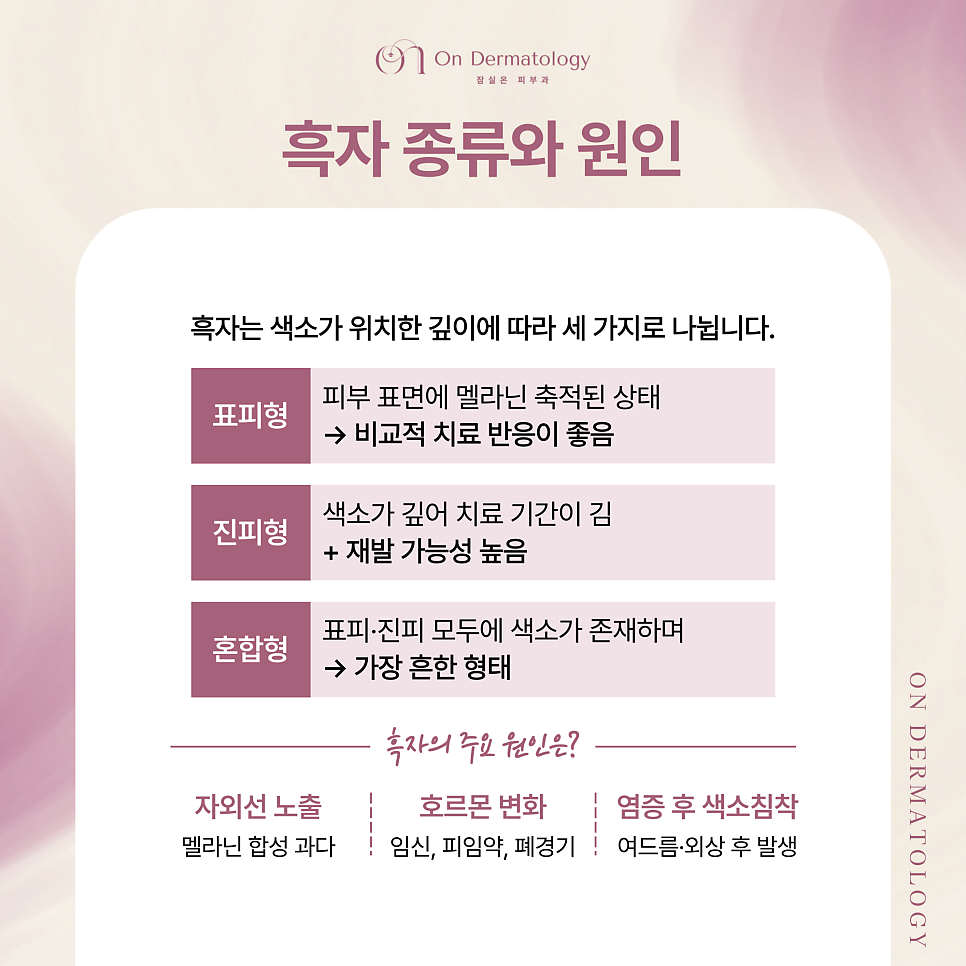
Before treatment, it is important to understand pigment lesions like lentigines in more detail, right~? Lentigines can be broadly divided into epidermal, dermal, and mixed types depending on how deep the pigment is located. Epidermal type has pigment close to the skin surface, so it appears relatively light brown and responds well to treatment. On the other hand, dermal type has melanin deep in the dermis, appears gray-brown or gray-black, and requires a longer treatment period. In most patients, the mixed type, where both forms are combined, is common.
In addition to genetic factors, causes include sun exposure, changes in female hormones, use of oral contraceptives, pregnancy, and post-inflammatory hyperpigmentation. In particular, lentigines tend to worsen during periods of hormonal fluctuation such as puberty, pregnancy, and menopause~ Regular use of sunscreen in daily life can help prevent the formation of new pigment.
Types and Causes of Lentigines
Which Conditions Are Confused with Lentigines?
Common pigment disorders that are often confused with lentigines include freckles, blemishes, and melasma. Freckles have a strong genetic tendency, appear from childhood, and darken with sun exposure. Blemishes are often caused by external irritation or post-inflammatory hyperpigmentation, and their shapes tend to be irregular.
Meanwhile, melasma is a pigment disorder influenced by female hormones and is characterized by broad, symmetrical distribution across both cheeks. The problem is that these three conditions often coexist with lentigines. Because it is difficult to distinguish them with the naked eye, better results can be expected only after accurately analyzing the depth and type of pigment using multispectral diagnostic equipment rather than visual diagnosis, and then carrying out customized treatment accordingly.
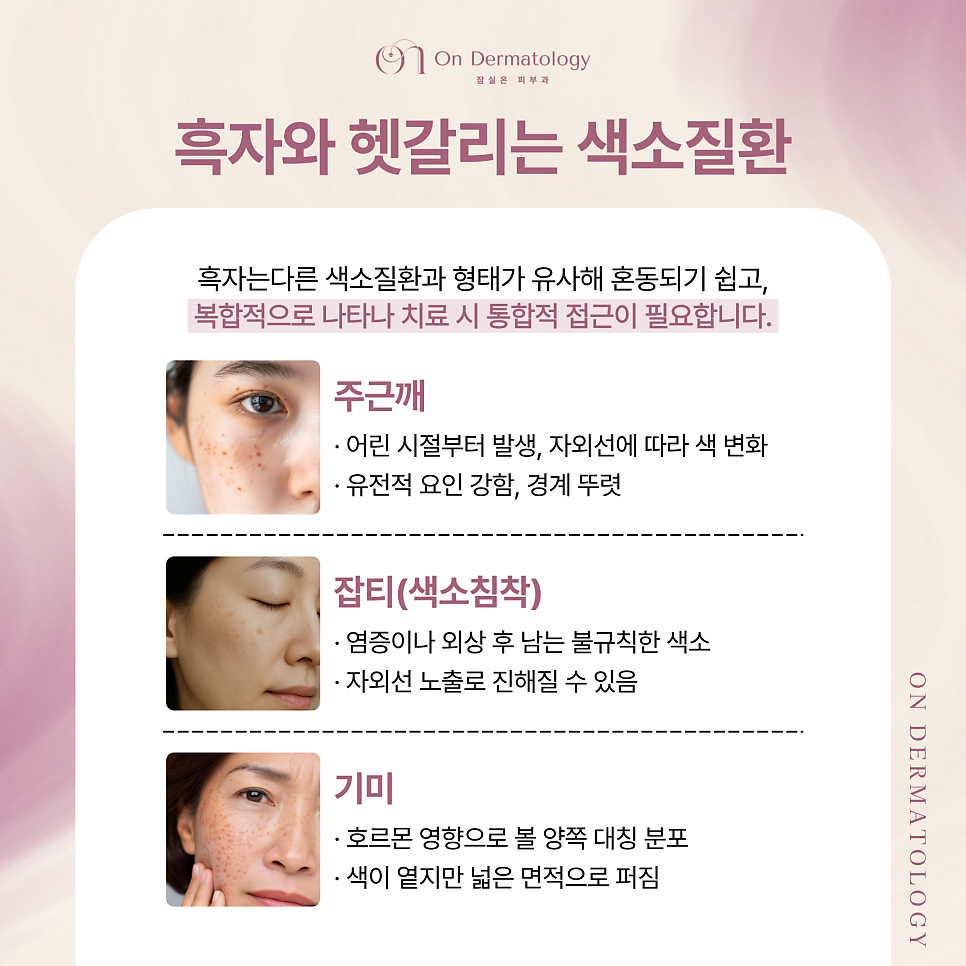
Pigment Disorders That Are Confused with Lentigines
PicoPlus Lentigines Treatment
PicoPlus is a high-performance laser that delivers strong energy in an ultra-short picosecond (one trillionth of a second) unit to finely break down melanin pigment. Because it applies high pressure in a much shorter time than conventional nanosecond lasers, it breaks pigment particles into smaller pieces while minimizing damage to surrounding tissue. As a result, there is less pain and a lower incidence of side effects such as redness or swelling after the procedure.
Another major advantage is that it can address pigment at various depths by using three wavelengths: 532nm, 755nm, and 1064nm. It is effective not only for epidermal lentigines, but also for mixed lentigines in which pigment has settled into the dermis! In addition, by inducing collagen regeneration within the skin through the LIOB principle, it helps improve not only pigmentation but also skin texture and elasticity. If you continue treatment regularly at set intervals, you can restore a more even and clear skin tone :)
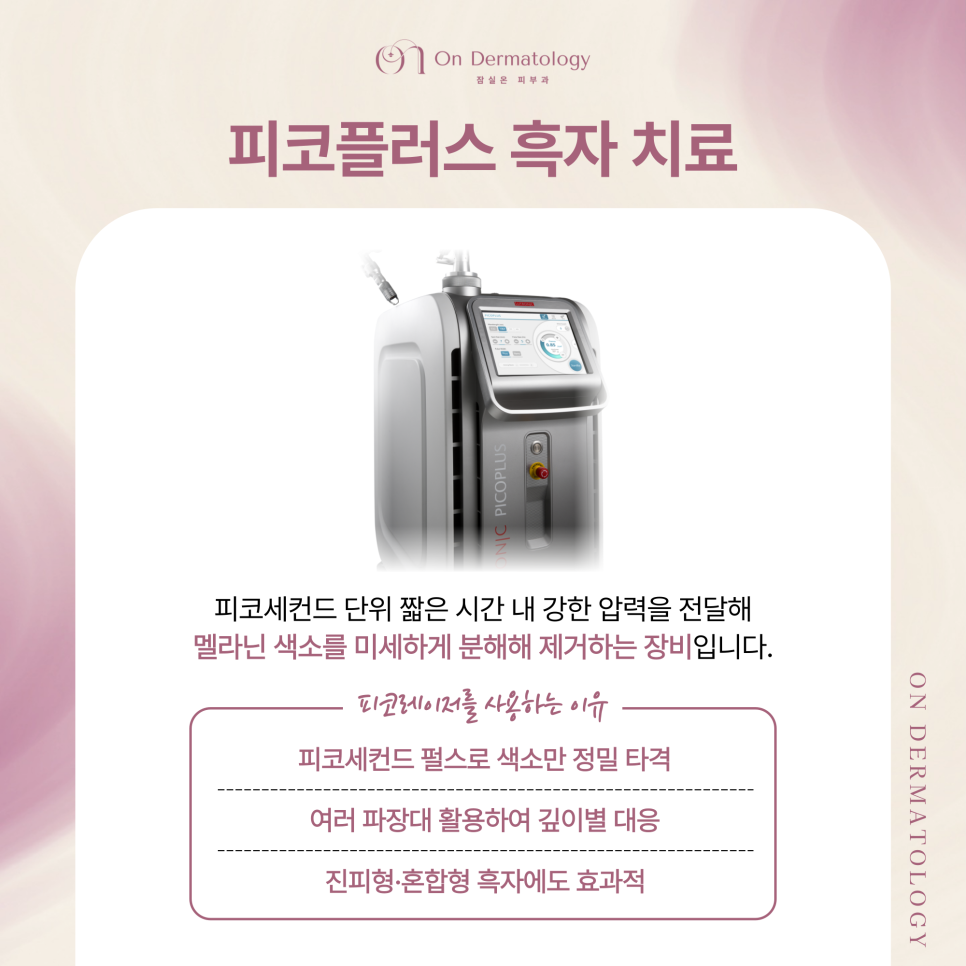
PicoPlus Lentigines Treatment
Hollywood Spectra
Another laser device used together is Hollywood Spectra. It is a laser that selectively delivers energy according to the depth of the pigment layer using various wavelengths! Because it precisely recognizes and breaks down only melanin pigment, it can achieve uniform pigment improvement while minimizing skin damage. In particular, it can also address mixed lentigines in which pigment is deposited in both the epidermis and dermis, allowing stable treatment even in cases with dark color or frequent recurrence.
In addition, the thermal energy generated during laser irradiation suppresses the overactivation of melanin cells, helping prevent the formation of new pigment. When used together with PicoPlus, energy can be subdivided and adjusted according to the size and depth of pigment particles, increasing treatment efficiency. It also acts evenly on complex pigmentation such as melasma and blemishes that coexist with lentigines, so you can expect an overall clearer and more even skin tone :)
<Hollywood Spectra>
-
Precisely breaks down various pigments with multiple wavelengths
-
Improves lentigines, melasma, and blemishes at the same time
-
Also improves skin texture and skin tone
-
Simultaneously improves pigment in both the epidermis and dermis
-
Synergistic effect with PicoPlus
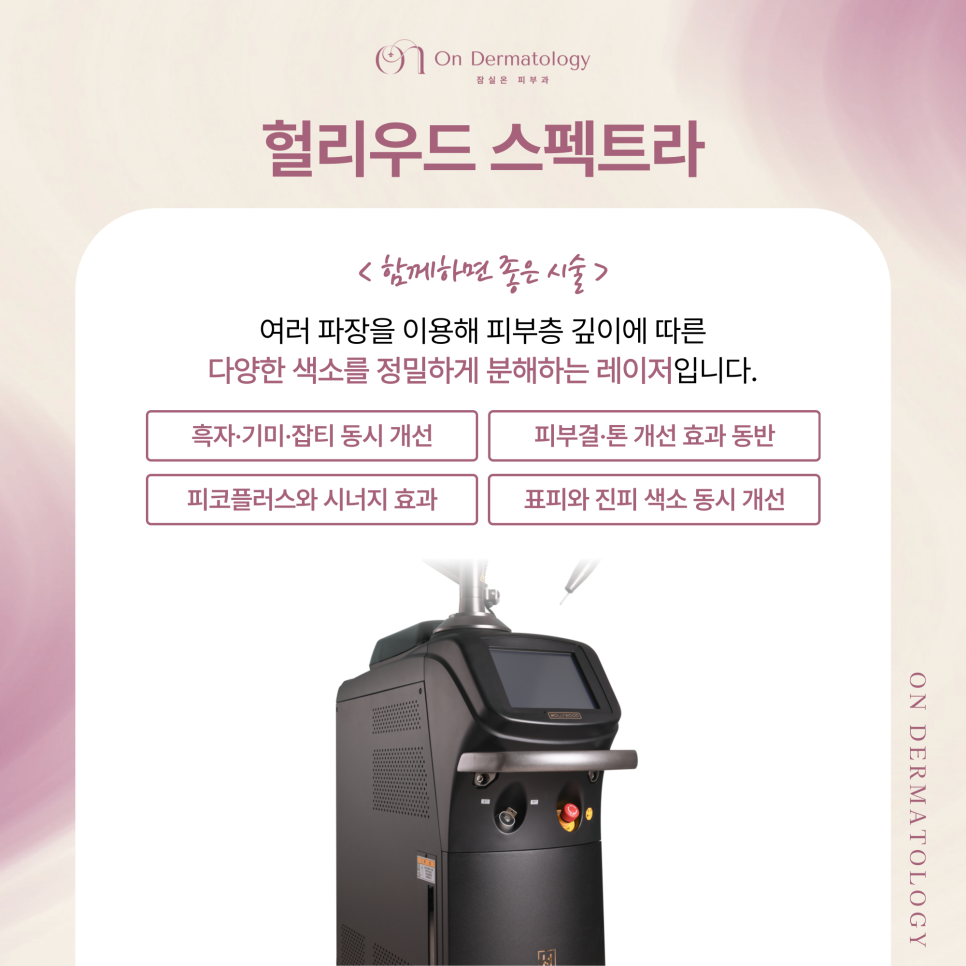
Hollywood Spectra
PicoPlus, Hollywood Spectra Pigment Laser