Hiracell Q&A
Hello, this is Jamsil On Dermatology!
Even if you take great care of your skin, there are times when it becomes especially dry and rough. When the skin is in this damaged state, it needs both moisture retention and regeneration. At times like this, ‘Hiracell,’ a wound dressing based on high-concentration hyaluronic acid, can be very helpful. As I will explain in detail below, it forms a protective barrier over damaged skin to block irritation and prevent moisture loss. You can think of it as a professional care method that helps the skin regain its natural balance.
Hiracell Q&A
What is Hiracell?
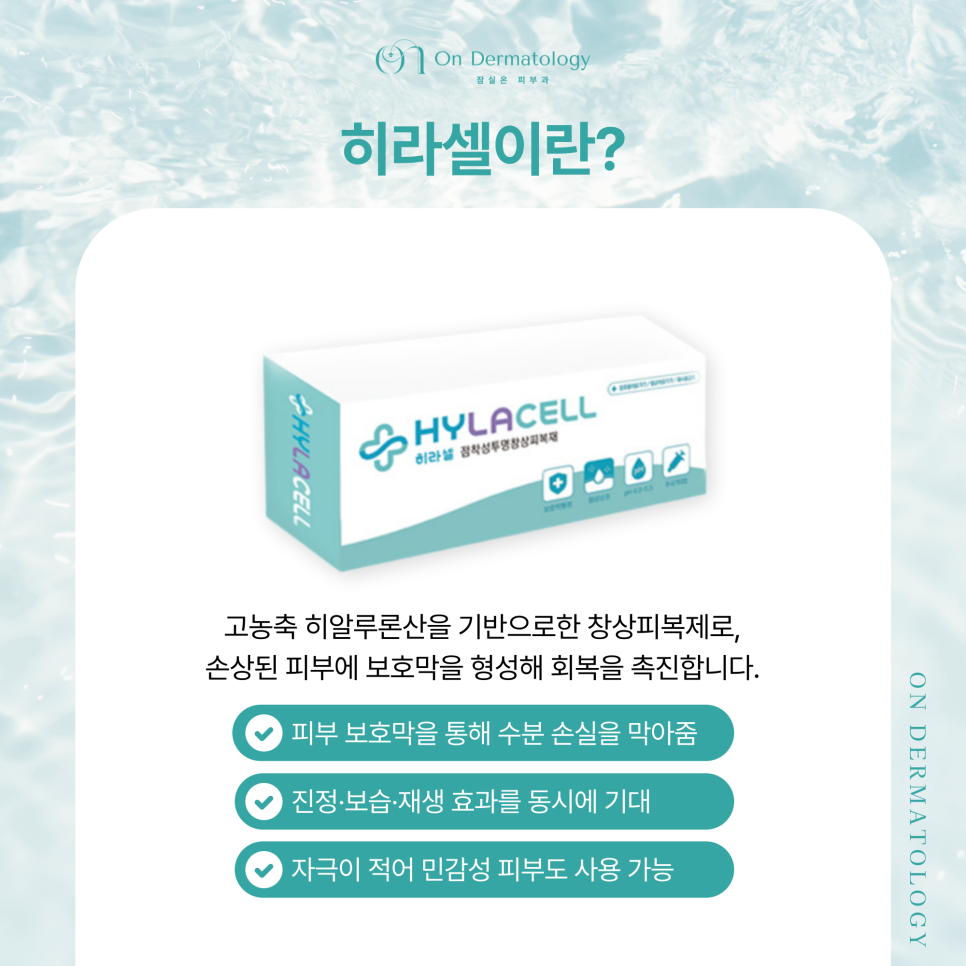
As mentioned above, Hiracell is a wound dressing used to help skin recover after irritation from lasers, peels, and similar procedures. Its high-concentration hyaluronic acid forms a thin moisturizing film on the skin’s surface, protecting the damaged area from external contaminants and helping the skin retain internal moisture. Once the damaged skin tissue stabilizes, redness and stinging are eased, and regenerative cells are activated to speed up recovery.
It is especially gentle enough to be used even immediately after procedures, when the skin barrier has weakened. Because it soothes the skin while improving the recovery environment, it is highly satisfying for patients who need quick recovery or who have sensitive skin types. In medical settings, it is often used as an auxiliary treatment for soothing care!
<Hiracell advantages>
-
Protects the skin barrier / prevents moisture loss
-
Soothing / moisturizing / regenerative effects at the same time
-
Low irritation / suitable for sensitive skin
What is Hiracell?
Key ingredients of Hiracell
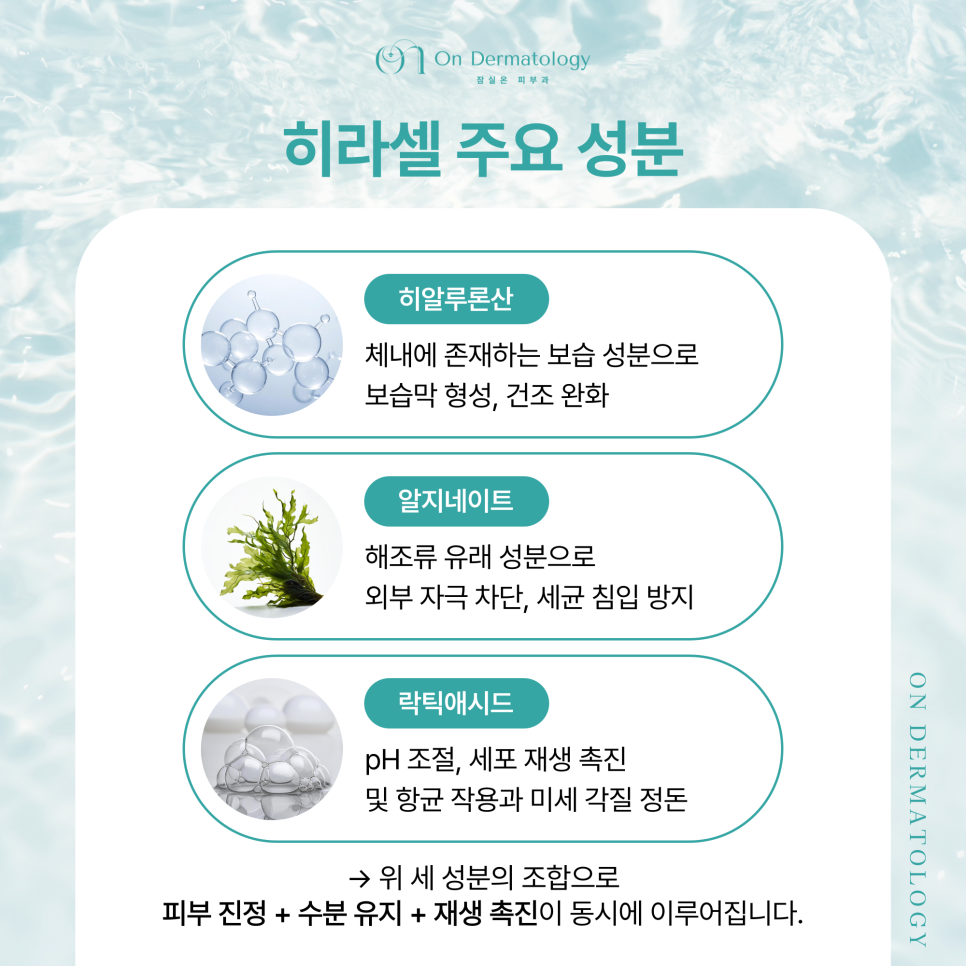
Let’s take a closer look. It contains three main ingredients: hyaluronic acid, alginate, and lactic acid. Hyaluronic acid, which may already sound familiar to you, is a natural moisturizing factor found in the body that draws in and retains moisture at damaged areas. It helps ease dryness and keeps the skin soft and hydrated :)
Alginate is an ingredient extracted from seaweed that creates a thin protective film over the wound area. It blocks external irritation and bacterial invasion while maintaining a steady level of internal moisture, promoting natural healing. Lactic acid keeps the skin’s pH mildly acidic, suppresses bacterial growth, and helps damaged tissue be replaced with new cells. You can understand these three ingredients as working in harmony to complete Hiracell’s soothing, moisturizing, and regenerative effects.
<Key ingredients of Hiracell>
-
Hyaluronic acid: a moisturizing ingredient naturally found in the body
-
Alginate: a seaweed-derived ingredient
-
Lactic acid: helps keep the skin pH mildly acidic
Key ingredients of Hiracell
Synergy when used with LDM devices
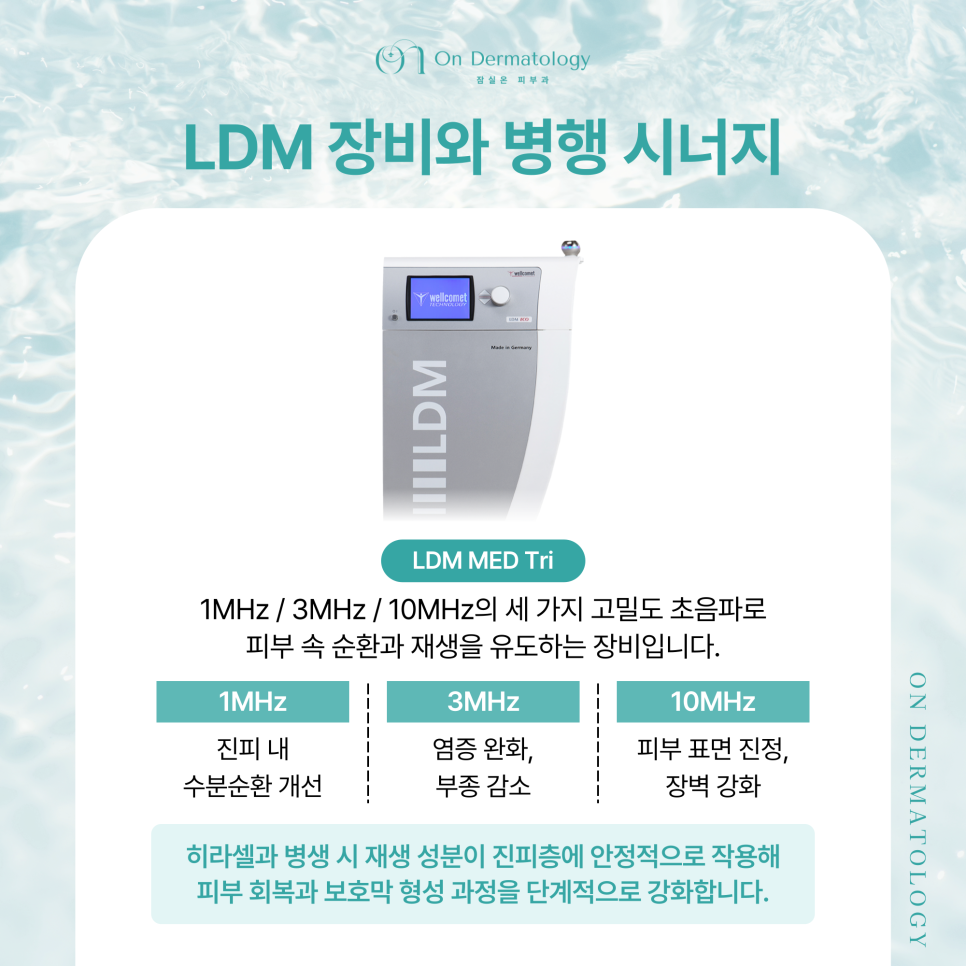
And one more tip! It shows even stronger effects when used together with an LDM device. LDM is a device in which ultrasound at three different frequencies interact to stimulate microcirculation and cell regeneration in the skin at the same time. In the first stage, micro-ultrasound opens absorption pathways in the skin so that Hiracell’s ingredients can penetrate deeply.
In the second stage, Hiracell’s active ingredients reach the dermis, promoting cell regeneration and easing inflammatory responses. In the third stage, moisture balance is restored, and in the final stage, cell-to-cell connections are stabilized, allowing the skin barrier to be firmly rebuilt. Through these three stages of action, redness and heat after the procedure are quickly relieved, and the regeneration speed is further improved.
Synergy when used with LDM devices
Hiracell insurance claim
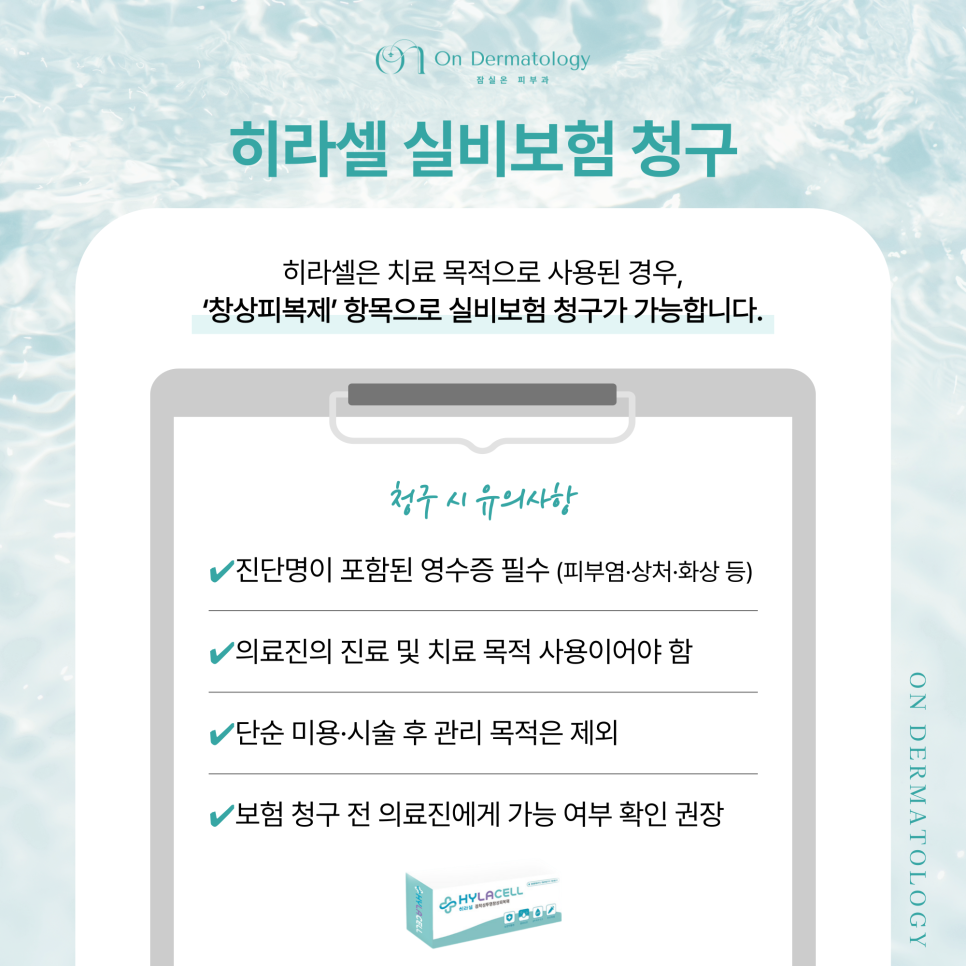
If Hiracell is used for treatment purposes rather than simply for cosmetic purposes, it may be eligible for reimbursement through actual expense insurance claims. When it is used based on the medical staff’s judgment that recovery from skin damage or soothing treatment is needed after a procedure, it is classified as a ‘wound dressing’ and included among items that may be covered by insurance.
However, for an insurance claim, a receipt that includes the diagnosis name is absolutely required. For example, the diagnosis must specify something like ‘dermatitis,’ ‘burn,’ or ‘wound treatment,’ and use for simple cosmetic care is excluded. Before the claim process, it is much easier afterward if you check in advance with the medical staff at the time of your visit to see whether actual expense insurance claims are possible, right?
<Hiracell insurance claim>
-
Receipt including diagnosis name / used for medical treatment or care under medical staff guidance
-
Excludes simple cosmetic use / post-procedure care for cosmetic purposes
-
It is recommended to check with the medical staff before filing an insurance claim
Hiracell insurance claim
Hiracell Q&A
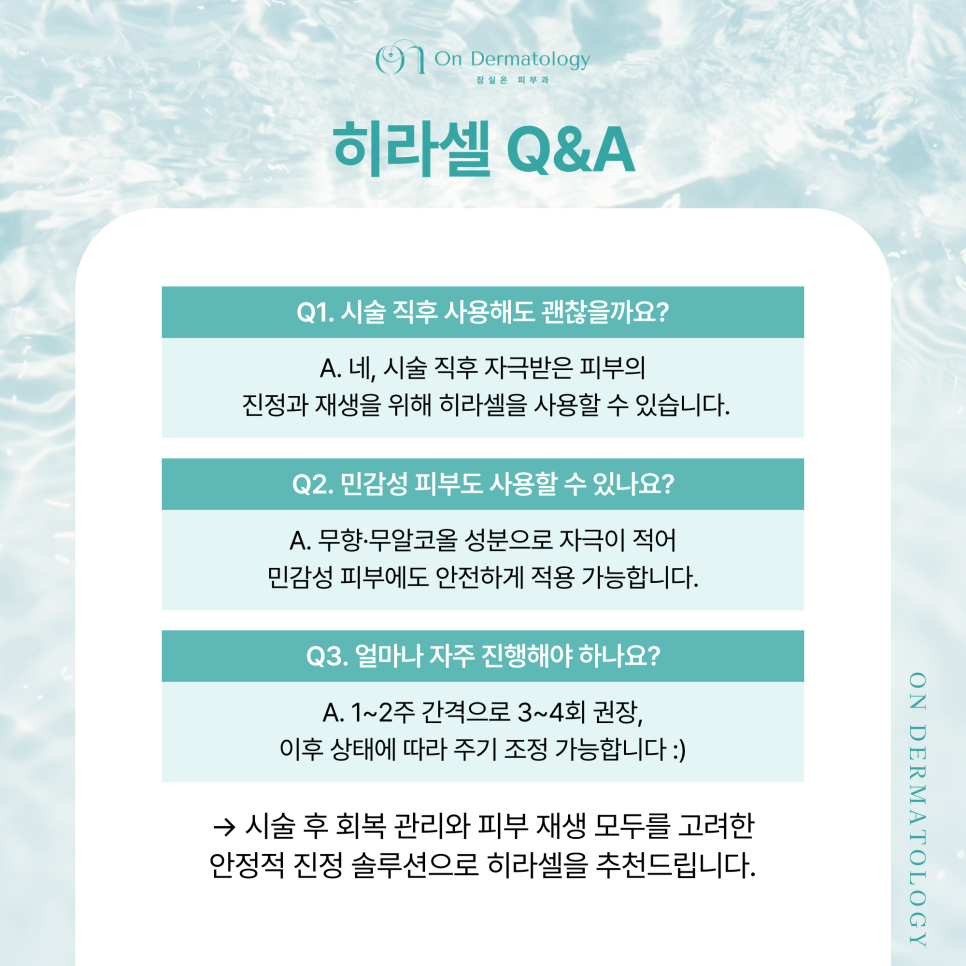
I’ll wrap up this post by answering a few questions. First, can Hiracell be used after other procedures? Hiracell is a care product that is very widely used during treatment and skin recovery. It can be applied when redness or heat remains immediately after a procedure, or when the skin is damaged by external irritation. Because it causes almost no irritation, it can be used safely even on sensitive skin! It is also formulated without fragrance or alcohol, minimizing irritation and causing very few problems even with long-term use.
Many people also asked about the recommended treatment interval. It varies depending on the individual’s skin condition, but I recommend a total of 3 to 4 sessions at 1- to 2-week intervals. If the skin has recovered to some extent after the initial care, it is fine to continue at longer intervals afterward. Today, we looked at the detailed information related to Hiracell. That’s all for this post, and if you have any questions, please leave them in the comments :)
Hiracell Q&A
High-concentration hyaluronic acid care, Hiracell