No-Prep Veneer Side Effects
Check in Advance
No-Prep Veneer Side Effects
Hello.
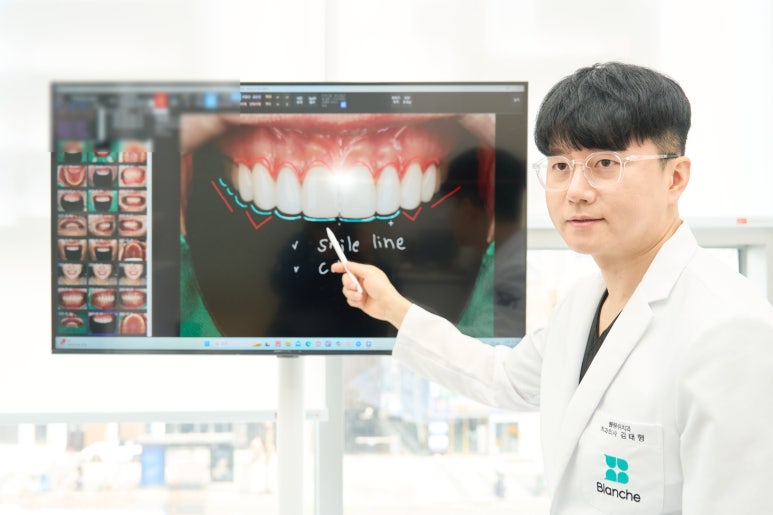
I’m Kim Tae-hyung, the chief dentist at Blanche Dental Clinic.

Check No-Prep Veneer Side Effects in Advance
For those considering no-prep veneers,
there are a few things that are especially on their mind.
That is, the side effects of no-prep veneers.
Many people are strongly attracted to the fact that they can achieve an aesthetic improvement
with very little damage to their natural teeth.
However, no procedure can have only advantages..
So it was truly important to know in advance about the problems that can arise before and after treatment and be prepared for them.
Why You Must Check the Side Effects of No-Prep Veneers
No-Prep Veneer Side Effects
- No-prep veneers,
what advantages brought them into the spotlight?
Check No-Prep Veneer Side Effects in Advance
Many people lost confidence in their smile because of tooth color or shape,
or minor alignment issues.
To solve these concerns,
people often consider traditional veneer treatment,
but
they hesitate to make a decision because of the burden of having to remove tooth structure.
Especially for younger patients or those with healthy teeth, the need to preserve natural teeth was really great.
The reason the advantages of the procedure felt more significant than concerns about no-prep veneer side effects
was precisely because it could preserve the natural teeth almost as they were.
Literally, the front surface of the tooth is almost not ground down,
and an ultra-thin ceramic tip is attached to bring about an aesthetic improvement.
No-prep veneers have
these three advantages:
Tooth preservation
Because the tooth is not reduced, or only minimally reduced, natural teeth can be preserved as much as possible.
Reduced psychological burden
There was less fear of tooth reduction or psychological resistance.
Convenience of the procedure
It was performed through a relatively simple process,
and in many cases without anesthesia,
so the treatment process was easier.
Thanks to these advantages..
for people who had long-standing concerns about their teeth but hesitated to have them reduced,
it felt like a truly groundbreaking alternative.
In particular, it was considered suitable for people with gaps between the teeth (diastema), minor chips, or color issues that could not be solved by whitening.
However, behind this convenience, there was clearly a shadow of no-prep veneer side effects that should not be overlooked.
- No-prep veneer side effects,
what are they in reality?

Check No-Prep Veneer Side Effects in Advance
Even if the teeth are not reduced,
this is still a treatment that adds a foreign material to the tooth surface, so various problems could occur.
To minimize no-prep veneer side effects, it was really necessary to clearly understand your tooth condition and the limitations of the procedure before treatment.
The most commonly mentioned problem was
bonding strength and detachment.
Because veneer tips are made very thin, they can be weaker in strength than conventional veneers..
and if the bonding surface is less favorable because the tooth is not reduced, or if the adhesion is weak, they can come off easily due to impact or chewing habits.
They were especially vulnerable for people who often eat sticky or hard foods.
Check No-Prep Veneer Side Effects in Advance
Next, there were aesthetic limitations.
Because thin ceramic is added,
if the natural tooth color is very dark,
there is a problem that it is difficult for a thin veneer alone to completely cover the color.
You may not get the bright, white result you wanted,
or
the tip itself may appear translucent.
In such cases, it was difficult to achieve the whitening effect you expected, so retreatment or another method had to be considered.
Another important no-prep veneer side effect was gum health problems and a foreign-body sensation.
Because veneer tips slightly increase the size of the natural tooth..
if the tip touches the gum margin or the boundary between the tip and the tooth is not properly finished, food can get trapped more easily.
As a result, plaque accumulates and the likelihood of gum diseases such as gingivitis or periodontitis increases.
Also, because the thickness on the outside of the tooth increases slightly..
at first, many people complained of a strange feeling when it touched the tongue or lips,
and in rare cases, there were instances where speech was affected.
Although people do adapt over time,
many patients felt discomfort during this adjustment period.
<If you want to know more about no-prep veneers, 'Blanche'>
Check No-Prep Veneer Side Effects in Advance
Check No-Prep Veneer Side Effects in Advance
Check No-Prep Veneer Side Effects in Advance
- Tips for reducing side effects and maintaining results long term
Check No-Prep Veneer Side Effects in Advance
To reduce these no-prep veneer side effects and maintain the treatment results for a long time,
careful diagnosis before treatment and thorough management after treatment were essential.
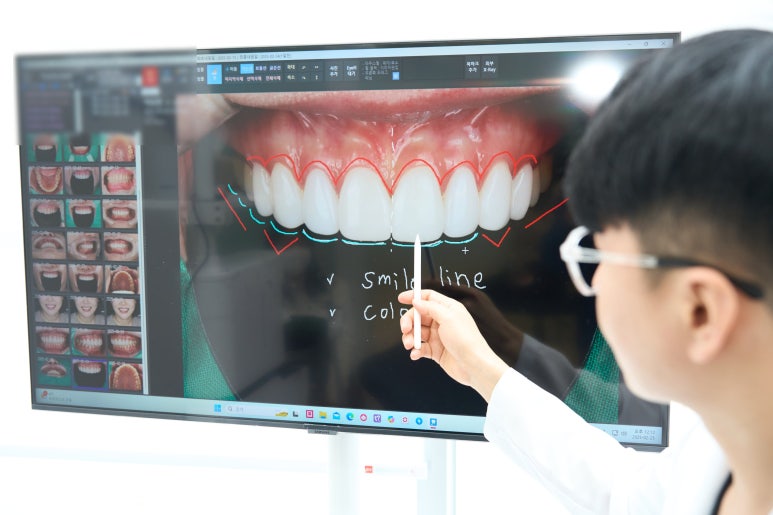
Before treatment, it is not enough to look only at the shape of the teeth;
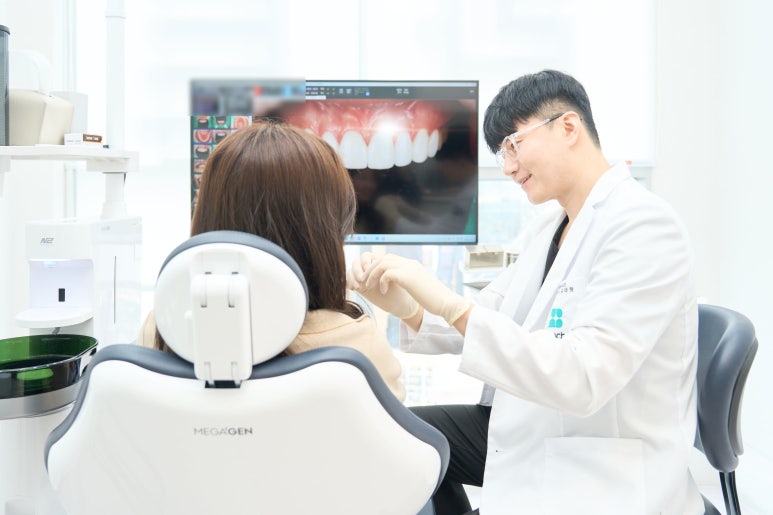
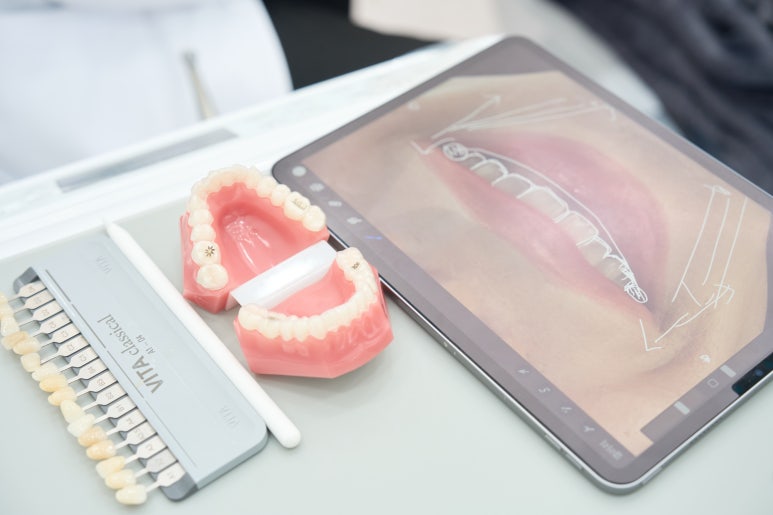
it was necessary to comprehensively consider the patient's bite, jaw movement, and daily habits to judge whether the no-prep approach was truly appropriate.
If the teeth were significantly misaligned or protruded severely,
then a veneer with minimal reduction or orthodontic treatment might have been more suitable than a no-prep approach.
Post-treatment care was also really important.
The key factors that determine the lifespan of no-prep veneers are
maintaining bonding strength and oral cleanliness.
Dietary control
Especially in the early stage, because the bond had not yet fully stabilized,
it was best to avoid biting into tough or hard foods with the front teeth (squid, nuts, ice, etc.) as much as possible.
Oral hygiene reinforcement
In addition to regular brushing, it was necessary to make care using interdental brushes, dental floss, or a water flosser part of daily routine so that food would not get trapped in the tiny gaps between the veneers and the teeth.
Keeping the bonded area clean was the most important way to prevent gum inflammation.
Habit improvement
If you tend to clench or grind your teeth (bruxism), excessive force is placed on the veneers, making them very likely to crack or come off.
For people who grind their teeth while sleeping, wearing a night guard was absolutely necessary to protect the teeth and veneers.
Finally..
In the early period after treatment, and at least once every 6 months to a year thereafter, you should visit the dental clinic to
regularly check the veneer bonding state, gum health, and bite-related issues.
Detecting problems early was really a big help for long-term maintenance.
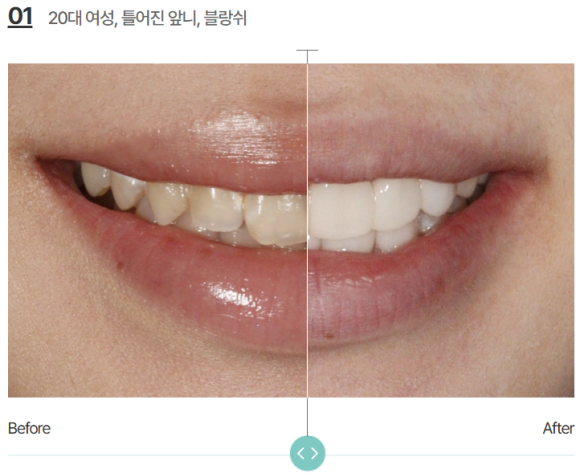
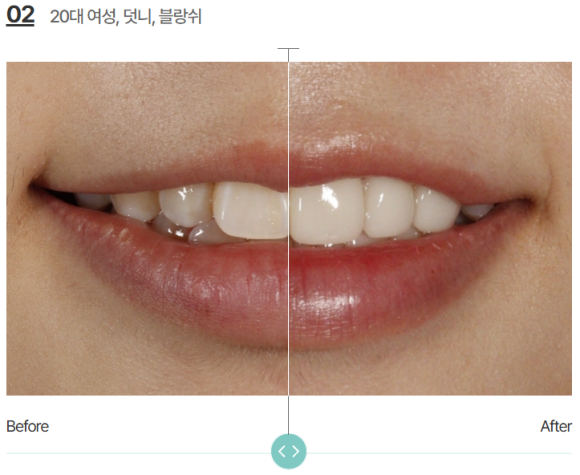
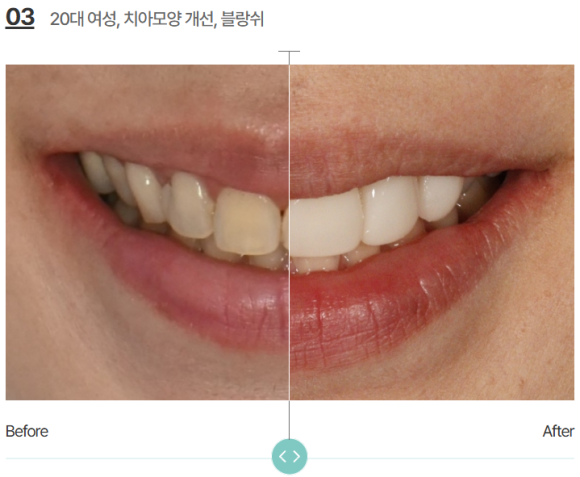
<Actual Blanche before-and-after photos>
- You can find more on the website.
Check No-Prep Veneer Side Effects in Advance
Check No-Prep Veneer Side Effects in Advance
Check No-Prep Veneer Side Effects in Advance
Check No-Prep Veneer Side Effects in Advance
To avoid no-prep veneer side effects
and achieve satisfying results..
rather than being swayed only by the convenience of the procedure,
a precise evaluation of your oral environment by a specialist is necessary.
No-Prep Veneer Side Effects
Also, it is essential to remember that responsible care after no-prep veneer treatment is required.
This has been Kim Tae-hyung, chief dentist.
Thank you for reading this long post.
| Kim Tae-hyung, Chief Dentist of Blanche Dental Clinic |
|---|
| Ask your questions right away |
| Check available reservation dates in 1 second |
Wishing you a bright and radiant smile,
Kim Tae-hyung,
Chief Dentist of Blanche Dental Clinic
Check No-Prep Veneer Side Effects in Advance
Check No-Prep Veneer Side Effects in Advance
Check No-Prep Veneer Side Effects in Advance