Hello.
This is Blanche Dental Clinic, where your smile becomes a work of art.
One of the situations people planning dental implants encounter most often is being told, “Bone grafting is needed, so the cost will increase.”
As the surgery cost jumps up, it is natural to wonder, “Are they recommending something I might not actually need?”
Today, we are openly sharing the real criteria for bone grafting, explained by a Seoul National University dental doctor.

The implant cost itself can already be a burden, and when bone grafting costs are added on top,
it becomes hard to even leave the dental clinic.
Especially when different clinics give different answers about whether bone grafting is necessary, patients can become extremely confused.
To help ease concerns about treatment costs, it is important to clearly understand
why bone grafting is decided and what the basis for that decision is.


Surprisingly, many people think, “Implants = bone grafting is essential.”
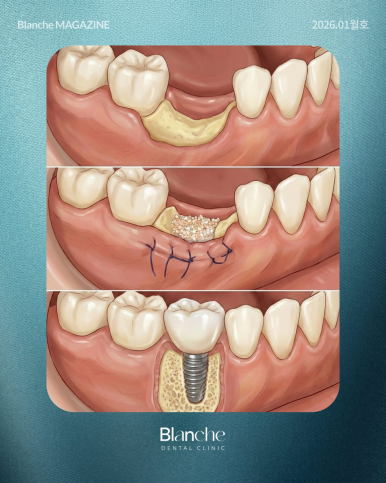
But bone grafting is similar to filling in soil when the ground is uneven or insufficient while building a house.
If the foundation is already firm and wide enough, there is no reason to spend extra money on grafting bone.
Unnecessary bone grafting may actually slow recovery.

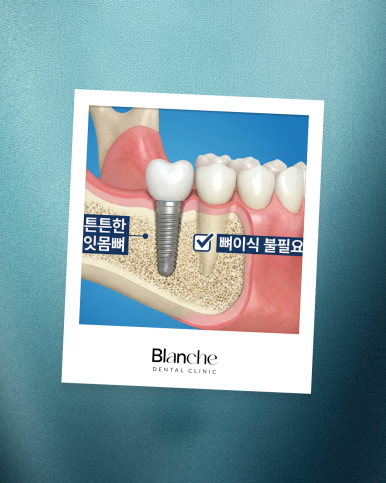
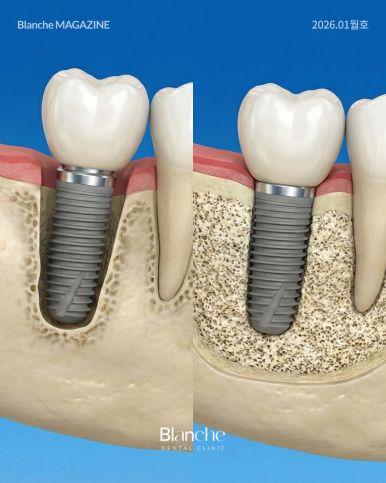
The reason for bone grafting is that there is not enough “bone volume” to support the screw of the implant.
If the screw becomes exposed outside the jawbone, it becomes vulnerable to bacterial infection, and in the end the implant may come out.
To prevent this, bone grafting is essentially done only when the bone is too thin or too low in height.

Whether bone grafting is truly necessary is not decided by guesswork.
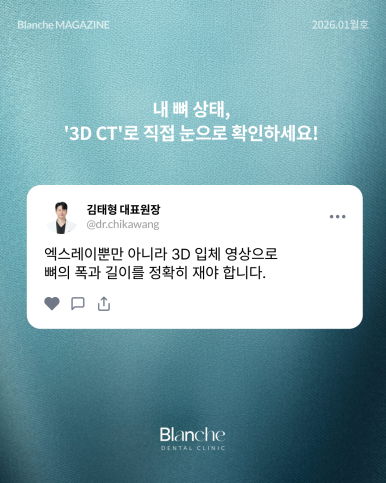
A 3D CT scan must be used to measure the bone thickness at the implant site in advance, in three dimensions.
When the patient also looks at the monitor together with the doctor and can visually confirm, “The area here is thin, so this much bone is needed,”
that is the process that helps remove doubts about overtreatment.
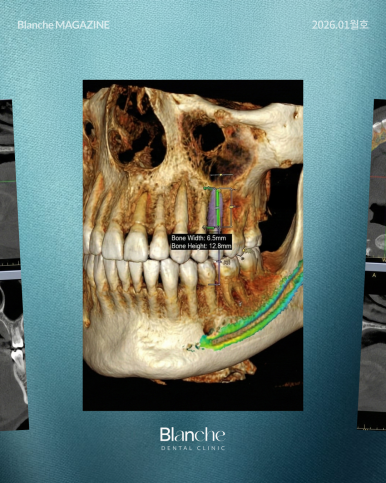
As emphasized in the video, if there is enough bone width to place an implant comfortably (for example, 6–7 mm or more)
but bone grafting is still strongly recommended, caution is needed.
Because bone grafting involves placing a foreign material into the body, the healthiest treatment is to do it only when absolutely necessary
and to proceed with the minimum amount needed.

If a tooth is extracted and left alone, the jawbone loses its role and gradually becomes thinner.
In such cases, the “foundation” for placing an implant becomes insufficient,
so bone grafting is more likely to be needed for a stable result.
Therefore, after tooth extraction, it is important to proceed without missing the proper timing,
which is the way to save both cost and time.

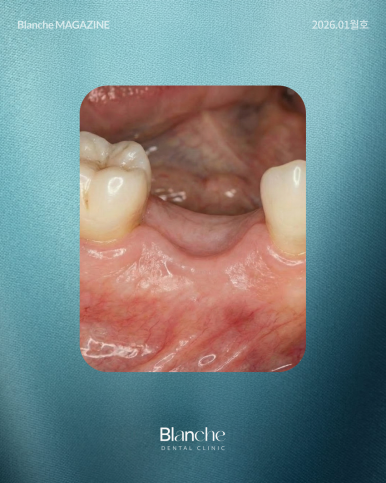
If a tooth had to be extracted because periodontal disease was severe and the tooth became loose,
there is a high chance that the surrounding bone has already been severely destroyed by inflammation.
In this situation, even if an implant is placed, the bone may not be able to support the screw sufficiently,
so the process of rebuilding the collapsed foundation through bone grafting becomes essential.

Blanche Dental Clinic does not add unnecessary bone grafting just to increase treatment costs.
We plan surgery in a way that uses the patient’s own bone as much as possible, and if bone grafting is
truly necessary, we explain the reason in a way the patient can understand through CT images.
We believe that an honest diagnosis determines the prognosis 10 years later.

Because implants are major surgery, it is important not to be swayed by cost
and to meet medical professionals who follow the “principles.”
We hope today’s information helps you make a wise choice.
If you are curious about the doctor’s sharper and more candid advice in the video,
check out the YouTube channel right now!


This post was compiled based on the content of a Blanche Dental Clinic YouTube video.