What Are the Insurance Coverage Criteria for Cavity Treatment Costs?
As the new year of 2026 begins and overall prices rise,
I think patients’ psychological burden about hospital bills
has also increased.
In particular, dentistry is one of the most representative fields where it is not easy for patients to predict treatment costs, because insured items covered by National Health Insurance and non-covered items coexist.
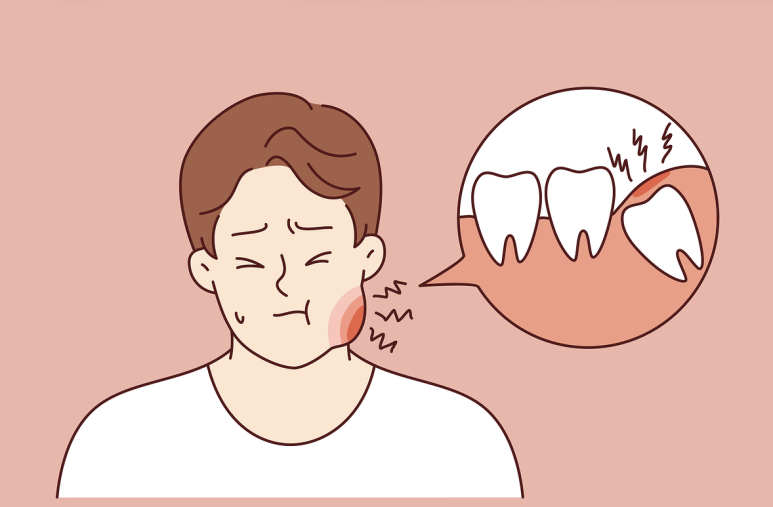
In fact, when I talk with patients in the consultation room,
they often say they delayed treatment not because they were afraid of pain, but because they were afraid of how much it would cost.
As a dentist, that is a very regrettable moment.
Early cavities can be treated very simply and inexpensively,
but if they are left untreated and damage the tooth’s nerve inside,
the cost and treatment time increase exponentially.
Today, I’ll explain the 2026 criteria for National Health Insurance coverage for cavity treatment costs,
as well as the costs themselves,
and the clear 기준 for material selection that many people worry about.
I hope this helps you make a reasonable treatment plan.
- Early cavity stage: take advantage of health insurance benefits
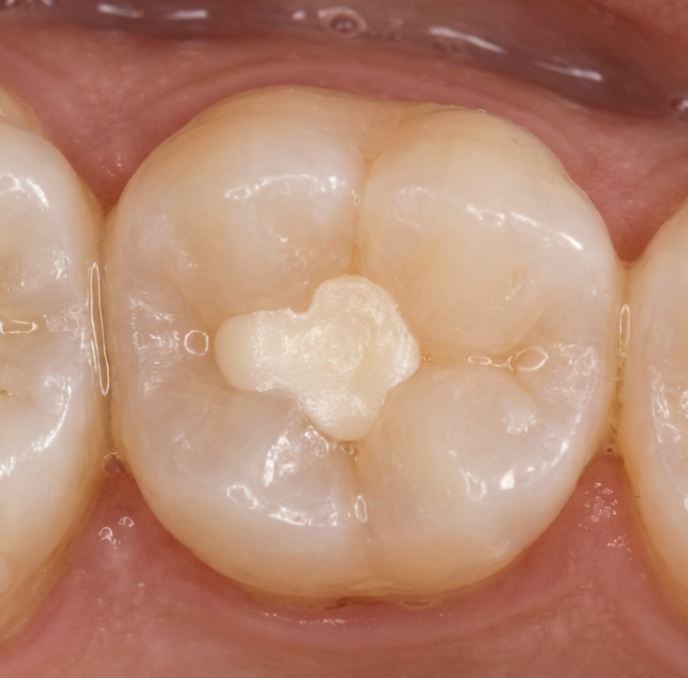
If the cavity is limited to the outermost hard layer of the tooth,
the enamel, it is treated at an early stage by simply removing the decayed area
and filling it with dental material.
At this point, insurance coverage depends on which material is chosen.
The first representative material covered by National Health Insurance is GI (glass ionomer).
Because this material is covered by the National Health Insurance benefits,
the financial burden is very small.
Although it varies depending on tooth location and area, the out-of-pocket cost is generally around KRW 10,000 to 20,000.
It is also relatively weak, so when used in molars that bear strong chewing force, it can wear down or break easily.
Therefore, it is often used for primary teeth, hard-to-see areas,
or as a temporary treatment.
(Insurance coverage by filling material)
| Filling material | Insurance coverage | Out-of-pocket rate | Applicable cases |
|---|
| Amalgam | ✅ Covered | 30% | All ages |
| Glass ionomer (self-cured) | ✅ Covered | 30% | All ages |
| Glass ionomer (light-cured) | ❌ Non-covered | 100% | - |
| Light-cured composite resin | ✅ Covered | 30% | Permanent teeth in children 12 and under |
| Standard resin | ❌ Non-covered | 100% | - |
- Please confirm the exact treatment cost through a dental examination.
Next is resin, the most widely used material.
Resin is a reinforced plastic material that is almost the same color as teeth,
so it has excellent aesthetics and a strong advantage in that it bonds chemically to the tooth,
allowing minimal removal of tooth structure.
For adults, resin treatment is a non-covered item that is not covered by National Health Insurance.
Although it varies by clinic, the cost is usually around KRW 100,000 to 150,000 depending on the size and difficulty of the cavity.
There is an important insurance benefit in 2026 that you should remember.
For cavity treatment of permanent teeth in children 12 years old and under,
resin is also covered by National Health Insurance.
With the out-of-pocket rate reduced to about 30%, treatment that previously cost more than KRW 100,000 can be received for about KRW 25,000.
If you have children, I recommend that you do not miss this benefit.
- Mid-stage cavity:
criteria for choosing inlay materials
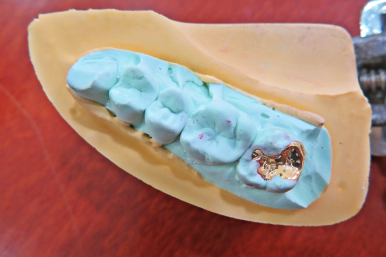
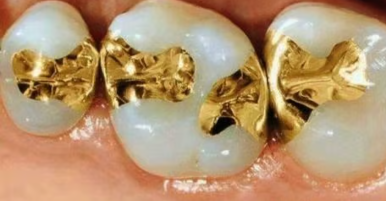
If the cavity has progressed into the inner dentin of the tooth,
or if it has formed on the adjacent surface between teeth,
treatment is difficult by simply filling the material directly inside the mouth.
This is because the cavity range is wide, so the material cannot withstand chewing force and there is a high risk that it will come off or break.
In such cases, after thoroughly removing the cavity, a precise impression is taken in the shape of the defect, and a hard restoration is fabricated outside the mouth and fitted in place. This is called inlay treatment. Inlay is a non-covered treatment, and costs and characteristics vary depending on the material.
What patients most often worry about here is whether to choose gold or tooth-colored material (ceramic/resin).
[Partially filling treatment: inlay selection guide]
First, if only one side is decayed, I recommend a gold inlay. If the cavity is only on one side of the adjacent surface between teeth, gold is a good choice.
Gold has ductility, meaning it stretches, so it fits the tooth without gaps and withstands chewing force well, making it highly durable.
Second, if both sides are decayed or the affected area is wide, I recommend a tooth-colored (ceramic/resin) inlay.
If a large cavity is filled with hard gold, the gold can act like a wedge when chewing and may instead increase the risk of the remaining tooth cracking.
On the other hand, tooth-colored inlays bond chemically to the tooth, so even in larger areas they can help support the tooth and reduce the risk of fracture.
- Late-stage cavity:
choosing materials for root canal treatment and crowns
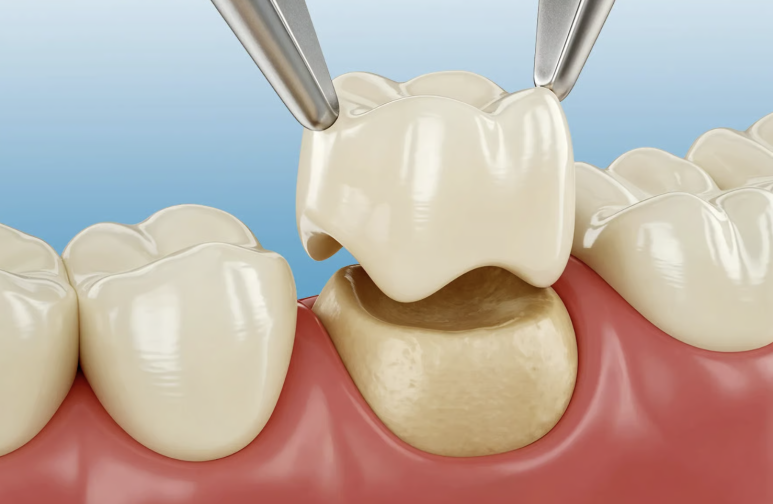
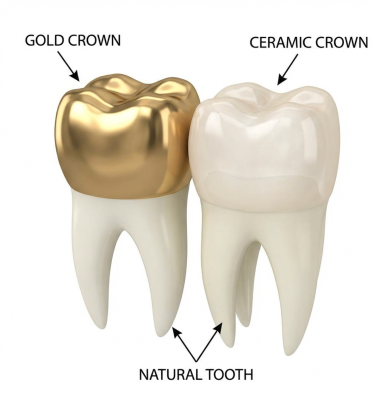 A cavity that invades the pulp, the nerve tissue inside the tooth, causing severe pain, or a case where much of the crown portion of the tooth has broken away, requires root canal treatment, the final step to save the tooth.
Root canal treatment itself is a covered item under National Health Insurance.
It costs about KRW 20,000 to 30,000 per visit,
and usually requires 3 to 4 visits.
However, crown treatment, which covers the weakened tooth after root canal treatment to protect it, is a non-covered item.
You may also be debating between crown materials such as gold and zirconia.
Here are the selection criteria depending on the situation.
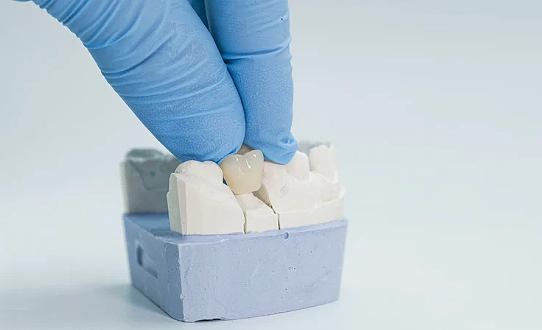 [Full coverage treatment: crown selection guide]
First, if the tooth has already had root canal treatment, I recommend zirconia.
Reason 1 (aesthetics): A gold crown can look shiny when you open your mouth, which may be unpleasant.
Zirconia is very similar in color to natural teeth, so it looks natural. It is especially recommended for lower molars because they are visible when speaking.
Reason 2 (hygiene management): Plaque and tartar surprisingly adhere more easily to gold crowns.
On the other hand, zirconia has a smooth surface, so less tends to stick, which is advantageous for gum care.
Second, if the tooth has not had root canal treatment, a gold crown may be worth considering.
Reason: To make a zirconia crown, the material’s characteristics require a certain amount of tooth reduction to secure thickness.
On the other hand, gold is strong even when made thin, so it can minimize tooth reduction.
Strategy: If you want to try saving the tooth without root canal treatment,
placing a gold crown, which requires less tooth reduction, and then observing the progress can be a good strategy that increases the chances of preserving your own tooth.
- Advice for reasonable treatment

The cost of dental treatment does not simply include the visible material cost.
It includes the medical staff’s skilled technique, careful diagnosis, and thorough aftercare system.
In particular, prosthetic treatments such as inlays and crowns become part of your body that must be used for as little as 5 years and as long as 10 years or more once they are made.
Therefore, while immediate cost is important, in the long run it is more cost-effective to choose the material most suitable for your tooth condition and to meet a clinician who performs the procedure meticulously.
Even with the same resin treatment or the same crown,
results can vary depending on how the treatment is performed.
Rather than chasing only the lowest price, please make sure to check whether the clinic provides care without overtreatment and treats your teeth as carefully as they would treat their own family.
Closing remarks
Today, I shared the 2026 cavity treatment costs and National Health Insurance coverage criteria, along with material selection tips by situation.
Teeth do not heal naturally.
The longer you wait, the greater the pain and cost become.
If you are currently experiencing tooth pain or it has been a long time since your last exam,
I encourage you to gather your courage and visit a dental clinic.
This has been Gangnam Blanche Dental Clinic. Thank you.


Medical law compliance and notice This post was written directly by Blanche Dental Clinic for the purpose of providing information about cavity treatment costs and health insurance. The above content reflects general dental treatment standards, and actual costs and treatment plans may vary depending on the patient’s oral condition and level of difficulty. All procedures may involve side effects such as temporary pain after treatment, sensitivity, crown detachment, and fracture, so please make your decision after sufficient consultation with the medical staff.