Do you really need bone grafting for a molar implant?
Among patients who come in for implant consultations after losing a molar, many are told that bone graft surgery is needed because the upper jaw bone is insufficient, and they feel worried.
It is already uncomfortable to be missing a tooth, but hearing that the gum bone is also lacking can make you worry about whether the surgery will become too extensive and how much pain or cost burden there will be.
In particular, the upper molar area is a region where bone deficiency is common due to its anatomical structure.
Today, Blanche Dental Clinic will explain in an easy-to-understand way why bone grafting is often needed for molar implants, as well as the actual surgical process, pain, and approximate treatment period.
Why is bone grafting needed for upper molars?


It is very common during implant consultations to be told that there is insufficient bone in the upper molar area.
This is not usually due to a patient’s poor care, but rather to the structural characteristics of our face.
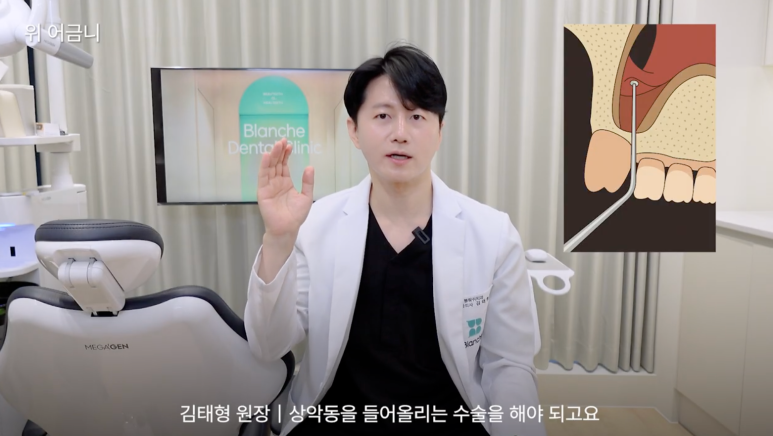
Inside the cheekbone area, there is an empty air pocket called the maxillary sinus.
This pocket is connected to the nose and allows air to pass in and out. Over time after a tooth is lost, the gum bone gradually resorbs and becomes thinner, and the air pocket above it descends downward.
As a result, the thickness of the gum bone where the implant must be placed becomes as thin as paper, making placement impossible.
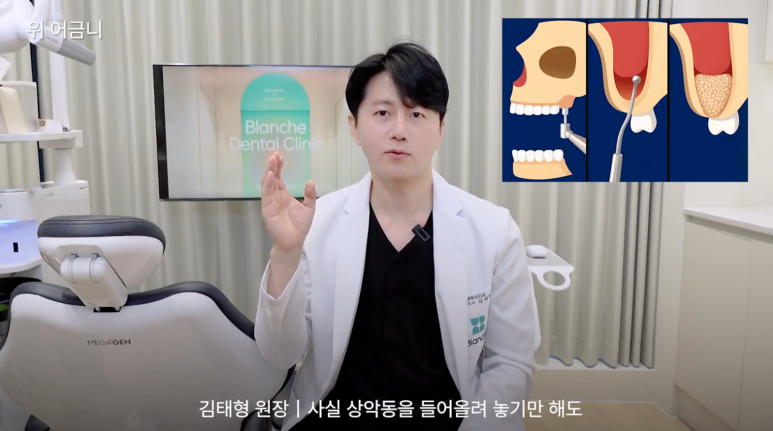
At this point, the thin membrane of the descended air pocket must be carefully lifted upward, and bone graft material must be filled into the empty space to secure enough height for implant placement.
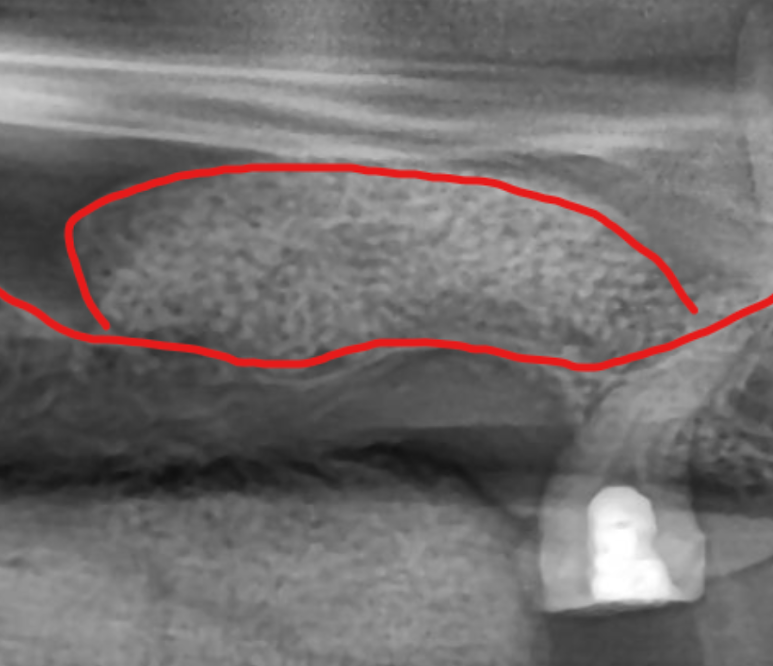
The bone after being filled in white
This is called sinus lifting, and it is a procedure necessary for successful implant placement.
If this step is skipped and the implant is placed forcefully, the implant may penetrate the air pocket, cause inflammation, or fail to gain stability, leading to loosening or falling out.
Therefore, laying a solid foundation is more important than anything else.
The bone graft procedure and pain
The words “making bone” can feel frightening.
However, with recent advances in dental technology, discomfort during the procedure has been greatly reduced.
First, precise diagnosis
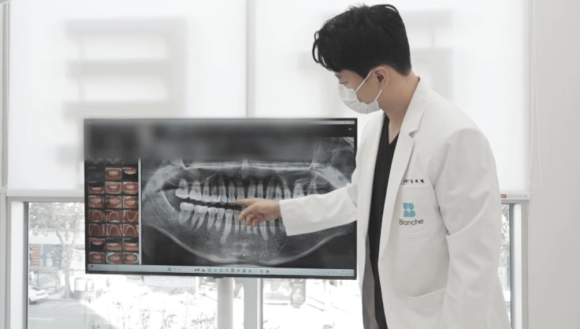
Through 3D CT, the remaining bone thickness is measured accurately, and the location of the nerve canal is identified to plan a safe placement path.
Understanding the bone density and width in advance helps shorten surgery time and improve accuracy.
Second, securing space and bone grafting
After making a minimal incision in the gum, space is secured where the implant will go.
At Blanche Dental Clinic, a water-pressure method may also be used to reduce physical impact.
Using special equipment, the thin membrane is lifted with the gentle pressure of water. Compared with the old method of striking the bone with a hammer, this can help reduce the vibration and impact felt by the patient.
The secured space is carefully filled with verified, genuine bone graft material.

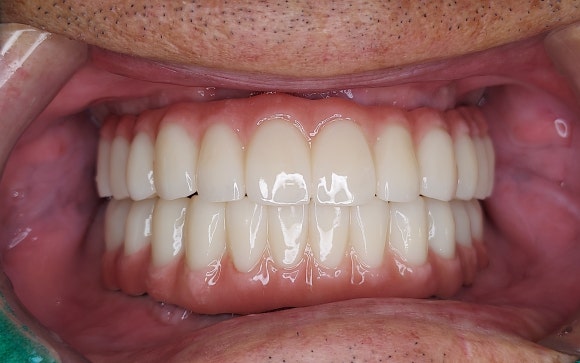 Third, implant placement
The implant is placed at the same time as the bone graft, or after waiting for the bone to harden.
This depends on the patient’s initial stability.
As for pain, because local anesthesia is sufficient during surgery, you will almost not feel any pain.
You may feel a slight sting when the anesthetic injection is given, and during the procedure you will only feel some pressure or vibration.
After the anesthesia wears off, there may be some throbbing or swelling, but this can usually be controlled well with the prescribed painkillers and ice packs.
There is no need to worry too much.
✅ Before getting bone grafting, make sure you understand this and visit the clinic!
Treatment period and cost differences
Molar bone graft implant treatment usually takes longer than a standard implant.
This is because the grafted artificial bone needs time to fuse firmly with the patient’s own bone.
In general, lower jaw implants take about 2 to 3 months because the bone is dense, but when upper molar bone grafting is involved, it may take 4 to 6 months or more depending on the bone condition.
If a prosthetic restoration is placed before the bone has become sufficiently firm, the implant may loosen or fall out, so enough waiting time is necessary.
During this period, temporary teeth and similar measures are used to reduce inconvenience in daily life.
The cost is also generally higher than that of a standard implant.
This is because it includes the cost of the advanced sinus lifting procedure, as well as the large amount of bone graft material and related materials needed to build bone.
Rather than looking only for the cheapest option, it is important to carefully check the medical team’s experience with this procedure and whether genuine materials are used.
Preventing the need for reoperation is the most economical approach.
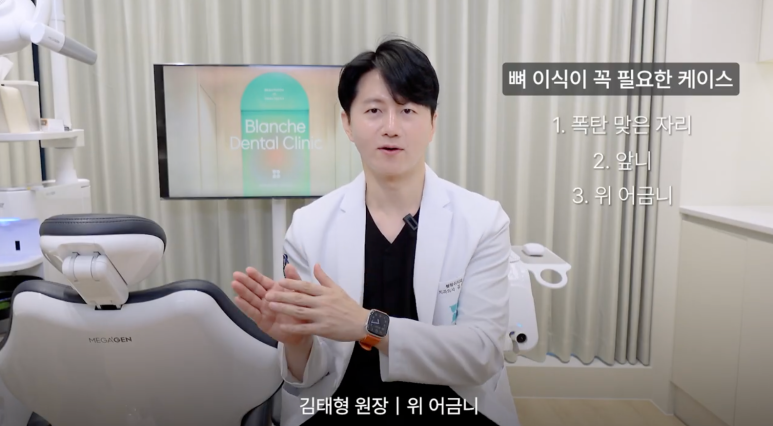
Loss of a molar can lead to reduced chewing function, which in turn may cause indigestion and nutritional imbalance.
Even if you have been told that implants are difficult because of insufficient gum bone, bone grafting can restore function sufficiently.
The important thing is to accurately diagnose the current bone condition and establish a safe surgical plan suited to it.
Rather than postponing treatment out of vague fear, we recommend visiting a dental clinic and having a consultation with the medical staff.
If you have any questions, feel free to leave a comment anytime!
This was Gangnam Blanche Dental Clinic. Thank you.
✅ The implant essentials explained by a dentist who has placed 30,000 implants


Medical law compliance and information notice: This post was written directly by Blanche Dental Clinic for the purpose of providing information about molar implants and bone grafting. Implant procedures may vary in treatment period and results depending on an individual’s gum bone condition, the presence of systemic diseases (such as diabetes, hypertension, and osteoporosis), and smoking status. Side effects such as postoperative bleeding, pain, sensory abnormalities, and infection (sinusitis) may occur, so please make a careful decision after sufficient consultation with the medical staff.