Hello.
Blanche Dental Clinic is where your smile becomes a work of art.
When you hear that a cavity is deep, it can be frightening.
You may also be recommended a 'crown' treatment, which involves filing down the tooth overall.
However, since a tooth that has been filed down once does not regenerate, it is very important to consider how much of the natural tooth can be preserved before deciding on treatment.
Today, we’ll explain the smart treatment criteria for preserving your natural teeth.

Anyone feels tense when sitting in the dental chair and hearing the sound of dental tools.
Patients become especially worried when they are told that even parts that seem fine need to be filed down.
The question, "Do I really need to have this much removed?" is a very healthy doubt to have in order to protect your precious teeth.
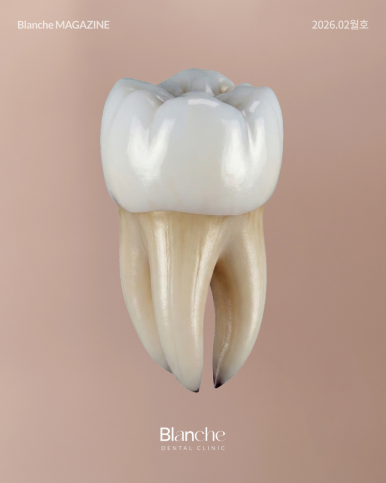
People often mistakenly think that crowns protect teeth and help them last longer.
But teeth are strongest and most resilient when their original structure is intact.
Rather than forcibly filing down the entire tooth and covering it with a crown, carefully restoring only the damaged area and maintaining the natural strength of your tooth is the key to extending its lifespan.
If a crown is like a hat that covers the entire tooth,
inlays and onlays are like a puzzle that fills in only the necessary parts.
Even if the cavity is deep, if enough of the tooth wall remains, treatment can still be done without filing down the entire tooth.
Please consult thoroughly with your dental team about ways to preserve even 0.1 mm more of your natural tooth.
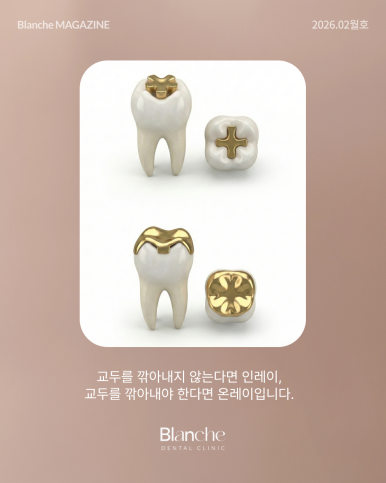
An important factor in deciding whether a crown is needed is the amount of tooth that remains.
If there are enough tooth walls left to withstand chewing force, inlays or onlays can also provide sufficient strength.
Rather than automatically choosing a crown, the priority is to receive an accurate diagnosis of the current structural condition of your tooth.
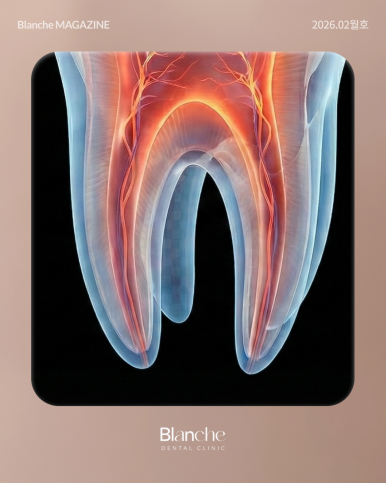
Inside our teeth are nerves and blood vessels that respond to external stimuli and receive nourishment.
The more a tooth is filed down, the weaker these natural functions can become.
Through conservative treatment, preserving as much of your natural tooth as possible is more than just saving money.
It is the most valuable investment for using your own teeth for a lifetime.
Even if the cavity is deep, there is hope if it has not reached the nerve.
If root canal treatment is needed, the tooth must be filed down overall and covered.
However, if the nerve can be preserved, treatment may be completed with a partial restoration.
If the pain is not very severe, it is best to first check whether the nerve can be protected and treated with a conservative approach.
When the tip of a tooth chips due to a sudden impact, people often panic and immediately think of a crown.
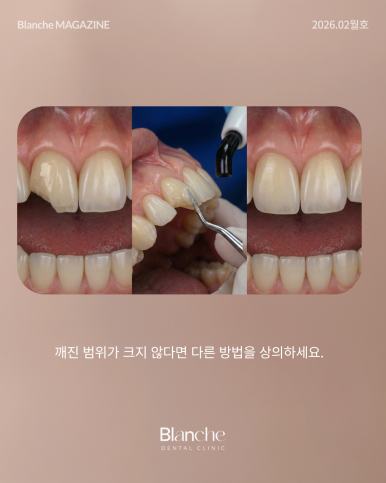
But if the chipped area is not large, the damaged part can also be precisely made and bonded back, restoring both aesthetics and function.
The most natural results come when the effort to preserve as much of your own tooth as possible is part of the process.
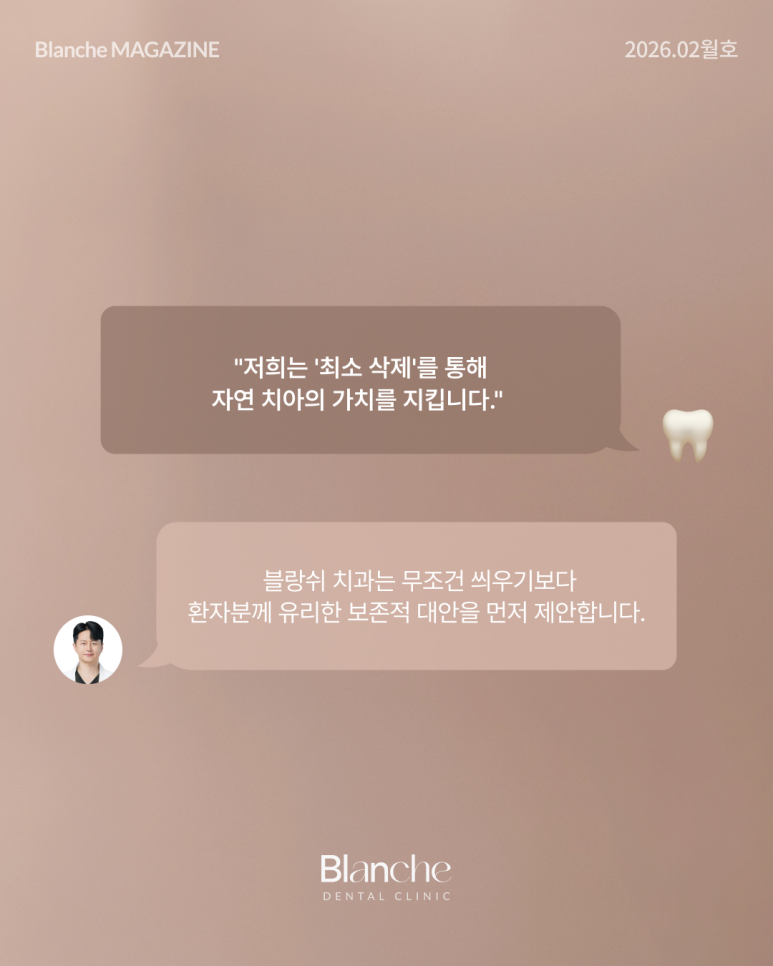
Blanche Dental Clinic chooses the more difficult path of preservation over the easier path of removal.
By closely analyzing the patient’s X-rays and oral photos, we honestly guide them on whether a crown is truly necessary or whether a partial restoration would be enough.
Our core goal is for patients to still be able to enjoy delicious meals with their own teeth 10 years from now.
That is the essence of the care we aim to provide.
We hope this information has helped ease some of your vague fears about dental treatment.
When choosing a treatment, ask one more time: "Is this the method that can save as much of my tooth as possible?"
That question will be the starting point for protecting your precious teeth.
If you’re curious about the more in-depth advice from the doctor in the video, check it out now!

This article was compiled based on a YouTube video from Blanche Dental Clinic.