Doctor, another clinic said I need to have this tooth removed.
If I get an implant, it will cost several million won, so honestly I can’t even bring myself to consider it.
Hello, I’m Kim Tae-hyung, chief director of Blanche Dental Clinic. When I counsel patients about implants, I hear this question very often.
Losing one’s own tooth is regrettable for anyone, and when you add the cost of an implant, it’s only natural to feel overwhelmed.
But as a dentist, I can tell you this: extraction does not necessarily mean an implant.
If the conditions are right, there is another option called “tooth transplantation,” where your own tooth is moved and transplanted.
Today, I’ll explain what tooth transplantation is, under what conditions the success rate is high,
and how it differs from implants, organized in the same way I explain it in the clinic.

Tooth transplantation, simply put, is like “repotting a plant”
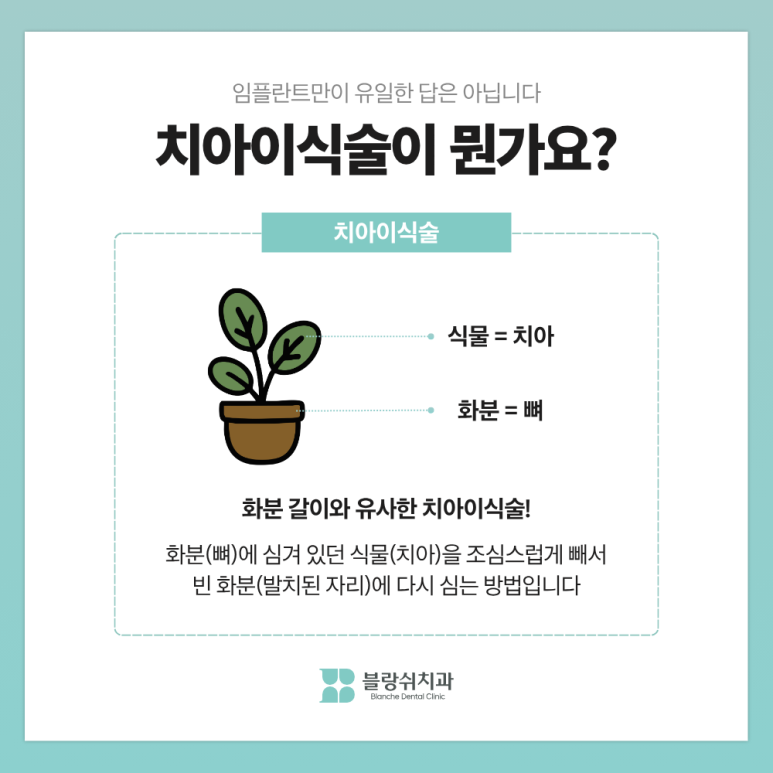
Tooth transplantation (Autotransplantation) is literally a procedure in which your own tooth is removed from one place and transplanted into another.
In an analogy, it’s similar to repotting a plant.
You carefully take the plant (tooth) out of the pot (bone) it was growing in, and then replant it in an empty pot (the extracted tooth socket).
Because it is moved while the root is still alive, if the procedure succeeds, it can take root again in the new location and function as your own tooth.
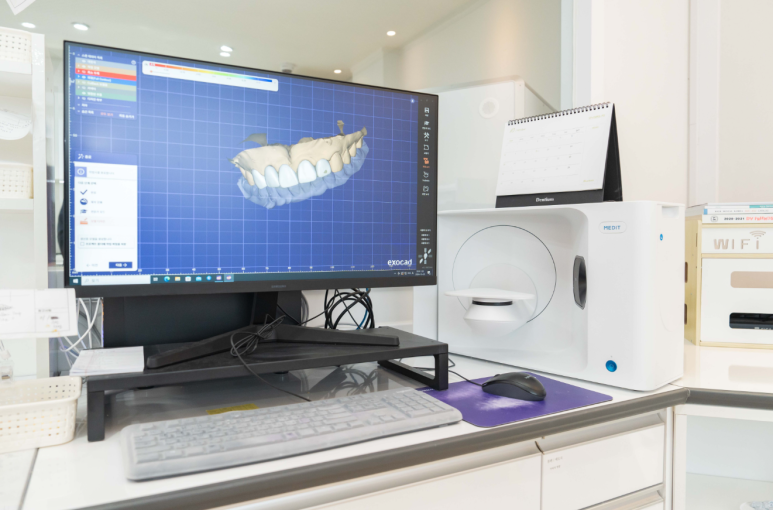
Even the best implant is still an artificial structure.
But with tooth transplantation, the periodontal ligament of your own tooth—the thin membrane surrounding the tooth root—
stays alive, so the chewing sensation is very close to that of a natural tooth.
It is also an extension of the “preserve natural teeth” principle that I always emphasize.
Then can anyone do it? 3 key conditions that determine the success rate
To be honest, tooth transplantation is not something I recommend to just anyone.
The conditions must be right for the success rate to be high, and if they are not, an implant may actually be the better choice.
Let me tell you the three conditions I check first when looking at a patient’s X-ray.
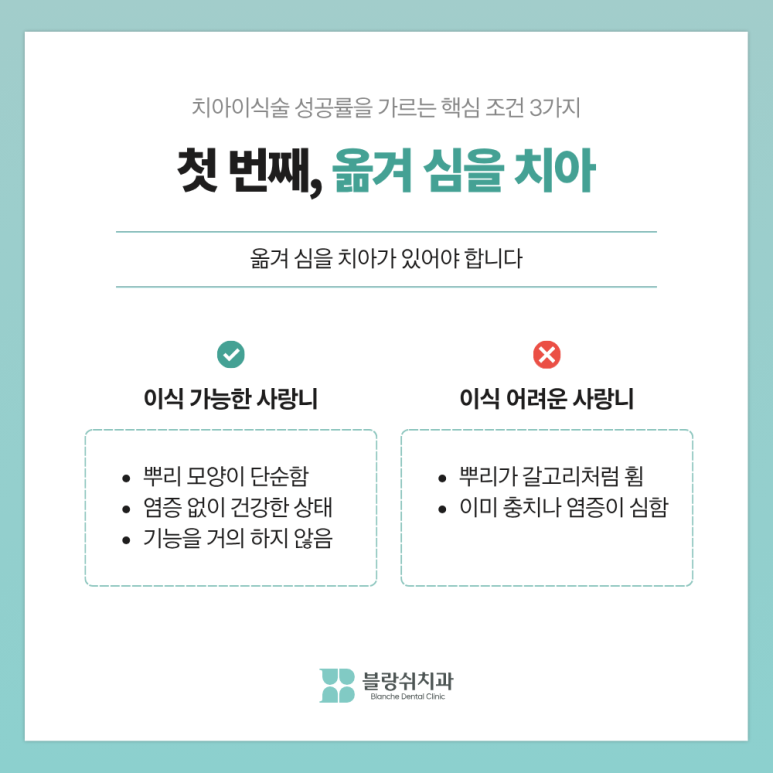
The first: there must be a tooth to transplant
It may sound obvious, but this is the key point. Usually, a wisdom tooth that is not being used functionally is the most common candidate.
If the wisdom tooth has a simple root shape and is healthy without inflammation, it becomes an excellent transplantation candidate.
On the other hand, if the wisdom tooth root is bent like a hook or has severe decay already, transplantation itself becomes difficult.
What I notice during treatment is that many people say, “Don’t wisdom teeth have to be removed no matter what?”
But if a wisdom tooth is not causing problems right away, I usually tell patients not to remove it carelessly and to leave it in place.
It may become a valuable “spare part” that can later be used for transplantation.
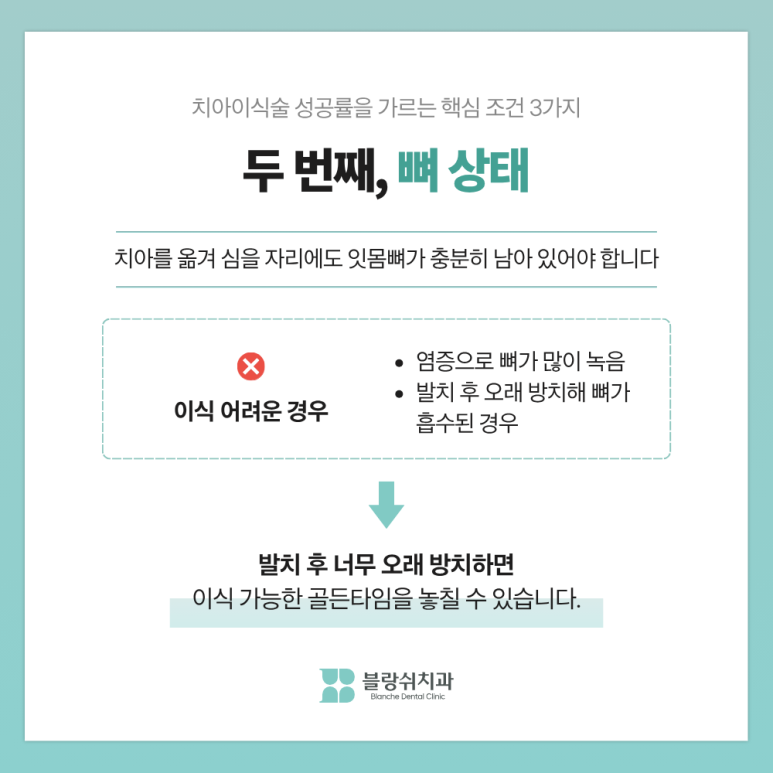
The second: there must be enough bone in the receiving site
Just as a plant needs enough soil in a flowerpot to take root, there must be enough jawbone left in the area where the tooth will be transplanted.
If bone has been severely lost due to inflammation, or if a long time has passed after extraction and the bone has resorbed, the success rate of transplantation drops.
So timing is actually important.
If too much time passes after extraction is decided, the bone in that area gradually decreases,
so you may miss the golden window when transplantation is still possible.
A single 3D CT scan can immediately show how much bone remains and whether transplantation is possible.
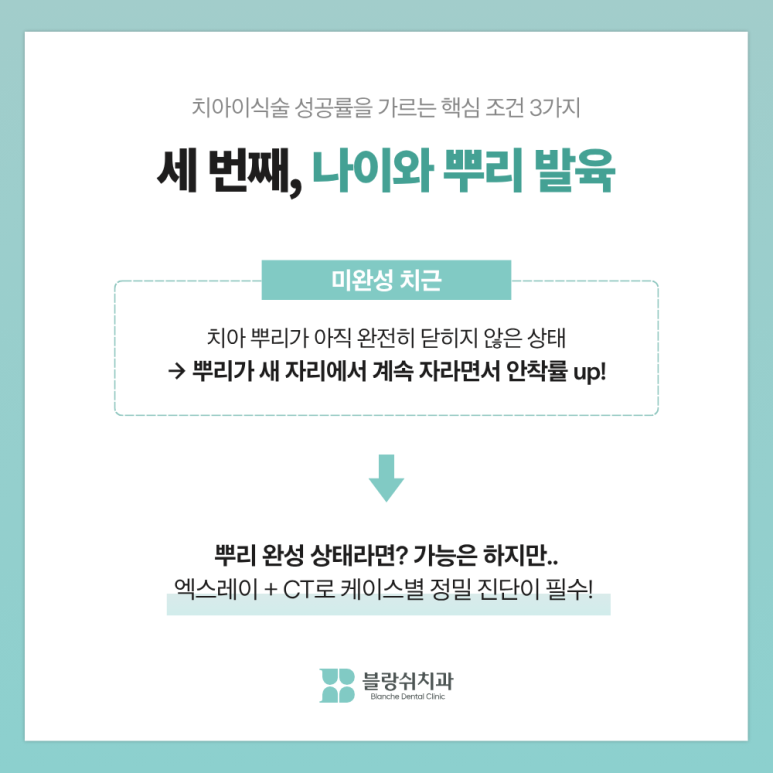
The third: age and the stage of root development
Tooth transplantation has a particularly high success rate for patients in their late teens to their 20s.
If the tooth root is still not fully closed—in technical terms, when there is an “open apex”
—transplantation can allow the root to continue growing in the new location, raising the success rate to over 90%.
Of course, adults can also undergo it. However, if the root is already fully developed,
root canal treatment may be additionally needed after transplantation, and the success rate may be somewhat lower.
That is why each case must be assessed precisely.
For this part, it is most accurate when I explain it directly while looking at the X-ray and CT together.
Which is better compared with an implant?
I get this question every week as well. To be clear from the start, there is no answer that is always the best.
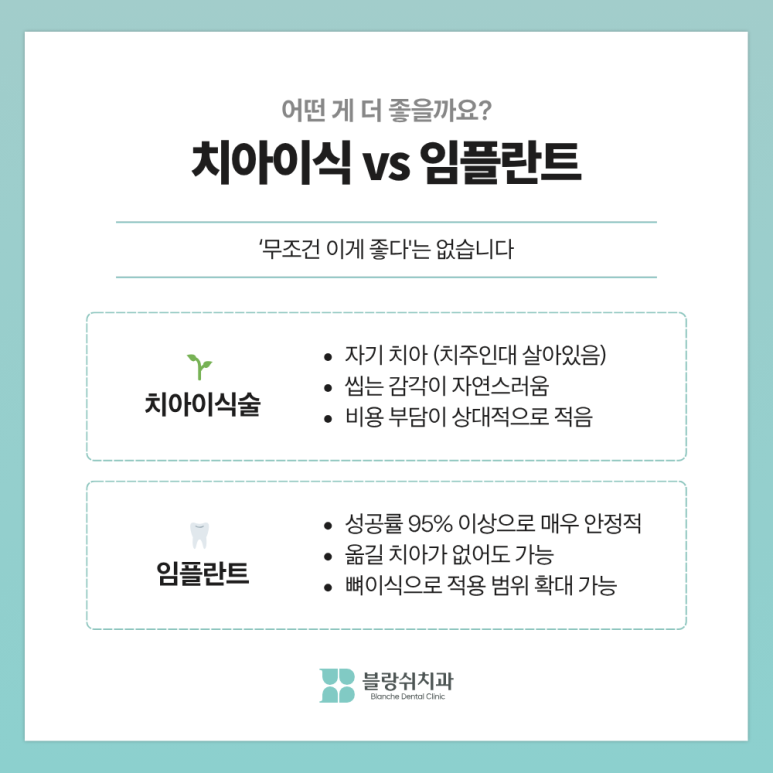
The biggest advantage of tooth transplantation is that it is your own tooth.
Because the periodontal ligament is alive, the chewing sensation is natural, and the connection with bone is qualitatively different from an implant.
It is also less burdensome in terms of cost compared with implants.
On the other hand, implants are very stable, with success rates of over 95% when the conditions are right, and they do not require a tooth to transplant.
Tooth transplantation requires all three conditions mentioned above to align perfectly, but implants can be applied more broadly through procedures such as bone grafting.
Based on verified brands such as Straumann and Osstem, Osstem implants are available from the 790,000 KRW range,
and the price may vary depending on your individual oral condition.
My principle has always been, “Let’s save any tooth that can be saved until the very end.”
So if transplantation conditions are met, I first consider transplantation, and if they are not, I suggest the most reliable method with an implant.
Whichever option it is, I personally handle the diagnosis and surgery from start to finish, so there is no change in the doctor in charge halfway through.
If hearing that a tooth needs to be extracted weighs on your mind, please check once
When most people are told they need an extraction, they immediately start searching for implant costs,
but it is a good idea to pause for a moment and also check whether transplantation is possible.
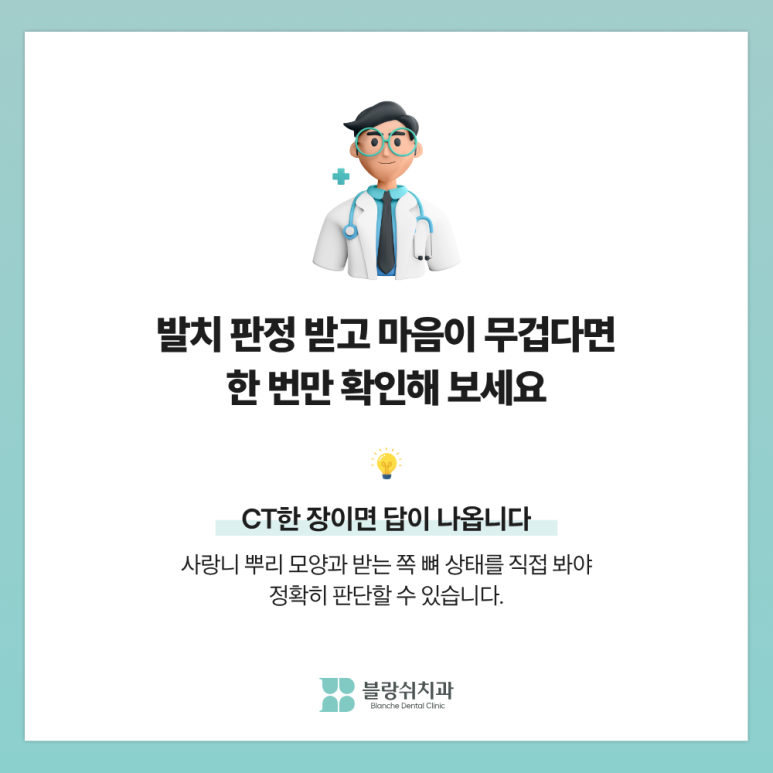
The wisdom tooth condition, the bone condition, and the root development stage can all be answered with a single CT scan.
Whether transplantation is possible or not is an area that can only be judged by directly looking at the wisdom tooth root shape and the bone condition on the receiving side. A single CT scan provides the answer, so I’ll check it myself and explain it to you.

I’ll personally check and explain whether it is a case suitable for transplantation or a case better suited for an implant.
Please feel free to ask any questions in the comments or by phone.
This was Banpo Blanche Dental Clinic. Thank you.
✅ Related posts you may want to read