"Doctor, if I have to get root canal treatment, the cost...
I’ve heard some people say it’s covered by insurance and others say it isn’t...
I’m Kim Tae-hyeong, chief dentist at Blanch Dental Clinic.
I see cavity patients several times a day, and many people subtly seem confused about the cost of root canal treatment for cavities.
Even as a dentist, I used to find it very confusing, so it’s only natural that patients ask about it. Haha..
Because covered and non-covered items can be mixed together within a single tooth, there are quite a few cases where people say, after root canal treatment for a cavity, "It’s more expensive than I expected." You can’t really see this structure just by searching the internet.
Also, when I looked things up, there were many cases with only strange statements written there..
Let me say this plainly as a dentist.
Even with the same cavity, depending on the stage at which it is treated, it may end with an insurance-covered treatment, or it may move on to a non-covered treatment costing several hundred thousand won.
Today, I’ll organize where that boundary lies, in the same way I explain it directly to patients who come in for cavity root canal treatment without knowing anything about health insurance.

- Root canal treatment itself is covered by health insurance

First, let’s clarify the part that causes the most confusion. Root canal treatment, more precisely called endodontic treatment.
This treatment itself is a health insurance benefit item. There is no age limit, and insurance applies whether the patient is an adult or a child.
At a dental clinic, the out-of-pocket cost per visit is about 10,000 to 15,000 won. Usually, treatment proceeds over 3 to 4 visits per tooth, so if you look only at the root canal treatment itself, the total comes to about 30,000 to 70,000 won.
Simply put, root canal treatment is the process of removing the infected nerve inside the tooth, disinfecting it, and then filling it back in. You can think of it like hollowing out the inside of a spoiled fruit, cleaning it thoroughly, and filling it again. Up to this point, charges are billed according to the government-set fee schedule, so there is not much difference from one clinic to another.
- The problem is what comes next: the crown
Many people who undergo root canal treatment say, "That was cheaper than I expected," and are surprised at the next stage.
A tooth that has finished root canal treatment is structurally very weak because the inside is hollow.
So in most cases, a crown, meaning a prosthetic restoration placed over the tooth, must be used to protect it.
This crown is non-covered. Health insurance does not apply. A zirconia crown generally costs around 400,000 to 700,000 won, and a gold crown generally costs around 450,000 to 600,000 won. It can vary depending on the individual oral condition, but this is the commonly known range.
What I feel from seeing countless cases in the clinic is that the amount patients think of as the "root canal treatment cost" usually includes this crown cost. If you say, "I spent 400,000 won on one tooth for root canal treatment," more than 90% of that is actually the crown cost.

In fact, among the people who hear these prices, about two or three out of ten ask,
"Do I really have to put a crown on it? Can’t you just fill it?" This is a very common question.
For areas that do not receive much chewing force, such as the front teeth, it may be possible to finish with resin depending on the case.
But molars are the area where force equivalent to body weight is concentrated during chewing.
If you use a tooth after root canal treatment without a crown and it splits vertically, then you’ll have to proceed to extraction and even an implant.
You end up spending millions of won trying to save tens of thousands.
- By cavity stage: what is covered and what is not

Let me summarize the entire cavity treatment process at a glance.
This is the content I draw out and explain directly to patients in the treatment room.
Early cavities (damage limited to the enamel) are treated by filling with resin or amalgam.
Amalgam and GI (glass ionomer) are covered by health insurance for all age groups.
However, the composite resin most commonly used these days is non-covered for adults.
Insurance applies only to permanent teeth in children aged 12 or younger, and the out-of-pocket share is about 30%.
Adult resin is non-covered and costs about 100,000 won for posterior teeth and about 150,000 to 200,000 won for anterior teeth. It can vary depending on the individual oral condition.
Mid-stage cavities (invasion into dentin) move on to inlays or onlays.
From this stage on, everything is non-covered. A ceramic inlay generally costs around 350,000 won.
Severe cases or beyond (when the nerve is involved) follow the structure I mentioned earlier: root canal treatment (covered) + crown (non-covered).
Combined, this comes to 400,000 to 700,000 won or more per tooth.
If a tooth that has already had root canal treatment develops another problem and needs retreatment, the cost is in the 300,000 to 600,000 won range, and it is non-covered or only partially covered. That is because additional steps are needed to remove the existing filling material and clean the inside again.
🏁 Cavity treatment costs & insurance coverage at a glance by stage
| Category | Treatment method | Health insurance coverage | Estimated out-of-pocket cost |
|---|
| Early cavity (enamel) | Amalgam / GI | ✅ Covered | 10,000–30,000 won |
| Early cavity (enamel) | Composite resin (adult) | ❌ Non-covered | 100,000–200,000 won |
| Mid-stage cavity (dentin) | Ceramic inlay / onlay | ❌ Non-covered | Around 350,000 won |
| Severe cavity (nerve involvement) | Root canal treatment | ✅ Covered | 30,000–70,000 won |
| Severe cavity (nerve involvement) | Crown (zirconia) | ❌ Non-covered | 400,000–700,000 won |
| Retreatment | Retreatment + crown | ⚠️ Limited | 300,000–600,000 won+ |
📌 "The main items covered by health insurance for adult cavity treatment are amalgam, GI, and root canal treatment."
📌 Since non-covered fees vary from clinic to clinic within the normal market range, you should receive a separate explanation when you visit.
- If you delay it, a covered treatment can turn into a non-covered one

There is one moment that is especially unfortunate while treating cavities every day.
A tooth that could have been finished with just one resin filling if the patient had come six months earlier,
arrives after being delayed and delayed until it now needs root canal treatment and a crown.
It takes surprisingly little time for a treatment costing a few tens of thousands of won and covered by insurance to turn into a treatment costing several hundred thousand won and not covered by insurance.
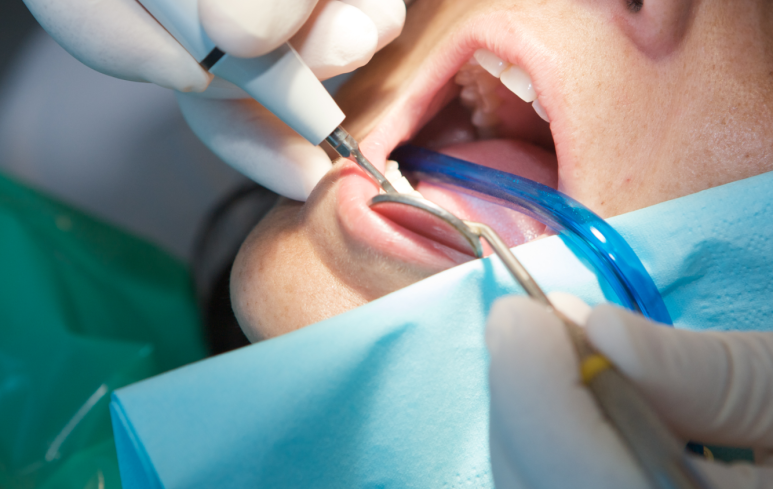
Cavities progress from enamel to dentin, and from dentin to the nerve, without any warning.
In particular, interproximal cavities that form between molars are not visible to the naked eye, so people often do not know about them until it hurts.
With just one X-ray, even hidden cavities can be checked immediately,
but by postponing that one exam, the scope of treatment and the cost both increase.
If you’re curious about the differences between crown materials, please refer to this post as well.
In closing

"My tooth doesn’t hurt, but there’s a problem?" I hear this at least once a day.
Many people always ask defensive questions because they worry about unnecessary treatment.
I understand that very well too, so I try to answer as accurately as possible.
To be blunt, when a cavity hurts, it is highly likely that it has already reached the nerve.
If it is caught before it hurts, it can end with a treatment covered by insurance, but when people come in only after it hurts, in most cases it has already moved into the non-covered range.
Which crown to choose after root canal treatment, and what stage your cavity is at, are things that can only be determined by seeing it directly. If you have any questions, feel free to ask via comment or phone call. I will check it myself and give you the most honest answer.
This was Gangnam Blanch Dental Clinic. Thank you.
✅ Other helpful posts to read