“Doctor, when I got scaling done somewhere else before,
I was told that I might need to have one tooth placed.
Is that an implant?.. Do I need that too? I’m still in my 20s…”
Hello, I’m Kim Tae-hyung, the chief director of Blanche Dental Clinic.
People often mention this casually when they come in for scaling or a checkup.
They heard about implants at another dental clinic, and at the time they left saying, “Okay, got it,”
but inside they were half skeptical, thinking, “What kind of person in their 20s needs an implant?”
So they didn’t intentionally make an implant consultation appointment, but they ask just in case while they’re here for scaling.
Since none of their friends have had implants, they wonder if they’re the only one going through this,
and when they search online, most of the information is about people in their 40s and 50s, so it’s hard to find information that fits their situation.
As a dentist, I’ll be honest: implants in your 20s are actually something that needs to be decided even more carefully than for older patients. Today, I’ll organize why people end up needing implants in their 20s, and the practical things you should know if you get one at a young age.

Why would someone in their 20s need an implant?
You may think, “I’m young—surely there wouldn’t already be a reason to lose a tooth?”
But in the clinic, the causes of implants in people in their 20s can be broadly divided into three categories.
First, wisdom teeth or severe decay in a molar. This is when decay has been left untreated for so long that even root canal treatment can no longer save the tooth. Many people in this case are those who didn’t go to the dentist while they were students and only came in after starting work.
Second, trauma. This includes cases where a tooth is knocked out or the root breaks due to a collision during sports or an accident. Especially with front-tooth trauma, we see quite a few cases in people in their 20s.
Third, congenital absence. These are people who were born with a missing permanent tooth. Often a baby tooth holds on until the 20s and then starts to become loose, prompting a visit.

Whatever the cause, the common reaction from patients in their 20s is, “Am I the only one?”
Absolutely not. More people in their 20s than you might think come to the consultation room with the same concern.
Implants in your 20s vs. your 40s and 50s: the conditions are this different
Even for the same implant, the conditions can differ quite a bit depending on age.
People in their 20s often feel vaguely scared, but in fact there are definitely some advantages.
| Category | 20s | 40s–50s |
|---|
| Jawbone condition | High bone density and abundant volume | Decreased bone density, often with ongoing resorption |
| Likelihood of needing bone grafting | Relatively low | Relatively high |
| Osseointegration speed | Fast (active blood circulation) | Relatively slow |
| Recovery after surgery | Less swelling and pain, faster recovery | Longer recovery period needed |
| Service life | Needs to last 50–60 years | Used for 20–30 years |
| Prosthetic replacement | May need replacement 1–2 times | Higher chance of going without replacement |
| National health insurance | Not covered (only for age 65 and older) | Not covered (only for age 65 and older) |
From the perspective of someone who performs implant surgery every week, even in the same area, patients in their 20s clearly have less swelling or pain after surgery and recover noticeably faster. Since their bone condition is good, there is also a higher chance that the implant can be placed right away without bone grafting. This is a clear advantage for younger patients.
However, as you can see in the table, if you get an implant in your 20s, you’ll need to live with it for the next 50 to 60 years. Since the average lifespan of the prosthetic part (the crown) is about 15 to 20 years with proper care, there is no guarantee that you’ll never need any work done on it in your lifetime. That’s why, for implants in your 20s, “what brand you place” matters much less than “what kind of design you place it with.”
How much do implants in your 20s cost, realistically?

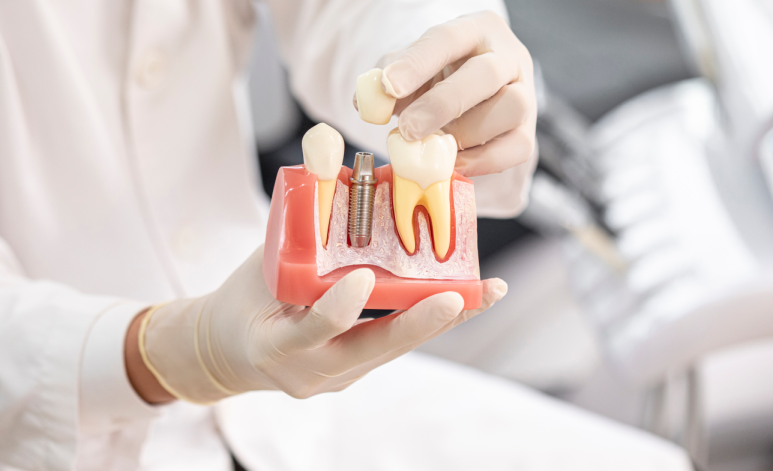
I’ll be honest about the cost as well. Implant costs vary depending on the brand and whether bone grafting is needed, but to give a general range: based on domestic implants (such as Osstem and Megagen), it’s about KRW 790,000 to 1.3 million per tooth; premium implants (such as Straumann) are 2 million KRW or more. If bone grafting is needed, an additional KRW 300,000 to 500,000 may be added. This can vary depending on each person’s oral condition.
The most common mistake people in their 20s make is choosing a clinic based only on price. It’s not uncommon to go after seeing an ad for “the lowest price, KRW 790,000,” only to find that bone grafting fees, CT fees, and anesthesia fees are added separately, ending up with a similar or even higher total. You should definitely check the total cost and whether aftercare is included.
For people in their 20s, national health insurance does not apply. Insurance coverage starts only at age 65, so the full cost is out-of-pocket. However, if you have private accident insurance or dental insurance, some coverage may be available, so it’s a good idea to check your policy in advance.
Leaving the gap untreated is even riskier in your 20s
“There’s no pain right now, so I’ll just do it later.” Many people think this way. It’s especially true for molars, which you can’t see easily.
But if you leave the space where a tooth was lost empty, the neighboring teeth start to lean into the gap. In dentistry, this is called mesial drift. Simply put, it’s like on a packed subway when one person gets off and the people next to them move into that space. The upper tooth comes down, and the teeth on both sides tilt, disrupting the entire bite.
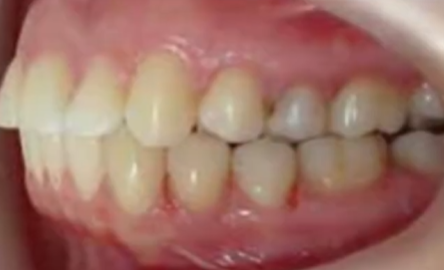
This change happens quickly in your 20s. Because bone metabolism is active, tooth movement is also faster. Even after just 6 months, the space for placing an implant in the original position may have become too narrow, and you may need orthodontic treatment first. That doubles both the cost and the time.
In the end, implants in your 20s are about design and maintenance
Getting an implant in your 20s is not something to be afraid of. However, because the assumption is that “once it’s placed, it needs to last as long as possible,” how it is placed at the beginning is everything, to the point that it’s not an exaggeration.
When I consult with patients in their 20s, I also talk about what the implant being placed now will be like when they are in their 40s and 50s. Having enough bone now is actually the best condition, but to make proper use of that good condition, precise diagnosis-based planning must come first. I also recommend checking whether this is a structure where one doctor takes responsibility for planning and managing everything from start to finish, rather than a place where a different doctor sees you every time.
If you’re curious about post-implant care, please also refer to this post.
One initial diagnosis can change the result 30 years later.
If needed, just one X-ray image can tell you right away what your bone condition is like now, whether the implant can be placed immediately, and whether bone grafting is necessary. It’s also fine just to confirm whether what you heard elsewhere is correct. If you have any questions, feel free to contact us by comment or phone.
This has been Banpo Blanche Dental Clinic. Thank you.
✅ Recommended additional reading