I’m Kim Tae-hyung, chief director of Gangnam Blanche Dental Clinic.
Have you ever brushed your teeth in the morning, looked in the mirror, and been startled to see your tongue coated white?
If bad breath is there too, it can make you reluctant to speak up close and extra cautious when meeting people.
In fact, not many people come to the dentist just because of tongue coating. Most visit for bad breath counseling or scaling and casually ask, “My tongue keeps getting white— is that okay?”
This is something I explain so often in the treatment room that I thought I’d take the chance to organize it into a post. Haha.
To be frank as a dentist, tongue coating itself appears to some degree for everyone, so there’s no need to worry right away. However, coating that does not go away even after brushing diligently, or coating that comes with bad breath and bleeding gums, is a little different.
Today, I’ll go over the five main causes of tongue coating and explain how the cases that need to be checked at a clinic differ.

Tongue coating is normal to some extent
There are many small projections called filiform papillae on the surface of the tongue.
If you zoom in on a carpet, dust gets caught between the fibers, right? Our tongues are similar to carpets.
Food debris, shed epithelial cells, and bacteria mix between these projections to form a thin film.
That is tongue coating.
A thin white layer when you wake up or when you haven’t had water for a long time is completely normal.
The problem is when it stays thick no matter how much you clean it, or when it becomes especially dense in certain areas.
In those cases, you should also consider the possibility that it is not just a tongue issue.
5 causes of tongue coating

First, bacterial buildup at the back of the tongue.
This is the most common cause. The back third of the tongue is an area that even a toothbrush does not reach well, and where saliva’s self-cleansing effect is weaker, so bacteria and waste tend to accumulate most easily. If this area is neglected, coating builds up heavily, and volatile sulfur compounds are produced, becoming a major cause of bad breath.
Second, dry mouth (xerostomia).
When saliva decreases, the function of washing away the surface of the tongue weakens. If you drink too little water, breathe through your mouth, or if salivary gland function declines with age, tongue coating becomes noticeably thicker. In fact, after the age of 40, there are a noticeable number of patients who complain of dry mouth.
Third, the structure of the tongue itself.
People whose filiform papillae are especially long and dense tend to get more tongue coating even if they eat the same amount. This is closer to a constitutional trait, so it is difficult to eliminate completely; consistent care is the answer. Haha.
Fourth, systemic factors.
If your stomach condition is poor, your immunity is lowered, or you take antibiotics or blood pressure medication for a long time, tongue coating may become thicker than usual.
Fifth, inflammation in the mouth and bacterial imbalance.
This is the part I want to emphasize most today. When the oral microbiome is disrupted by periodontitis or untreated cavities, the effects appear on the tongue as well. Tongue coating accompanied by bleeding gums or bad breath is exactly this case.
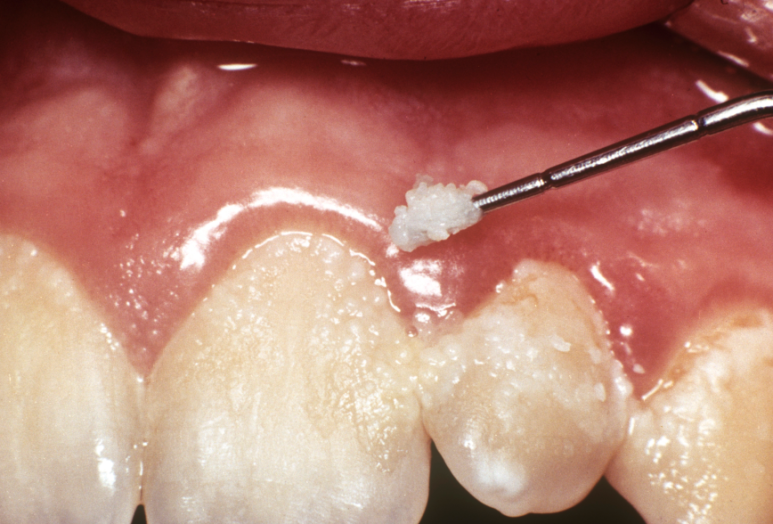
Tongue coating that cannot be solved by brushing is different

There is one point I want to clearly distinguish as a dentist.
The difference between ordinary tongue coating and tongue coating that needs to be checked at a clinic is more obvious than you might think.
You may get a better sense of it if you compare them at a glance in the table below rather than by words.
| Category | Ordinary tongue coating | Tongue coating requiring a medical evaluation |
|---|
| Thickness/appearance | Thin white coating | Thick buildup or especially dense in certain areas |
| After using a tongue cleaner | Noticeably lighter | Quickly becomes thick again |
| Color | Light white | Yellowish or brownish |
| Bad breath | Almost disappears after brushing | Persists even after brushing; family notices first |
| Gum condition | No bleeding or swelling | Bleeding when brushing, swollen gums |
| Suspected cause | Bacteria at the back of the tongue, dry mouth | Oral inflammation such as periodontitis or deep cavities |
| Recommended action | Self-care with a tongue cleaner and hydration | Dental evaluation needed |
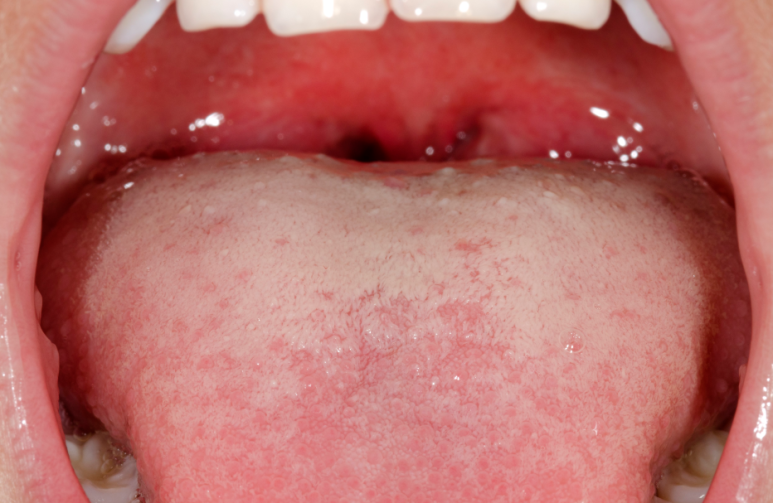
When I see patients coming in for bad breath counseling in the clinic,
the actual cause is often not the tongue but periodontitis or deep cavities.
If the cause is identified incorrectly, people may end up diligently cleaning only the tongue while the gum condition continues to worsen.
In fact, with just one X-ray and periodontal pocket measurements, you can almost immediately tell whether the cause is the tongue or the gums.
Home care you can do, and its limits

To start with the care you can practice in daily life:
Use a tongue cleaner (scraper) once a day after brushing, and gently scrape from front to back 3 to 4 times.
Be careful not to scrape too hard, as that can injure the tongue surface and make it even more sensitive.
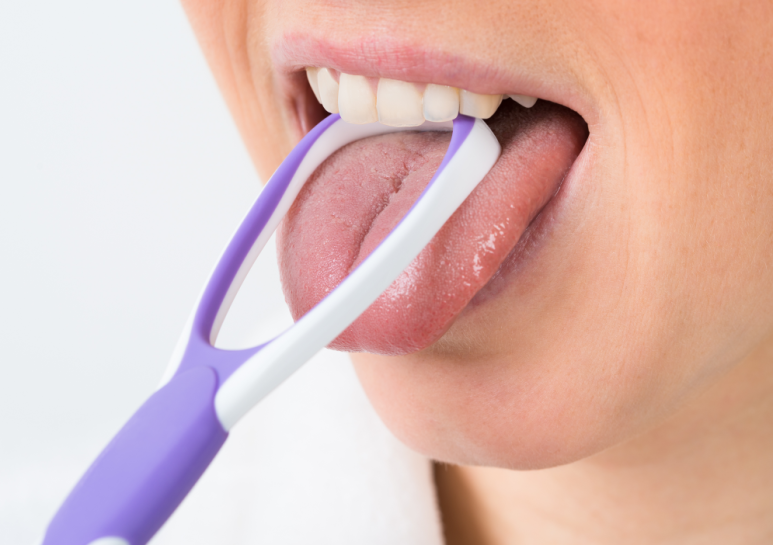
On top of that, if you keep these three things in mind—drinking about 1.5 to 2 liters of water a day, breathing through your nose, and avoiding sugary snacks before bed—the coating will noticeably decrease.
However, as mentioned earlier, if the coating comes from the gums or teeth rather than the tongue, this kind of care will not solve it.
Think of the tongue as a mirror reflecting the condition of the entire mouth, not something that turns white on its own.
If you have gum swelling or bleeding along with tongue coating, please also refer to this post.
→ 3 Symptoms of Swollen Gums That Must Never Be Ignored
Tongue coating usually improves with everyday care, but whether I fall into that “usually” or not is something that can only be determined by directly looking at the overall condition of the mouth.
If the coating does not go away no matter what you do, or if bad breath and gum bleeding are happening too, cleaning only the tongue will not give you an answer.
Today we looked at tongue coating, which serves as a mirror of oral health,
and if you have any questions after reading, feel free to ask in the comments.
This was Gangnam Blanche Dental Clinic. Thank you.
✅ Recommended reading