Hello.
This is Blanche Dental Clinic, where your smile becomes a work of art.
One of the most common yet most feared dental treatments is root canal treatment.
Because of the frightening expression, “the nerve has to be killed,” many people delay treatment.
However, not every tooth with pain is a candidate for root canal treatment.
Today, we’ll explain how to tell whether the nerve in your tooth can be saved,
or whether treatment is truly necessary.
Root canal treatment is a procedure that removes contaminated nerve tissue and fills the space with artificial material.
After this process, the tooth no longer receives nutrients and moisture,
so it can become weakened, much like a tree root drying out.
That is why dentists also try to preserve the nerve as much as possible,
but from the patient’s perspective, it is natural to want to know exactly whether treatment is necessary.
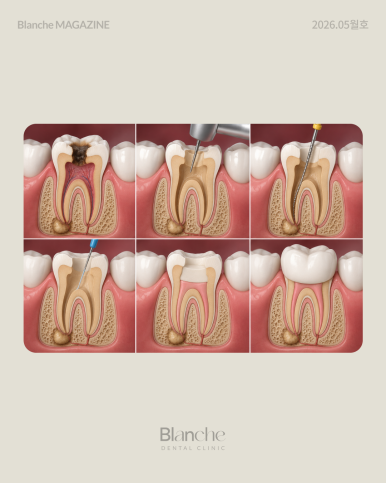
Even if inflammation develops in the tooth nerve, not all cases are irreversible.
In the case of reversible pulpitis, if the decay is removed properly
and appropriate protective measures are taken, the nerve can become healthy again.
Rather than rushing to remove the nerve because there is pain,
it is essential to first determine whether the current condition of the nerve is recoverable.
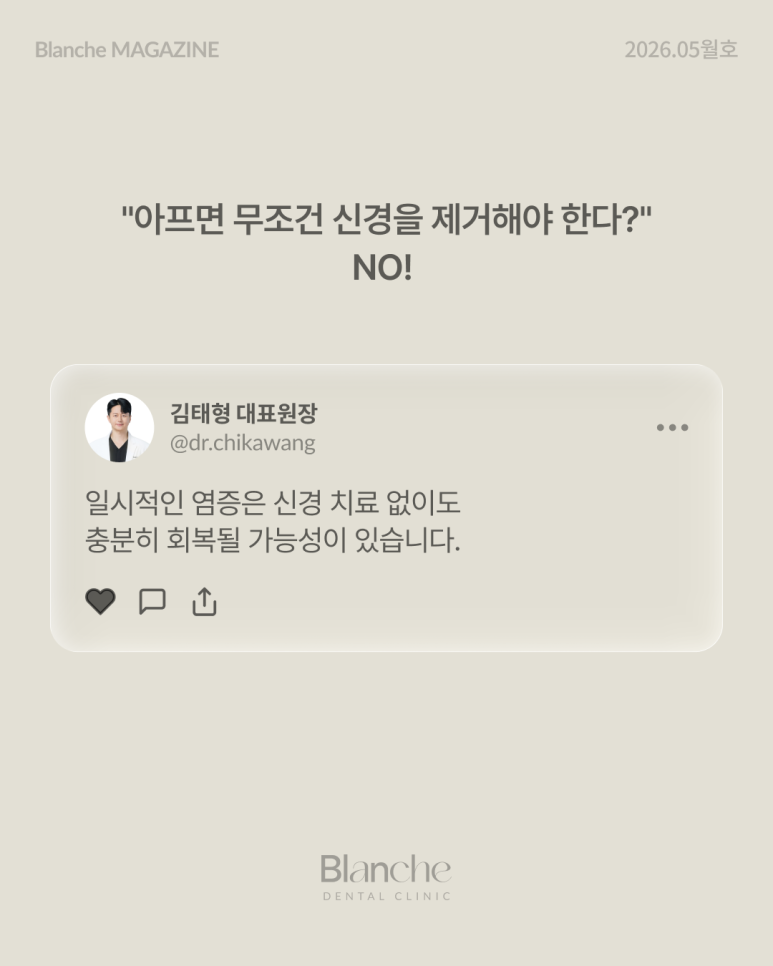
If your tooth stings when you eat something cold, but the pain stops as soon as you open your mouth, that is relatively hopeful.
This means the tooth nerve is reacting sensitively to external stimuli,
and there is a high chance it can be resolved with only the stage before root canal treatment, namely decay treatment.
However, if you miss this stage, the inflammation can deepen, so careful observation is needed.
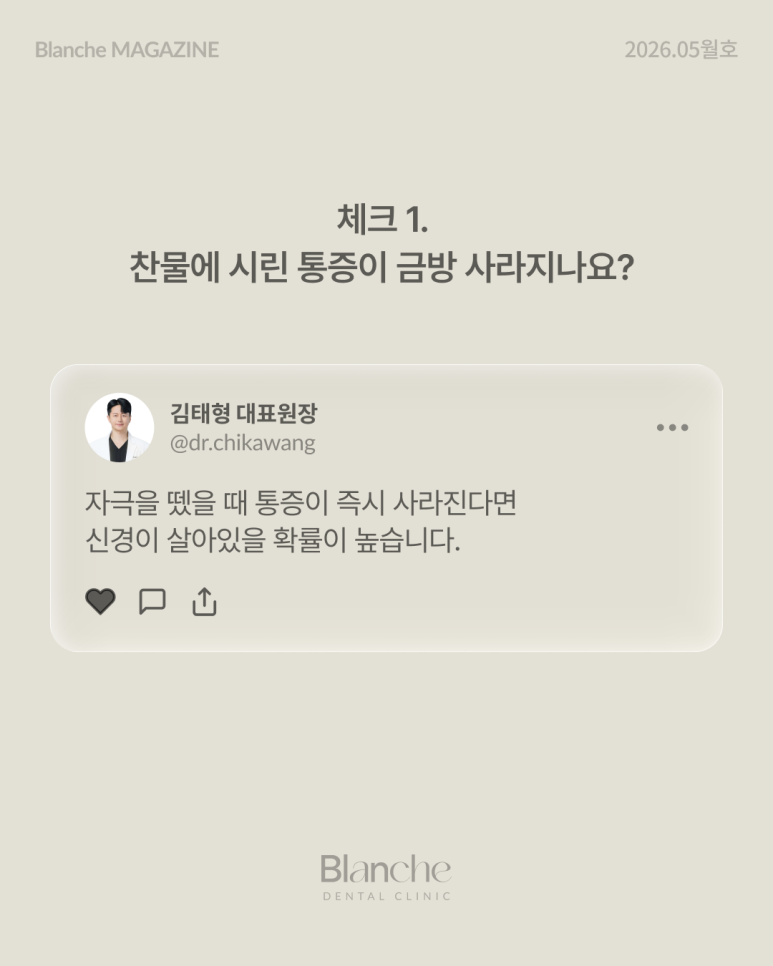
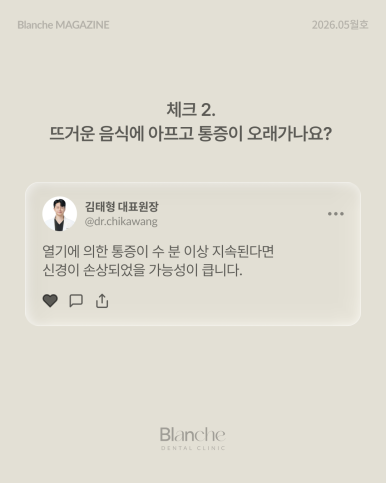
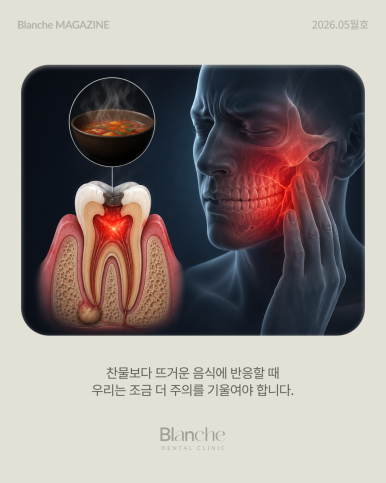
We should pay a bit more attention when the tooth reacts to hot food rather than cold water.
This is because heat stimulation may cause gas inside the tooth to expand and press on the nerve.
If the pain does not subside for a long time after drinking hot soup,
it may be a sign that the nerve inflammation has already become severe and treatment is needed.
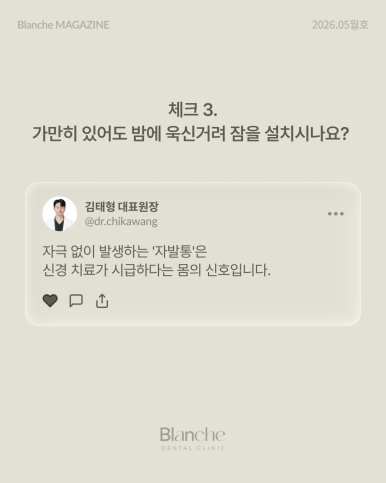
The clearest sign is pain felt even without any stimulus,
especially pain that gets worse when lying down at night.
Throbbing pain, like a beating heart, means the pressure inside the tooth has reached its peak.
At this stage, rather than enduring it with painkillers alone, you should visit the dentist quickly
to prevent further complications and receive appropriate treatment.

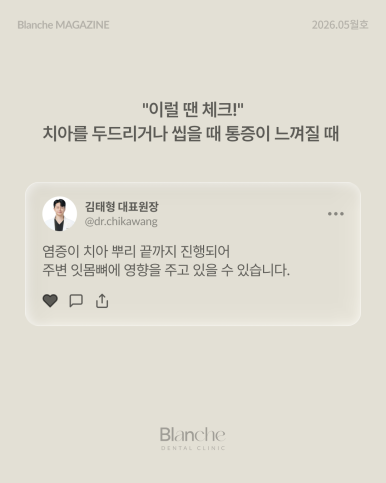
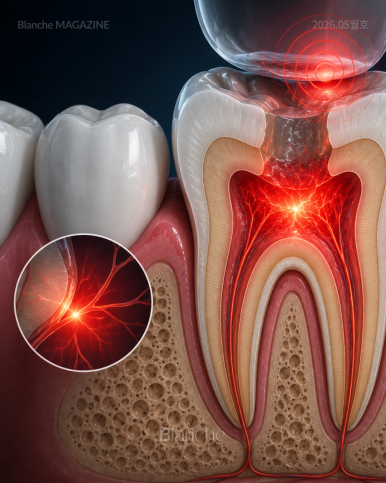
If it is fine when you are still, but hurts only when tapped with chopsticks or when chewing food,
there is a high chance the inflammation has spread beyond the inside of the tooth to the area around the root tip.
Since the gum bone has become sensitive to stimulation, an X-ray examination should be done
to carefully check whether an inflammatory pocket has formed at the root tip.
Surprisingly, there are also cases where root canal treatment is needed even without pain.
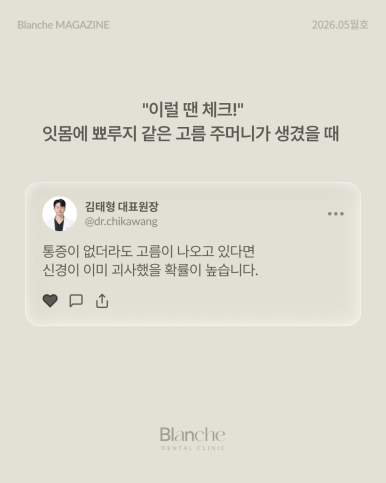
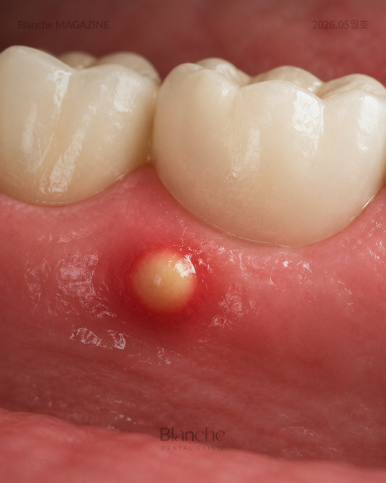
If a small pus pocket, like a pimple, keeps appearing and disappearing on the gums,
that is the pathway through which gas and pus from a dead nerve escape through the gum bone.
Just because the pain has disappeared does not mean it is healed;
it may be that the nerve has completely died and can no longer feel pain, so confirmation is necessary.
Blanche Dental Clinic understands better than anyone the value of a nerve that cannot be restored once removed.
Through 3D precision diagnostics, we evaluate nerve vitality, and rather than automatic root canal treatment,
we first consider “pulp preservation treatment” using a nerve protective agent (MTA).
We work with patients to find the most honest and conservative way
to extend the life of their teeth by even one more year.

Pain is an important signal sent by our body.
Rather than enduring it out of fear, use the checklist we shared today to assess your condition,
and seek the best treatment through an expert’s precise diagnosis.
If you want to learn how to keep your teeth healthy and are curious about the director’s more detailed explanation,
watch the Blanche Dental Clinic YouTube video right now!