I’m Kim Tae-hyung, Chief Director of Banpo Blanch Dental Clinic.
When I ask patients in the clinic, “What kind of gargle do you use?” the answers are surprisingly varied.
Some use Hexamedin because a pharmacist recommended it at the pharmacy, some pick up familiar Garglin at the supermarket,
some use Tantum because they have mouth ulcers, and some just use the one provided at hotels.
But each gargle has different ingredients and different uses, and many people use them in the same way every day.
Gargle can definitely help with bad breath management when used correctly,
but if used incorrectly, it can actually make bad breath worse and even cause staining on the teeth.
Daily-use gargles and medicinal gargles are products with entirely different purposes from the start,
so mixing them together or using medicinal gargles every day can lead to side effects.🟡
Today, I’ll explain how common gargles on the market, such as Hexamedin, Garglin, and Tantum, differ,
and which gargle should be used in which situation.

Gargles are broadly divided into three categories

First, let’s sort out the categories so you don’t get confused. Gargles sold at pharmacies and supermarkets can be broadly divided into three types.
First, there are medicinal gargles.
Hexamedin is the representative example. It contains chlorhexidine, a powerful antiseptic ingredient, and is used as a short-term prescription gargle after gum surgery or when gum inflammation is severe.
Second, there are quasi-drug gargles.
Products such as Perio and Dain Yak Gargle fall into this category.
You can buy them at pharmacies for the purpose of easing inflammation of the oral mucosa or as an aid for antiseptic care,
and while they are weaker than medicinal products, they are more functional than ordinary gargles.
Third, there are general cosmetic gargles.
These include products easily found in supermarkets, such as Garglin, Garglin Zero, and Listerine.
These are the daily-use gargles that people use every day.
Even though they are all gargles, depending on the category, some products can be used every day while others should only be used for a few days.
Before reading the next section, check which category the gargle you’re currently using belongs to first. Haha
Hexamedin is for short-term prescription use, not for daily use
The misunderstanding I correct most often in the clinic involves Hexamedin.
There are surprisingly many people who buy Hexamedin because their breath smells bad and rinse with it every day.
Some say that because it has strong antiseptic power, it must be good, but Hexamedin is not meant to be used that way.
The chlorhexidine in Hexamedin is a powerful antiseptic ingredient, and if used daily for more than two weeks, brown or black staining may appear on the tooth surface, and side effects such as reduced taste sensation have been reported.
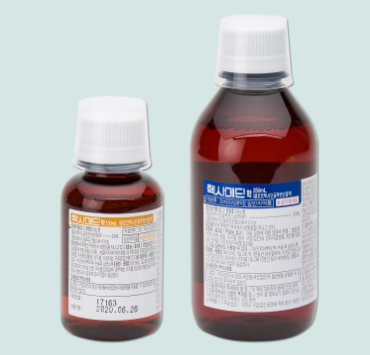 Source: Korea Pharmaceutical Information Center
So it is usually prescribed only for short-term use, such as for 1–2 weeks after gum surgery or during periods of acute gum inflammation, and you should stop using it after that period.
Also, Hexamedin should not be used together with toothpaste. Some ingredients in toothpaste reduce the antiseptic effect of chlorhexidine. You should wait at least 30 minutes after brushing before using it for it to work properly. Many people unknowingly rinse with it right after brushing.
Tantum and Perio gargles have different purposes
Tantum gargle is often recommended at pharmacies when you have mouth sores or swollen gums.
It contains benzydamine, an anti-inflammatory and pain-relieving ingredient, which helps calm inflammation of the mucous membranes.
However, this is also intended to relieve inflammation rather than for antiseptic purposes, so it is not well suited for daily rinsing when you are concerned about bad breath.
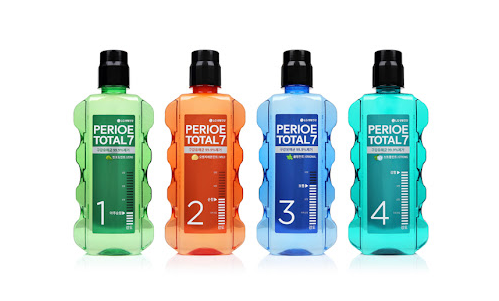
Products like Perio gargle are quasi-drugs intended to aid antiseptic care and gum care. They are not as strong as medicinal products, so there are usually no major side effects even if used for more than a week. However, even in this case, it is more efficient to use them only when your gum condition is not good rather than as a daily gargle.
Daily-use gargles like Garglin and Listerine — these need to be checked carefully
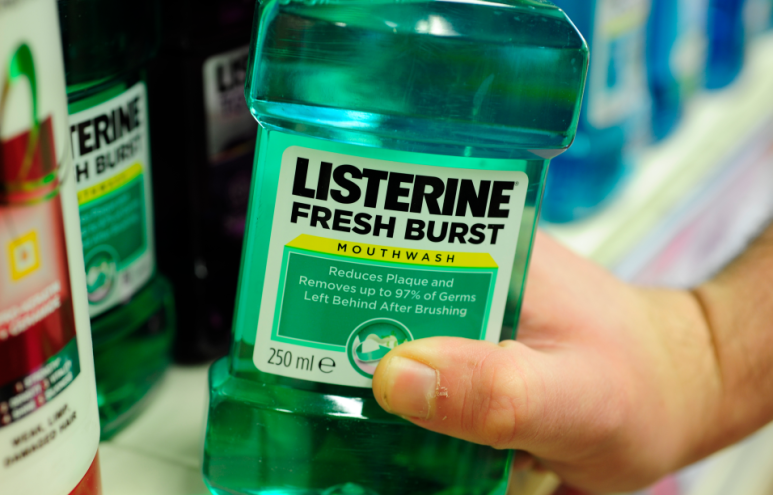
For daily-use gargles, there are two things you should look at.
The first is whether they contain alcohol.
Alcohol-containing gargles may feel cool and refreshing right after use, but alcohol dries out the oral mucosa and reduces saliva secretion. When saliva decreases, the mouth’s natural self-cleansing function weakens, paradoxically making bad breath worse over time.
If you use gargle every day, I recommend an alcohol-free product. That is why alcohol-free versions such as Garglin Zero exist.
The second is what antiseptic or neutralizing ingredients they contain.
The CPC (cetylpyridinium chloride) and zinc mentioned in Part 2 apply to gargles as well. CPC targets oral bacteria, and zinc reacts with sulfur compounds, which are the source of bad breath, to neutralize the odor. If you are concerned about bad breath, choosing a daily-use gargle containing these two ingredients is the most reasonable option.
For daily-use gargles, the key checkpoints are: alcohol-free + CPC + zinc.
How to use gargle: not immediately after brushing, but 30 minutes later
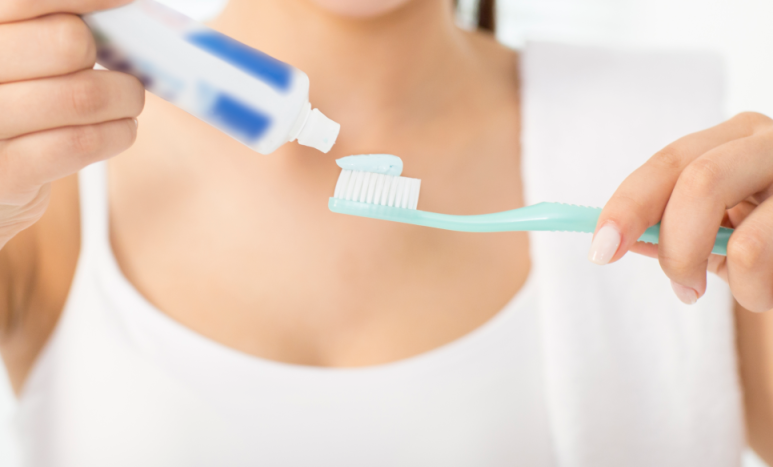
Proper use is important if you want to get the full effect of gargle.
One of the most common questions I get in the clinic is the order of brushing and gargling,
and to give the answer first: brush first, gargle afterward. However, you should not gargle immediately after brushing.
Right after brushing, the fluoride in toothpaste is at the stage where it is just beginning to adhere to the teeth, and rinsing with gargle on top of that washes the fluoride away. In other words, you are washing away the key benefit of brushing with gargle.
So the rule is to wait about 30 minutes after brushing before gargling. Also, many people rinse their mouth with water after gargling, but the gargle ingredients need to remain in the mouth for the effect to continue, so after gargling, you should simply spit it out without rinsing with water.
The length of time you gargle matters too. Usually, you should rinse for about 30 seconds to 1 minute so it can reach every corner of the mouth. If you spit it out after 5 seconds, it is practically the same as not using it at all.
For frequency, 1–2 times a day is enough for a daily-use gargle. Using it more often does not make it more effective; instead, it can disrupt the normal oral microbiota and have the opposite effect.
Can gargle really replace brushing?
This is a question I get very often in the clinic.
People ask whether gargling can replace brushing when they are busy or out and about,
and many also ask whether gargle is more effective than brushing.
As a dentist, I can say clearly that gargle cannot replace brushing.
The reason is that the two work in completely different ways.
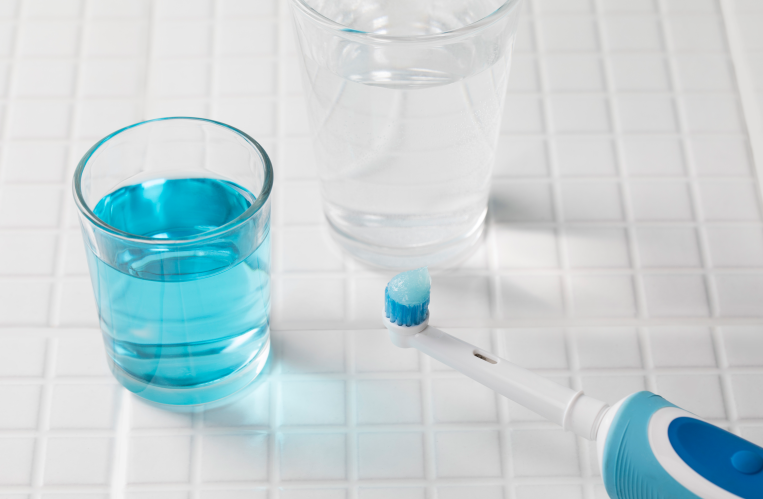
Brushing is the physical act of removing plaque from the tooth surface and the gumline with the bristles of a toothbrush,
while gargling chemically targets bacteria left in the mouth or changes the oral environment.
The key point here is the nature of plaque.
Plaque is a sticky film that adheres firmly to the tooth surface, and no gargle can remove it by rinsing.
It must be directly reached by the toothbrush bristles and physically separated to be removed.
If you only gargle without brushing, plaque keeps accumulating while only a thin layer of gargle ingredients coats the surface.
It may feel refreshing, but actual oral hygiene is hardly improved.
A case I often see in the clinic is people who rely on gargle for several days when they cannot brush because they are out, traveling, or working overtime.
They think they are taking care of their oral health, but plaque keeps accumulating around the gums and gum inflammation begins.
Gargle is a tool that supports brushing, not a tool that can replace it.
Using it temporarily once or twice when you are out is better than not using anything, but if that becomes your routine, gum health will decline quickly.
To summarize: brushing removes plaque physically, while gargle manages bacteria and odor chemically.
They are tools with different roles, so neither can replace the other.
There are types of bad breath that toothpaste and gargle cannot control
So far, through Parts 1, 2, and 3 of this series, I have covered everything from the causes of bad breath to how to choose toothpaste and how to use gargle.
If you have done all of this self-care and your bad breath still does not improve, that means the issue has moved beyond what toothpaste and gargle can handle.
In the clinic, I often see people who rely on self-care for 6 months to a year before coming in, and by then many have developed periodontal disease or deep cavities under prosthetic restorations.
Problems that could have been solved with one or two scaling sessions if they had come in early often end up requiring gum treatment or replacement of prosthetic work.
Actually, just measuring the periodontal pockets can usually tell you right away whether your bad breath is within the range that self-care can manage,
or whether it has reached a stage that needs treatment. It is not complicated, and even a simple X-ray can help.
So if you are wondering whether this might be you, or if you also have swollen gums or bleeding, please refer to this article as well.
→ Three symptoms of swollen gums that should never be ignored
In summary, gargle has different uses depending on its category.
Hexamedin is for short-term prescription use, Tantum is an over-the-counter medicinal product, quasi-drugs like Perio are for mucosal inflammation,
and daily-use products like Garglin and Listerine are for everyday use.
For daily-use gargles, check whether they are alcohol-free and contain CPC and zinc.
However, whatever gargle you use, it only works if you are brushing properly first.
If you brush well, choose your toothpaste well, and think of gargle as something added on top of that,
you will not go wrong in managing bad breath.
In fact, beyond these textbook points, there are many cases where we need to examine directly whether a person’s bad breath can be controlled through self-care, so please make sure to visit the dentist regularly. Any nearby clinic is fine.
If you have any further questions after reading these posts, please feel free to leave them in the comments and I will reply.
With that, I’ll wrap up this article on daily oral care and wish you healthy teeth.
This has been Banpo Blanch Dental Clinic. Thank you.
✅ Recommended reading