I am Kim Tae-hyung, director of Banpo Blanche Dental Clinic.
There are many people whose teeth look yellow even though they brush very diligently. I often meet patients in the clinic who feel self-conscious every time they look in the mirror, notice it more in photos, or keep their mouths closed when they smile. Some even blame themselves, asking, “Is it because I don’t brush my teeth enough?” In reality, the reason for yellow teeth is much more often unrelated to brushing habits.
Yellow teeth and tooth discoloration are the result of both surface staining and pigments inside the teeth. That is why many people do not see their teeth become brighter no matter how diligently they brush. Today, I will summarize the five real causes of yellow teeth and why brushing alone cannot resolve them.

Could your teeth really be discolored? Start with a simple self-check
Before discussing the causes in detail, there is one point worth clarifying. The terms “yellow teeth” and “tooth discoloration” can feel somewhat uncomfortable, and some people are unsure exactly what they mean. Tooth discoloration simply refers to a condition in which the teeth have a more yellow tone than normal.
If you would like to check for yourself whether your teeth are truly yellow, try these two simple tests.
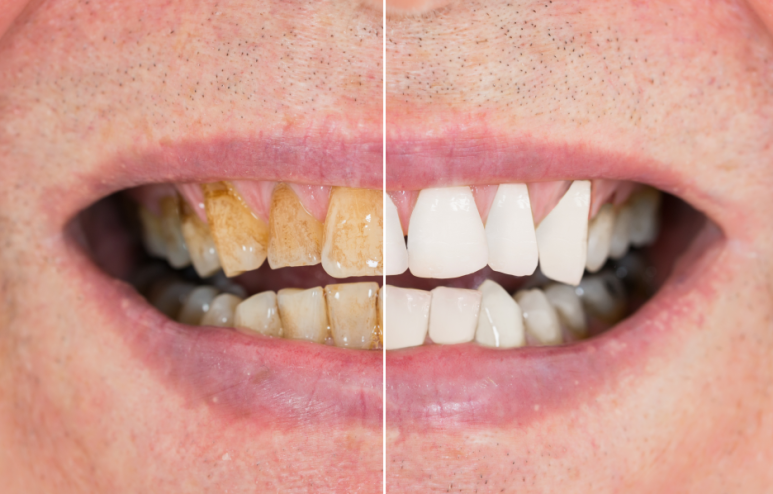
First, hold a white sheet of paper next to your mouth under natural light and compare the color of your teeth in the mirror. If they are noticeably more yellow than the paper, your teeth are discolored.
Second, take a front-facing smiling photo without a camera filter. If you are used to the color correction from selfie filters, you may perceive your actual tooth color as more yellow than it really is. A photo without a filter is the most accurate.
Cause 1. External staining from coffee, tea, and wine consumed every day

This is the most common cause and the one people are usually most aware of. Common foods and beverages that stain teeth, such as coffee, black tea, green tea, red wine, and cola, are rich in tannins and pigments. These substances seep into the tiny irregularities on the tooth surface and form a yellow film.
For people who drink two or three cups of coffee a day, noticeable surface staining can develop within six months to a year. In particular, if you wait more than 30 minutes to brush after drinking, the acidic beverage can temporarily weaken the tooth enamel, making it easier for pigments to settle more deeply.
At this stage, the staining remains mostly on the surface, so it can be removed to some extent through scaling or professional whitening. Brushing alone cannot reach pigments embedded in the surface.
Cause 2. Deep staining caused by smoking
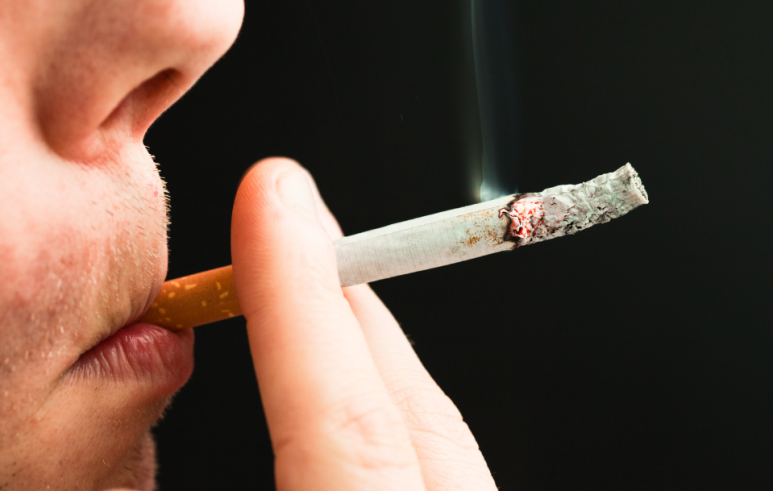
Smoking creates deep staining that goes beyond simple external discoloration, allowing color to penetrate into the teeth. Tar and nicotine in cigarette smoke settle not only on the tooth surface but also along the gumline and between the teeth.
Tooth staining in smokers progresses three to five times faster than in nonsmokers, and once it becomes established, it is rarely removed with regular brushing or commercially available whitening products. In the clinic, it is common to see smokers in their 30s with more yellow teeth than nonsmokers in their 50s.
The same applies to electronic cigarettes. Many people think they cause less staining than conventional cigarettes, but in reality, the liquid ingredients can settle in minute amounts and produce similar results over time.
Cause 3. Natural internal discoloration that progresses with age
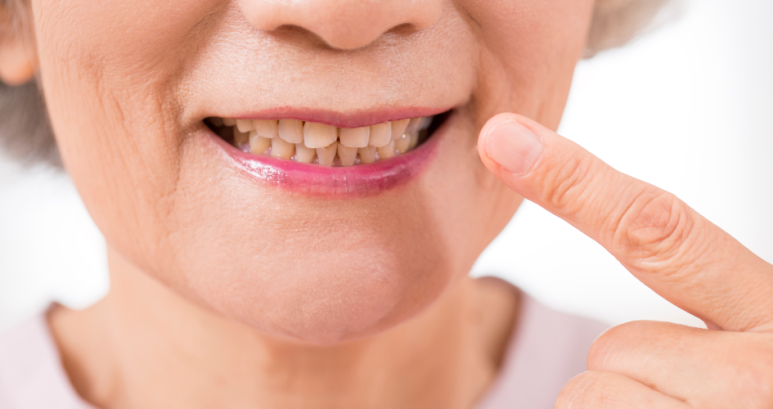
This is the cause that is most difficult for an individual to control. Teeth consist of outer enamel, which is white, and inner dentin, which has a yellowish tone. As we age, the enamel becomes thinner and the dentin becomes thicker. In other words, the yellow color inside becomes more visible.
This is a natural aging process that cannot be prevented no matter how diligently you brush or how carefully you choose your food. It begins to progress more noticeably from the late 40s, and by the 50s, the yellow tone becomes deeper to the point that people notice it themselves.
Therefore, even if the same person follows the same diet, it is normal for their teeth to look more yellow in their 50s than in their 30s. At this stage, surface care alone cannot solve the problem, and whitening that breaks down pigments inside the teeth is needed.
Cause 4. Discoloration limited to one or two teeth due to medication or trauma

In some cases, the teeth are not uniformly yellow overall; instead, one or two specific teeth look unusually dark or grayish.
The most common cause is tetracycline antibiotics taken during childhood. If a child is exposed to these medications before the age of eight, gray or brown stripes can remain permanently on the permanent teeth. It is also possible that a parent gave the medication during childhood without the person knowing about it later.
Another cause is trauma. If you fell and hit a front tooth as a child, the nerve may have been damaged, causing that tooth alone to become darker over time. It is also common for the color change to begin several years after the trauma, so many people do not connect the injury with their yellow tooth.
In these cases, regular whitening has limitations, and whitening that works from inside the tooth, known as walking bleach, or veneers may be needed.
Cause 5. Genetic factors and the natural color of the teeth
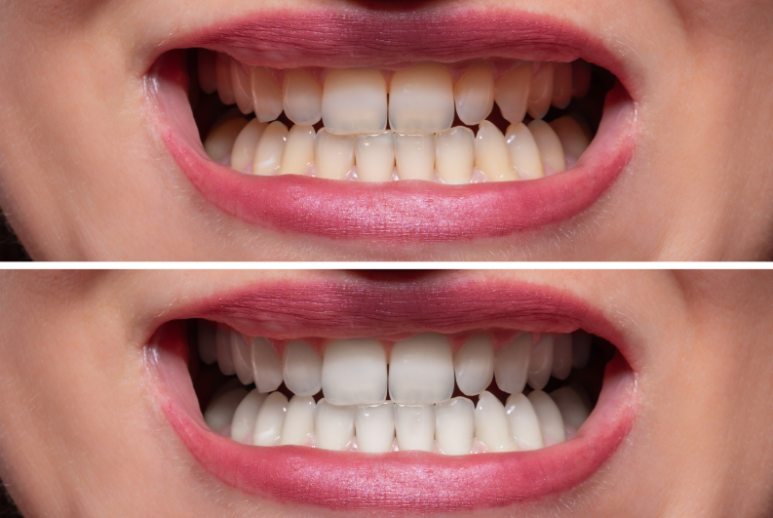
The final factor is an area beyond your control. Surprisingly, many people search for information about genetically yellow teeth. They wonder why their teeth are yellow even though they brush well and do not drink pigmented beverages.
The basic color of teeth is genetically determined. If one of your parents had relatively yellow teeth, you are more likely to have a similar tone. The average tooth color of Koreans is slightly more yellow than that of Westerners, although there are substantial individual differences.
In this case, the teeth may be healthy but simply yellow in color, so surface care produces little change. If you want to make your natural tooth color more than one shade brighter, whitening that breaks down internal pigments is ultimately needed.
Why brushing alone does not work: the difference between the surface and the inside
The five causes above have one thing in common. Surface staining from coffee, tea, and smoking can at least be partially managed with brushing and scaling, but internal discoloration caused by aging, medication, trauma, or genetics cannot be resolved by brushing. The first step is to determine which type of discoloration you have.
To summarize the options you can try yourself, the first is products sold commercially as toothpaste for yellow teeth or whitening toothpaste. However, most commercial products work by using strong abrasives to wear away the tooth surface, making gum irritation and tooth sensitivity more likely. Even if they remove some surface staining, they have no effect on internal pigments. Products that have a meaningful effect contain ingredients such as hydrogen peroxide at safe concentrations and work on internal pigments, but products meeting these conditions are very rare on the market.
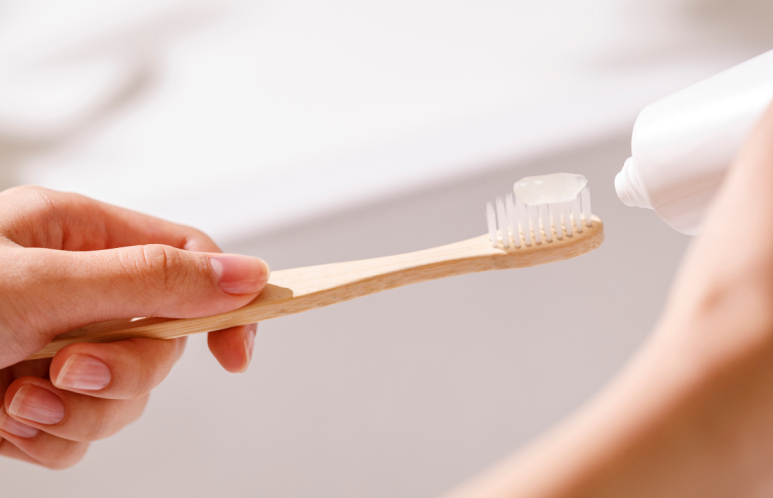
The second option is self-care with commercially available whitening products, such as strips or devices. These may brighten the teeth by one or two shades, but their limitations are clear because of gum irritation and concentration issues. The third option is professional whitening at a dental clinic. Dentists use whitening agents at higher concentrations together with a light source to break down pigments inside the teeth, so the effect is much greater than with self-care.
Which method is right for you ultimately depends on whether your discoloration is surface staining or internal discoloration and how advanced it is. In fact, after examining your teeth once in the clinic, it is usually possible to determine almost immediately what is causing the discoloration.
If your yellow teeth do not improve even though you brush diligently, it does not mean there is a problem with your brushing habits. It means the cause of the discoloration lies outside the area that brushing can address.
Managing yellow teeth in daily life can certainly help, but there are clear limits to what it can accomplish.
The quickest answer comes from examining your teeth directly to determine what caused the discoloration and which method is appropriate.
If you have any questions, please feel free to leave a comment.
This was Banpo Blanche Dental Clinic. Thank you.
✅ Recommended related reading