Hello.
I am Kim Tae-hyung, the director of Gangnam Blanche Dental Clinic.
If you have ever felt a sharp sensitivity from a sip of cold water, or noticed in the mirror that your teeth look longer than they used to,
they may already be showing signs that changes have begun at the boundary between your gums and teeth.
Many people dismiss it by thinking, “It only feels sensitive when I brush, so it should be fine,” or “Isn’t that normal as you get older?”
However, in the dental office, most people who experience these two symptoms together often find that they stem from the same underlying cause.
Tooth sensitivity, receding gums, and the formation of grooves at the boundary between the teeth and gums are not medically separate phenomena. They are part of one connected process.
Today, I will explain how these symptoms are connected, help you identify which stage you may be at, and summarize what you can do.

Symptom 1. Your teeth feel sensitive — the real cause of tooth sensitivity

Sensitivity is the first symptom most people notice. Many people search for sensitivity to cold water before finding this information. A sharp sensation from a sip of cold water, sensitivity while brushing, or a dull ache when something sweet touches the teeth all fall into this category.
Teeth feel sensitive when the enamel, which acts as a protective layer, becomes thinner, or when the dentin near the tooth root becomes exposed, allowing stimulation to reach areas close to the nerve. Inside the tooth are tiny tubes called dentinal tubules. When they become exposed, cold stimuli are transmitted directly to the nerve, causing a sharp, tingling pain.
The problem is that even if the symptoms temporarily subside after using sensitive-teeth toothpaste or medication, the underlying cause has not disappeared. Sensitivity is only the result; the real cause is a sign that some part of the tooth surface is breaking down.
Symptom 2. Your teeth look longer — the beginning of gum recession
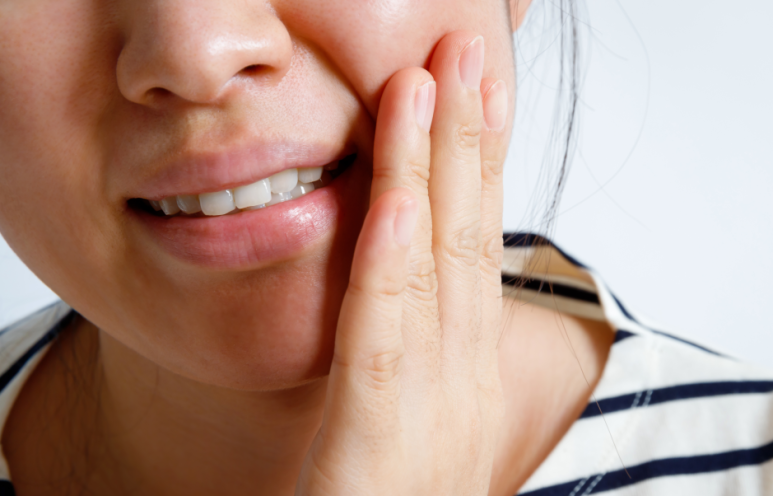
The second symptom is visual. Your teeth may look longer than before when you look in the mirror, the gumline around one of your front teeth may appear to have receded on one side, or black triangular spaces may appear between your teeth.
This occurs when the gums recede and part of the tooth root, which should normally be covered by the gums, becomes exposed.
It is medically known as gingival recession and is one of the first signs that patients often notice themselves in the mirror at home.
Once gum recession progresses, natural recovery is almost impossible. Lost supporting bone does not grow back on its own, and the gum tissue that covered it does not return to its original position. That is why the key is to stop the progression before it advances further.
They share the same underlying cause — the relationship between cervical abrasion and gingival recession
This is where it is important to understand how the two symptoms are connected.
When the gums recede, the cervical area of the tooth—the area at the boundary between the tooth and gum—becomes exposed.
This area has a thin, relatively weak layer of enamel, so it can be easily worn down by toothbrush bristles and acidic stimuli.
Cervical abrasion occurs when this area becomes worn and develops a V-shaped or wedge-shaped groove.
The gums recede, exposing the cervical area; that area then wears down, exposing the underlying dentin, which eventually leads to sensitivity to cold water.
That is why, when we examine the mouths of people who visit us because of sensitivity, cervical abrasion and gingival recession are almost always progressing together. It is actually less common for only one of them to occur on its own.
See which of these four causes may apply to you
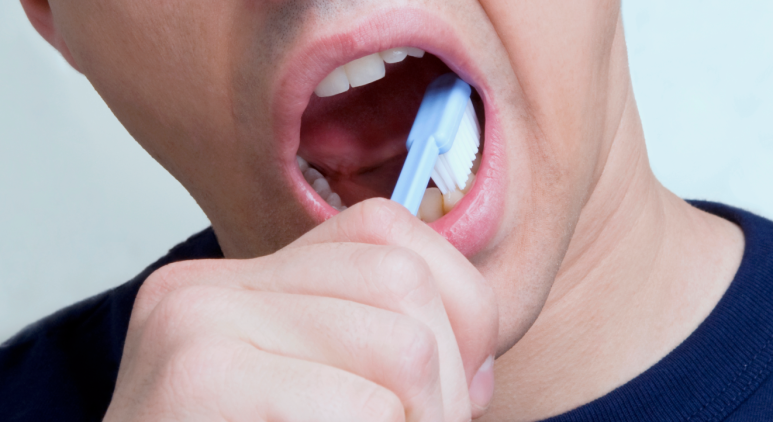
The causes of cervical abrasion and gingival recession can be broadly organized into four categories.
First, improper brushing habits.
This is the most common cause. Using a hard-bristled toothbrush, brushing vigorously from side to side, or brushing with excessive force can damage the boundary between the teeth and gums first. In particular, people who brush immediately after eating may end up scraping away enamel that has been weakened by acidic foods.
Second, teeth grinding and clenching.
If you grind your teeth while sleeping or unconsciously clench them during the day, repeated pressure is placed on the boundary between the teeth and gums, causing tiny cracks in the cervical area. As this accumulates, it can develop into V-shaped wear.
Third, gum changes after orthodontic treatment.
As the teeth move during orthodontic treatment, the supporting bone also changes. During this process, some gum recession may occur. This is especially common with adult orthodontic treatment.
Fourth, age and hormones.
After the age of 40, the ability of the supporting bone and gum tissue to recover naturally declines. Even with the same brushing habits, gum recession can progress much faster in someone in their 50s than in someone in their 30s.
Can toothpaste and supplements solve the problem?
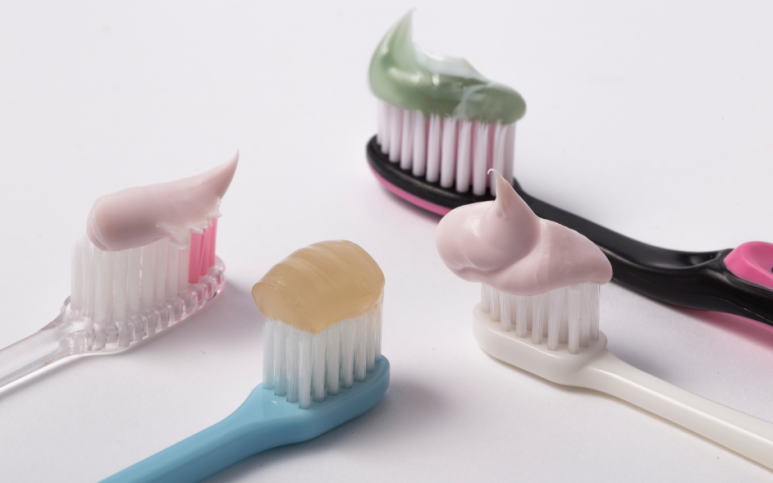
At this stage, let me first summarize the options you can try on your own.
First, toothpaste for sensitive teeth. These are products commonly found by searching for toothpaste or supplements for sensitive teeth. Ingredients such as potassium nitrate or strontium chloride can temporarily block exposed dentinal tubules and relieve sensitivity.
However, this only relieves the symptoms; it does not restore worn tooth surfaces or receded gums. It generally takes about 2–4 weeks to see an effect, and in many cases the sensitivity returns after use is discontinued.
Second, gum-health supplements and supplements marketed for tooth sensitivity. They may support gum health, but there is no established evidence that they can raise gums that have already receded. It is more appropriate to think of them as a supportive measure that may help slow progression.
Third, gum medications such as Insadol. They may help relieve gum inflammation, but they also cannot reverse gingival recession itself.
In conclusion, self-care is limited to relieving sensitivity and slowing the rate of progression. Worn cervical tooth surfaces and receded gums are conditions that require dental treatment.
Treatments available at the dentist
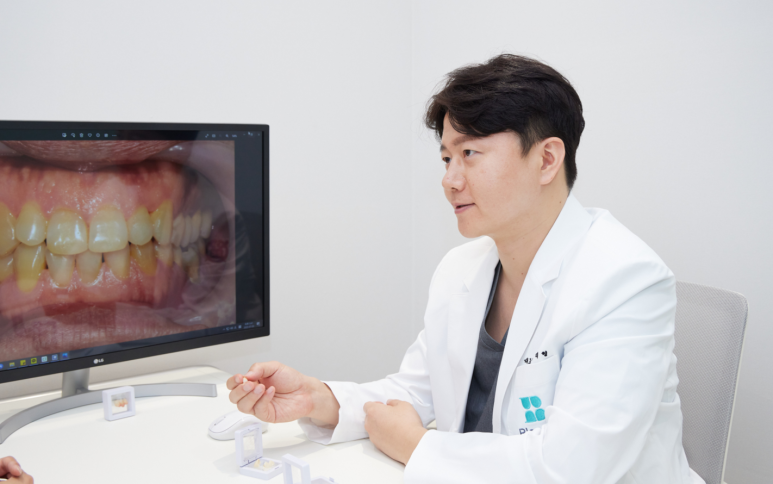
Cervical abrasion is generally treated by filling the worn area with a tooth-colored composite resin, following the shape of the wear. The procedure takes about 20–30 minutes per tooth, and sensitivity often decreases immediately.
When gum recession is severe, gum grafting, also called soft-tissue grafting, or gum-regeneration treatment may be considered. However, these treatments are not suitable for every case. Their suitability is determined after a detailed examination of the condition of your gums and supporting bone.
If teeth grinding is the cause, the priority is to prevent further wear with a protective device such as a mouthguard. If brushing habits are the cause, changing the toothbrush bristle firmness and brushing technique is the quickest approach.
By the time sensitivity appears while brushing, the condition may already have progressed considerably.
Whether your teeth are at a stage where self-care can slow progression or at a stage requiring treatment can only be determined accurately through a direct examination.
If you feel any discomfort in your gums, please be sure to visit a nearby dental clinic.
This has been Gangnam Blanche Dental Clinic, hoping to be of help to your dental health. Thank you.
✅ Recommended related reading