"Doctor, my gums keep bleeding when I brush my teeth. But it doesn't hurt or anything...
I just assumed my gums were a little weak and let it go. Is it really okay to leave it untreated?"
Hello. I am Kim Tae-hyung, director of Gangnam Blanche Dental Clinic.
After spending many years treating gum conditions, I hear this concern several times a week.
But there is one thing patients almost always add: "It doesn't hurt."
It is completely understandable to reassure yourself that it cannot be serious because your gums bleed but do not hurt.
That feeling is even stronger when an internet search brings up articles saying, "It's because you're brushing too hard."
But let me give you a candid answer as a dentist.
In gum disease, pain and the extent of progression are not proportional in the way you might expect.
In fact, cases that progress without pain are often more dangerous.
Today, I will explain why this happens and which signs mean you should get examined.

Why bleeding without pain can be a more alarming sign
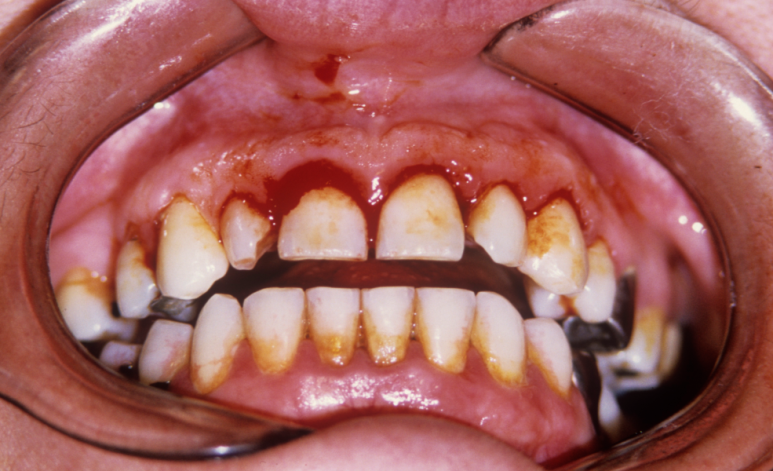
The key to gum inflammation lies not on the surface of the gums, but underneath them. Between the teeth and gums is a space called a periodontal pocket, or simply a gum pocket. A healthy pocket is usually no deeper than 3 mm, but as inflammation progresses deeper, the pocket gradually widens to 4 mm or 5 mm, and the alveolar bone inside it begins to deteriorate.
The problem is that this process often progresses quietly without causing pain. Unlike a cavity, which directly stimulates a nerve, the resorption of alveolar bone does not readily reveal itself as a painful sensation. As a result, by the time patients feel pain and come in for treatment, I often see clinically that a considerable amount of bone has already been lost. It is like a house whose wallpaper looks intact while the supporting columns inside are decaying.
If your gums bleed even though you brush carefully, the problem may be where you brush
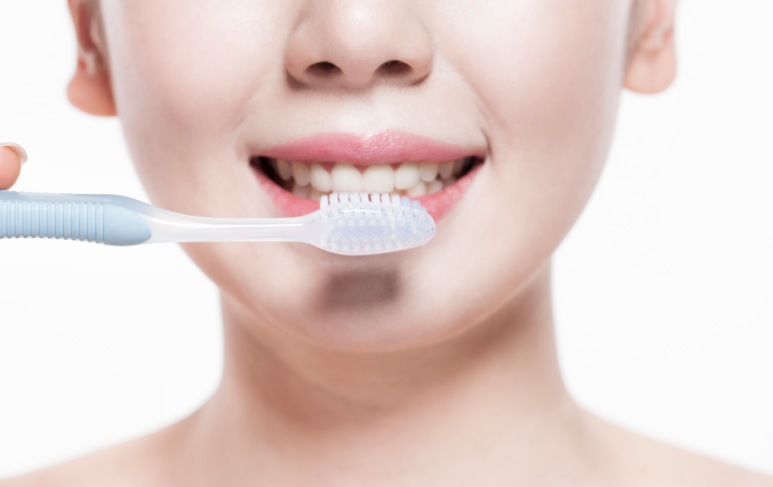
Many people say, "I really do brush my teeth diligently." In fact, they may brush for a long time and often enough. However, in most cases, only the areas reached by the toothbrush are polished clean, while the gumline where inflammation begins and the spaces between the teeth are not reached properly.
From a dentist's perspective, bleeding is not a signal to "brush harder," but a signal that "there is inflammation in that area." Scrubbing already weakened gums with hard bristles only increases the bleeding while leaving the cause untouched. This is why where and with what you brush matters more than how much force you use.
If you notice these three signs, your window for timely action may be closing

Rather than listing five or ten symptoms, I will narrow it down to the three signs I tell patients in the treatment room, "Do not put this off."
First, the bleeding happens repeatedly in the same spot, rather than just once.
Second, the gum in a specific area is swollen and feels dull and painful when pressed.
Third, food keeps getting stuck in that area, accompanied by bad breath.
If these three signs overlap, there is a high possibility that this is more than simple irritation and that the alveolar bone has already been affected.
To be completely honest, it is impossible to know how much jawbone remains just by looking. An X-ray immediately shows the height of the bone, and there are many patients whose treatment could have been much more limited if they had simply had one X-ray before the condition reached the moderate stage.
When scaling alone is enough vs. when it is not
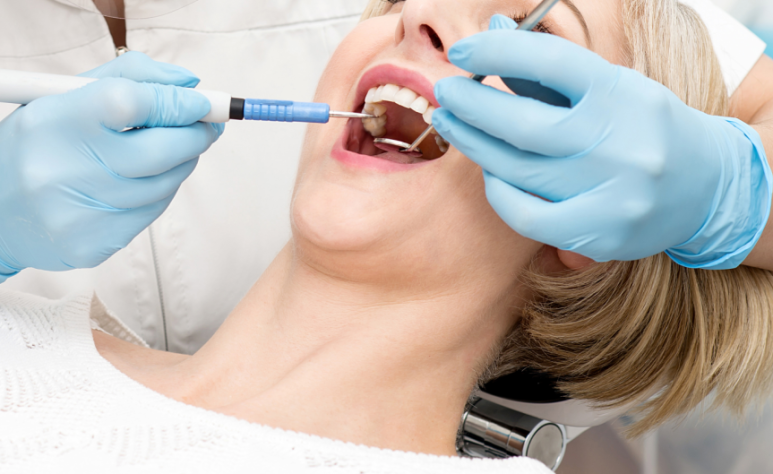
Gum bleeding does not automatically mean that deep gum treatment is required. If the condition is in its early stages, regular scaling and brushing instruction may be enough to resolve it in many cases. Scaling is covered by national health insurance once a year, with an out-of-pocket cost of around KRW 15,000, although this may vary depending on the individual's oral condition.
Even when the symptom is the same gum bleeding, the early and progressive stages differ completely—not only in appearance, but also in the condition of the bone underneath and the care required. Here is a quick summary of the differences I often draw and explain to patients in the treatment room.
| Category | Early stage | Progressive stage |
|---|
| Gum condition | Occasional bleeding when brushing, with little to no swelling | Repeated bleeding in the same spot; swelling and a dull sensation when pressed |
| Jawbone (alveolar bone) | Still maintaining its normal position | Begins to deteriorate — once it has receded, it is difficult to restore |
| Pain | Usually absent, making it easy to overlook | Felt only at this point, but the condition is often already fairly advanced |
| Care required | Often manageable with regular scaling and brushing instruction | Scaling alone is insufficient; periodontal treatment addressing the area beneath the gums is also needed |
| Natural teeth | Can usually be preserved almost as they are | The earlier the condition is addressed, the more can be preserved |
However, if the alveolar bone has already begun to deteriorate, scaling alone is insufficient, and periodontal treatment that addresses the deeper areas beneath the gums is also needed. The important thing is to accurately determine which situation applies to you.
We do not stop at examining the gums alone; we also investigate other possible causes of bleeding, such as bite-related issues or irritation from dental prostheses. Unlike clinics where the treating dentist changes at every visit and you have to explain everything from the beginning each time, having the same dentist who first examined you follow your case through makes a difference in diagnostic consistency.
Which symptoms should never be left untreated once your gums have reached the stage of swelling is covered in more detail in the article,
["3 Symptoms You Should Never Ignore When Your Gums Are Swollen"]
so you may find it helpful to read that as well.
Gum bleeding may initially have been something that could be resolved with scaling, but while it is postponed, it can progress to requiring periodontal treatment, and if delayed further, it can eventually lead to having a loose tooth extracted.
You cannot determine through an internet search where you currently are on that path. It is something that can only be identified by examining you directly.
I will check your condition myself and give you the most honest answer I can. If you have any questions, please feel free to contact us through the comments or by phone.
This was Gangnam Blanche Dental Clinic. Thank you.
✅ Recommended reading