“Doctor, I was told elsewhere that it would be better to simply extract the tooth and get an implant.
But I’m hesitant because the tooth looks perfectly healthy. Is extraction really the right choice?”
Hello. I’m Kim Tae-hyung, the medical director of Banpo Blanche Dental Clinic.
Speaking honestly as someone who performs implant surgery every week, I’m actually glad when patients come to the consultation room after asking this question one more time. That hesitation before having a tooth extracted is, in fact, extremely important.
Because this concerns your own mouth, you must feel even more anxious. When you search online, posts saying “My implant turned out well” and regretful posts saying “I unnecessarily had a healthy tooth extracted” appear side by side, making it even more confusing to know whom to trust.
So let me speak frankly as a dentist. Paradoxically, as implant technology improves, more natural teeth that could have been preserved are being given up too easily.
Today, I’ll explain why this happens and outline the criteria for determining whether your tooth is one that can be saved or whether an implant is the better option.

The Paradox: As Technology Improves, Natural Teeth Are Extracted More Easily
In the past, replacing a tooth after extraction was difficult, so the first priority was to try to preserve it somehow. But as implants became widespread, the idea that “you can just extract it and place an implant” also spread. The problem is that this makes people lean toward extraction too quickly—even when the tooth could have been preserved.
I also had a personal experience that made me keenly aware of this. A family member received an implant at a place reputed to be well known, and I later saw firsthand that its condition had deteriorated in less than five years. At that time, I reminded myself once again that no matter how well an implant is made, a natural tooth that has been extracted cannot be restored exactly as it was.
The Real Reason Natural Teeth Are Better Than Implants—They Have “Sensation”
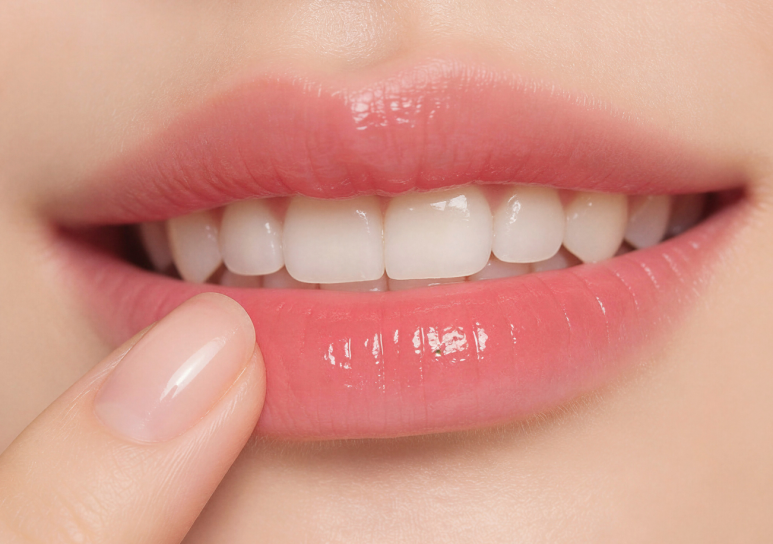
The biggest difference between natural teeth and implants is the presence or absence of nerves—in other words, sensation. A living tooth has a thin cushioning tissue called the periodontal ligament around its root. If the chewing force is excessive, it instinctively helps reduce that force, acting as a safety mechanism. It is similar to an old solid-wood post flexing slightly and dispersing impact.
By contrast, an implant lacks this cushioning mechanism and is anchored directly into the bone. Its function is certainly excellent, but it does not have the sensation needed to regulate force on its own. That is why, from a dentist’s perspective, when the options are otherwise comparable, we first consider protecting a natural tooth whose nerve is still alive. This is why Blanche prioritizes preservation over shaving down or extracting teeth.
When an Implant Is Still the Answer—Cases Where Trying to Save the Tooth Can Do More Harm
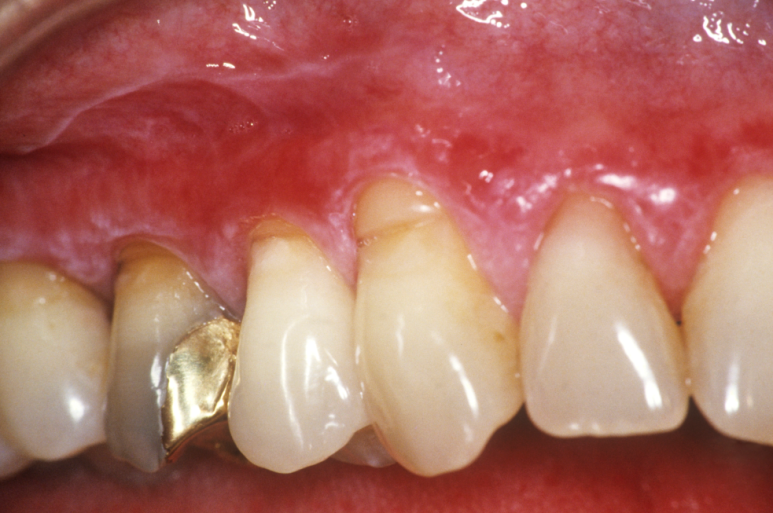
Of course, insisting on preserving every natural tooth is not always the right answer. If the tooth is cracked all the way to the root, if repeated inflammation has caused severe damage to the jawbone, or if forcing the tooth to remain ends up damaging the neighboring teeth as well, proceeding cleanly with an implant may actually reduce the overall loss. The key is to assess the balance of the entire mouth rather than looking at just one tooth.
| Category | When preserving the natural tooth is advantageous | When an implant is advantageous |
|---|
| Tooth root | The root is strong and has no cracks | The tooth is cracked all the way to the root and is difficult to preserve |
| Gum and bone condition | Treatment may restore the supporting structures | Repeated inflammation has caused extensive jawbone damage |
| Neighboring teeth | Saving the tooth will not place undue strain on adjacent teeth | Trying to preserve it would put the neighboring teeth at risk as well |
| Remaining tooth structure | Enough structure remains for reinforcement with root canal treatment and a restoration | Almost no tooth structure remains to be reinforced |
| Treatment direction | Consider ways to preserve the tooth before shaving it down or extracting it | Addressing the problem promptly may reduce the overall loss |
For reference, when an implant is necessary, insufficient jawbone may require additional bone grafting, increasing the cost and treatment time. Implants generally start at around 1 million won per tooth, but the price varies depending on the bone condition and type of restoration, and may also differ according to each individual’s oral condition.
Ultimately, the CT Scan—not the Eye—Determines Which Path to Take
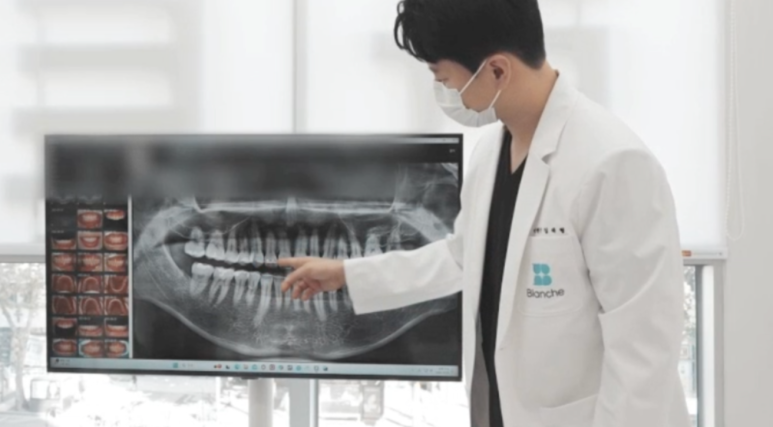
Here is the most important point I want to make. Whether a tooth can be preserved cannot be determined by looking at its surface. We need to assess the amount of remaining tooth structure, cracks in the root, the height and density of the jawbone, and the bite relationship. These factors can only be distinguished by taking a 3D CT scan and directly examining the inside of the root and the condition of the bone. This is why one person’s loose tooth may be saved while another person’s loose tooth may require an implant.
What is especially important is planning not just for today, but with five or ten years from now in mind.
If you are considering an implant and want to know more about the process and costs,
「A Complete Guide to Molar Implants: Bone Grafting, Pain, and Cost」may be helpful.
I began this post with the story of someone who came in after asking one more time.
In fact, that hesitation is the first step toward saving a tooth.
People who pause for a moment when they hear, “Let’s just extract it,” often end up choosing the path that allows them to keep their own teeth for longer.

I do not extract a tooth unless there is a clear reason that it must be removed.
That is why I look at each and every patient with the same perspective until the end.
If you feel hesitant, that hesitation is valid.
This has been Banpo Blanche Dental Clinic. Thank you.
✅ Recommended Related Reading