Hello, I’m Kim Tae-hyung, Director of Gangnam Blanche Dental Clinic.
After an examination, some patients who are about to leave occasionally ask, “Doctor, my mouth keeps feeling dry these days. Is that okay?” They ask because they do not think it is serious enough to visit a hospital specifically for, but since they are already here, they bring it up. In fact, it is a sign that deserves more attention than simply brushing it off.
Many people who complain of dry mouth are older or take several medications.
They may only notice a slightly unpleasant, coated feeling, but from a dentist’s perspective, the environment inside the mouth can sometimes have changed considerably.
Today, I’ll carefully explain what happens in the mouth when it becomes dry, which signs to look out for, and what you can replenish at the table.

When Saliva Dries Up, the Mouth’s Protective Barrier Becomes Thinner
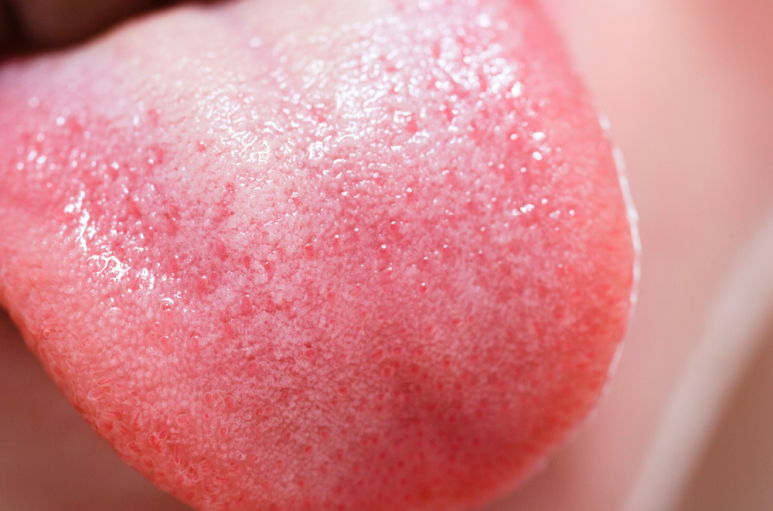
Saliva is not simply water that moistens the mouth. It constantly washes away food particles, prevents bacteria from multiplying, neutralizes the acidic environment in the mouth, and protects the teeth. In a sense, it is both a cleaning crew and a protective barrier circulating throughout the mouth all day. A healthy adult produces around 1 liter of saliva a day. When that amount decreases, the mouth becomes correspondingly more vulnerable.
The symptoms you notice are more commonplace than you might expect. You may wake up at night with a dry mouth and look for water, feel as though your tongue is sticking to the roof of your mouth when you speak for a long time, or find dry foods difficult to swallow, making meals uncomfortable without water.
For people who wear dentures, reduced saliva can also loosen the fit against the gums, causing the dentures to lift repeatedly. These symptoms may all seem minor, but each is a different way of showing the same thing: the protective barrier has become thinner.
In fact, some people who visit because of dry mouth feel only a coated sensation, yet by that point, cavities or gum inflammation may already be progressing more quickly than usual. Dry mouth is not merely an inconvenience; it is a sign that the mouth has changed into an environment where damage can occur more easily.
Dry Mouth May Also Be Related to Nutritional Problems

There are many possible causes, including insufficient water intake, stress, medications, and underlying conditions such as diabetes.
Commonly used medications, particularly those for high blood pressure and antihistamines, often reduce saliva production. If your mouth became dry after starting a new medication, it may be worth considering the medication as a possible cause.
However, nutritional deficiencies are surprisingly often overlooked.
The salivary glands also need raw materials to function, and when those materials are lacking, both the amount and quality of saliva can decrease.
Let me clarify one thing first. When people hear this, some immediately start looking for supplements, but that is not necessarily needed.
In most cases, these nutrients can be obtained from your regular meals, and even when you are getting the same nutrient, obtaining it from food tends to suit the body better.
5 Things to Prioritize at the Table

Protein provides the basic raw materials needed for the salivary glands to function.
If the materials are inadequate, it becomes difficult for the “factory” that produces saliva to operate properly.
You can get protein from eggs, beans, fish, lean meat, and dairy products.
Vitamin A is a nutrient that forms and protects the mucous membranes in the mouth.
When it is deficient, the mucous membranes become weaker and inflammation can develop more easily. On the other hand, taking too much in supplement form may actually make your mouth drier.
For this reason, it is safer to obtain it from foods such as carrots, spinach, and eggs.
Iron deficiency can cause a burning sensation on the tongue or a feeling of dry mouth.
It is not uncommon for people with signs of anemia to also complain of dry mouth. Green vegetables, legumes, seafood, and lean meat may be helpful.
Zinc is involved in maintaining the balance of saliva’s components.
When zinc is deficient, the protective function that helps prevent cavities can weaken even when saliva is present. You can obtain zinc from whole grains, nuts, and seafood.
The B vitamins help support the mucous membranes and cell regeneration.
A deficiency can cause a swollen tongue, frequent canker sores, and cracking at the corners of the mouth.
Because B vitamins are found in a variety of foods, including grains, beans, fish, and dairy products, eating a balanced diet can help you obtain them naturally.
| Nutrient | Signs of deficiency | Foods to include |
|---|
| Protein | Reduced saliva production due to inadequate raw materials for making saliva | Eggs, beans, fish, lean meat, dairy products |
| Vitamin A | Weakened mucous membranes, inflammation, and dryness (excessive intake may also cause dry mouth) | Carrots, spinach, eggs |
| Iron | Burning tongue and dry mouth, sometimes accompanied by signs of anemia | Green vegetables, legumes, seafood, lean meat |
| Zinc | Weakened protective function against cavities even when saliva is present | Whole grains, nuts, seafood |
| B vitamins | Swollen tongue, frequent canker sores, cracking at the corners of the mouth | Grains, beans, fish, dairy products |
Rather than focusing on a single supplement, it is much better to make sure your regular meals are well balanced.
Do Not Treat This Kind of Dry Mouth as Something Minor
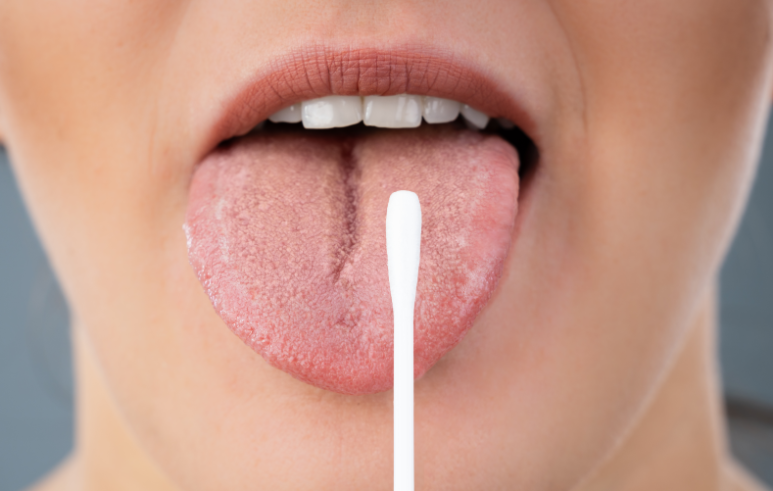
If your dry mouth persists even after paying attention to your diet and drinking enough water, it may not be simply a nutritional issue.
There are a few signs in particular that you should not ignore.
If your eyes also feel gritty and dry, an autoimmune condition such as Sjögren’s syndrome should be considered.
If your mouth becomes dry along with swelling in one cheek or beneath the jaw, the salivary glands themselves may be the source of the problem.
If bad breath or frequent canker sores occur along with dry mouth, it may mean that the balance inside your mouth has already begun to break down.
In these situations, it is more appropriate to look into the underlying cause rather than simply adding more nutrients.
Dry mouth may only be the result, with another reason hidden behind it.
Simply adding water-rich foods such as cucumbers or melon and drinking water frequently can make your mouth feel much more comfortable.
Take a moment to check whether any of these nutrients are missing from today’s meal, and whether your dry mouth is something you can safely overlook.
This has been Gangnam Blanche Dental Clinic. Thank you.