A few days after getting scaling, you look inside your mouth in front of the mirror.
Have you ever noticed that the spaces between your teeth seem wider than before and that your teeth feel sensitive, then immediately opened a search window in alarm?
Hello. I’m Kim Tae-hyung, director of Gangnam Blanche Dental Clinic.
Many people contact us with concern after scaling because their teeth feel sensitive or their gums feel hollow.
You had the treatment for your oral health, but now that your teeth feel sensitive and your gums feel hollow, you may be worried that you did something wrong.
To get straight to the point, most of these changes are not signs that anything went wrong. Rather, they are part of the process of the gums returning to their natural state.
However, there are certainly cases that should not simply be dismissed as normal.
So today, I’ll help you distinguish between the normal reactions after scaling that settle within a few days and the signs that need to be examined more closely.

Sensitivity is usually temporary — Why do your teeth feel sensitive?
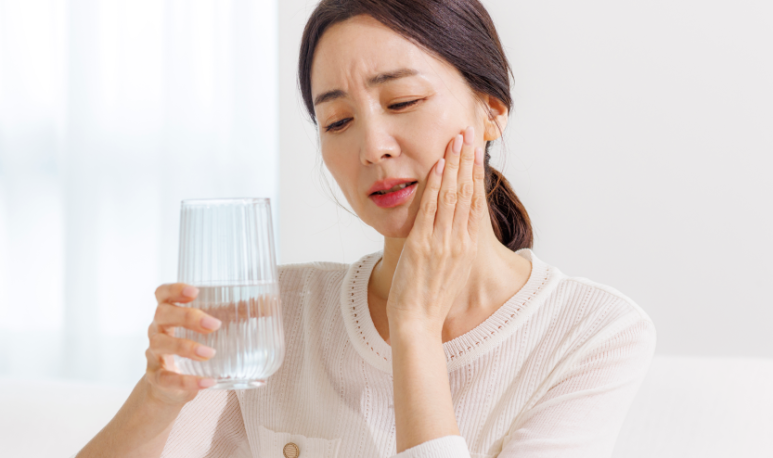
Tooth sensitivity after scaling is one of the most common complaints we hear. The reason is simple.
The tartar that had built up thickly on your teeth had essentially been covering the tooth surfaces like a scab.
Once the tartar is removed, the tooth surfaces that had been covered are temporarily exposed to external stimuli, making them more sensitive to cold water or air.
This does not happen because the teeth have been damaged. It is a temporary reaction caused by previously covered surfaces being exposed.
It usually settles naturally within a few days to one or two weeks, and using toothpaste for sensitive teeth can help with recovery.
In the meantime, avoiding foods and drinks that are extremely cold or hot will make things more comfortable.
In the clinic, we find that people who had more tartar tend to feel greater sensitivity.
This also means that a wider area had been covered until then.
When using toothpaste for sensitive teeth, rather than simply squeezing it out and rinsing, gently rub it onto the sensitive area, leave it there briefly, and then spit it out. This is more effective.
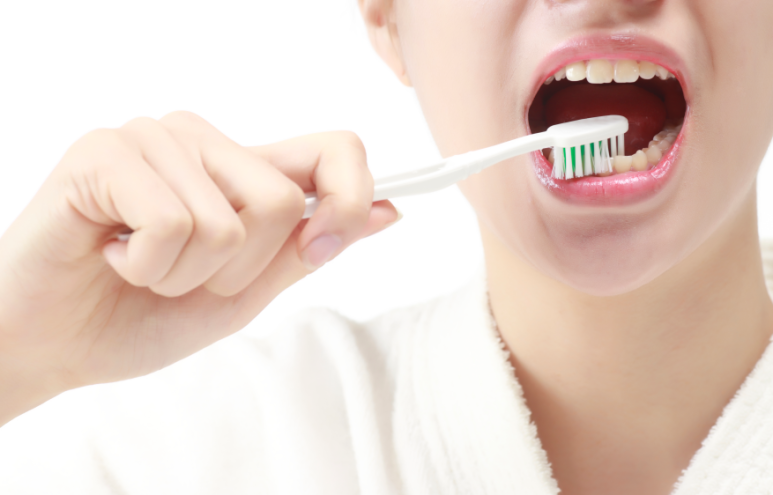
One more thing: if you have a habit of brushing by scrubbing your teeth forcefully from side to side during this period, the sensitivity may last longer.
Holding the toothbrush diagonally toward the gums and brushing gently will place less irritation on the sensitive tooth surfaces and help them recover sooner.
It is not a hole in the gums—the swelling has gone down

“We have holes between my teeth,” and “My gums have receded” are also concerns we hear very often.
Surprisingly, in most cases this does not mean that the gums have been damaged. It is the result of swollen gums settling down.
When there is a lot of tartar, the gums around it become swollen due to inflammation.
The swollen gums may fill the empty spaces between the teeth. When scaling removes the tartar and the source of the inflammation, the swelling goes down and the spaces that were already there become visible.
It is like a balloon-inflated area deflating and revealing its true appearance.
A new hole has not formed. Rather, the fact that the gums had already deteriorated to that extent is finally becoming visible.
That is why I do not view this only as a negative sign. It is also an opportunity to see the condition of your gums honestly.
However, because the newly exposed spaces cannot be cleaned well with a single toothbrush bristle, food can easily become trapped there. From this point on, it is important to clean between the teeth with floss or an interdental brush as well. If you leave the newly visible spaces untreated, tartar can build up there again and the same thing can happen repeatedly. Choosing an interdental brush of the appropriate size is not difficult once you have received guidance.
Still, these cases need to be checked again
Most of what we have discussed so far is a natural process, but not every case is the same. The following changes may not be part of a simple recovery process.
| Symptom | Normal reaction that settles down | Sign that needs to be checked again |
|---|
| Sensitivity | Gradually decreases within a few days to one or two weeks | Lasts more than two weeks or becomes worse |
| Space between the gums | Becomes visible as swelling goes down, with no further change | The space continues to grow or food repeatedly gets trapped |
| Bleeding | Briefly appears during brushing and then stops | Continues for several days or is heavy |
| Loose teeth | A sensation caused by tartar coming out, followed by quick adjustment | The looseness does not improve or gradually worsens |
| Pain and swelling | Little to none, or mild | Swelling and throbbing accompanied by pus or an odor |
In particular, a feeling that your teeth are loose should be evaluated carefully.
Mild looseness immediately after scaling is often felt because tartar that had been filling the spaces between the teeth has been removed.
However, if periodontitis has already progressed deeply, it may also be a sign that the jawbone has deteriorated and can no longer support the teeth.
Because these two situations can feel similar, the distinction can be made accurately only by checking with an X-ray how much of the supporting jawbone remains.
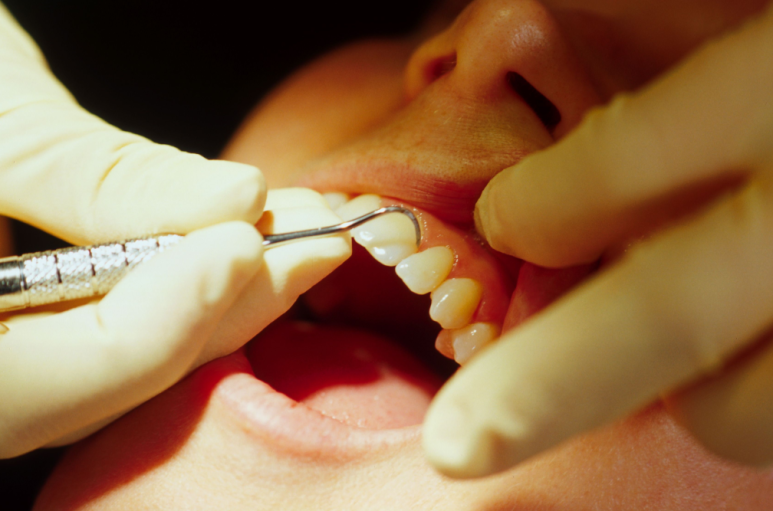
There are some clues that can help distinguish between them.
Looseness caused by tartar being removed gradually becomes less noticeable as your mouth adjusts after a few days.
By contrast, looseness caused by insufficient support from the jawbone does not decrease over time, and the sensation of slight movement continues whenever you chew.
In the latter case, it is often necessary to examine the condition of the gums as a whole rather than focusing only on the single loose tooth. It is safer to have it checked instead of simply waiting to see what happens.
Most changes after scaling are signs that the gums are regaining their health.
However, some of them are also a belated indication that “the gums had already been damaged.”
If the symptoms do not settle after several days or gradually become worse, the issue may not be part of the recovery process and may need to be evaluated separately.🟡
Whether the degree of sensitivity or looseness is within the normal range can only be determined by directly examining the condition of your gums.
So please do not be overly anxious, and consider having your gums checked in the near future.
This was Gangnam Blanche Dental Clinic. Thank you.