"Doctor, I brush diligently three times a day and even clean my tongue.
But I still worry that I might have bad breath when speaking up close. What on earth could be the problem?"
Hello. I’m Kim Tae-hyung, director of Banpo Blanche Dental Clinic.
Surprisingly, many people lower their voices and ask me this at the end of an examination or scaling appointment.
They are not people who neglect brushing.
In fact, most of them come because they brush more carefully than anyone else, yet the odor does not go away and they feel frustrated.
When you still have bad breath despite brushing every day, you may blame yourself and wonder whether you should brush harder and longer.
But speaking honestly as a dentist, the problem is often not that you are brushing poorly—it is that the cause lies somewhere a toothbrush cannot reach. Today, I’ll point out the four true sources of bad breath that brushing alone cannot resolve.

Brushing Cleans Only Half of Your Mouth

First, let’s clear up one misconception. About 90% of bad breath originates in the mouth.
Many people think it is caused by stomach problems, but digestive issues account for only a portion of cases. In most cases, the cause is in the mouth.
And even within the mouth, the area that a toothbrush actually reaches is narrower than you might think.
A toothbrush is a tool for cleaning the outer surfaces of the teeth.
However, odors in the mouth are produced more often in places that toothbrush bristles have difficulty reaching, such as the tongue, between the teeth, and beneath the gums, than on the tooth surfaces themselves.
It is like cleaning a room by sweeping only the floor while leaving the corners and ceiling untouched.
No matter how diligently you brush, if the areas being cleaned are limited, the source of the odor remains.
Causes 1 and 2 — Tongue Coating and Blind Spots a Toothbrush Cannot Reach
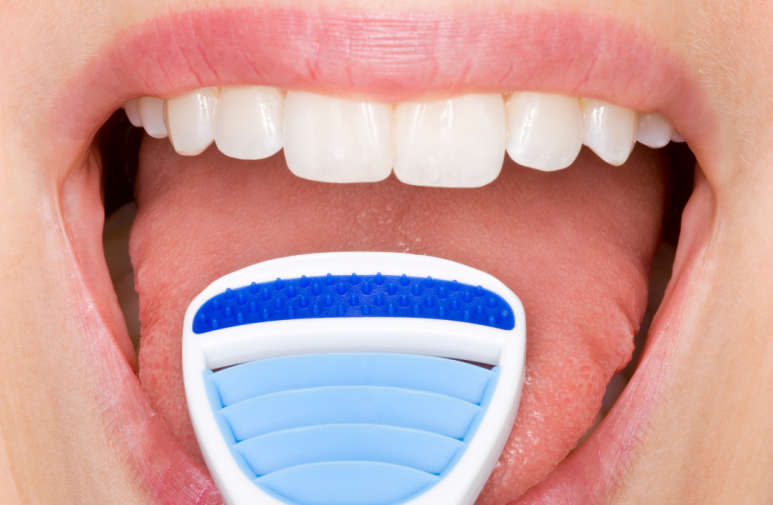
The most common source is the tongue. Bacteria and food debris accumulate between the tongue’s rough surface projections, forming a whitish coating known as tongue coating. This accounts for a significant portion of bad breath.
However, in the clinic, I often see people who say they clean their tongues but only lightly brush the front portion.
The area that produces the most odor is actually the deeper back portion of the tongue, so missing it makes tongue cleaning ineffective.
The second source is blind spots such as between the teeth and behind the molars.
Toothbrush bristles clean flat surfaces well, but they cannot enter the narrow spaces where teeth touch each other.
Food trapped in those spaces decays and creates odors, and this is difficult to resolve with a toothbrush alone without floss or an interdental brush.
Causes 3 and 4 — Pockets Beneath the Gums and the Tonsils at the Back of the Throat
The third source is beneath the gums.
There is a space between the gums and teeth called a periodontal pocket—in simple terms, a pocket in the gums.
When gum inflammation progresses, this pocket deepens, allowing bacteria to settle inside it.
Odors from this area cannot be reached no matter how thoroughly you clean the surface.
Bad breath caused by gum pockets can only be addressed by directly managing the area through scaling or gum treatment, rather than brushing alone.
This is why, when bad breath that brushing cannot resolve continues for a long time, you should consider whether the source may be beneath the gums.
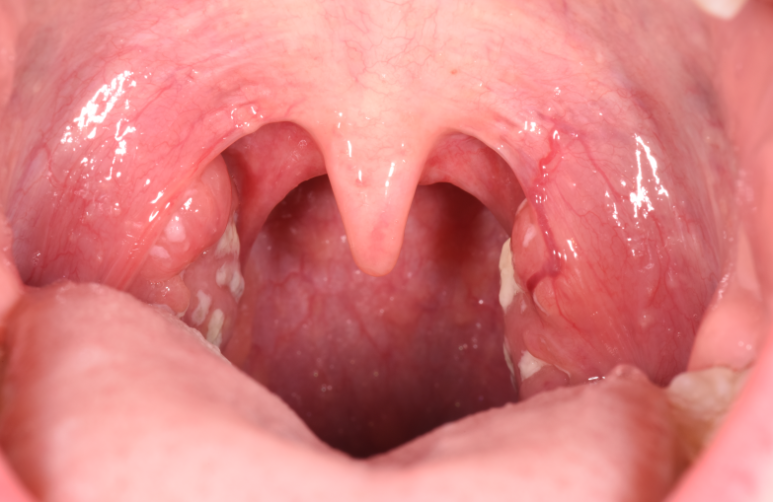
The fourth is a somewhat unexpected culprit: tonsil stones.
These are rice-grain-like lumps formed when debris collects in the small pits of the tonsils at the back of the throat, and they can produce a fairly strong odor.
If the odor remains even after brushing, cleaning your tongue, and flossing, this may be the cause.
Because the source is at the back of the throat rather than inside the mouth, many people cannot even guess where the odor is coming from.
| Cause | Where it originates | Self-care | Why brushing alone does not work |
|---|
| Tongue coating | Bacteria and debris deep on the back of the tongue | Clean back to the inner area with a tongue scraper | A toothbrush tends to reach only the front |
| Blind spots | Decaying food between the teeth and behind the molars | Use floss and an interdental brush as well | The bristles cannot enter the gaps |
| Pockets beneath the gums | Bacteria inside deepened periodontal pockets | Regular scaling and gum treatment | Cleaning the surface does not reach inside |
| Tonsil stones | Debris lodged in the tonsils at the back of the throat | An ENT examination may be necessary | The source is at the back of the throat, not inside the mouth |
So, Where Is My Bad Breath Coming From?

As you can see, bad breath does not have just one possible cause.
For some people, the source is the tongue; for others, it is beneath the gums or in the tonsils.
The problem is that these causes can all look similar from the outside, making it difficult for you to determine which specific area is responsible.
That is why many people become exhausted from simply trying to brush more thoroughly without knowing the cause.
When someone visits me because of bad breath, I check the tongue, the depth of the gum pockets, the spaces between the teeth, and the tonsils in sequence to find the actual source first.
There is a difference in the result between cleaning without knowing the cause and managing the problem with that knowledge.
If the bad breath that brushing cannot resolve originates in the gums,
You may also find the article [“Why Neglecting (Bleeding) Gum Scaling Can Be Dangerous”] helpful.

Bad breath often continues not because you lack determination, but because the cause is hidden in places that do not get cleaned.
Rather than brushing harder, the first step is to find out where the cause is.
There are areas you cannot see by yourself in a mirror,
so if this has been troubling you for a long time, getting it checked may be a way to relieve your frustration.
This has been Banpo Blanche Dental Clinic. Thank you.
✅ Recommended articles to read together