Hello. I’m Kim Tae-hyung, Director of Gangnam Blanche Dental Clinic.
Have you ever felt self-conscious for the rest of the day after noticing the person you were talking to slightly turn their head or casually cover the area around their mouth with their hand, wondering if you might have bad breath?
Because it can feel embarrassing to ask someone directly about bad breath, many people quietly worry about it on their own and only bring it up discreetly during a dental visit.
However, some people worry excessively even though everything turns out to be fine, while others are completely unaware of their own bad breath.
There is a reason for this difference. You are actually the least likely person to notice your own bad breath.
So today, I’ll summarize several ways to check your own breath at home in just one minute in front of a mirror before visiting a clinic. Rather than going deeply into the cause, today’s goal is first to determine whether bad breath is present or not.

Why can’t I smell my own bad breath?

This point needs to be addressed first for a self-check to be meaningful.
When our nose is exposed to the same smell continuously, we become accustomed to it and eventually stop recognizing it.
This is called olfactory adaptation. It works on the same principle as someone wearing perfume but being unable to smell their own fragrance.
The same applies to our own breath. Since the smell inside the mouth is always directly below the nose, the brain treats it like background noise and filters it out.
That is why the degree of bad breath you perceive can often differ from the actual degree, and a little technique is needed to judge it yourself.
This is also why simply breathing onto your hand and smelling it does not work very well.
Self-check methods you can try at home
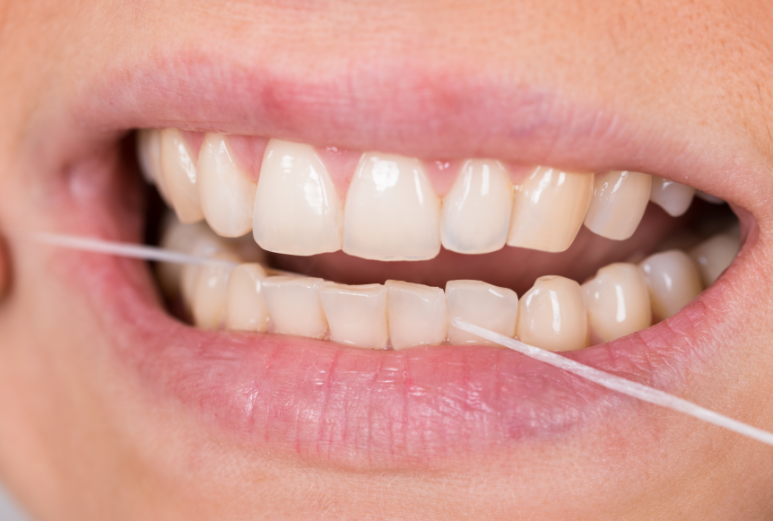
Here are a few methods. Rather than trying just one, you can get a more accurate idea by trying two or three together.
The simplest method is to lick the inside of your wrist or the back of your hand, wait for the saliva to dry, and then smell the area.
The smell transferred to your tongue remains there, allowing for a relatively objective check. The inside of the wrist, which generally has less odor than the palm, is more accurate. Be sure to smell it after the saliva has dried slightly, rather than immediately after licking it.
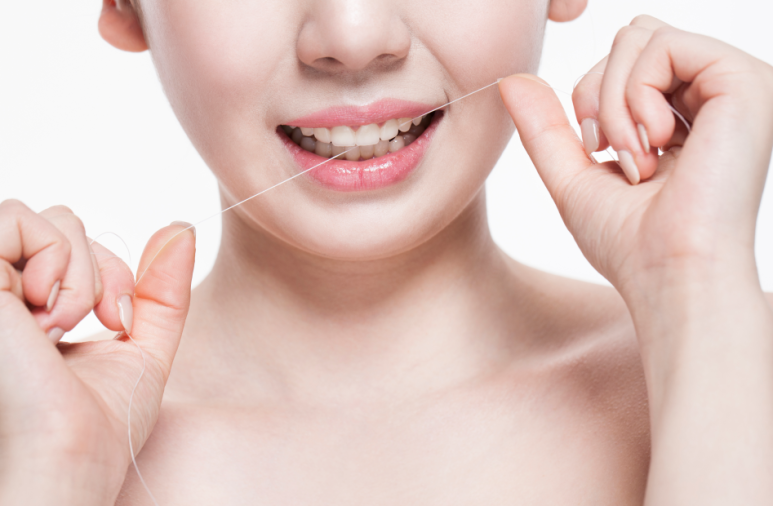
If you use dental floss, smelling the used floss is also a good method.
You can directly check the odor coming from between your teeth. If the smell is particularly strong in one specific area, that may be a clue that there is a problem there.
For the inner part of your tongue, gently wipe the area with a cotton swab or gauze and smell it.
This can help you assess the condition of the coating on your tongue, which is a major cause of bad breath. For the check to be meaningful, wipe the deeper inner portion rather than the front of the tongue.
Looking at the color of your tongue in the mirror can also provide a clue.
If your tongue is not pink but has a thick white or yellow coating, it may be the source of the odor.
However, you need to distinguish this from temporary discoloration caused by food. For a more accurate check, rinse your mouth with water first.
By trying these three things together—the smell of the back of your hand, the smell of dental floss, and the smell from the inner part of your tongue—you can get a fairly objective idea of the extent of your bad breath.
| Method | How to do it | Odors that require attention |
|---|
| Lick the back of your hand | Lick the back of your hand or inside of your wrist, let it dry, and smell it | A distinct odor remains on the dried area |
| Smell the dental floss | Smell the floss after using it | A strong odor comes from a specific area |
| Wipe the inner tongue | Wipe the inner part of your tongue with a cotton swab or gauze, then smell it | An odor remains on the area that was wiped |
| Check the tongue color | Check the color of the tongue’s surface in the mirror | A thick white or yellow coating rather than a pink color |
Temporary odor and persistent odor are different
Not all odors detected during a self-check mean the same thing. There is one distinction you need to make here.
Bad breath when you first wake up, have gone without food for a long time, or feel nervous is physiological halitosis that occurs temporarily because saliva production decreases. It is a normal reaction that everyone experiences and that goes away after drinking water, eating, and brushing your teeth.
On the other hand, if the odor remains even after brushing and continues over time or gradually worsens, it may be a sign that there is an ongoing cause somewhere in the mouth.
The type of odor can also provide a clue. An odor resembling rotting food or a fishy smell is generally oral halitosis caused by something inside the mouth. In rare cases, however, there may be an odor resembling sweet fruit or ammonia that is unrelated to oral care. In such cases, it may be necessary to look for a cause outside the mouth.
In the clinic, we see both people who worry excessively about a temporary physiological odor and people who leave persistent odor untreated, assuming that it is simply normal for them. Distinguishing between these two can help separate unnecessary worry from signs that should not be overlooked.
A self-check can tell you whether an odor is present, but it cannot tell you exactly where it is coming from.
You need to examine it directly to determine whether the source is the tongue, beneath the gums, or somewhere else.
First, use the methods above to check whether your bad breath is temporary or persistent.
If it seems closer to the kind that persists even after brushing, I discuss where the cause may be hiding in the article
「Bad Breath Despite Brushing Carefully? 4 Real Causes Your Toothbrush Can’t Address」.
Please take a look at that article as well.
This was Gangnam Blanche Dental Clinic. Thank you.