Types of Veneers
3 Common Traits of People Who Regret Them
Hello.
I’m Kim Tae-hyung,
Director of Blanche Dental Clinic.
More people than you might expect come to our clinic
after already getting veneers.
Not because they want to get new ones,
but because they ask,
“Can these be removed?”
To be honest, these consultations
weigh heavily on me as well.
Many patients tell us that they got veneers
a few years ago, but their gums keep swelling,
or their front teeth look especially prominent
every time they take a photo.
When I ask how they made the decision
in the first place,
their answers are often quite similar.
They saw attractive photos first,
compared prices, and then immediately
scheduled the procedure.
And they always add this:
“I didn’t know back then
that there were different types of veneers.”
When I see people who regret getting veneers,
many of them overlooked something
they should have checked
when making the initial decision.
So today, I’d like to share
three common traits I often see
in the clinic.^^
- They Looked at the Price First
Instead of Considering the Type of Veneer
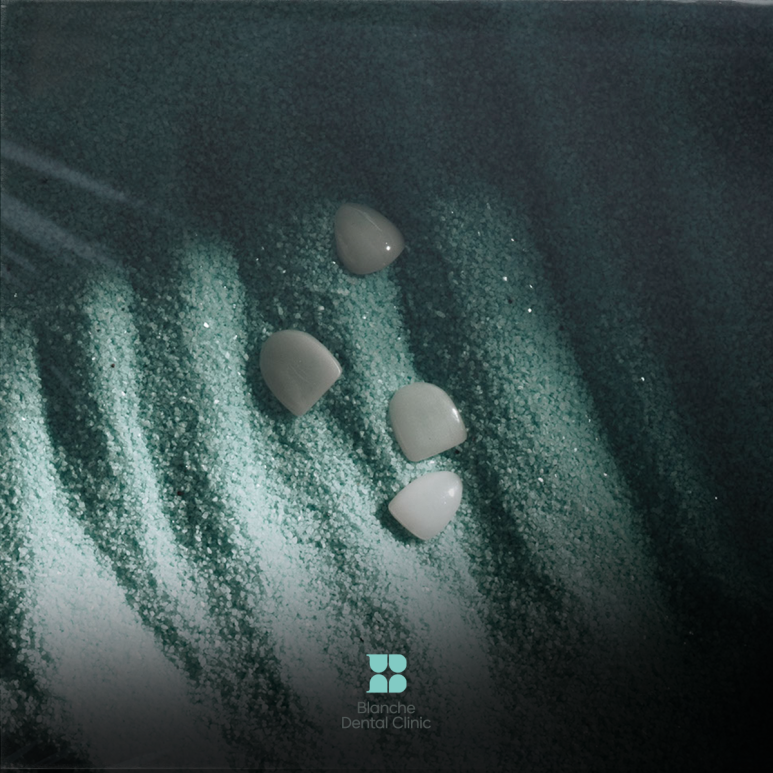
Veneers
are not all made in the same way.
Depending on how much the tooth is reshaped,
they may be classified as conventional-preparation,
minimal-preparation, or no-preparation veneers.
There are also differences depending on
what material is bonded to the tooth.
A method that builds up the shape
by applying composite resin is also sometimes
called a veneer.
Over time, resin may gradually become
slightly rougher on the surface
or become stained.
If the margins are not maintained properly,
there may also be a possibility of decay.
The main reason prices can differ significantly
even for what are called the same veneers
is usually found here:
what material is used,
and who makes them and how.
“Blanche” is the name we have given
to the veneers we use.
Giving them a name
may seem a little excessive.. haha
But it reflects how much time
we spent considering and selecting
which materials to use.
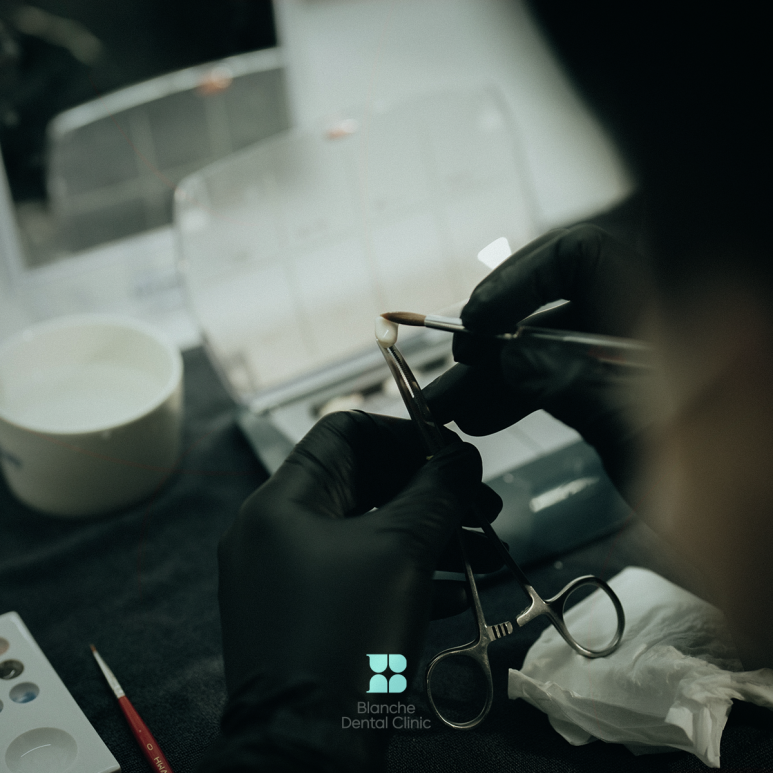
Blanche veneers use
feldspathic ceramic,
whose light-transmitting properties
are close to those of natural teeth.
We keep them thin, at around 0.1 mm,
and have an in-house dental laboratory team
so we can review the process together
from the design stage.
Be sure to ask these three questions
during your consultation:
What material is being used?
How thick will it be?
Who will make it, and where?
- They Focused Only on Attractive Veneers
Without Checking Their Gums

Among those who come to us
asking to have their veneers removed,
many say they are uncomfortable because
their gums keep swelling
or bleed when they brush their teeth.
In these cases, the gums are often
sending a signal before the teeth do.
The boundary where the ceramic meets the gums
is called the margin.
If this boundary extends too deeply
under the gums,
or if the veneers are thicker than necessary,
the gums may swell, bleed,
or gradually recede.
Even if they look attractive and well done
when viewed from the front,
if your gums bleed every time you brush
and the swelling keeps returning,
please do not dismiss it as something
that will improve as you get used to it.
It is not something you simply need to adjust to;
it is something that should be checked.
- They Trusted the Phrase
“No-Preparation Veneers” Without Checking
Their Own Dental Condition
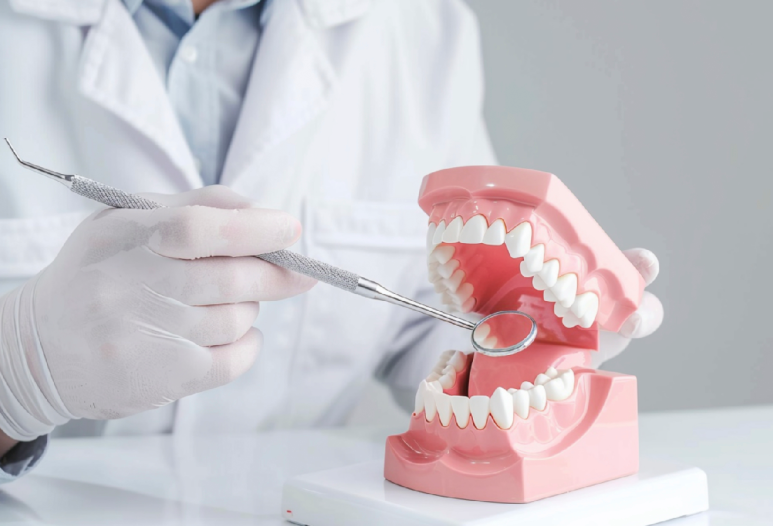
These days, many people come in
asking about no-preparation veneers first.
Since they are told that their teeth do not need
to be filed down,
it is naturally more appealing.
I probably would have looked into them first too.
However, just because someone wants
no-preparation veneers
does not mean that everyone should receive them.
Some people feel a little disappointed
when I say this. ^^;
No-preparation veneers are not good
simply because no tooth structure is removed.
They are a good option when the teeth
can achieve a suitable shape
without preparation.
If the natural teeth are small,
if there are spaces between the teeth,
or if the teeth next to the front teeth
are positioned inward,
it may be easier to create the desired shape
without preparation.
On the other hand, if overlapping crooked teeth
are already present,
or if the mouth already appears prominent,
insisting on no-preparation veneers
may add the veneer thickness directly,
making the lips and teeth look more protruded.
In fact, quite a few people who come to us
asking to have veneers removed
after getting them at another dental clinic
are in this situation.
The problem is not that no-preparation veneers
are inherently bad.
It is the result of choosing a method
that does not suit their teeth.
That is why, during a consultation,
I do not make a definitive judgment
about whether no-preparation veneers are possible
from the outset.
First, I take photographs and examine
the alignment of the teeth and the profile.
Then I explain whether no-preparation veneers
are suitable or whether minimal preparation
is needed.
In Closing
To summarize the three points:
They compared prices first
without considering the type of veneer.
They looked only at the shape of the teeth
without checking the condition of the gums.
They trusted the phrase “no-preparation”
without checking whether it suited their teeth.
Veneers are not simply
a procedure for choosing an attractive shape.
They are closer to a process of selecting
a method that suits the condition
of your teeth and gums.
Of course, not every tooth can be treated
in the same way,
and results vary from person to person.
So before getting started,
I hope you take the time to hear a thorough explanation
of what options are possible
and what limitations may apply.
Take a moment to check in the mirror today.
See whether there is a red line
along the gum margin,
or whether your front teeth look
unusually far forward.
If either of these concerns you,
rather than waiting and hoping it will improve
on its own,
I recommend having your current condition checked first.
These are your front teeth,
which you will use for many years to come.
It is perfectly fine to take a little more time
before making your decision.
Wishing you a bright, radiant smile,
Kim Tae-hyung,
Director of Blanche Dental Clinic
[Frequently Asked Questions]
Q. How are the different types of veneers classified?
A. Based on the amount of tooth preparation, they are classified as conventional-preparation, minimal-preparation, or no-preparation veneers. Based on the bonding material, they are classified as ceramic or resin veneers.
Q. Why do veneer prices differ from one dental clinic to another?
A. Even when they have the same name, prices can differ depending on the type and thickness of the material and where the veneers are made.
Q. Why do the gums swell after getting veneers?
A. This can occur when the boundary where the ceramic meets the gums, or the thickness of the veneer, encroaches on the space needed by the gums.
Q. Can anyone get no-preparation veneers?
A. No. They may be advantageous when the teeth are small or have spaces between them, but they are not recommended when crooked teeth overlap or the teeth are protruding.
Q. What are resin veneers like?
A. Although the initial cost is lower, there is a possibility of discoloration and decay at the margins, so they may need to be repaired or redone over the long term.
Q. Can veneers be removed later?
A. It depends on the bonding method, and because it is difficult to completely restore the teeth to their original condition, the initial choice is important.
Q. What should I do if my existing veneers are uncomfortable?
A. Rather than simply putting up with them and waiting to adjust, it is better to have a consultation to check the condition of your gums and margins first.