Dental Implant Bone Grafting
If You Hesitated Because It Felt Frightening and Burdensome

Hello.
I am Tae-hyung Kim,
Director of Gangnam Blanche Dental Clinic.
There is something I often hear
in the treatment room these days,
so I would like to share that story
today. ^^
I often meet patients who come in
for a dental implant consultation,
then become visibly concerned
when they hear that bone grafting is necessary.
Deciding to replace even one tooth is significant,
and now they are told that bone also needs to be added..
They may worry about the cost
and fear that the surgery
will become too extensive.
Some patients also blame themselves,
wondering whether their bone is weak
or whether it is because they
failed to take proper care of their teeth.
I meet quite a few people who feel this way
in the treatment room.
So today,
I will explain, one by one and in an easy-to-understand way,
why bone grafting is needed for dental implants,
how burdensome the process actually is,
and when it is truly necessary.
- Why Is Bone Grafting Needed?
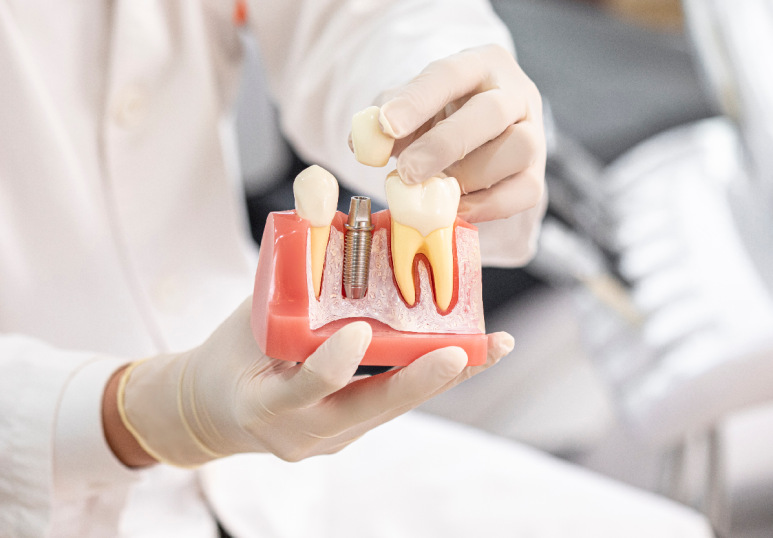
If the space left by a missing tooth
is left empty for a long time,
the jawbone around it
may gradually shrink.
The area around the upper molars,
in particular, has a structure in which the bone
can become thin more easily
because of the maxillary sinus, an air-filled space.
The upper molar area also has
this empty space above it called the maxillary sinus,
so in some cases there is not enough bone height
for placing an implant.
Because an implant needs to settle
securely within the jawbone,
it is important to first check
the amount and shape of the bone that remains.
To explain it a little more simply,
it is similar to building a foundation for a house:
when there is not enough ground,
you reinforce the necessary areas
before constructing the foundation.
If there is an area where the bone is insufficient
for placing an implant,
bone grafting is the process
of reinforcing that area.
That does not mean that everyone who receives an implant
needs bone grafting.
Whether it is needed and how extensive it must be
depends on how much bone remains
and where the implant will be placed. ^^
Also, if you have been told that your bone is insufficient,
you do not need to blame yourself
by asking, “Is this because I did not take proper care of my teeth?”
Several factors may have an influence,
including the reason the tooth was lost,
how much time has passed since extraction,
and the shape of the bone you originally had.
Once you understand the reason,
the next question you are probably most curious about is:
“Does bone grafting hurt a lot?”
- Why It Usually Hurts Less Than Expected

Hearing the words “bone grafting”
may make you feel frightened
as you imagine the surgery.
However, local anesthesia is used during surgery,
so when the area is properly anesthetized,
many procedures can be performed
without significant pain.
After the anesthesia wears off,
however, throbbing or swelling may occur
depending on the extent of the surgery
and your individual recovery.
At that time, you will take the prescribed medication
and use cold packs as instructed
while monitoring the recovery process.
I would like to emphasize
that this is not a process
that requires you to endure as much pain
as you may be imagining. ^^
Swelling or mild pain may remain
for several days after surgery,
but in most cases it is manageable enough
for you to continue your daily activities as usual,
so you do not need to worry excessively.
Then you may have another question here. Haha.
“If I get an implant,
do I have to undergo bone grafting at the same time?”
- Not Everyone Needs Bone Grafting

There is one thing
I especially want to make clear.
Bone grafting is not necessary
for everyone who receives an implant.
If the remaining bone is sufficiently strong
and has adequate width,
a stable result may be expected
without additional grafting.
On the other hand, bone grafting is more likely
to be performed when a significant amount of bone
has been lost due to gum inflammation,
when the procedure involves the thin bone
around the front teeth,
or when a sinus lift is necessary,
as in the upper molar area.
If you are told during your consultation
that bone grafting is necessary,
you may feel free to ask questions such as:
“Which part of my bone is insufficient?”
“What difficulties could arise
if I do not undergo bone grafting?”
It may also help you make a wise decision
to consider whether the dental clinic
recommends bone grafting unconditionally,
or explains the reasons while showing you
the supporting evidence. ^^
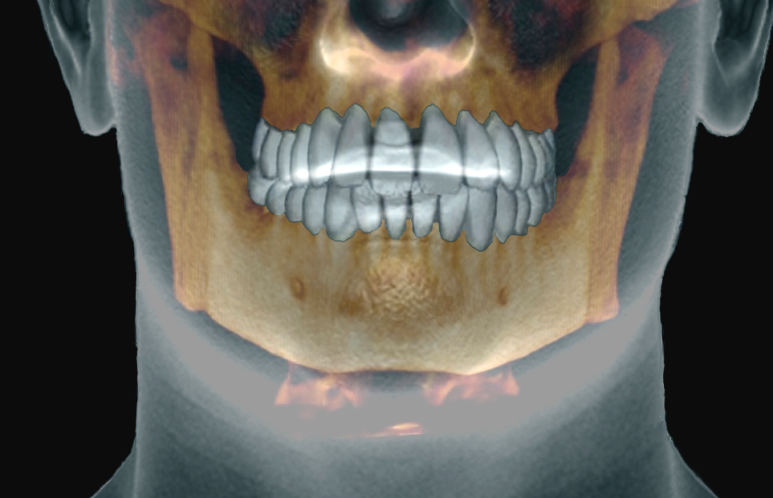
Whether this applies to your case
can only be determined after accurately checking
the condition of your bone with a 3D CT scan,
so rather than worrying vaguely,
I recommend starting with an examination
at your convenience.
In Closing
Losing even one tooth is upsetting enough,
and hearing that bone grafting is also needed
may leave you feeling overwhelmed,
as though the surgery is becoming more extensive.
However, rather than viewing bone grafting
as a process that makes implant treatment difficult,
think of it as a preparatory step
that reinforces insufficient jawbone
so the implant can settle securely.
Of course, it is not necessary for everyone. ^^
At Blanche Dental Clinic,
we first examine the CT scan
to determine how much bone currently remains,
and whether additional reinforcement
is needed at the planned implant site.
If bone grafting is necessary,
we explain which area is insufficient
and why grafting is needed
while looking at the images together.
Therefore, there is no need
to become overly frightened from the outset
or postpone treatment
just because you heard the words “bone grafting.”
The first step is to determine
whether it is truly necessary in your case,
and, if so, how extensive it needs to be.
If you have any questions,
please feel free to leave them
in the comments at any time.^^
This was Blanche Dental Clinic in Gangnam.
Thank you.
Q. Why is bone grafting needed for dental implants?
A. The jawbone in the area of a missing tooth
gradually shrinks,
and the bone around the upper molars
can become thin more easily because of the maxillary sinus.
For this reason, bone grafting to fill in insufficient areas
is often necessary.
Q. Is pain from dental implant bone grafting severe?
A. During surgery, local anesthesia means
that you will feel little to no pain.
After the anesthesia wears off,
minor throbbing and swelling can generally be managed
with pain medication and ice packs.
Q. Does everyone need bone grafting
when getting a dental implant?
A. No. If sufficient bone remains,
treatment may proceed without additional grafting.
It is mainly needed when a significant amount of bone
has been lost, in the front tooth area,
or when a sinus lift is necessary,
as in the upper molar area.