Before Getting a Crown at a Banpo Dental Clinic
Which Material Is Best?

Hello.
I’m Kim Tae-hyung, the director of Blanche Dental Clinic.
When patients are advised to get crown treatment during an examination,
many of them find it difficult to make a decision on the spot. ^^;
In particular, one question that many people struggle with is:
“Doctor,
which material would be best for my crown?”
Even after going home and searching for information about gold crowns and zirconia,
the advantages and disadvantages are described differently in every article,
which probably made things even more confusing. Haha.
In fact, rather than deciding that one crown material is always better,
it is important to choose one after considering the tooth’s location,
the condition of the remaining tooth structure,
and the amount of biting force involved. ^^
So today,
I’ll make it easy to understand how gold crowns and zirconia differ,
and what criteria to use when choosing a crown material for your teeth. Haha.
- Is a Crown Always Necessary?
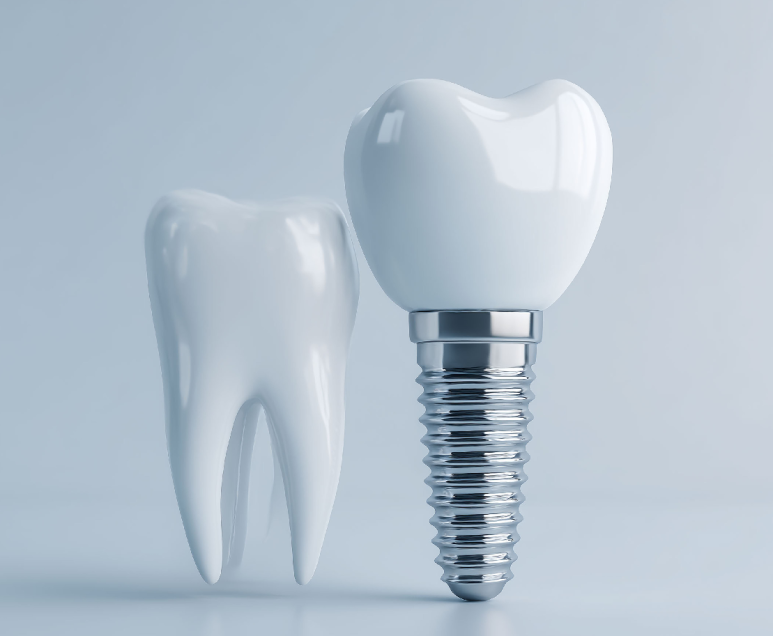
If tooth decay has progressed significantly,
or if the tooth has undergone root canal treatment,
crown treatment is often recommended. ^^
However, before choosing a material,
it is best to first confirm whether a crown is truly necessary.
If enough of the tooth remains
and the damaged area is not extensive,
it may be possible to consider a method that reinforces only part of the tooth,
such as an inlay or onlay.
Since crown treatment requires trimming a certain amount of the tooth
to cover the entire tooth,
it is important to preserve as much natural tooth structure as possible.
Therefore, first check how much tooth structure remains
and how extensive the damage is.
If a crown is necessary,
you can then decide together which material is appropriate,
such as gold or zirconia. ^^
- Gold Crowns Are Suitable for People with Strong Biting Forces
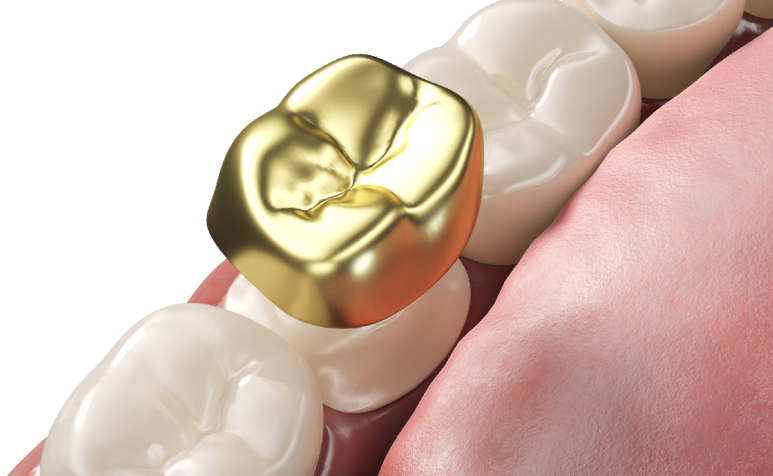
A gold crown is a crown
made from a gold alloy.
It is a material that has been used for a long time,
and one of its advantages is that it can be precisely fabricated
to fit the tooth well.
It can also be made relatively thin,
so in some cases, less tooth structure needs to be trimmed
compared with other materials.
For this reason, it is often considered for people who tend to clench their teeth,
people with strong biting forces,
or molars that are exposed to significant force. ^^
However, because the gold color remains visible,
it is generally used on molars rather than front teeth,
which are more visible when smiling.
You should also consider that the recent rise in gold prices
may make gold crowns more expensive
than other crown materials. ^^;;
- PFM Crowns:
When Considering Both Appearance and Cost

PFM was developed
to address the aesthetic limitations of the gold crown mentioned above. ^^
A PFM crown
has a metal interior
covered on the outside with tooth-colored porcelain.
Since it can be made similar in color to natural teeth,
it generally looks more natural than gold. Haha.
However, because it is relatively prone to chipping or breaking,
people with strong bite forces should keep the possibility of fracture in mind.
Since there is metal on the inside,
the metal may sometimes appear as a dark line along the gumline over time,
so be sure to ask about this during your consultation.
PFM crowns generally require
somewhat more careful maintenance
than gold crowns.
- Zirconia:
When Considering Both Strength and Aesthetics

Zirconia is a high-strength ceramic material
and is one of the materials
widely used for crown treatment today. ^^
Its advantages include sufficient strength
to withstand biting forces
while still being capable of fabrication
in a color similar to natural teeth.
Since it contains no metal,
another major advantage is that the gums
will not develop a blackish show-through over time. ^^
Because zirconia is highly durable,
it is also generally known to have
a relatively long lifespan.
It can be used reliably for both front teeth and molars,
so it is the material we recommend most often at our clinic.
- Criteria for Choosing a Crown Material
To summarize,
if durability is your priority, consider gold;
if you want a balance between color and cost, consider PFM;
and if you want both strength and aesthetics,
consider zirconia. ^^
By tooth location,
zirconia or PFM may be considered first
for areas where aesthetics are important, such as the front teeth,
while gold or zirconia may be considered first
for areas where biting force is important, such as the molars. Haha.
However, the appropriate material varies
depending on the tooth’s location,
the condition of the gums, and your bite habits,
so we do not recommend choosing a material first
without an examination.
A crown is a treatment that is used
for an average of about 10 years once placed,
so making a careful decision when choosing the material initially
can help reduce regret later. ^^;
In Closing
Today, I summarized
the characteristics of each crown material.
However, every person’s dental condition is different,
so rather than choosing a material based only on this article,
we recommend having an examination first
and discussing your options before making a decision.
If you have any questions,
please leave them in the comments.
I’ll answer them carefully. ^^
This was Gangnam Blanche Dental Clinic.
Thank you.
Q. What types of crown materials are available?
A. There are three main types: gold, PFM, and zirconia.
Q. What are the criteria for choosing a crown material?
A. The decision is made by considering biting force, aesthetic needs, and cost together.
Q. Why is zirconia used most often?
A. Because it satisfies both strength and aesthetic requirements.
Q. If I have a cavity, do I automatically need a crown?
A. Depending on how much tooth structure remains, an inlay or onlay may also be possible.
Q. How long do crowns last?
A. It varies depending on maintenance, but they generally last around 10 years on average.
Q. Is there a significant cost difference between crown materials?
A. Yes, the cost varies depending on the material, and we provide detailed guidance during the consultation.