No-Prep Veneers at a Seocho Dental Clinic
Can They Really Be Done? Misconceptions and Facts
Hello.
I’m Tae-hyung Kim, the director of Blanche Dental Clinic.
When you search online for no-prep veneers,
you find page after page talking only about how good they are ^^;
But when you actually visit different clinics for consultations,
some say they can be done,
while others say they cannot,
so many people end up feeling more confused than expected. Haha.
That’s why today,
I’d like to honestly organize the common misconceptions about no-prep veneers
and explain how they actually work.
- No-Prep Veneers—
Can They Be Done on Any Tooth?
Let’s start with the most common misconception.
Because they are called “no-prep” veneers,
many people assume they can be applied to every tooth.
But that is not actually the case.
Whether they are possible depends on the size and alignment of the teeth,
as well as the way the upper and lower teeth meet, or the bite.
If the teeth are severely misaligned
or significantly protruding,
it can be difficult to improve them with no-prep veneers alone.
In such cases, a small amount of tooth reduction
or another treatment may need to be considered
to achieve a natural result.
For example, no-prep veneers tend to work well
for naturally small teeth, known as peg-shaped teeth,
or teeth that curve inward.
On the other hand, if teeth are significantly protruding,
such as crowded teeth or prominent front teeth,
forcing treatment with no-prep veneers may make the mouth look even more prominent.
In these cases, we generally recommend either minimal reduction
or clear aligner treatment first.
So if a clinic tells you unconditionally,
“Your teeth can have no-prep veneers,”
it is a good idea to check the details one more time. ^^
- The Misconception That No-Prep Means No Side Effects
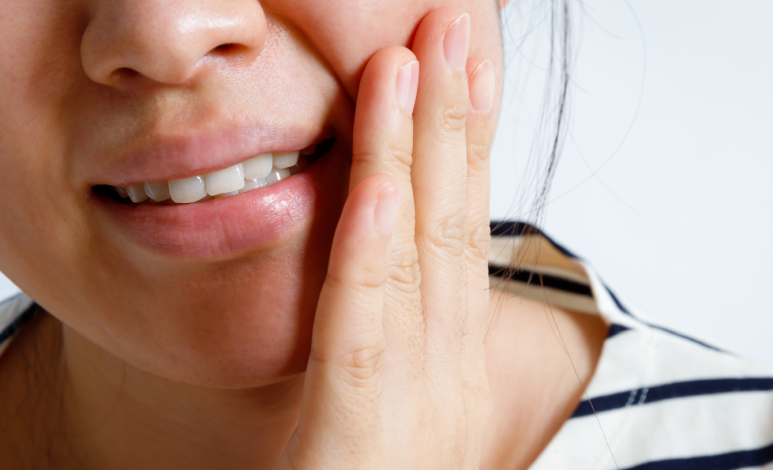
Then, does having no-prep veneers,
which involve no tooth reduction,
mean there is absolutely no burden or risk?
This is another area that is often misunderstood.
Although little or no tooth reduction is an advantage,
it does not mean that problems such as chipping or debonding
can never occur. ^^;
Because the procedure involves bonding thin ceramic
to the surface of the teeth,
if the material is not strong enough
or the bonding is not done properly,
chipping or debonding can actually occur.
This may be more likely if you grind your teeth,
have a habit of clenching them,
or frequently eat hard foods,
as repeated force is placed on the veneers
and they may chip or come off.
The design is also important.
If the veneers are made without considering
the shape of the teeth and the way they meet,
force may become concentrated in a particular area.
Rather than simply making them as thin as possible,
it is important to maintain a natural shape
while ensuring the necessary strength.
Therefore, with no-prep veneers,
you should look beyond the fact that “the teeth are not shaved.”
You should also check whether the veneers are made
with an appropriate thickness and shape,
taking your bite and lifestyle habits into account. ^^
- No-Prep Veneers—
What Determines the Result?
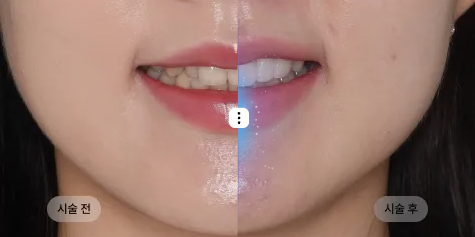
So, what does the result of no-prep veneers depend on?
To get straight to the point,
the result is not determined by the “no-prep” method alone. ^^
You need to consider what material is used,
how securely it bonds to the teeth,
and how it is designed to fit your teeth.
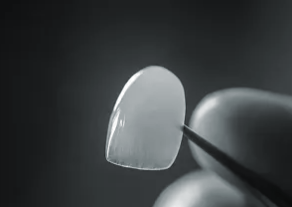
At Blanche Dental Clinic, we use Swiss feldspathic ceramic
as a veneer material because it is stronger than glass
while offering natural translucency.
We also use a premium adhesive
that has received awards in the U.S. dental field
to help the veneers withstand chewing pressure
and everyday stress.
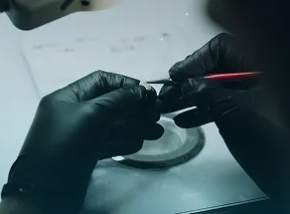
Only when this is combined with a design
that considers the shape of each individual tooth
and the gum line
can it lead to a natural and long-lasting result. Haha.
However, even when veneers are bonded with excellent materials,
please keep in mind that their longevity may vary
depending on how they are cared for. ^^
It can also be a useful criterion to check
whether the dental laboratory is located within the clinic
and whether the clinic handles the design and fabrication directly.
In Closing
After organizing everything this way,
I hope it has become clear once again
that no-prep veneers are not a treatment
that should be judged as simply good or bad
just because the teeth are not reduced. ^^
The beginning of a choice you will not regret
is confirming whether your teeth are suitable
for no-prep veneers,
as well as what materials and bonding methods will be used.
If you have any questions,
please feel free to leave them in the comments below.
Wishing you a bright smile,
Tae-hyung Kim
Director, Blanche Dental Clinic
Frequently Asked Questions
Q. Can no-prep veneers be used
on every tooth?
It depends on the size and alignment of the teeth,
as well as the bite.
An evaluation through a consultation is necessary.
Q. Can no-prep veneers
also have side effects?
If the material strength or bonding
is not sufficient,
the veneers may chip or come off.
Q. What is the difference between
no-prep and minimal-prep veneers?
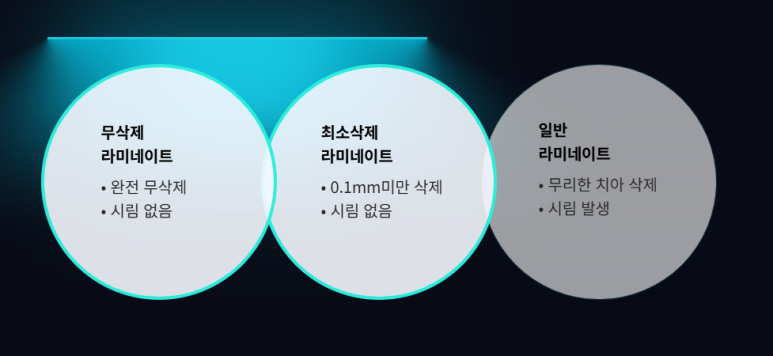
No-prep veneers involve no tooth reduction at all,
while minimal-prep veneers involve
slightly reshaping the teeth.
Q. What should I check
if I want the results to last a long time?
It is a good idea to check the ceramic material and adhesive used,
as well as how the dental laboratory is operated.