When facial contours or elasticity start to feel different from before in daily life, it naturally leads to interest in various approaches. In particular, care methods that use thermal energy are relatively well known, so many people become curious about the differences between devices or tips.
Among them, a structure in which the delivery method changes depending on the tip within the same device can be somewhat confusing at first. It is not simply a matter of having different names; there are differences in depth and range of action, so it is important to understand them separately.
In this post, I will organize the basic structure of this method, focusing on the differences between the Alpha Tip and the High Tip.
- Daechi-dong Density Alpha Tip vs. High Tip Principle
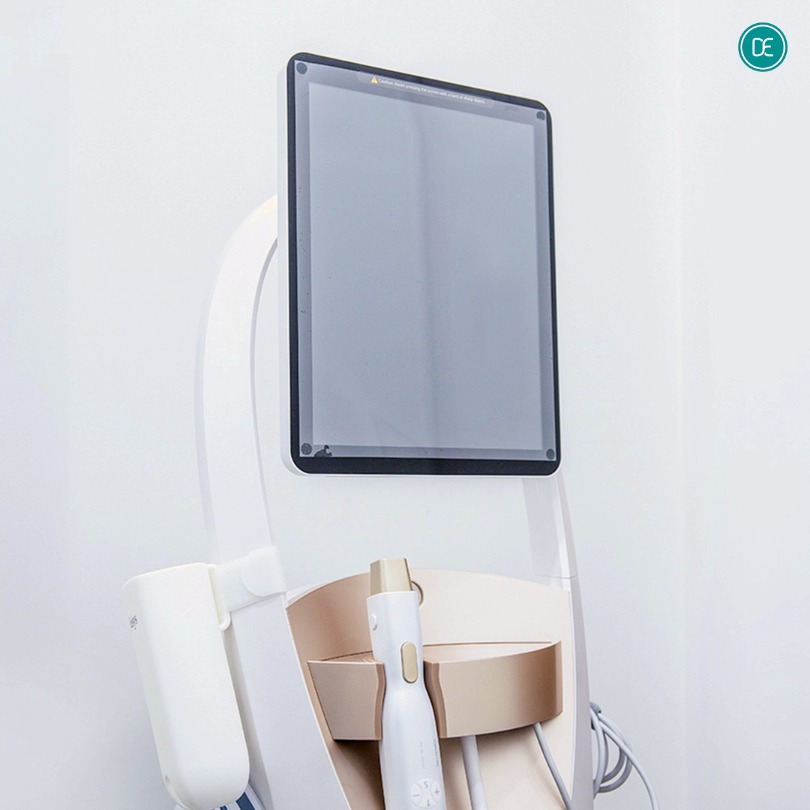
First, let’s look at the overall mechanism.
This care method works by using thermal energy to deliver stimulation to the deeper layers. Rather than staying only on the surface, it delivers energy to a certain depth and induces internal changes.
In particular, because the depth and range reached by the energy vary depending on the type of tip, the same device can lead to different results.
That is why tip selection is not just an accessory detail, but an important 기준 that helps determine the overall direction.
- Daechi-dong Density Alpha Tip vs. High Tip Differences: Features of the Alpha Tip
Now, let’s first look at the features of the Alpha Tip.
The Alpha Tip has a structure that approaches relatively shallow layers and focuses on stimulating a wide area evenly.
Because of that, it is used in situations where the goal is to refine the overall texture or pursue a gentler change. Also, since the stimulation is distributed, it is often felt as relatively less burdensome.
In other words, it is characterized more by a direction that organizes the balance of the entire face rather than focusing on a specific area.
- Daechi-dong Density Alpha Tip vs. High Tip Differences: Features of the High Tip

After looking at the Alpha Tip, let’s move on to the High Tip.
The High Tip has a structure that delivers energy to deeper layers, and its feature is that it can provide relatively focused stimulation.
That is why it is often mentioned when a more distinct change is desired in a specific area. Since the delivery depth is deeper, the intensity of the stimulation is also more clearly perceived.
In this way, the High Tip can be understood as a direction focused on localized changes.
- Daechi-dong Density Alpha Tip vs. High Tip Differences: Summary
Now, let’s compare the two and organize the differences.
| Category | Alpha Tip | High Tip |
|---|
| Approach depth | Focus on shallow layers | Focus on deeper layers |
| Stimulation method | Distributed | Focused |
| Direction | Overall balance refinement | Concentration on specific areas |
| Sensation | Relatively gentle | More clearly felt |
As such, the two tips are not simply different in intensity; their approach itself can be said to be different.
- Flow Considered When Choosing Between the Daechi-dong Density Alpha Tip and High Tip
Lastly, let’s summarize the 기준 by which they can be considered.
If the focus is on overall balance or a gentler change, the Alpha Tip is often mentioned. If a distinct change in a specific area is being considered, the High Tip is also compared.
Depending on the situation, the two may also be applied separately or in a different order.
In the end, what matters is not a simple comparison, but the flow of considering both the current condition and the desired direction.
✔ Summary Table at a Glance
- Key features by tip
| Item | Alpha Tip | High Tip |
|---|
| Range | Wide area | Localized area |
| Depth | Shallow | Deep |
| Direction | Overall refinement | Focused change |
- Comparison of how it feels
| Item | Alpha Tip | High Tip |
|---|
| Sensation | Gentler | Relatively distinct |
| Process flow | Gradual | Focused |
| Application image | Natural refinement | Distinct change |
- Summary of considerations
| Criteria | Alpha Tip | High Tip |
|---|
| Overall balance | Suitable | Auxiliary |
| Specific area | Auxiliary | Suitable |
| Repeated care | Suitable | Applied depending on the situation |
Q&A Frequently Asked Questions
Q. Do I have to choose only one of the two?
A. Depending on the situation, the two may be applied separately or considered together.
Q. Can one be said to be better than the other?
A. Since each has a different direction, the selection criteria vary depending on the purpose rather than based on a simple comparison.
Q. Is there a big difference in stimulation?
A. There may be differences in how it feels depending on the depth of delivery, and it can be perceived differently from person to person.
Q. Is one session enough?
A. It is often not something that ends in one session, but rather continues as a repeated process.
To summarize, the Alpha Tip and the High Tip are elements within the same device that are configured with different approaches and directions. Therefore, rather than making a simple comparison, it is important to understand the features of each and look at the overall flow.
I hope today’s post was helpful in organizing your 기준. Wishing you a comfortable day.