There are moments in daily life when you look in the mirror and notice changes around the neck.
Not only the face, but the neck area can also lose elasticity over time or develop more defined lines.
These changes are a natural part of aging, but various care methods are often mentioned for those seeking a more refined appearance.
Among them, methods that stimulate the body’s response and methods that provide immediate volume have different characteristics, so it is worth comparing them.
Today, let’s look at the structure of Radiesse and also sort out how it differs from filler when applied to the neck area.
- Cheongdam Radiesse for improving neck wrinkles: What’s the difference from filler? Principle

First, it is important to look at the basic mechanism of action.
This method can be understood not as simply filling space, but as a process that induces an internal response.
As the injected substance settles in place, it has a structure that gradually induces changes in elasticity over time.
In other words, some visible changes may appear right away, but the characteristic is that changes continue gradually over time.
In this respect, it differs from a simple filling method.
- Cheongdam Radiesse for improving neck wrinkles: What’s the difference from filler? Features when applied to the neck area

Once you understand the principle, you can then look at the characteristics when applied to the neck area.
The neck moves a lot and has a thin structure, so simply adding volume may make it difficult to create a natural result.
That is why an approach that considers the overall change in elasticity is important.
Because this method gradually induces changes in elasticity over time, it can offer a relatively natural flow even in an area like the neck that moves frequently.
Another feature is that the changes continue gradually over a certain period of time.
- Cheongdam Radiesse for improving neck wrinkles: What’s the difference from filler?
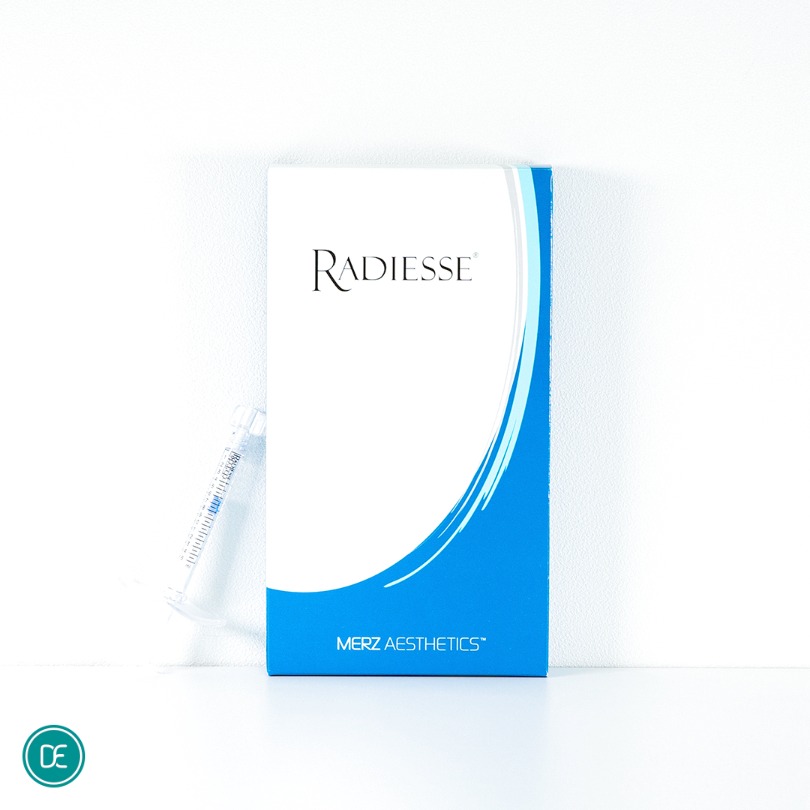
Now let’s look at how it differs from the filler method most often compared with it.
Filler has a structure that adds volume at the time of injection, so it has the characteristic of showing changes relatively quickly.
In contrast, Radiesse does not focus on immediate filling, but rather on inducing changes in elasticity through an internal response over time.
Also, in the neck area, if too much volume is added, it can look awkward when moving, and this is where the difference between the two methods becomes even more noticeable.
If filler is a method that directly fills in the lines, Radiesse can be seen as being closer to a method that adjusts the overall elasticity flow.
So it can be understood that simply filling deep lines and taking an approach that softens the overall appearance are two different directions.
- Cheongdam Radiesse for improving neck wrinkles: What’s the difference from filler? Maintenance flow and frequency
If you understand the difference, it is also necessary to look at how the result is maintained.
This method shows gradual changes over time and then tends to be maintained for a certain period.
The maintenance period varies depending on the individual’s condition, and the effect gradually softens over time.
Filler is also absorbed over time, but while the early phase centers on immediate changes, Radiesse differs in that changes continue over time.
In this way, you can understand that there are differences in the starting point and the flow of change.
- Cheongdam Radiesse for improving neck wrinkles: Other care factors to consider together

Lastly, the factors considered together are also important.
Because the neck area involves a lot of everyday movement, it is important to reduce irritation after care and allow enough recovery time.
In addition, when moisturization-focused care is used alongside it, it can help maintain the overall flow.
Rather than approaching it with just one method, continuing it together with everyday care can affect how naturally the changes are maintained.
Closing
So far, we have looked at the structure of Radiesse and organized how it differs from filler in the neck area.
The two methods each have different characteristics, and the direction differs depending on whether the focus is immediate volume or a flow of changes over time.
In particular, in an area like the neck that moves frequently, understanding these differences is important.
By looking at the overall flow together and comparing them, you can understand it in a more balanced way.
Thank you for reading this long post. I hope you have a comfortable day.