Tooth Sensitivity Symptoms
Causes and Prevention Methods
Hello. Tooth sensitivity refers to a condition in which a specific part of a tooth becomes sensitive to external stimuli,
causing pain when eating cold foods or drinks,
or even from exposure to air alone.
This symptom not only causes discomfort in daily life
but can also affect dental health.
In this post, I will explain the causes of tooth sensitivity symptoms and how to prevent them.
Main Causes of Tooth Sensitivity Symptoms
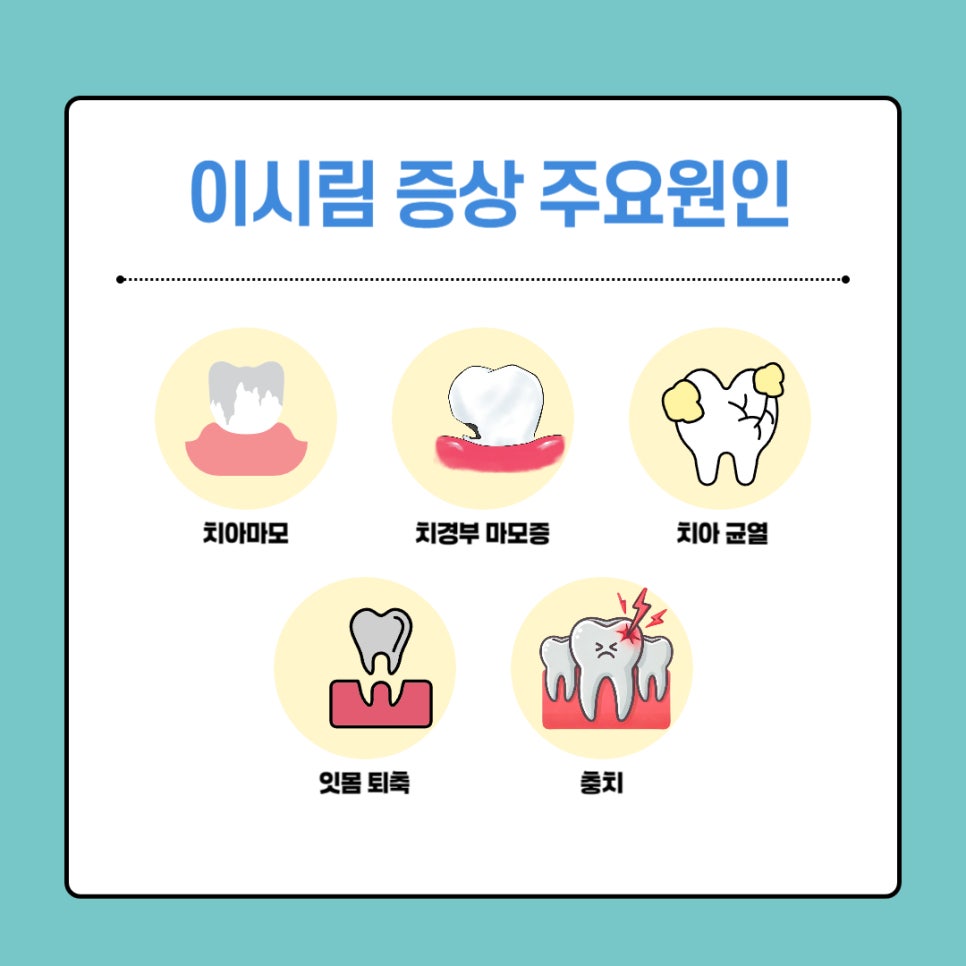
There are five major causes.
- Tooth wear
Teeth are protected by a hard enamel layer on the outer surface.
However, improper brushing habits, brushing with excessive force,
or long-term use of toothpaste containing abrasives can
cause the enamel layer to gradually wear away, exposing the dentin inside the tooth.
Dentinal tubules exist in dentin,
and external stimuli are transmitted through these tubules to the tooth nerve, which can cause tooth sensitivity.
- Cervical abrasion
The cervical area, where the tooth meets the gum, has a relatively weak structure.
When the cervical area wears down due to incorrect brushing methods or improper tooth care,
sensitivity increases and pain is triggered.
- Tooth cracks
Tooth cracks refer to tiny gaps or fissures on the surface of a tooth.
These cracks can occur due to strong impacts, teeth clenching habits,
or chewing hard foods.
External stimuli are transmitted directly to the nerve through the cracks, causing tooth sensitivity.
- Gum recession
As people age or gum disease worsens, the gums gradually recede.
When the gums recede, the roots of the teeth become exposed,
and this area has no enamel layer, making it highly sensitive to stimulation.
- Cavities
When cavities develop, holes form on the surface of the tooth,
allowing food debris or external stimuli to penetrate inside the tooth and irritate the nerve.
Early cavities cause mild tooth sensitivity,
but if left untreated, they can lead to severe pain.
Causes Related to Lifestyle Habits
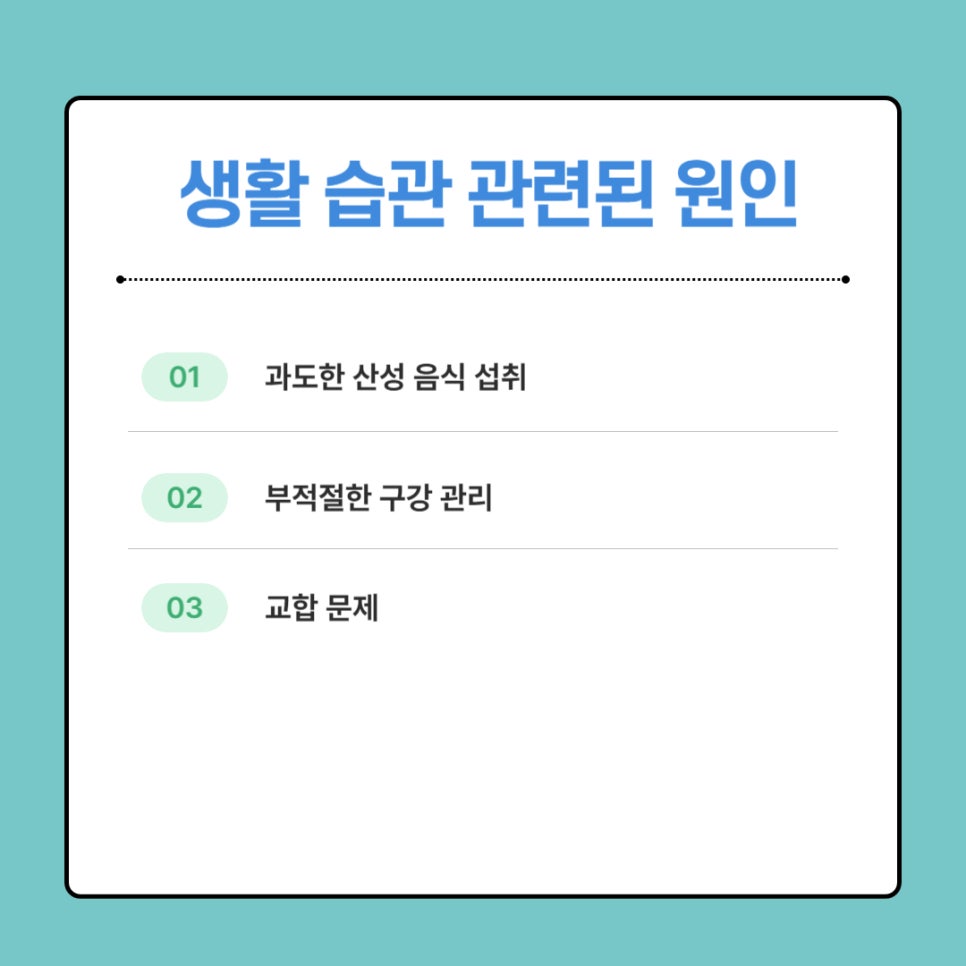
- Excessive consumption of acidic foods
If you consume acidic foods (lemons, oranges, carbonated drinks, etc.) in excess,
the tooth enamel may weaken, leading to dentin exposure
and causing pain.
- Improper oral care
Irregular brushing and insufficient use of dental floss or oral care tools can
allow plaque and tartar to accumulate, which can lead to gum disease.
Ultimately, this may appear together with gum recession.
- Bite problems
When the teeth do not align properly, or if you have the habit of grinding or clenching your teeth,
it can cause cracks on the tooth surface and increase sensitivity.
How to Prevent Tooth Sensitivity Symptoms

- Proper brushing habits
Use a soft toothbrush and a toothpaste with low abrasiveness.
Do not brush too hard; develop a gentle brushing habit.
Brush 2 to 3 times a day, 30 minutes after meals.
If you use toothpaste for sensitive teeth, it should help improve the condition to some extent.
- Balanced eating habits
After consuming acidic foods, rinse immediately with water to neutralize the acidity.
Strengthen your teeth by eating foods rich in calcium (milk, cheese, etc.).
- Regular dental visits
Visit the dentist at least once every six months to check your oral health.
Early cavities or tartar can be prevented by removing them at an early stage.
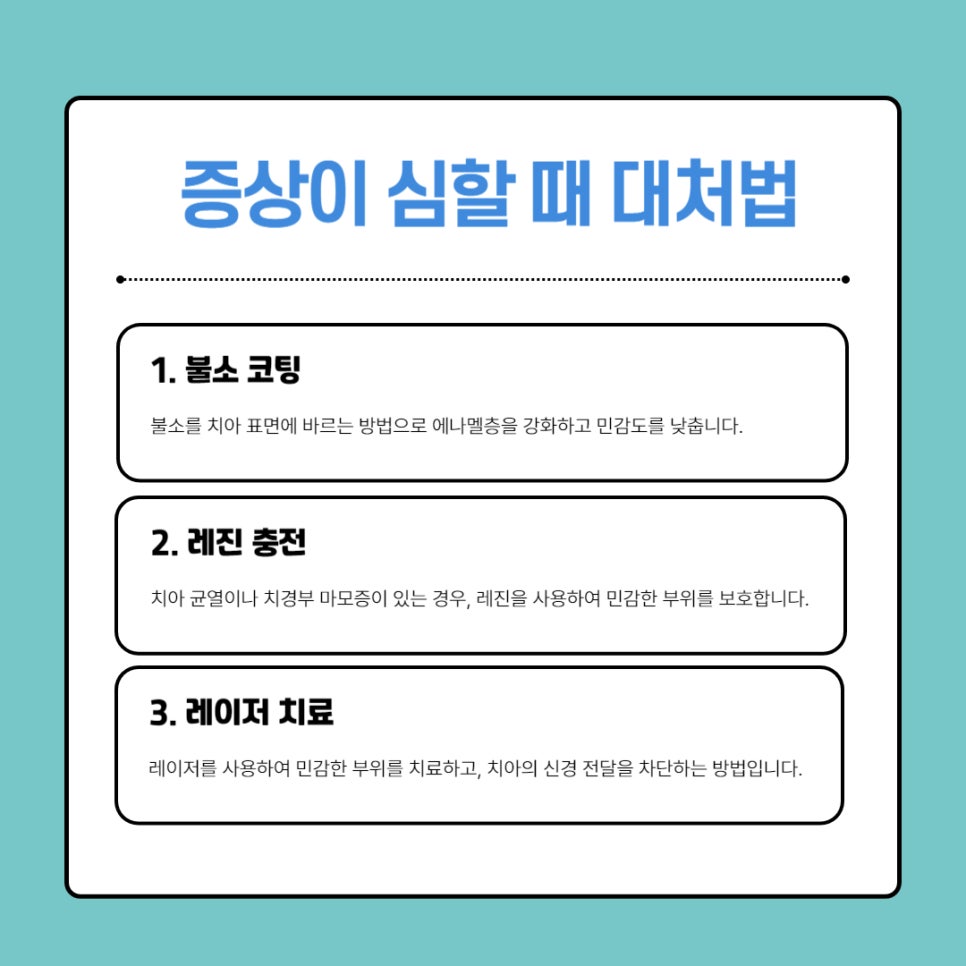
What to Do When Symptoms Are Severe
If the symptoms persist or cause significant discomfort in daily life,
it is important to visit a dentist and receive appropriate treatment.
Here are some treatment options that a dental clinic may provide.
- Fluoride coating
This method applies fluoride to the tooth surface to strengthen the enamel layer and reduce sensitivity.
It also helps prevent cavities.
- Resin filling
If there are tooth cracks or cervical abrasion,
resin is used to protect the sensitive area.
- Laser treatment
This is a method of using lasers to treat sensitive areas
and block nerve transmission in the tooth.
Tooth sensitivity symptoms arise from various causes,
including structural problems in the teeth, lifestyle habits, and poor oral care.
It can be prevented through proper oral care and regular dental visits,
and if symptoms have already appeared, they can be relieved with appropriate measures.
Do not ignore tooth sensitivity symptoms; seek professional help at an early stage to maintain healthy teeth.









 Previous image
Next image
Previous image
Next image









 Previous image
Next image
Previous image
Next image
#toothsensitivitysymptoms #causesoftoothsensitivity #preventingtoothsensitivity