Hello :)
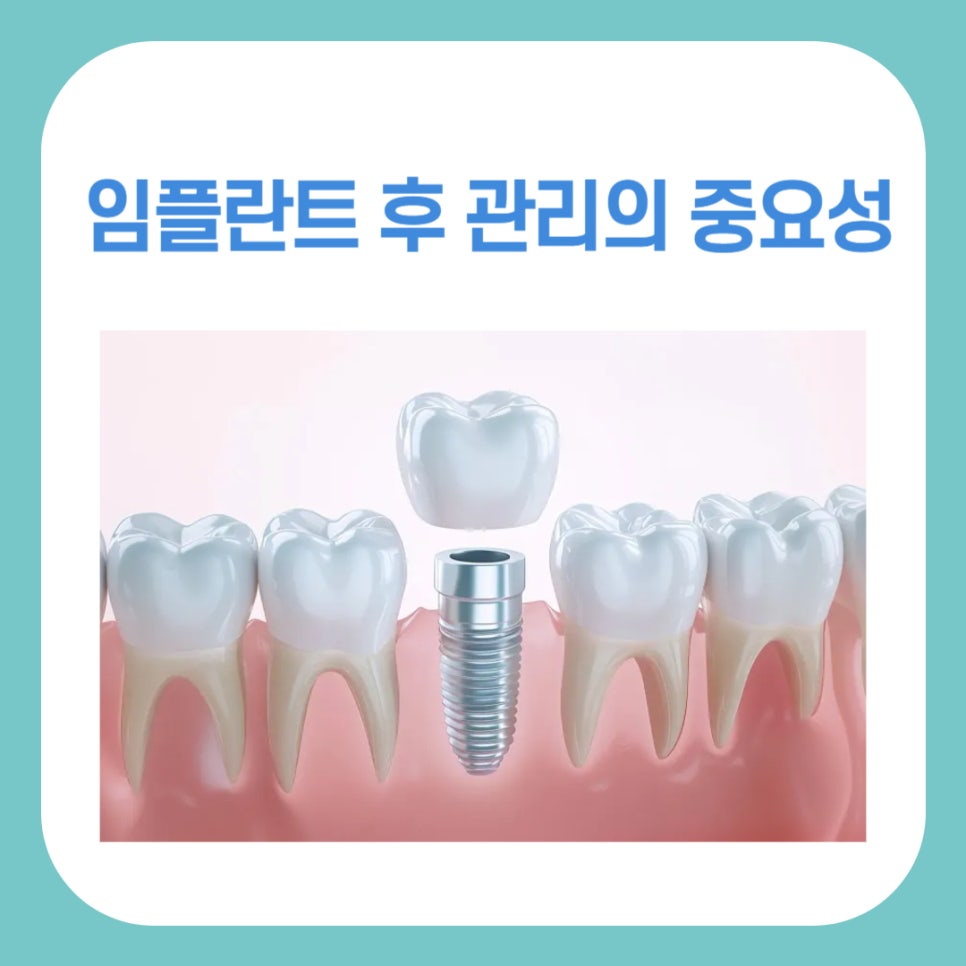
Implant surgery is one of the most effective treatments for replacing teeth,
and it provides results that are functionally and aesthetically similar to natural teeth.
It does not simply end with the procedure;
its lifespan depends on how you care for it afterward.
In particular, because implants are artificial structures unlike natural teeth, neglecting care may lead to failure.
In this post, we will look at why care after implant surgery is important and discuss specific care methods.
The Need for Care
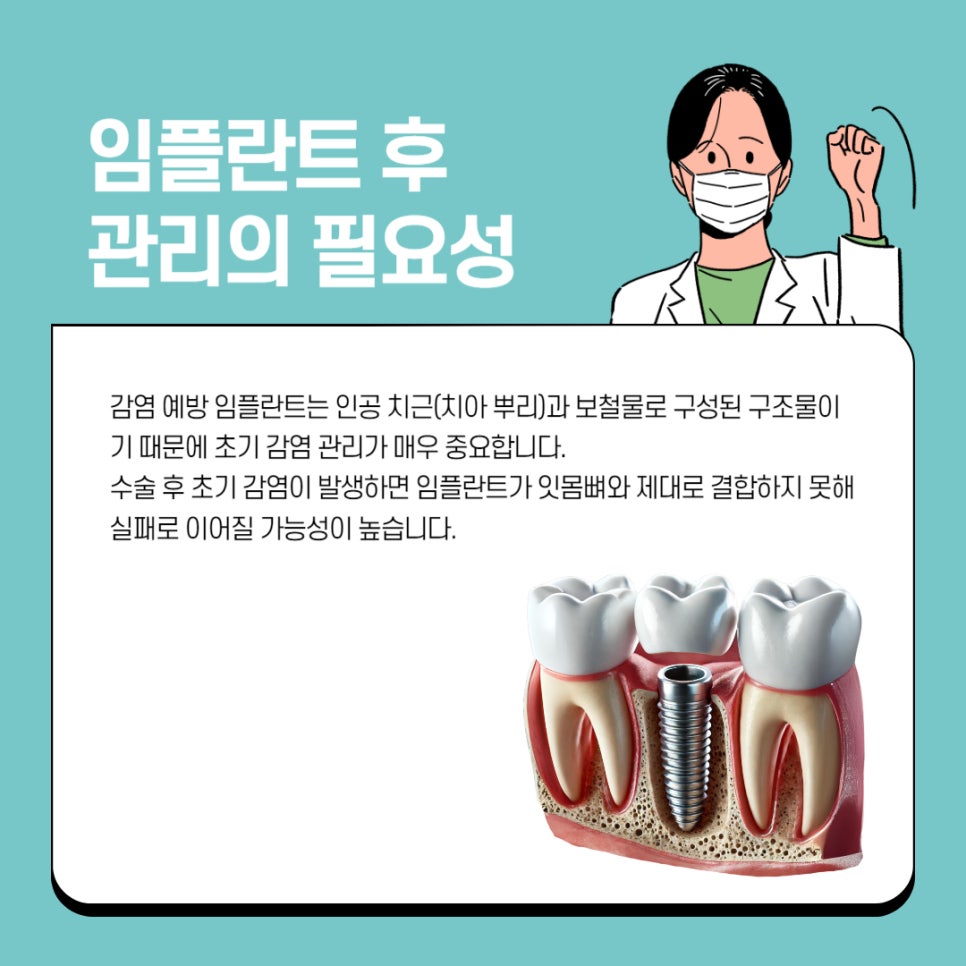
Preventing infection: Because an implant is a structure made up of an artificial root (tooth root) and a prosthesis,
managing early infection is very important.
If an infection occurs in the early stage after surgery,
it is highly likely to fail because it cannot properly integrate with the jawbone.
This is why thorough hygiene management and early care are important.
Preventing periodontal disease: The tissue around an implant can be more sensitive than the tissue around a natural tooth.
If care is neglected, the risk of developing periodontal disease increases,
which can ultimately threaten the stability of the implant.
Periodontal disease may not have any noticeable symptoms at first, so extra caution is needed.
With proper care, implants can last more than 10 years.
However, if care is not provided properly, problems can arise within a few years.
This can lead not only to financial loss but also to additional treatment, so consistent care from the beginning is necessary.
Initial Care After Implant Surgery
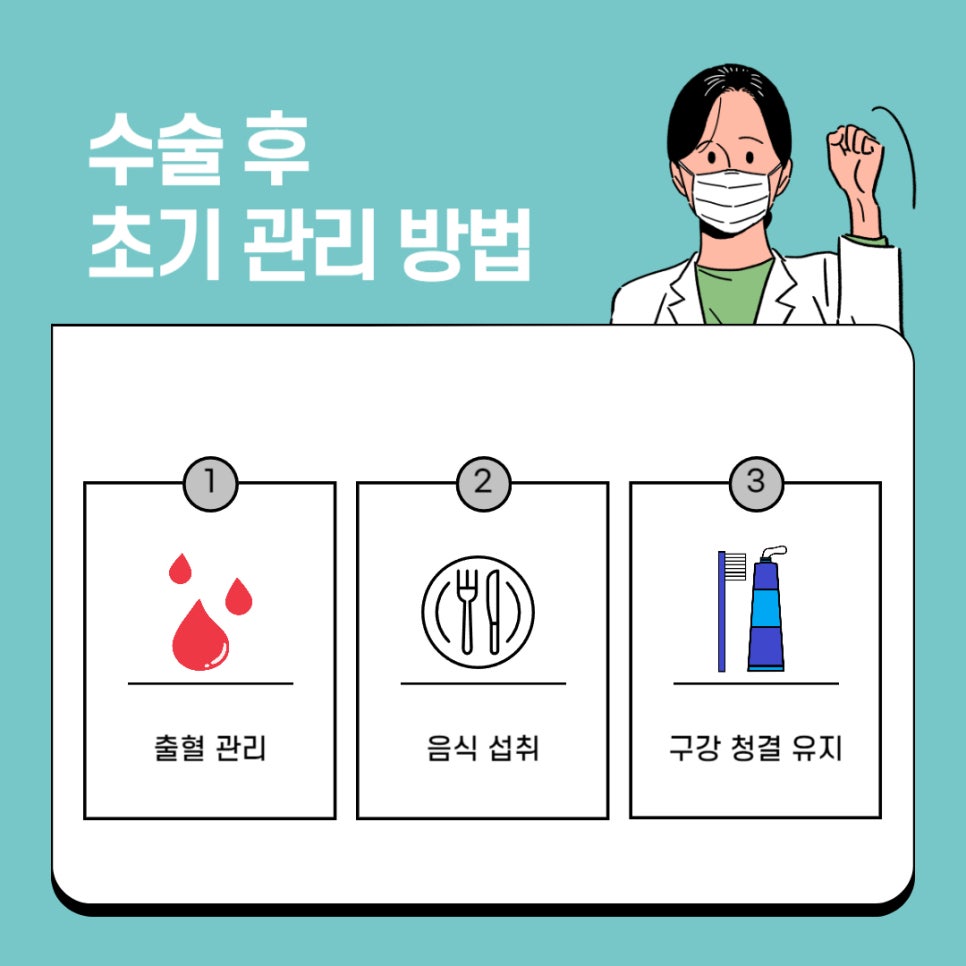
Here are the care methods immediately after surgery.
First, if bleeding occurs at the surgical site, bite on gauze and maintain pressure.
If bleeding continues even after about 1 to 2 hours, you should contact the dental clinic immediately.
Second, avoid foods that are too hot or too hard, and it is best to eat soft foods such as porridge or soup.
Third, on the day of surgery, instead of brushing your teeth,
lightly rinse your mouth with the antiseptic provided by the clinic.
Care for the First Week After Surgery
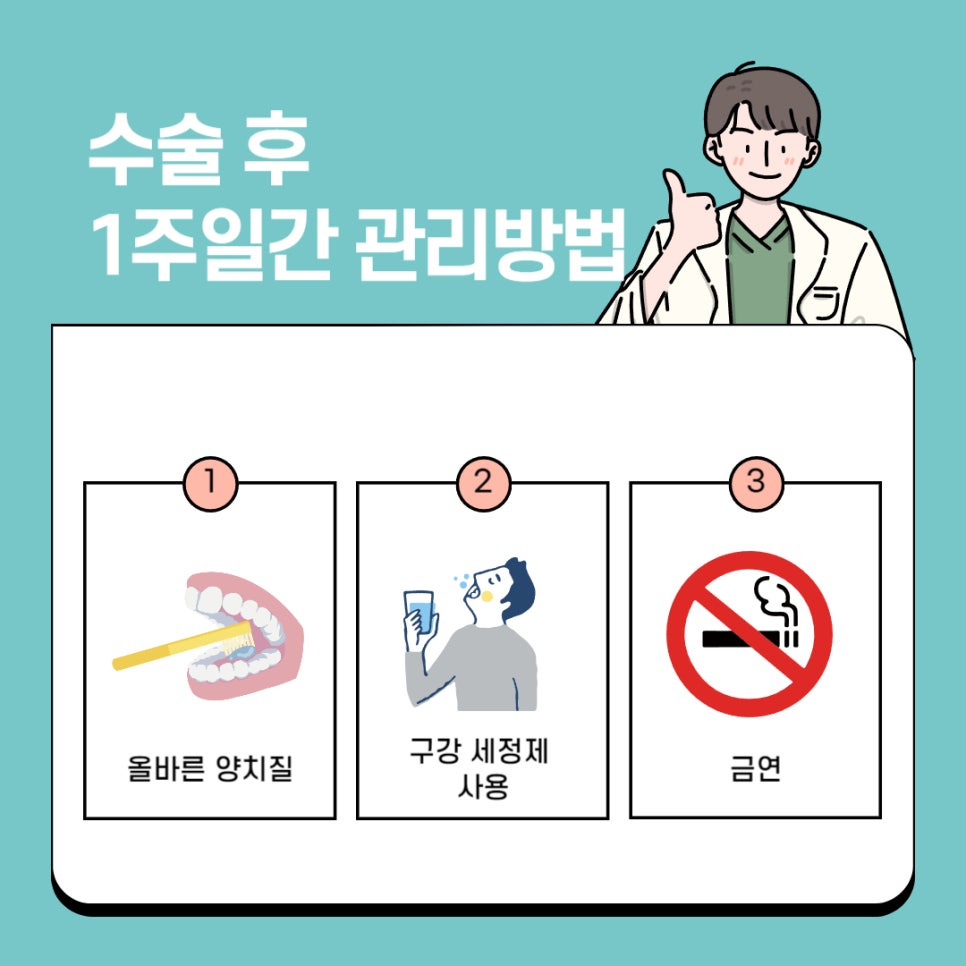
Once a week has passed after surgery, how should you care for it then?!
First, brush your teeth properly.
Brushing too hard can irritate the gums, so
use a soft toothbrush and gently clean around the implant.
Second, use a mouth rinse
To prevent inflammation, you can use the mouth rinse prescribed by the dentist 2 to 3 times a day.
Third, quit smoking!
In fact, smoking is really bad during the recovery process because
it reduces blood circulation and interferes with gum healing, so you must stop smoking.
Long-Term Maintenance Methods
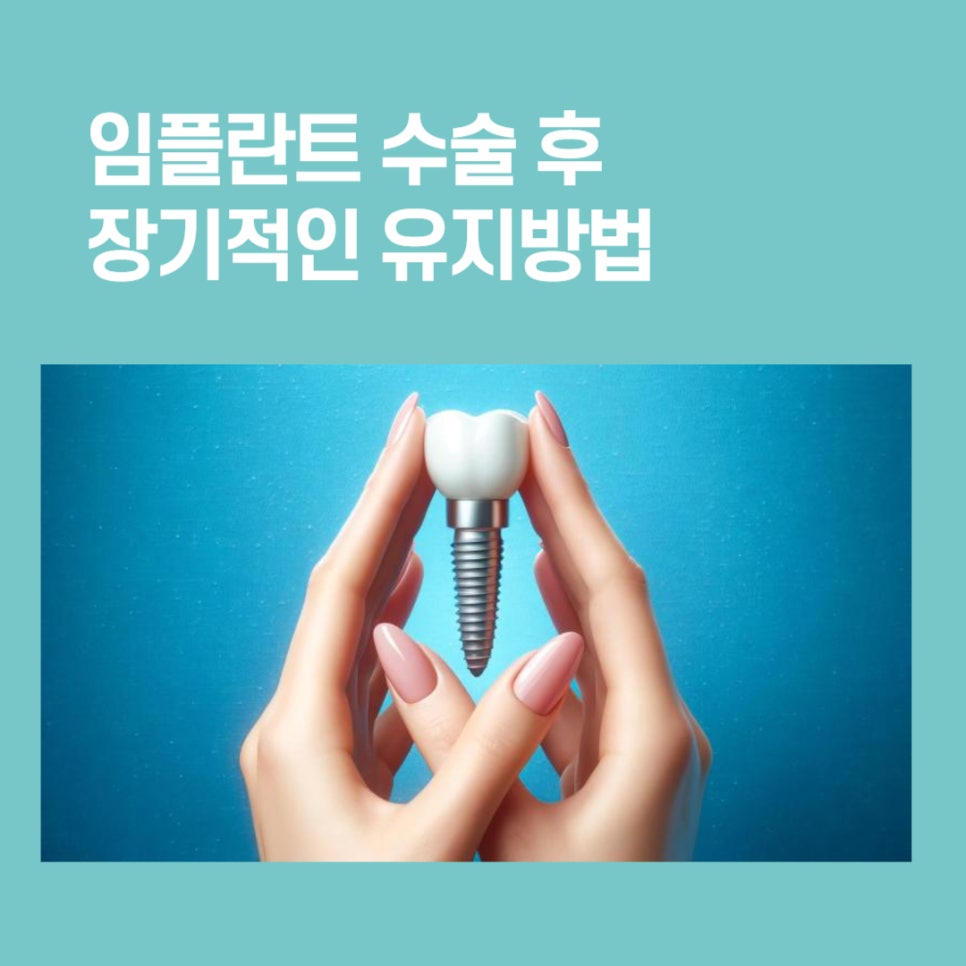
Regular checkups are essential. After implant surgery, you should have regular checkups every 6 months to 1 year.
Through dental examinations, the condition of the implant can be checked, and if a problem is found, it can be addressed early.
Use dental floss and interdental brushes: Food particles can easily get stuck around implants.
You should carefully clean the gaps between the implant and the gums using dental floss and interdental brushes.
In particular, interdental brushes are effective for cleaning around implants.
Maintain a balanced diet: Hard foods, such as nuts or ice,
can put strain on your teeth, and frequently eating such foods can also affect implants.
On the other hand, fiber-rich foods such as vegetables and fruits help maintain gum health.
Practice proper brushing: In addition to a regular toothbrush,
using an electric toothbrush can also be effective for keeping the area around the implant clean.
Ideally, you should brush at least 3 times a day, within 3 minutes after meals.
Failure Cases and Prevention Methods
Poor hygiene management: If cleanliness around the implant is not maintained,
bacteria can accumulate and cause inflammation.
This is highly likely to lead to periodontal disease, so daily care is essential.
Neglecting regular checkups: If you do not receive regular checkups,
you may miss the opportunity to identify the condition of the tissue around the implant early.
If early problems are not detected, treatment can become more complicated.
Smoking: Smoking interferes with blood circulation in the gums,
slows healing, and increases the risk of infection.
Because smokers have a higher chance of implant failure than non-smokers, they must quit smoking.
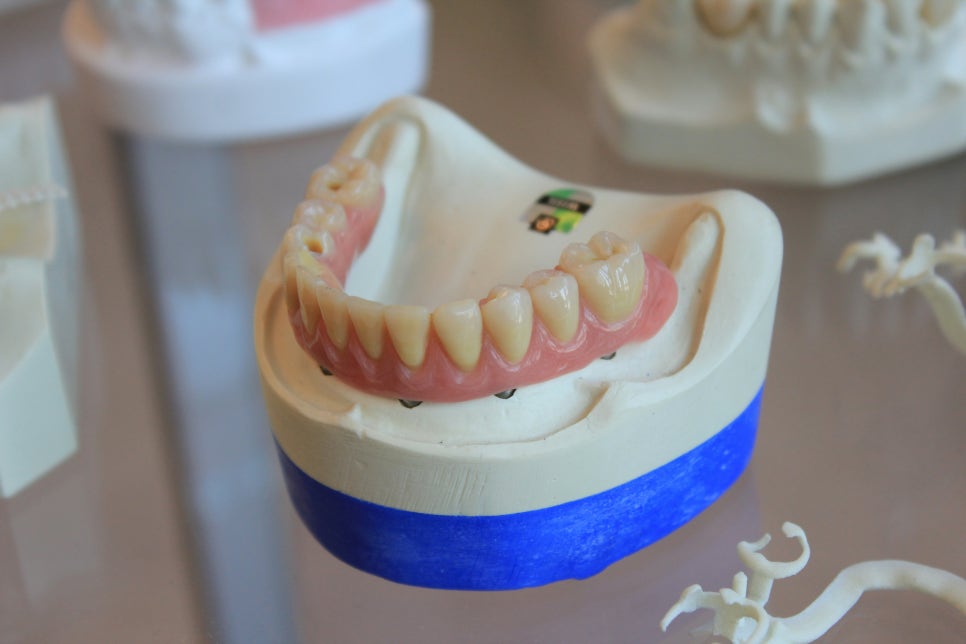
With proper care, implants are an innovative treatment that can be used for a long time, much like natural teeth.
Problems caused by neglecting care may not be easy to resolve,
so consistent care and regular dental visits are essential.
For the health of your implants, start practicing proper care habits today.
A healthy oral condition will bring you a bright smile and a confident life.









 Previous image
Next image
Previous image
Next image









 Previous image
Next image
Previous image
Next image
#임플란트관리방법 #임플란트관리의중요성