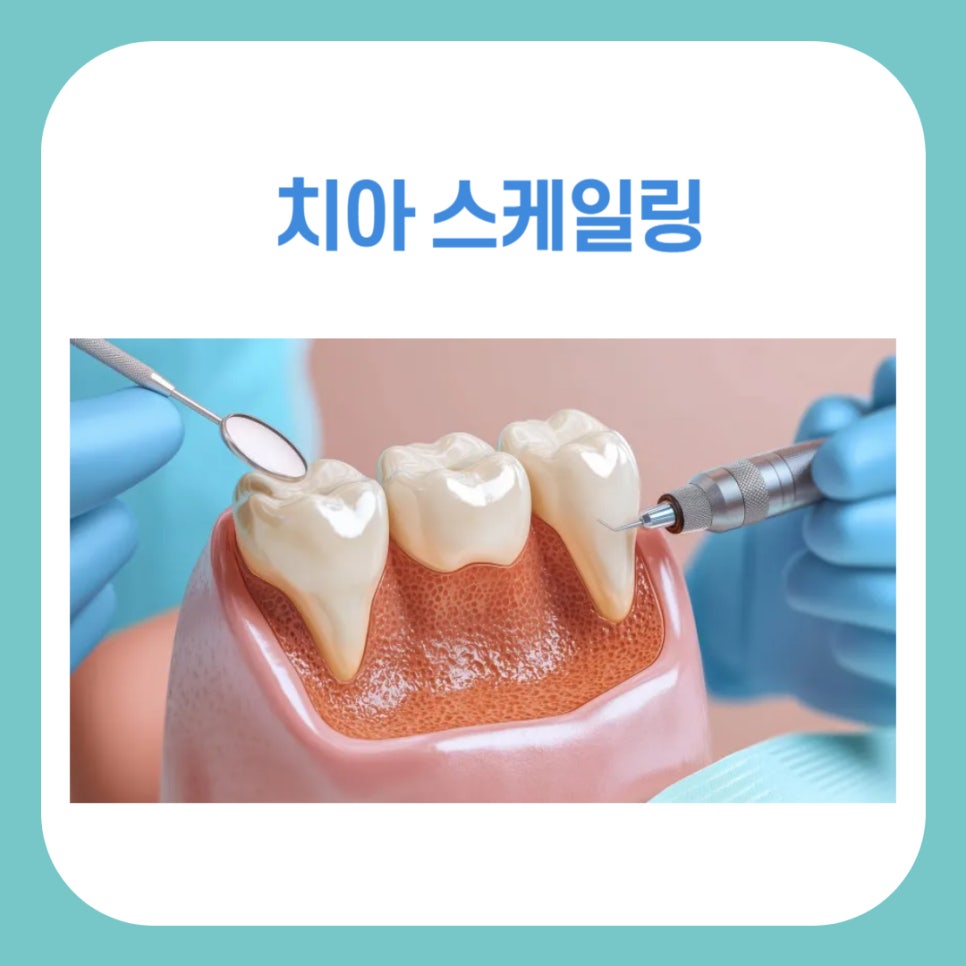
Dental scaling is a dental treatment method that removes tartar, plaque, and dental calculus that build up on the tooth surface and between the gums. Tartar is difficult to remove with brushing alone, and over time it hardens, causing gum inflammation, periodontal disease, and bad breath. Scaling is an essential treatment for maintaining oral health, and it is important to receive it regularly. For adults aged 19 and older, it is a dental treatment covered once a year by health insurance. By removing tartar and plaque that build up between the teeth and gums, it helps maintain oral health at a relatively low cost. Below, let’s take a closer look at the insurance coverage for scaling and related information.
Necessity

It is an important process for maintaining the health of the teeth and gums and preventing periodontal disease.
- Maintaining oral health
When tartar builds up, the likelihood of it developing into periodontitis increases, which can cause teeth to become loose or fall out. Scaling helps protect gum health by removing tartar.
- Preventing bad breath
Bad breath is mainly caused by tartar and plaque. Removing them through scaling can help keep breath fresh.
- Aesthetic effect
By removing stains and discoloration from the tooth surface, teeth can look brighter, which creates a better aesthetic effect and makes your smile stand out more.
- Extending oral health longevity
Regular care helps keep the oral condition clean and contributes to maintaining long-term oral health.
How often should scaling be done?
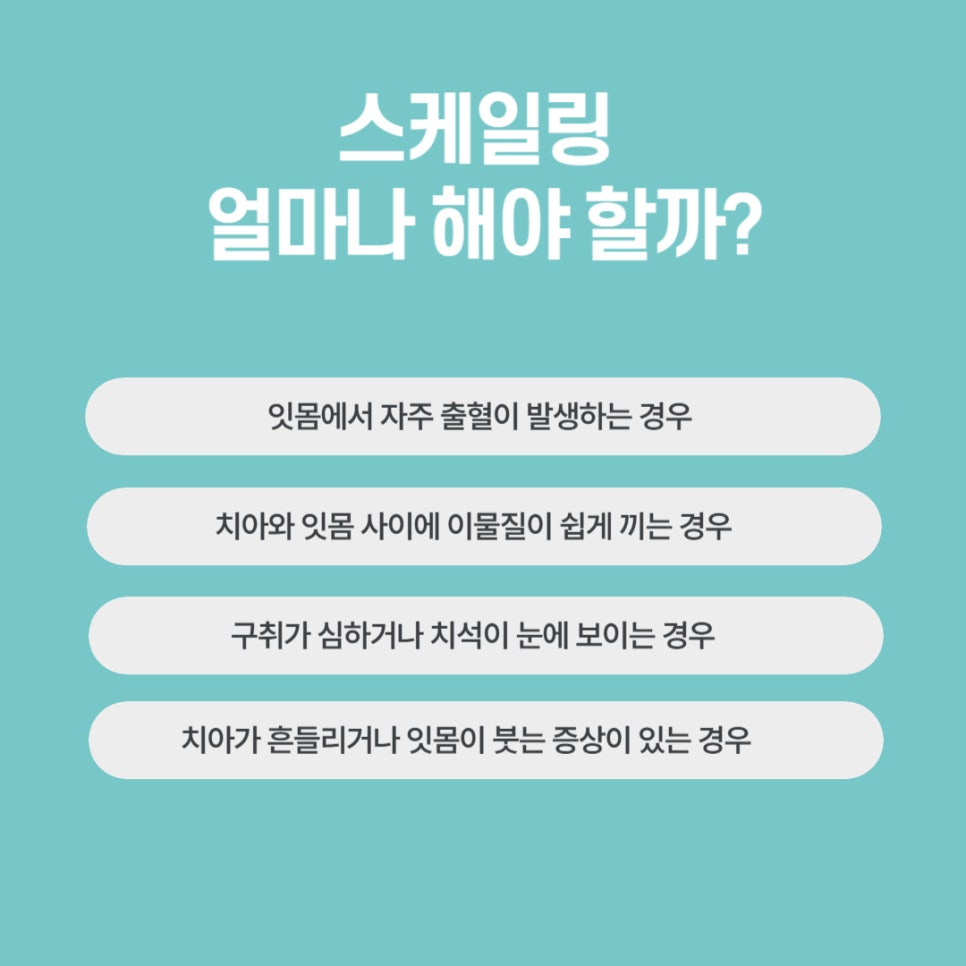
The recommended interval is generally once every 6 months to once a year. However, the interval may vary depending on each person’s oral condition.
People who develop a lot of tartar or have severe gum inflammation may need scaling more often.
-
If bleeding from the gums occurs frequently
-
If foreign material easily gets stuck between the teeth and gums
-
If bad breath is severe or tartar is visible
-
If teeth feel loose or there are symptoms of swollen gums
For these symptoms, regular care is recommended.
The scaling process
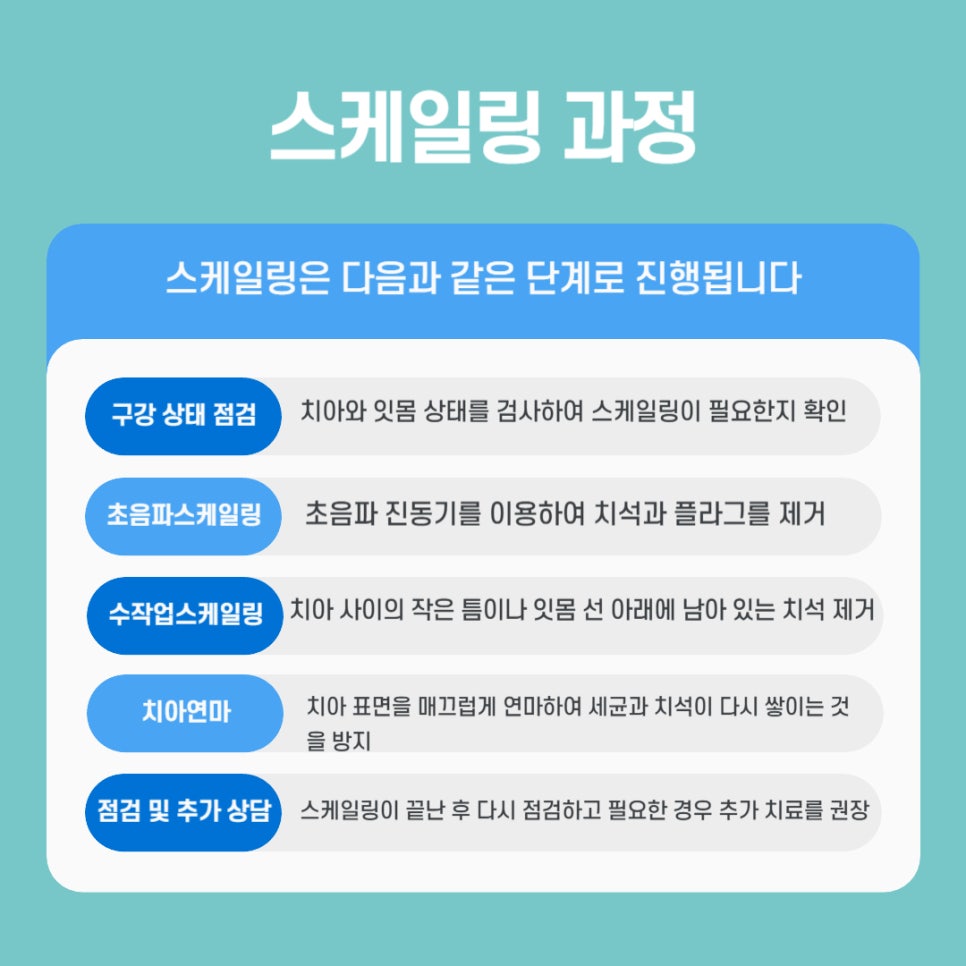
- Oral condition check
The condition of the teeth and gums is examined to determine whether scaling is needed. During this process, the distribution of tartar and whether gum inflammation is present are diagnosed.
- Ultrasonic scaling
An ultrasonic vibrator is used to remove tartar and plaque. This process is effective for removing tartar that has built up on the tooth surface and beneath the gums.
- Manual scaling
Next, any tartar remaining in small gaps between the teeth or below the gum line is removed.
- Polishing
The tooth surface is polished smooth to help prevent bacteria and tartar from building up again.
- Condition check and additional consultation
After the procedure, the condition of the teeth and gums is checked again, and additional treatment is recommended if necessary.
Precautions after scaling
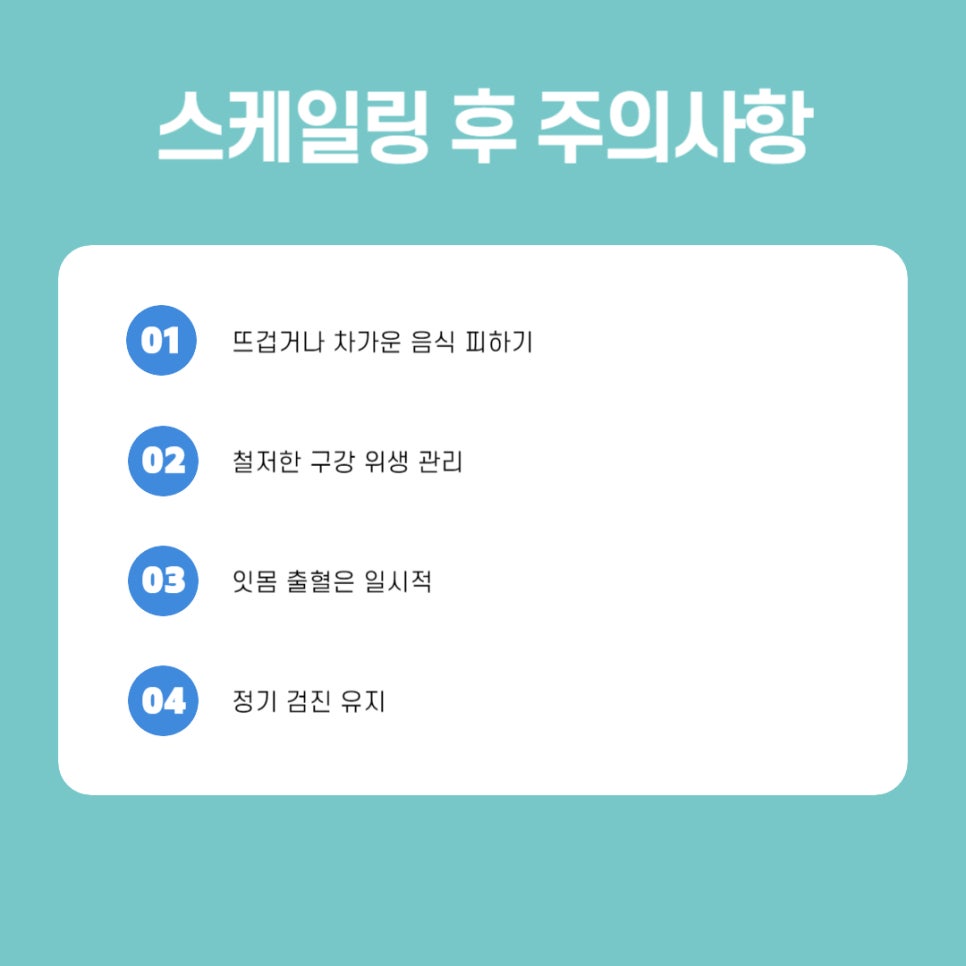
Teeth and gums may become temporarily sensitive. Observing the following points can help with recovery.
- Avoid hot or cold foods
Right after treatment, teeth may be sensitive, so it is best to avoid foods with extreme temperatures.
- Maintain thorough oral hygiene
Even after treatment, make a habit of brushing and flossing regularly so that plaque and tartar do not build up.
- Gum bleeding is temporary
Gum bleeding may occur for 2 to 3 days after scaling, but this is a normal reaction. If bleeding continues, visit a dental clinic.
- Keep regular checkups
It is important to visit the dentist regularly every 6 months to check your condition.
There is a misconception that scaling weakens teeth or makes them sensitive. However, this is not true. Tooth sensitivity may appear temporarily after tartar is removed, but it naturally goes away over time. In fact, if scaling is not done, tartar can cause greater damage to the teeth and gums.
Health insurance coverage criteria
| Target age | Health insurance coverage is available for those aged 19 and older, and benefits can be received once a year. |
|---|
| Scope of coverage | Scaling for general tartar removal is covered by insurance. However, if additional periodontal disease or gum treatment is needed, that portion may be done at your own expense. |
| Coverage period | Insurance coverage resets on January 1 each year, so if you received scaling once within the year, you can receive insurance benefits again starting the following year. |
| Cost | With health insurance coverage, scaling costs about 10,000 to 20,000 KRW, so it can be received at a relatively low cost. This may vary slightly by clinic, but without insurance the average cost is about 50,000 to 80,000 KRW. Therefore, using insurance benefits is economical. |
It is an essential process for protecting the health of your teeth and gums. Receiving regular care is one of the easiest ways to maintain oral health and prevent periodontal disease. Keep your teeth clean and healthy, and create a confident smile. Thank you^^










Previous image
Next image










Previous image
Next image