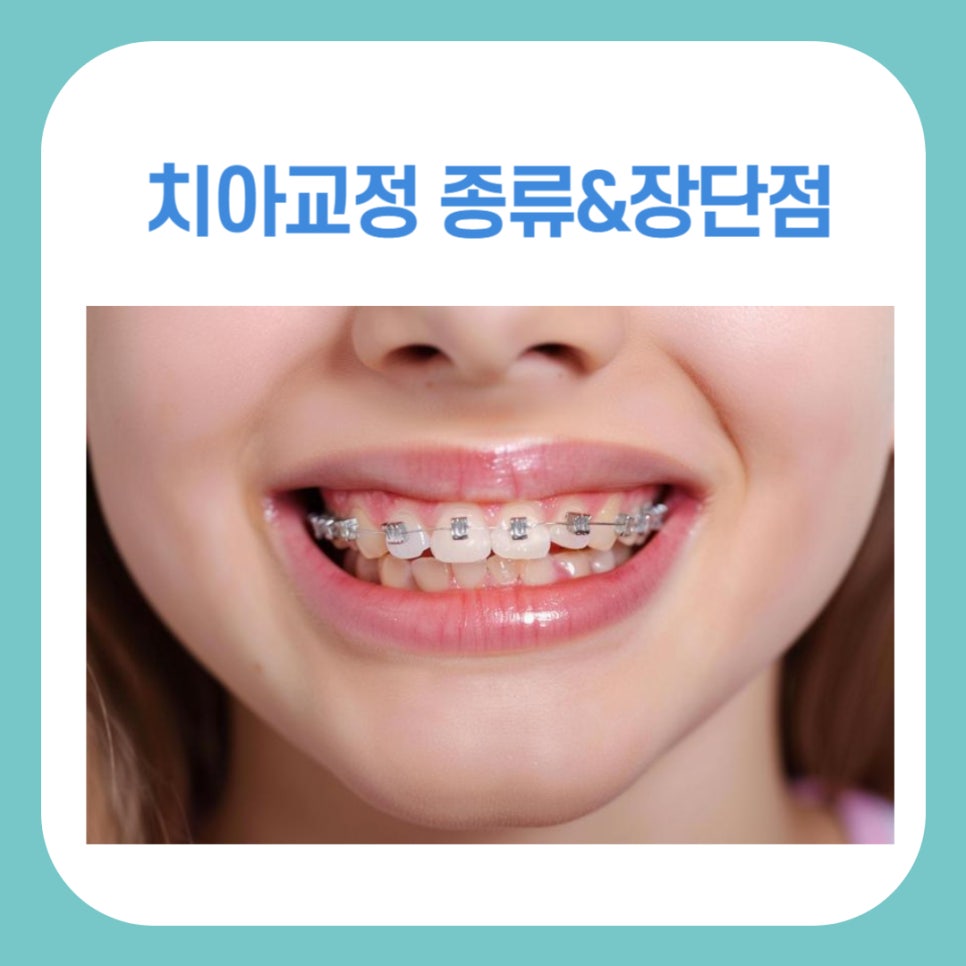
Hello. Orthodontic treatment is a method that improves tooth alignment and bite condition,
and not only provides aesthetic satisfaction but also improves oral health.
There are many types of braces, and each is chosen differently depending on its purpose, advantages, and disadvantages.
Since the treatment method that suits you is already determined,
please visit a dental clinic and receive 충분한 상담 after that before proceeding.
In this post, we will look at the types, features, and pros and cons of orthodontic appliances,
and learn how to choose the right braces for you.
Metal braces (metal brackets)
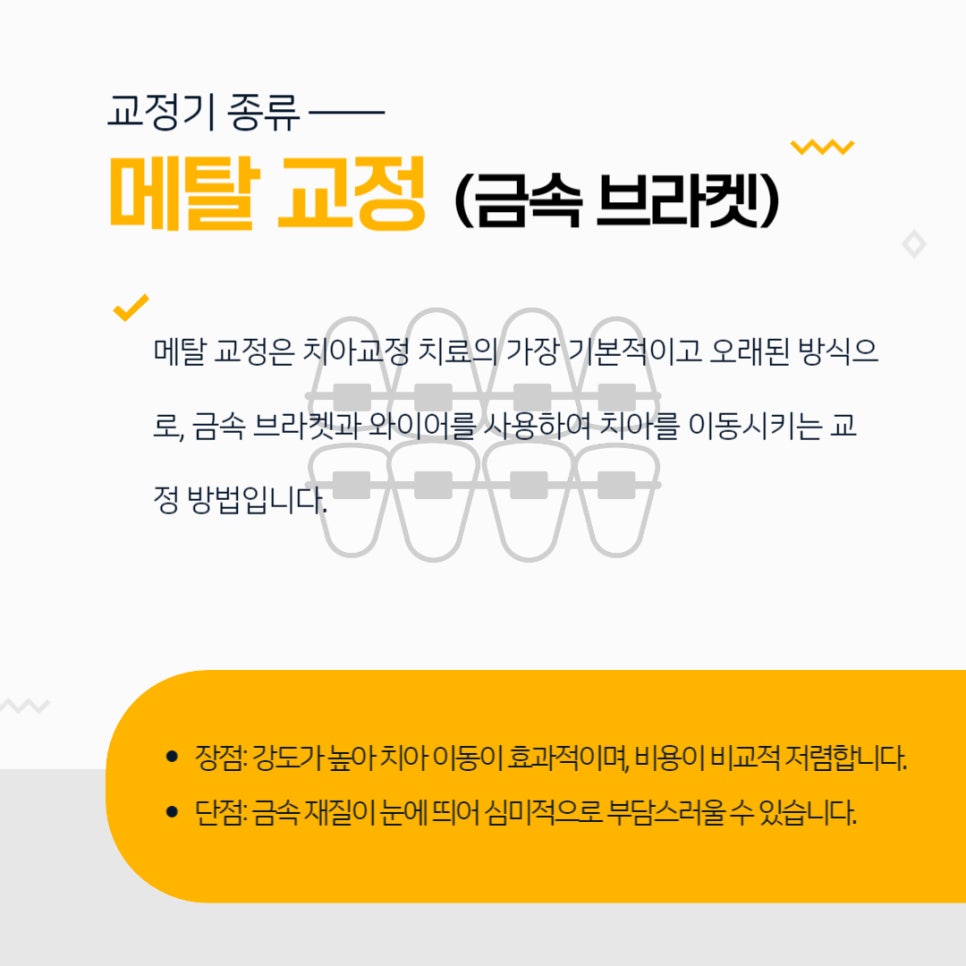
This is the most basic and long-established method of orthodontic treatment,
using metal brackets and wires to move the teeth.
Thanks to their high strength and stability, they have become a trusted treatment option for many patients.
The advantage is that the strong force makes tooth movement effective,
and the cost is relatively low.
As for the downside, because they are visible from the start,
the metal material stands out the most, so it can feel less aesthetically pleasing.
Ceramic braces (clear bracket braces)
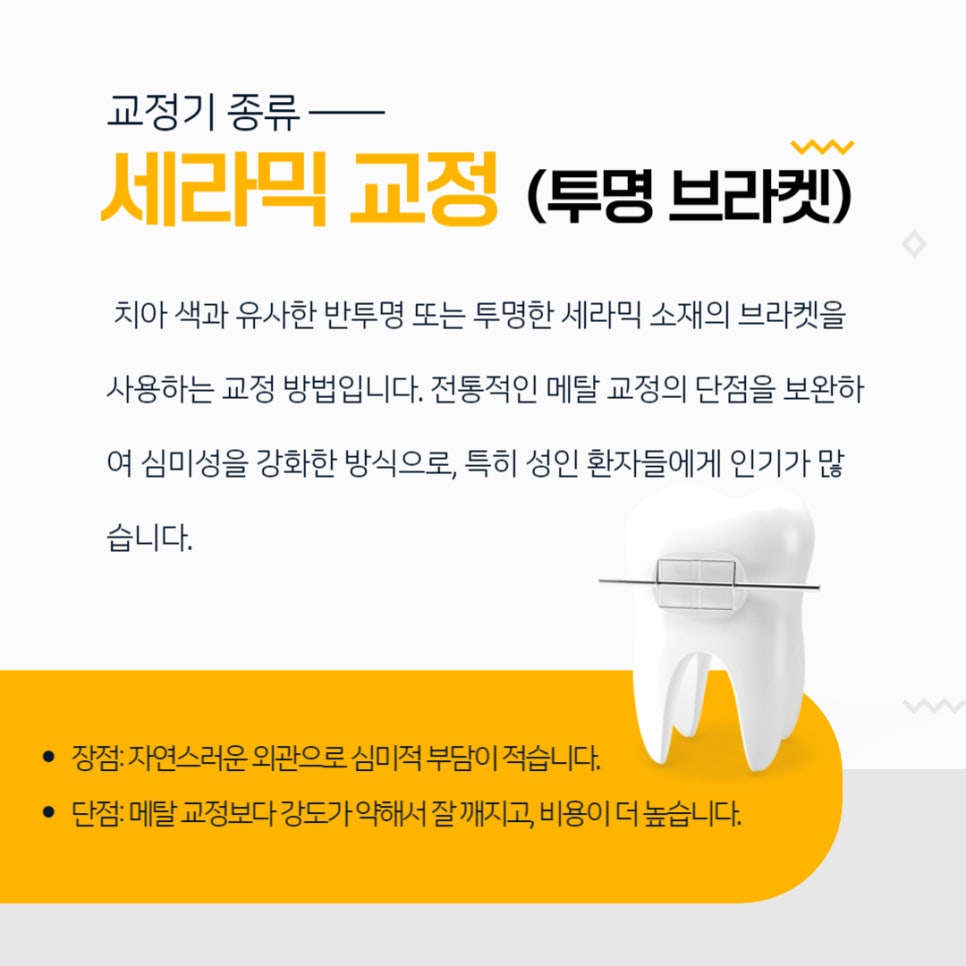
Ceramic braces use brackets made of translucent or
clear ceramic material that is similar to the color of teeth.
This method improves aesthetics by addressing the drawbacks of traditional metal braces,
and is especially popular among adult patients.
The advantage of these braces is their natural appearance, which makes them less of a burden aesthetically,
so they are recommended if you want your braces to be less noticeable.
However,
the downside is that they are weaker than metal, so they can break more easily, and they are more expensive.
They are recommended for adult patients who talk a lot while undergoing orthodontic treatment or work in service jobs dealing with customers.
Self-ligating braces
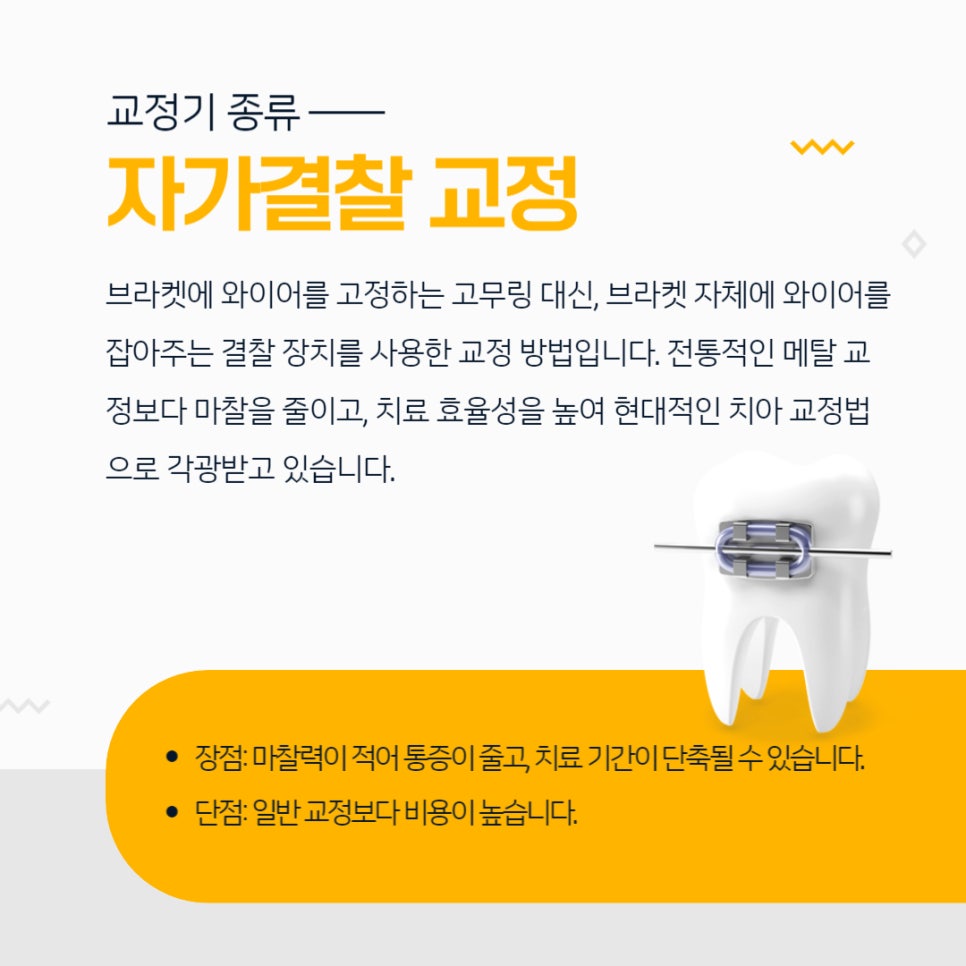
Self-ligating braces use a built-in clip mechanism on the bracket to hold the wire instead of the elastic rings used to fix the wire to the bracket.
By reducing friction compared with traditional metal appliances, they improve treatment efficiency and are gaining attention as a modern orthodontic method.
They are also the braces used most often these days.
The advantage is that lower friction can reduce pain and shorten treatment time.
The downside is that they tend to be more expensive than regular braces.
Lingual braces

Lingual braces are attached to the inside of the teeth (the tongue side) using brackets and wires,
and their defining feature is that they are completely invisible from the outside.
They are mainly popular among adults who place importance on aesthetics,
and they also provide the same functional results as conventional braces.
Their biggest advantage is excellent aesthetics because the appliance cannot be seen from the outside.
The downside is that they are more expensive than regular appliances,
and there may be discomfort during the initial adjustment period.
Because they are attached to the back of the teeth, food can easily get caught, so oral care is essential.
Clear aligners
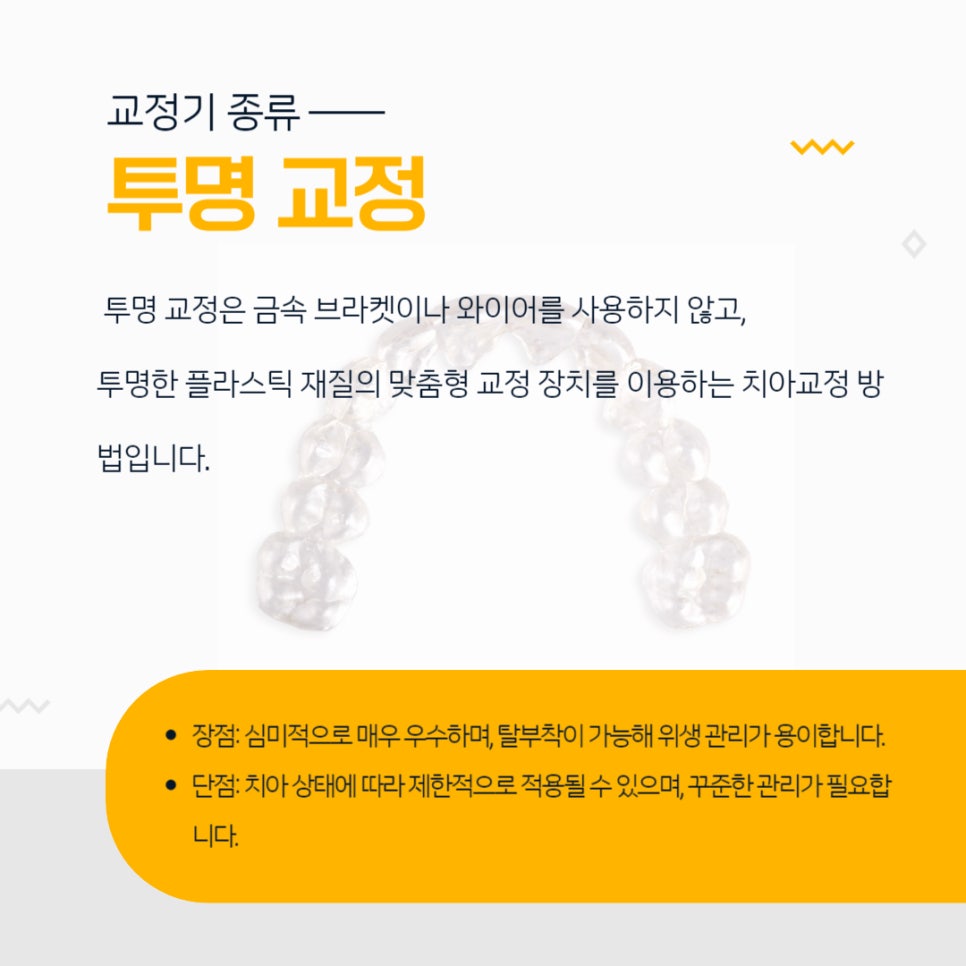
This method does not use metal brackets or wires,
but instead uses custom-made devices made of clear plastic.
It is very popular among patients who value aesthetics and convenience.
The advantage of clear aligners is that they are highly aesthetic,
and because they are removable, oral hygiene is easier to maintain.
The downside is that they may only be applicable in limited cases depending on the condition of the teeth,
and because there will be no progress unless they are worn consistently, they must be worn at all times.
Partial orthodontic treatment
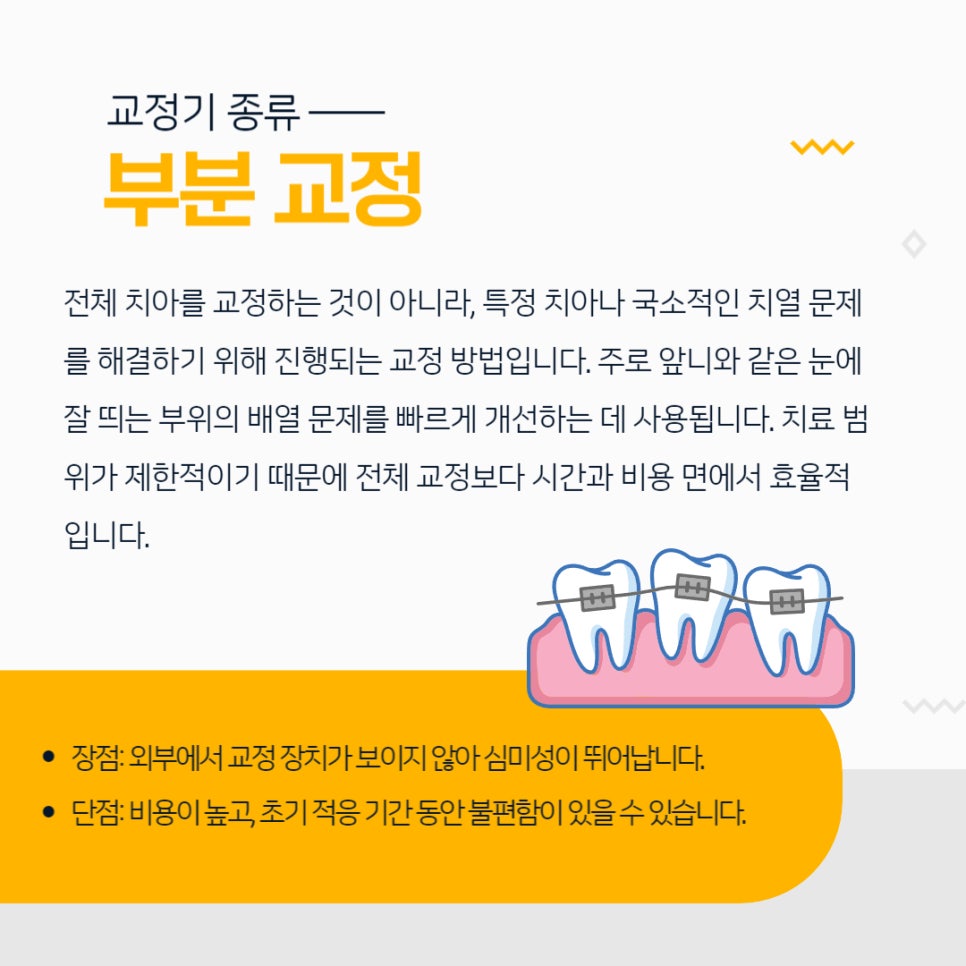
This is a method used to address problems with specific teeth or localized misalignment rather than the entire dentition.
It is mainly used to quickly improve alignment issues in visible areas such as the front teeth.
Because the treatment area is limited, it is more efficient in terms of time and cost than full treatment.
The advantage is a shorter treatment period, and because it is partial, the cost is relatively lower.
The downside is that it is not suitable for resolving overall bite problems,
and can only improve alignment in a limited area.
Factors to consider when choosing orthodontic treatment
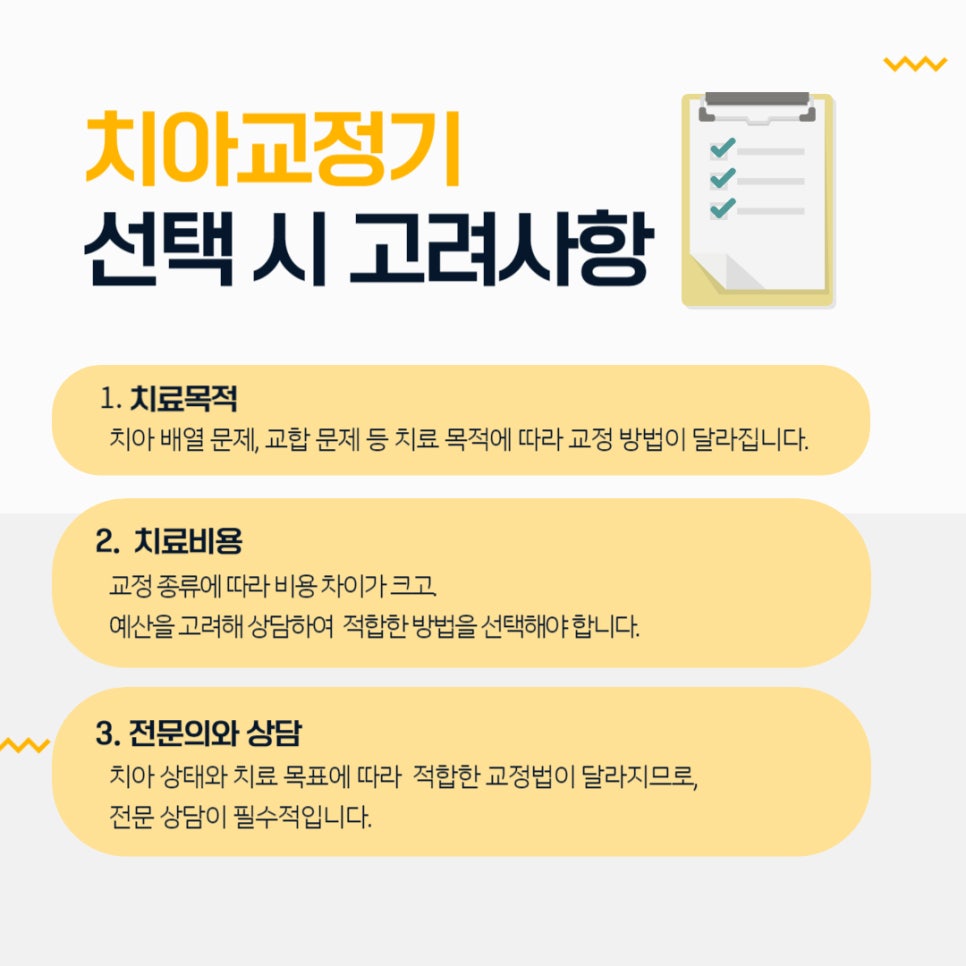
Here are the factors you should consider when making your choice.
The first is the treatment purpose.
The method varies depending on the treatment goal, such as tooth alignment problems or bite problems.
It is best to proceed after 충분한 consultation with a dental specialist.
The second is cost.
The cost varies greatly depending on the type of braces. You should consider your budget and choose the appropriate method after consultation.
Lastly, consultation with an orthodontic specialist is important.
I recommend getting advice from an orthodontic specialist with extensive experience.
Simply chasing the lowest price may not lead to good results.
Because the appropriate orthodontic method differs depending on the condition of the teeth and treatment goals, professional consultation is essential.
Orthodontic treatment can be chosen in various ways depending on an individual's dental condition and treatment goals.
It is important to find the method that suits you best through consultation with an orthodontic specialist.
Create not only a beautiful smile but also a healthy oral environment.
Thank you ^^










Previous image
Next image










Previous image
Next image