Hello.
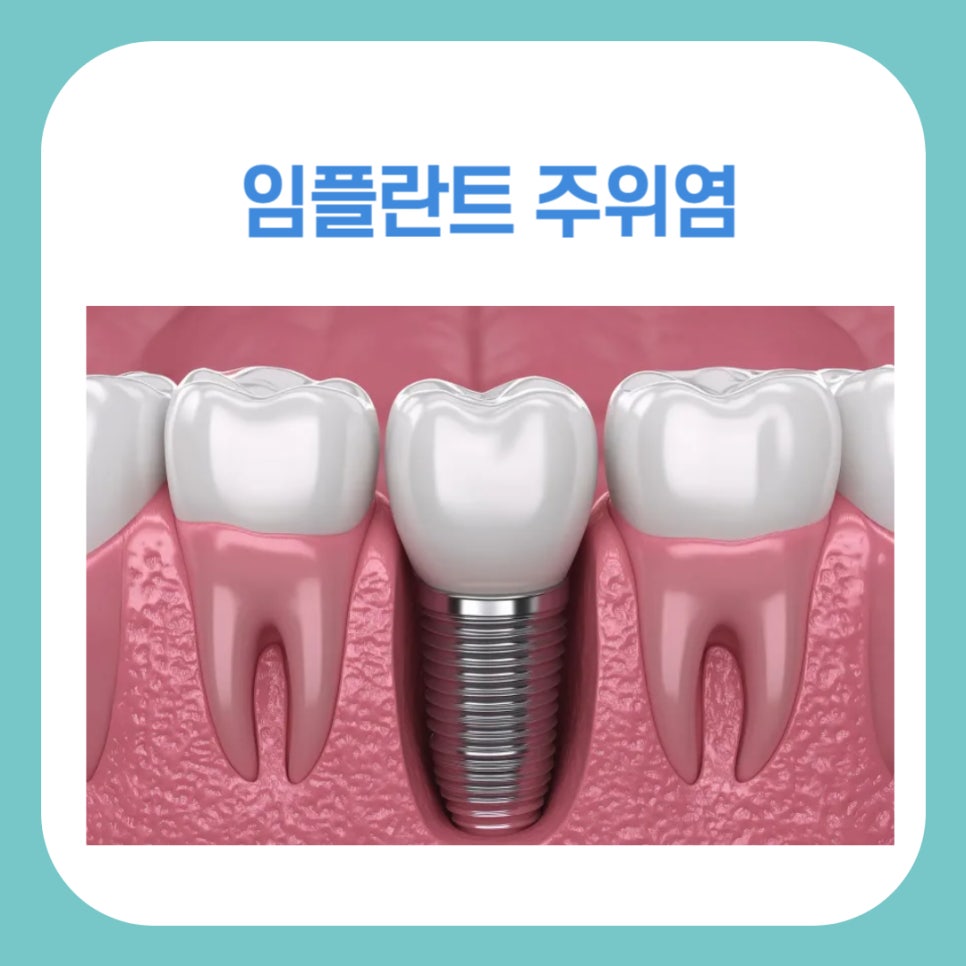
Today, I’d like to take a detailed look at peri-implantitis, which is a concern for many people after getting dental implants.
Dental implants are known as an excellent treatment that replaces natural teeth, but problems can occur if they are not accompanied by regular maintenance and proper oral hygiene.
In particular, if left untreated, they can not only reduce the function of the implant but also lead to the risk of it coming loose.
This refers to a condition in which inflammation occurs in the gums and bone supporting the implant.
It is similar to periodontitis that occurs around natural teeth,
but because bone resorption can progress more quickly around implants,
early detection and treatment are very important.
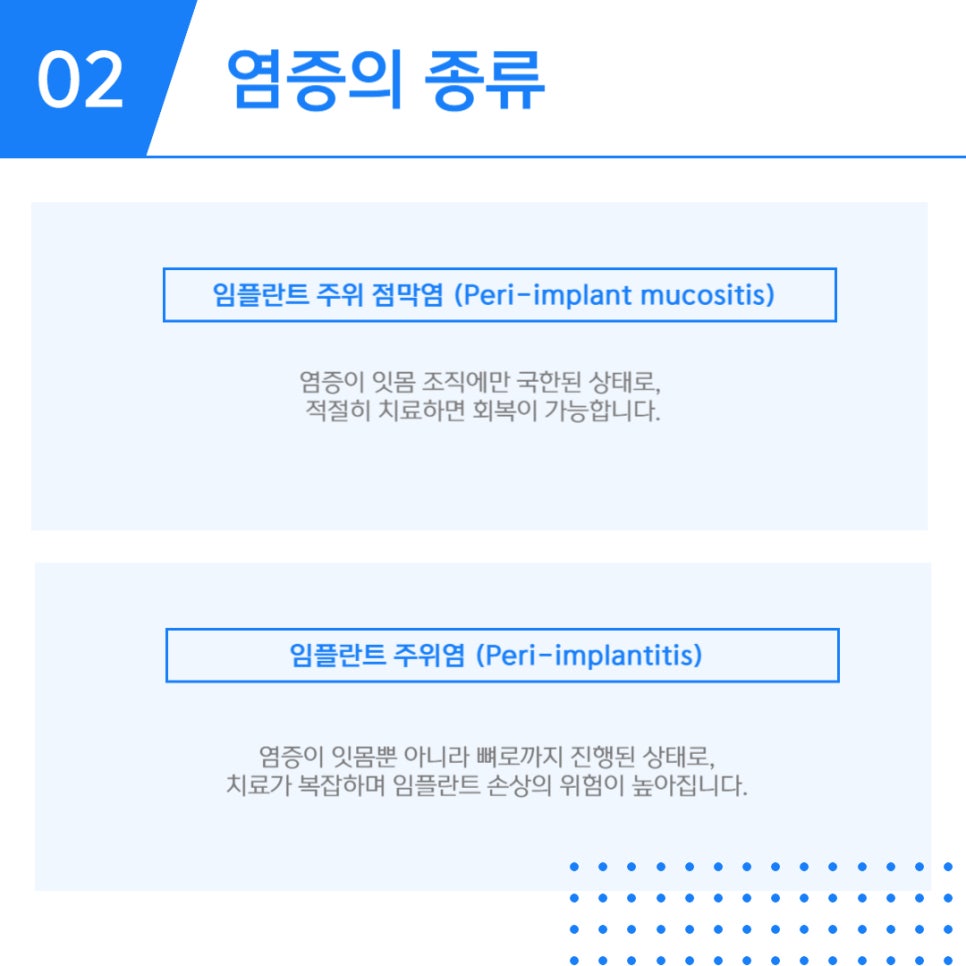
There are two main stages of inflammation.
- Peri-implant mucositis
This is a condition in which inflammation is limited to the gum tissue,
and recovery is possible with proper treatment.
- Peri-implantitis
This is a condition in which inflammation has progressed not only to the gums but also to the bone,
treatment is more complex, and the risk of implant damage increases.
Causes of inflammation
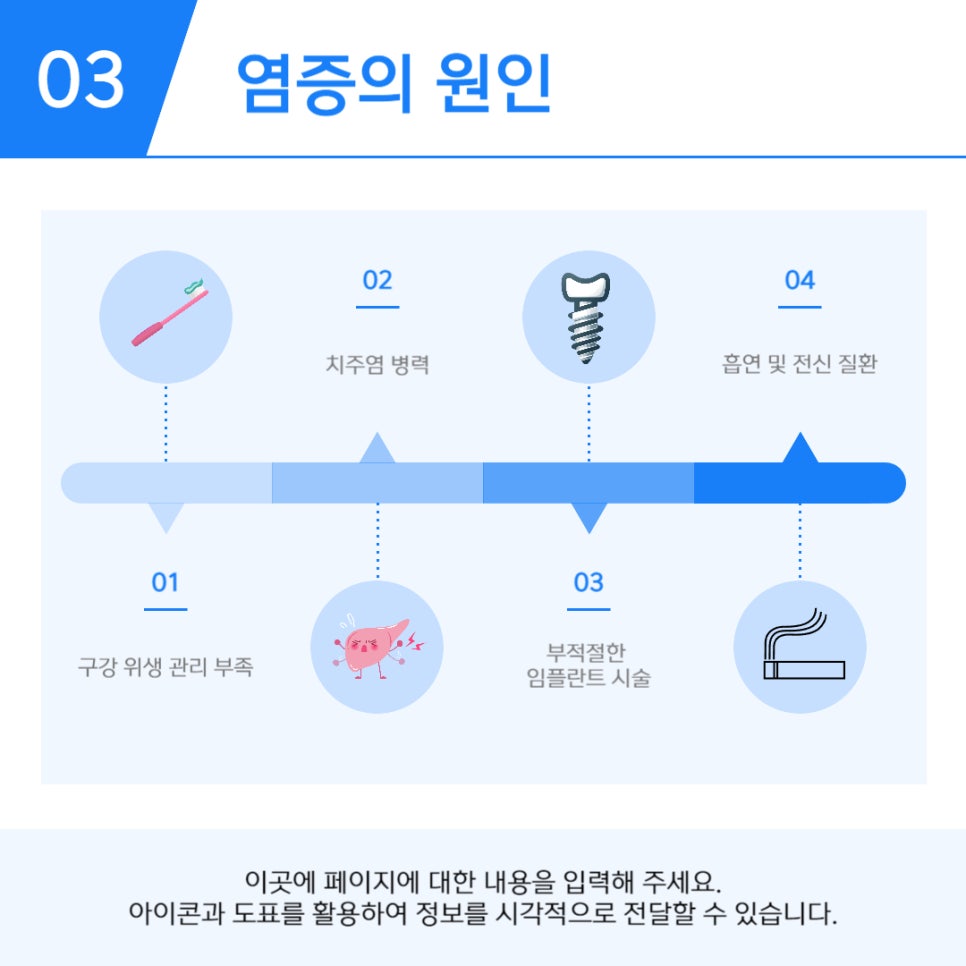
Inflammation can occur due to various causes.
- Poor oral hygiene management
If you do not brush properly and use dental floss,
plaque and tartar build up around the implant and trigger inflammation.
- History of periodontitis
If you have previously had periodontitis,
the surrounding tissues are more vulnerable to inflammation.
- Improper implant placement
If the implant is not placed at the proper position and angle,
or if the prosthesis does not fit the gums well, the likelihood of inflammation increases.
- Smoking and systemic diseases
Smoking worsens gum health and interferes with blood circulation, which aggravates inflammation.
In addition, chronic diseases such as diabetes are major risk factors for peri-implantitis.
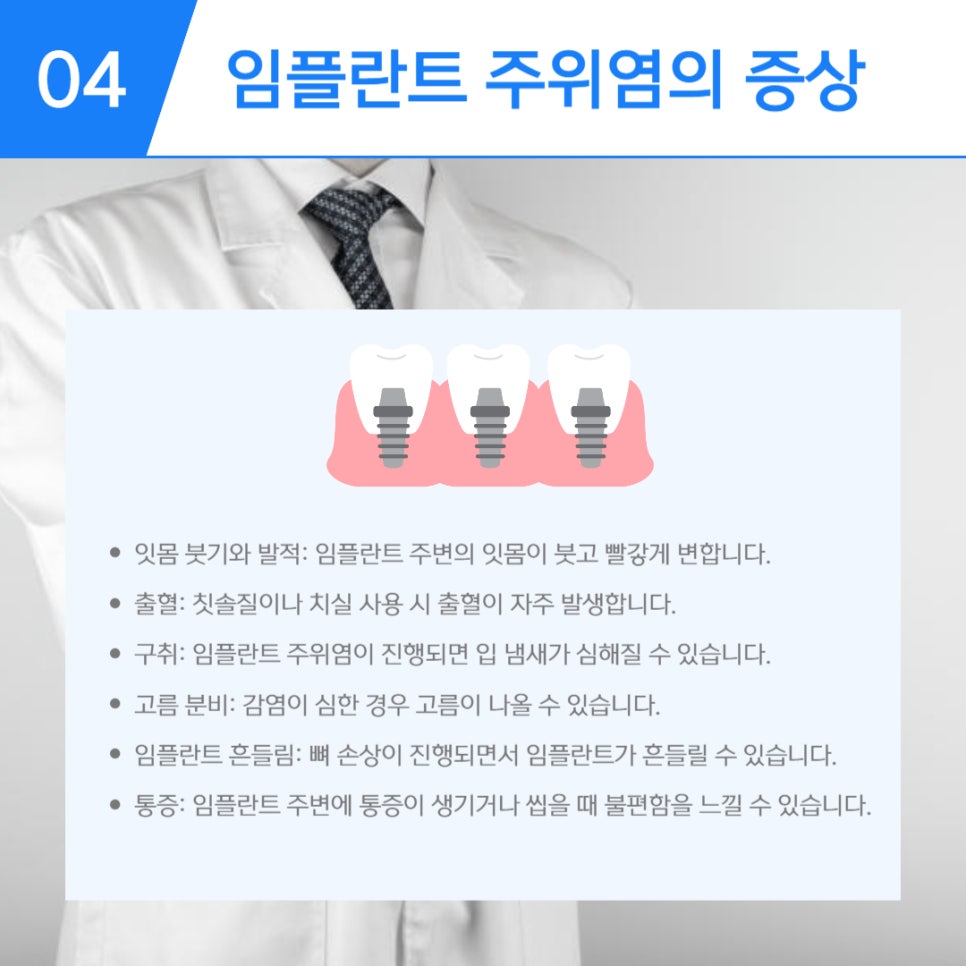 If the following symptoms appear, you may want to suspect it.
Swollen and red gums: The gums around the implant swell and turn red.
Bleeding: Bleeding occurs frequently when brushing or using dental floss.
Bad breath: As peri-implantitis progresses, bad breath can become severe.
Pus discharge: In severe cases of infection, pus may come out.
Implant mobility: As bone damage progresses, the implant may become loose.
Pain: You may feel pain around the implant or discomfort when chewing.
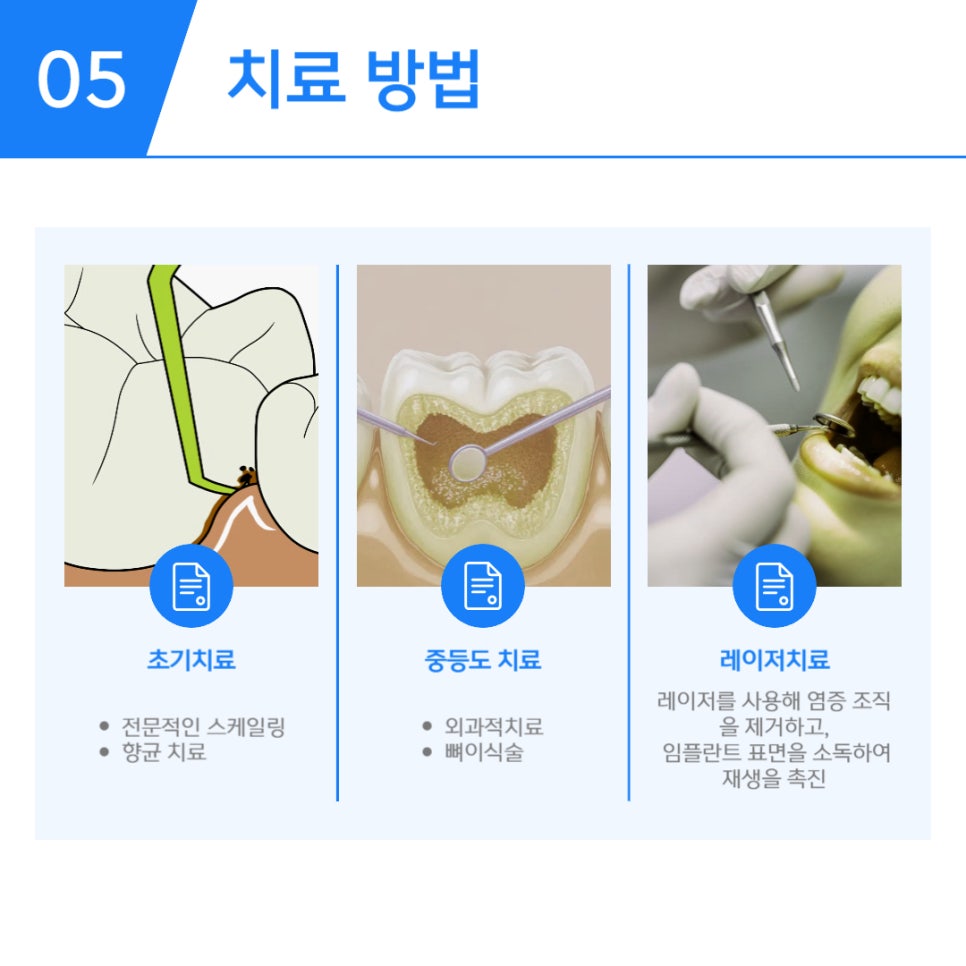
Peri-implantitis can be resolved with simple treatment if detected early,
but if left untreated, more complex treatment may be needed. Treatment methods vary depending on the degree of inflammation.
- Initial treatment
Professional scaling
At the dental clinic, plaque and tartar are removed,
and the area around the implant is cleaned with an antimicrobial cleanser.
Antibacterial treatment
At the dental clinic, antibacterial agents are used to suppress bacterial growth.
- Treatment for moderate to severe cases
Surgical treatment
If the inflammation has progressed to the bone,
the gums are incised to remove infected tissue and tartar.
Bone grafting helps restore damaged bone.
- Laser treatment
A laser is used to remove inflamed tissue,
and the implant surface is sterilized to promote regeneration.
- Antibiotic prescription
Depending on the extent of the inflammation, antibiotics are taken to control the infection.
 Preventing inflammation from occurring is the most important thing.
- Regular dental checkups
Visit the dentist at least every 6 months to have your condition checked.
- Proper oral hygiene
Brush correctly at least twice a day.
Use auxiliary items such as dental floss, interdental brushes, and oral irrigators.
- No smoking
Smoking worsens gum inflammation and may reduce the effectiveness of treatment, so please quit smoking.
- Maintain a healthy diet
Eat foods rich in vitamins and minerals to maintain gum health.
- Stress management
Stress can weaken immunity and increase the likelihood of inflammation,
so it is important to manage it appropriately.
Peri-implantitis is a condition that can be avoided with regular care and prevention alone.
It is important not to neglect proper oral hygiene habits and dental checkups.
If you suspect a problem, visit a nearby dental clinic immediately for professional consultation and treatment.
I hope you can keep your precious dental health strong for a long time!
If you have any questions or need help, please leave a comment. Thank you.









 Previous image
Next image
Previous image
Next image









 Previous image
Next image
Previous image
Next image