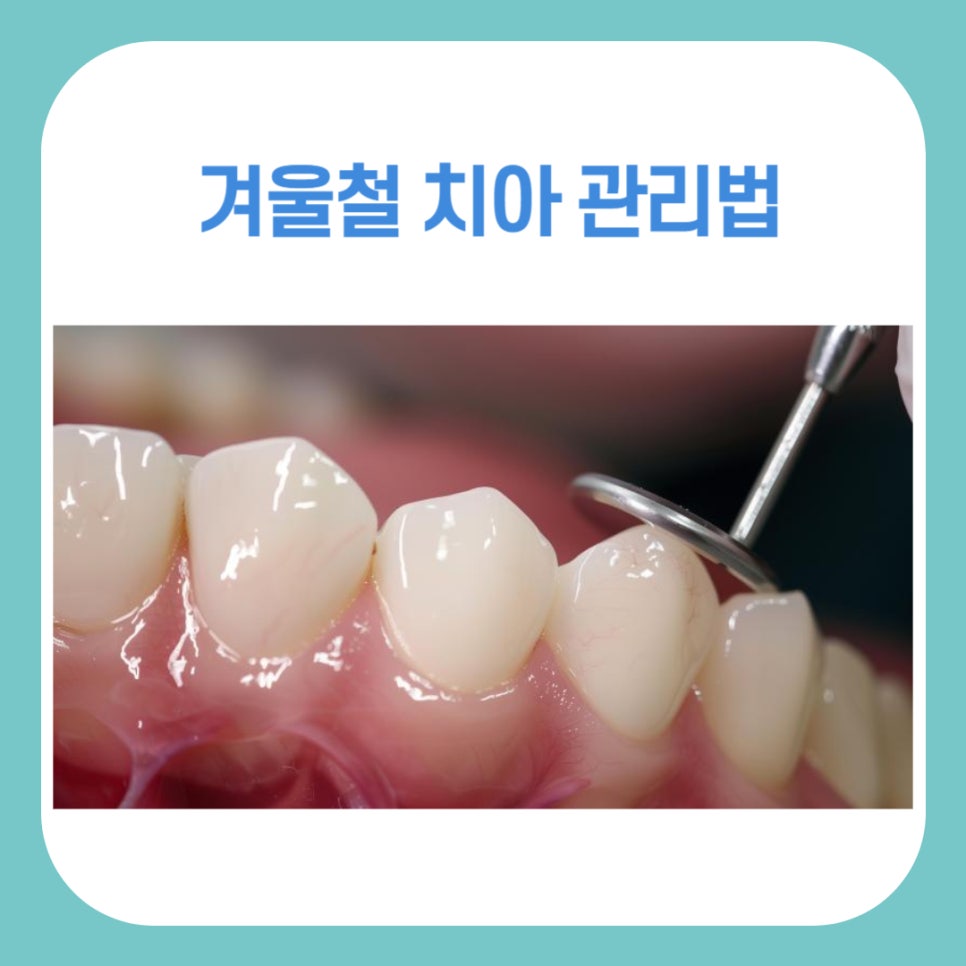
Hello.
Winter is a season when cold weather and dry air
can affect dental health.
In particular, exposure to cold air or alternating between hot foods and cold drinks can place stress on your teeth.
To help prevent dental health from worsening due to these seasonal factors,
let’s look at what you should pay attention to.
Precautions When Drinking Hot and Cold Beverages

In winter, people tend to drink hot beverages often,
but suddenly alternating between hot and cold drinks
can cause microscopic cracks in the teeth.
These microcracks are likely to lead to tooth sensitivity or cavities over time.
After drinking hot coffee or tea, do not immediately consume a cold drink,
and keep beverages at an appropriate temperature.
Avoid drinks that are too hot or too cold,
and make it a habit to drink slowly.
Maintain Thorough Oral Hygiene
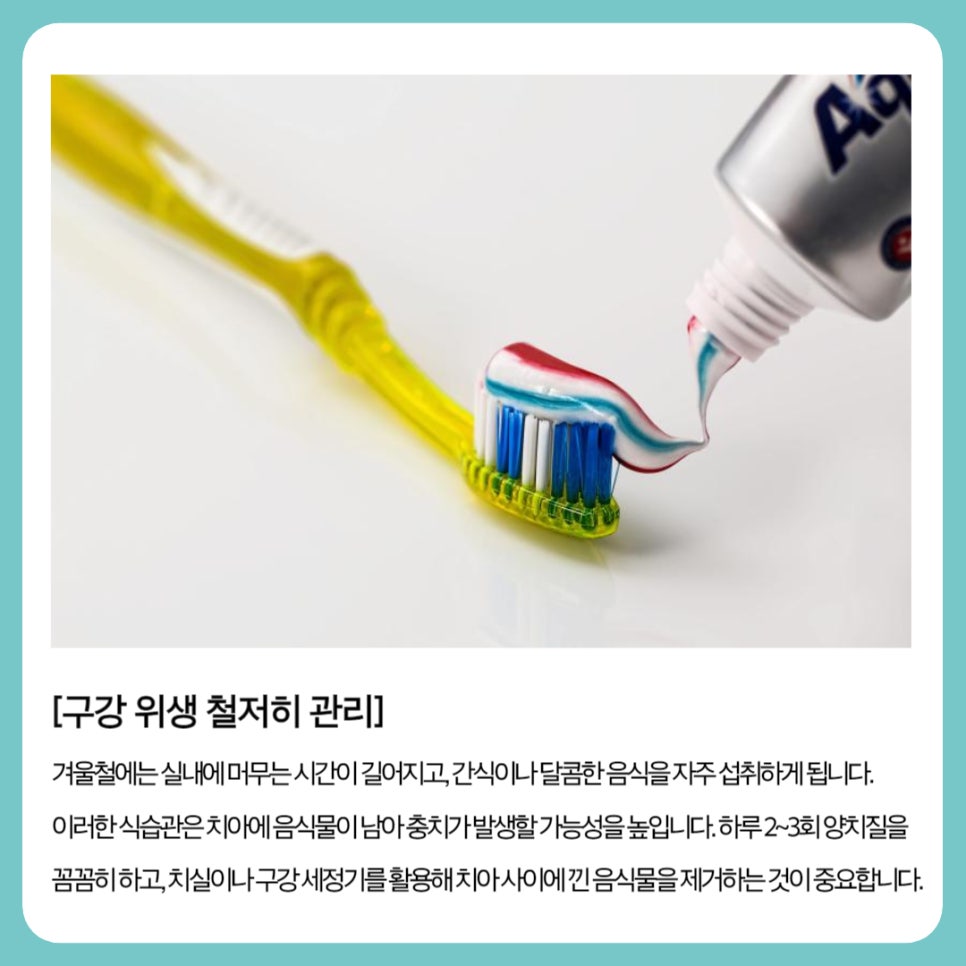
In winter, people spend more time indoors,
and often consume more snacks and sweet foods.
These eating habits increase the likelihood of food remaining on the teeth and causing cavities.
Brush thoroughly 2 to 3 times a day,
and use dental floss or an oral irrigator to remove food trapped between the teeth.
In particular, be sure to brush before bed,
and it is best to use a soft toothbrush so as not to irritate the gums.
For toothpaste, it is effective to use a fluoride-containing product that helps prevent cavities.
Managing Tooth Sensitivity
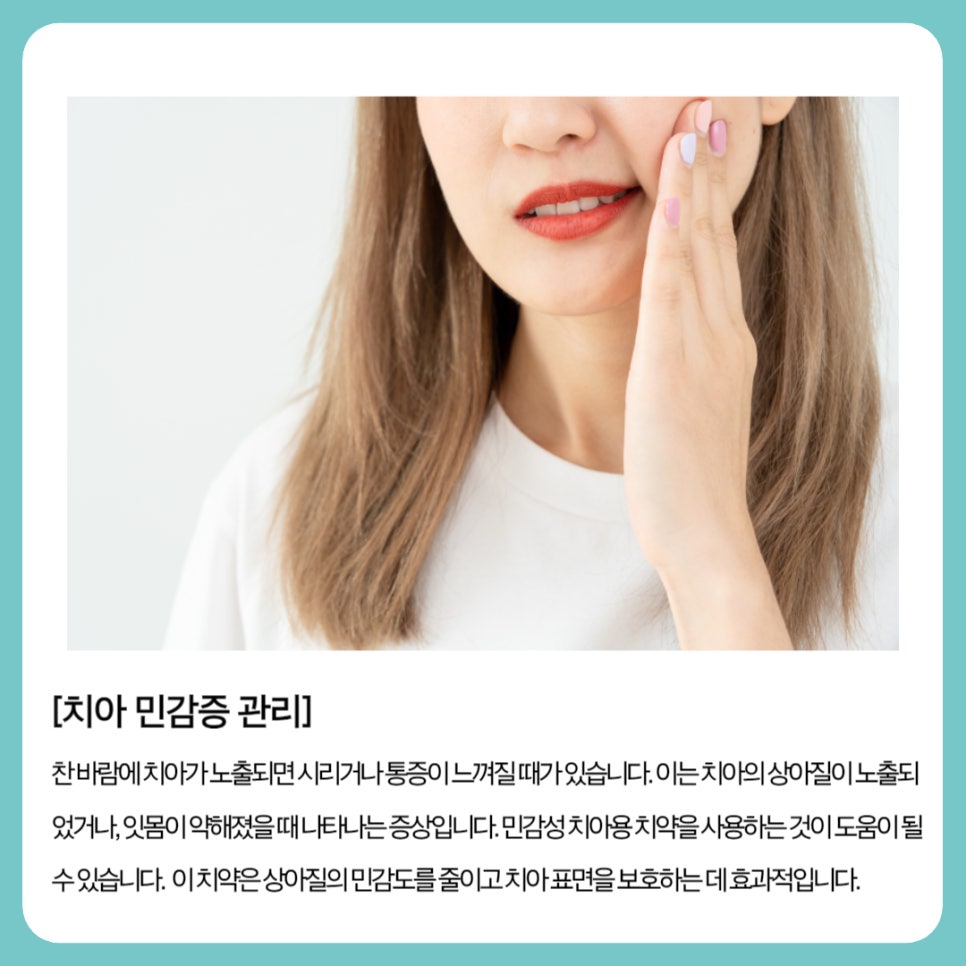
When exposed to cold wind, you may feel a stinging sensation or pain.
This is a symptom that appears when the dentin of the teeth is exposed or when the gums are weakened.
Using a toothpaste for sensitive teeth may help.
It is effective in reducing dentin sensitivity and protecting the tooth surface.
If tooth sensitivity is severe, you need to visit a nearby dental clinic
and receive professional diagnosis and treatment.
There are treatments such as tooth coating and fluoride application that can help relieve sensitivity, so seek help from a professional.
Regular Dental Checkups

Winter is a season when health management can easily be neglected.
However, by visiting the dentist regularly to check the condition of your teeth
and getting scaling, you can prevent cavities and gum disease.
Scaling is the process of removing tartar and plaque attached to the teeth,
and it is essential for maintaining gum health.
If tartar builds up, it can cause gum inflammation or bad breath, so it is best to visit the dentist and get care at least once every 6 months.
Vitamin D Intake

Winter reduces exposure to sunlight, making vitamin D deficiency more likely.
Vitamin D helps calcium absorption and plays an important role in keeping teeth and bones strong.
If you are deficient in vitamin D, your teeth may become weaker and the likelihood of gum disease increases.
To supplement vitamin D, it is good to eat foods rich in vitamin D such as salmon, eggs, and milk,
or to take supplements.
Taking a walk in the sunlight is also a good way to naturally obtain vitamin D.
Gum Health Management
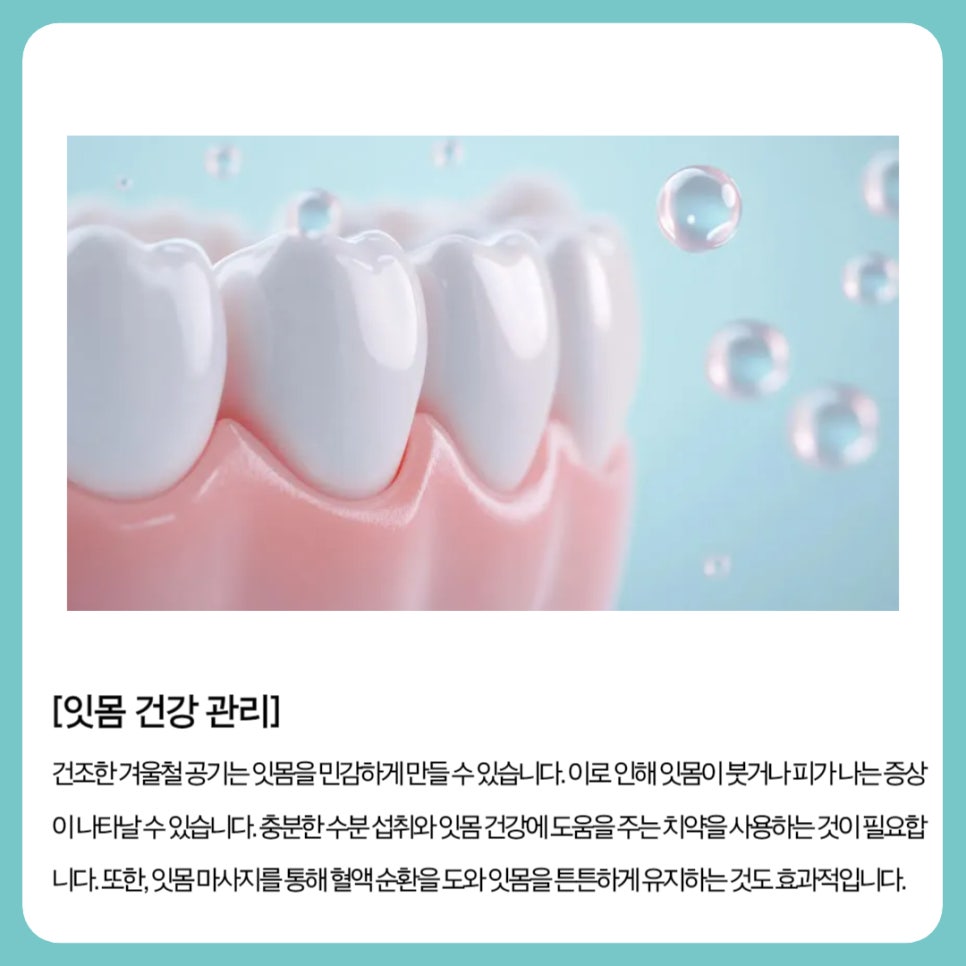
The dry winter air can make the gums more sensitive.
As a result, symptoms such as swollen gums or bleeding may appear.
It is necessary to drink enough water and use toothpaste that helps with gum health.
Also, gum massage can help improve blood circulation and keep the gums strong.
Foods that are good for gum care include green tea, apples, and broccoli,
which are rich in antioxidants and help support gum health.
Protecting Your Teeth During Winter Sports

In winter, many people enjoy winter sports such as skiing and snowboarding.
However, during these activities, falls or impacts can damage the teeth.
To prevent this, it is important to wear a mouth guard.
A mouth guard not only protects the teeth but also helps protect the jaw joint and gums.
When enjoying sports, be sure to prepare a mouth guard to stay safe.
Reduce Sweet Food Intake

In winter, people often consume sweet foods such as steamed buns, hot chocolate, and sugar-containing snacks.
However, these foods can be a major cause of cavities.
After eating sweet foods, be sure to brush your teeth,
and it is important to consume foods high in sugar in moderation.
Also, chewing sugar-free gum can help prevent cavities.
Chewing gum stimulates saliva production, which helps neutralize acidity in the mouth and protect the teeth.
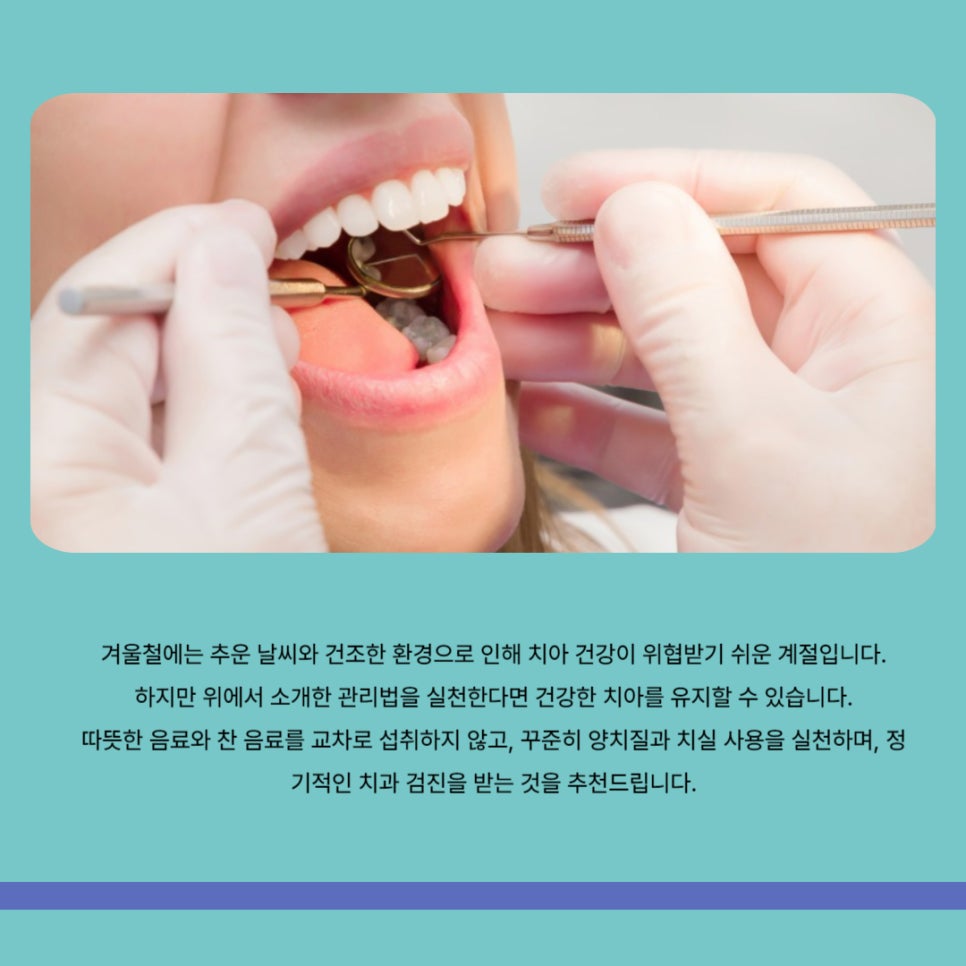
In winter, cold weather and a dry environment make dental health more vulnerable.
However, if you follow the care methods introduced above, you can maintain healthy teeth.
Avoid alternating between hot and cold drinks,
consistently brush and use floss,
and recommend getting regular dental checkups.
Also pay attention to vitamin D supplementation and gum care,
and do not forget to wear protective gear for your teeth when enjoying winter sports.
Lastly, if you consume sweet foods in moderation and maintain a balanced diet,
you will be able to keep strong teeth and a healthy smile even in winter.










Previous image
Next image