The Right Way to Use an Interdental Brush!
Helping with Tooth Care
Hello, this is Gangnam Newen Dental Clinic.
Oral health is a very important factor in improving our quality of life.
When your teeth are healthy, you can smile confidently and enjoy a variety of delicious foods.
However, brushing alone makes it difficult to completely remove food debris and
plaque from between the teeth.
That is where interdental brushes and dental floss come in.

When you use interdental brushes and dental floss properly,
you can care for even the smallest spaces between teeth.
They help prevent gum disease and cavities,
and also help reduce gum bleeding and bad breath.
However, many people choose the wrong interdental brush or dental floss,
or use them incorrectly and end up damaging their gums instead.
In this post, we will focus on the types of interdental brushes and floss, how to choose them,
and the correct way to use them.
Through this, we hope you can build a more systematic oral hygiene habit,
increase the preventive effect against dental diseases,
and maintain a healthy, bright smile.
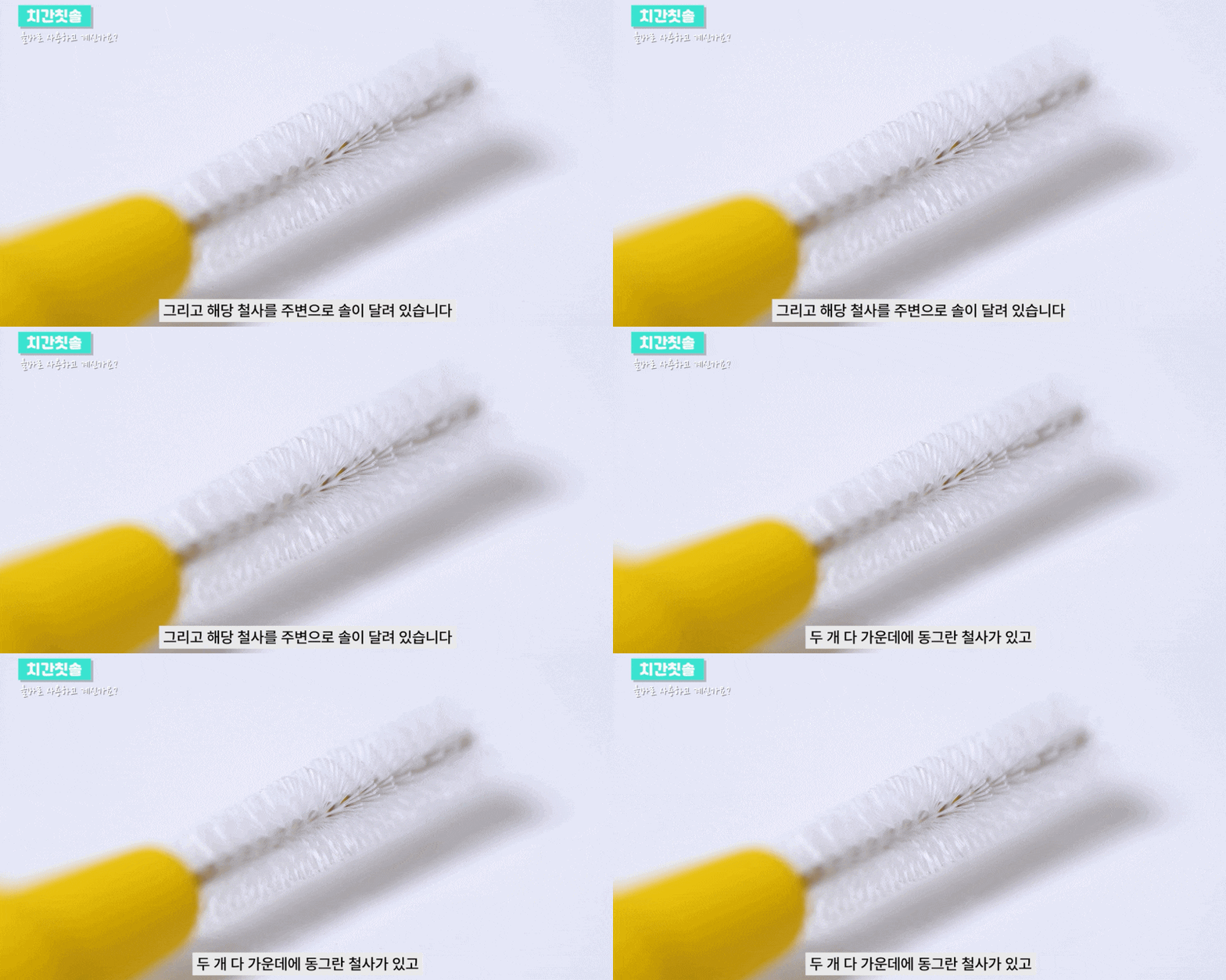
An interdental brush, as the name suggests, is a specialized brush for cleaning between teeth,
that is, the interdental spaces.
Its bristles are made very small and thin,
allowing it to reach gaps that a regular toothbrush cannot,
and it is highly effective at removing food debris and plaque.

(1) Types of interdental brushes
Conical (tapered) type
It has a narrow, pointed shape at the tip,
and is good for people whose tooth spacing is not uniform.
Cylindrical type
The bristles form a uniform cylindrical shape,
making it suitable for people whose tooth spacing is relatively even.
Angled type
The handle is bent or curved,
so it can easily clean areas that are hard to reach, such as the inside of the molars.
(2) Criteria for choosing an interdental brush
Bristle thickness
It is important to choose a size that is neither too thick
nor too thin for the spaces between your teeth.
Durability
If the bristles bend or come off easily during use, they can injure the gums,
so choose a product with strong durability.
Replacement timing
If the bristles spread out or become dirty,
cleaning performance drops significantly, so you should replace it right away.

(3) Correct way to use an interdental brush
Choose the right size
Choose a brush size that can fit into the spaces between your teeth without strain.
Insert gently
Do not force it into the interdental space,
and insert it slowly following the angle of the teeth.
Move it back and forth
Move the interdental brush gently back and forth
to remove food debris and plaque.
Hygiene care
After use, rinse the interdental brush thoroughly with water
and let it dry before storing it.
Interdental brushes, are they really okay?
Three misconceptions corrected
- Is it enough to just move an interdental brush gently back and forth?

You should choose an interdental brush that matches the spacing between your teeth.
If it is too thick, it can injure the gums,
and if it is too thin, the cleaning effect will be reduced.


When inserting the interdental brush between the teeth,
rather than pushing it in too hard,
it should be inserted naturally according to the angle of the teeth.
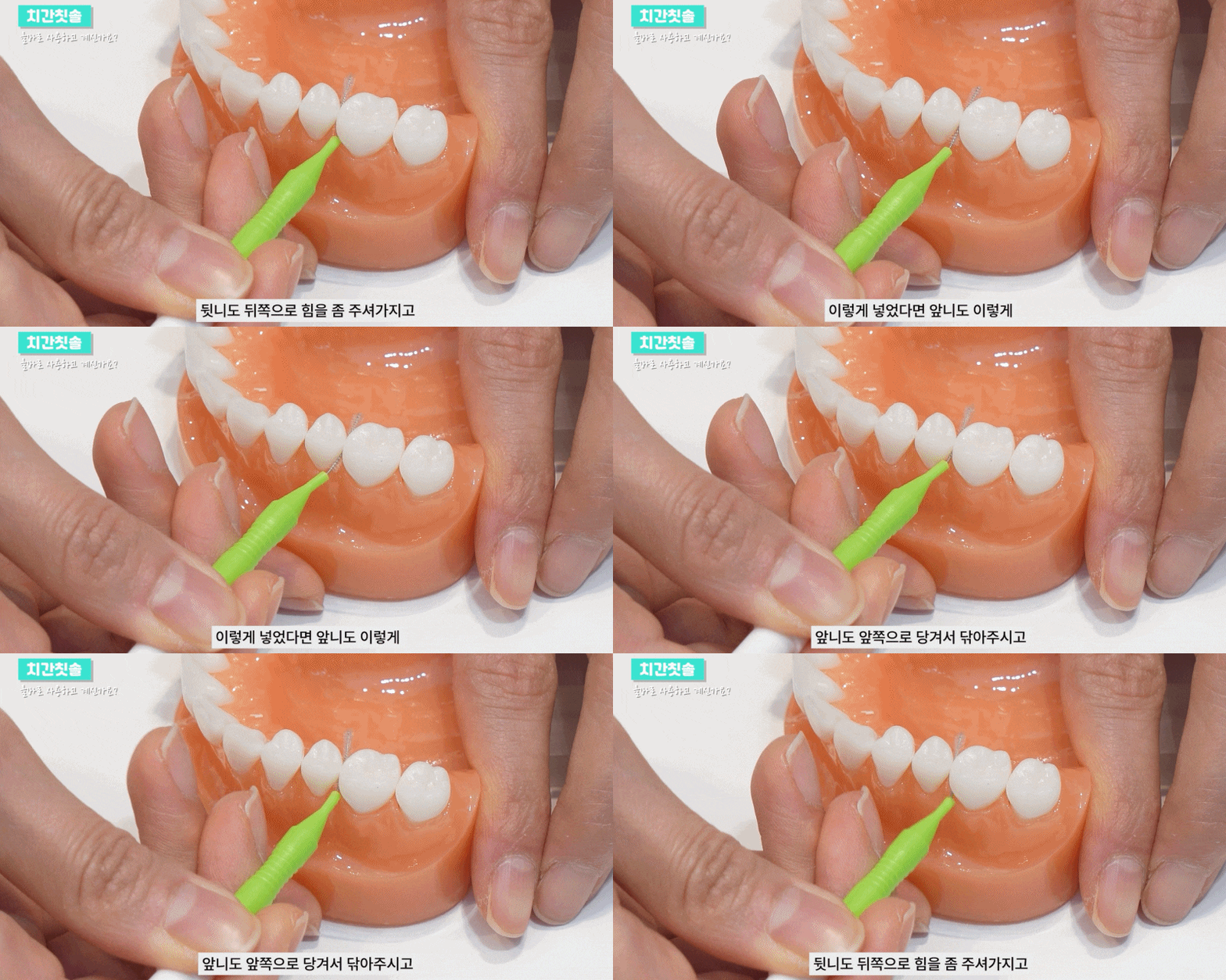
If you move it too quickly with too much force, it can strain the gums,
so moving it slowly is key.
However, while checking the tooth and gum line,
it is important to carefully clean even the areas where food is stuck.
- Does using an interdental brush make the spaces between the gums wider?

With proper use, the spaces between the gums do not widen.
If you use an interdental brush of the right thickness at the correct angle,
the gums can actually become healthier and firmer.

When the gums are swollen, the space may look narrower.
Inflamed gums swell up, making the interdental spaces appear tighter,
but when the inflammation improves, the original size of the interdental space often becomes visible again
and the normal shape is restored.
This can be mistaken for the spaces becoming wider.
If you force in an interdental brush that is too large and bleeding occurs frequently,
it can cause gum damage due to incorrect use.
However, this is not the spaces between the gums widening;
it is a case of “injuring the gums,” so the size needs to be changed.
- Are interdental brushes especially problematic for molars?
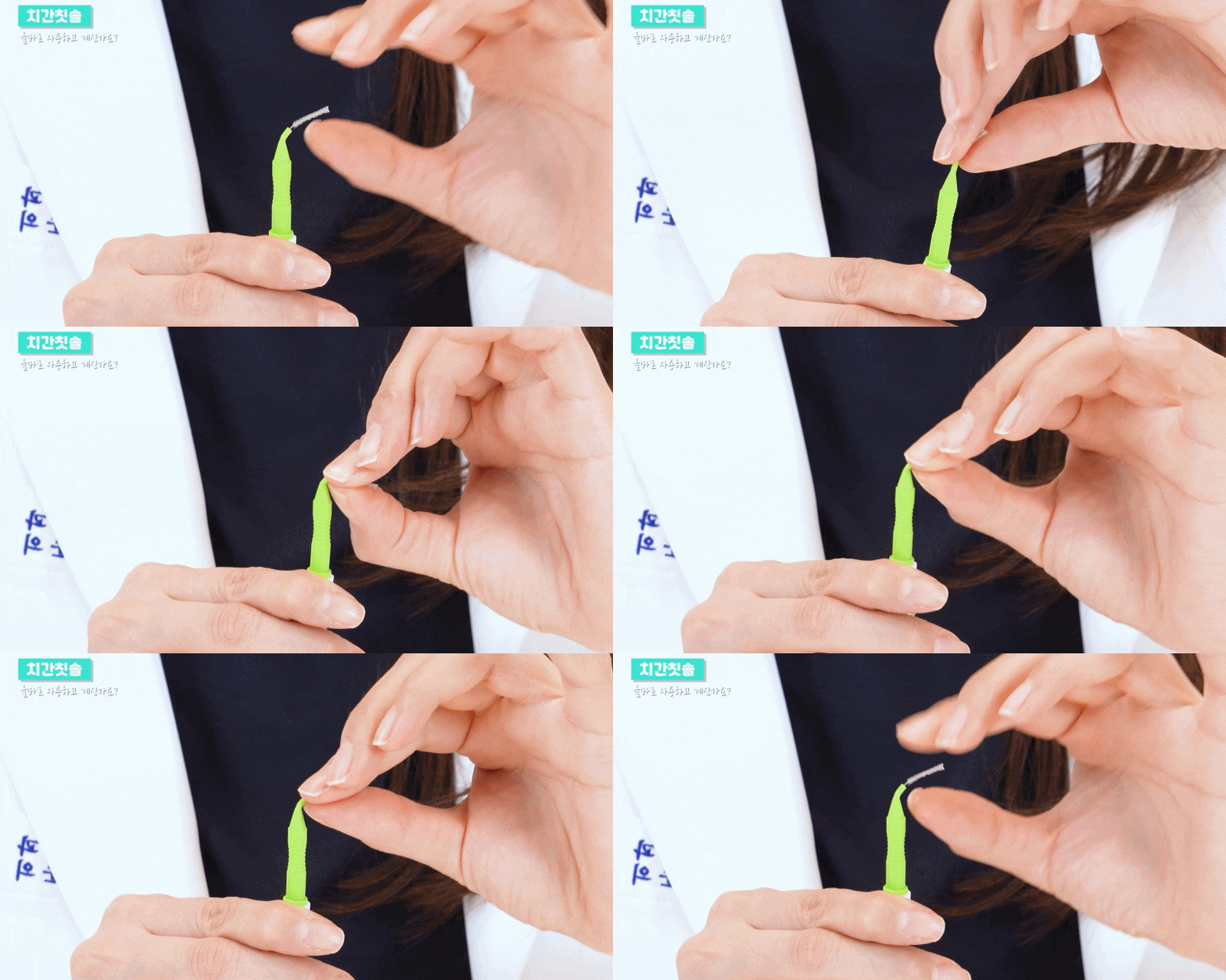
Using an angled interdental brush
If you use an interdental brush with a bent or curved handle,
you can relatively easily reach the back of the molars or deep inside the mouth.
After opening your mouth wide while looking in a mirror,
insert it according to the angle of the teeth, and you can clean between the teeth easily without excessive force.
For people with orthodontic appliances or implants, it is better to use professionally
thinner products or bent products.
It is also fine to use several different sizes for different areas.
Even around the molars, if you use a suitable angled interdental brush,
and apply it slowly while considering the structure of the mouth, it can be managed safely and efficiently.
The idea that “it is hard to use on molars” may be a wrong fixed belief.
Why interdental brushes and dental floss
are good to use together
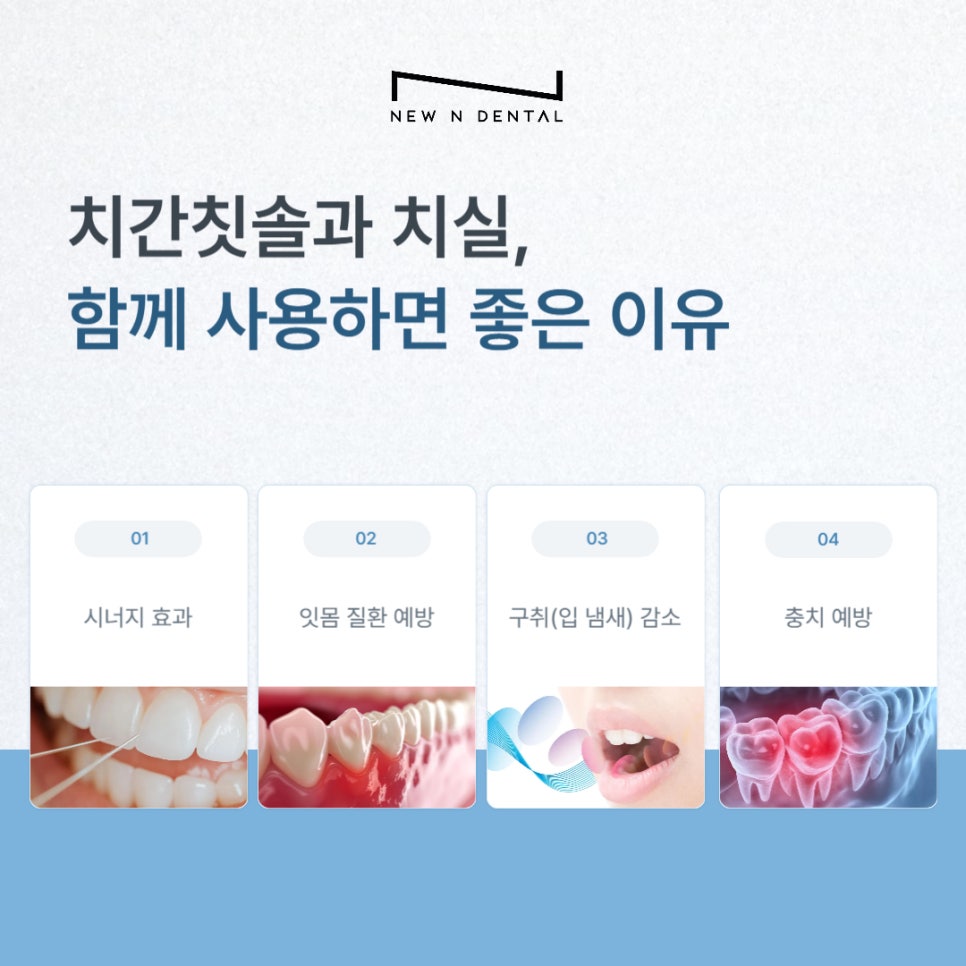
Synergistic effect
After cleaning once with an interdental brush,
using dental floss to precisely care for the fine areas
can keep everything much cleaner.
Prevention of gum disease
By removing plaque left behind in the corners and gaps,
it helps prevent gum bleeding and gum inflammation,
and helps slow the progression of periodontal disease.
Reduction of bad breath
Food that has decayed between the teeth can also be a major cause of bad breath.
Using interdental brushes and dental floss together
can minimize food residue and reduce bad breath.
Cavity prevention
It is especially effective in preventing cavities on the sides of teeth (proximal cavities).
Cavities can form more easily in the gaps between teeth
than on visible surfaces.

To maintain healthy teeth and gums, brushing alone is not enough.
By appropriately combining interdental brushes and dental floss to carefully clean the fine spaces between teeth
and the gumline, oral hygiene that is close to perfect can be achieved.
For interdental brushes, choose the thickness correctly according to the tooth spacing,
and when using them, it is important to clean by moving them gently back and forth rather than forcing them in.
For dental floss, choose from various types (waxed, unwaxed, tape-style, etc.)
according to the spacing between teeth and personal preference,
and use a clean section of floss for each tooth to avoid transferring bacteria.
Also, even if you consistently use interdental brushes and dental floss well, tartar cannot be completely removed,
so regular dental checkups and scaling are recommended.
Above all, since the appropriate tools and methods can vary depending on each person's tooth alignment,
whether they have orthodontic treatment, or whether they have implants,
you should also seek advice from a dental specialist if necessary.
If you make interdental brushes and dental floss a habit,
you can move away from worries about cavities and periodontal disease and maintain a clean oral environment without bad breath.
With consistent care and regular dental checkups,
we hope you can keep a healthy, bright smile for a long time.
Thank you ^^\n










Previous image
Next image










Previous image
Next image
#InterdentalBrushUse #ProperInterdentalBrush #GangnamNewenDentalClinic #NewenDentalClinic