Can patients with systemic diseases get dental implants?
Safe treatment methods
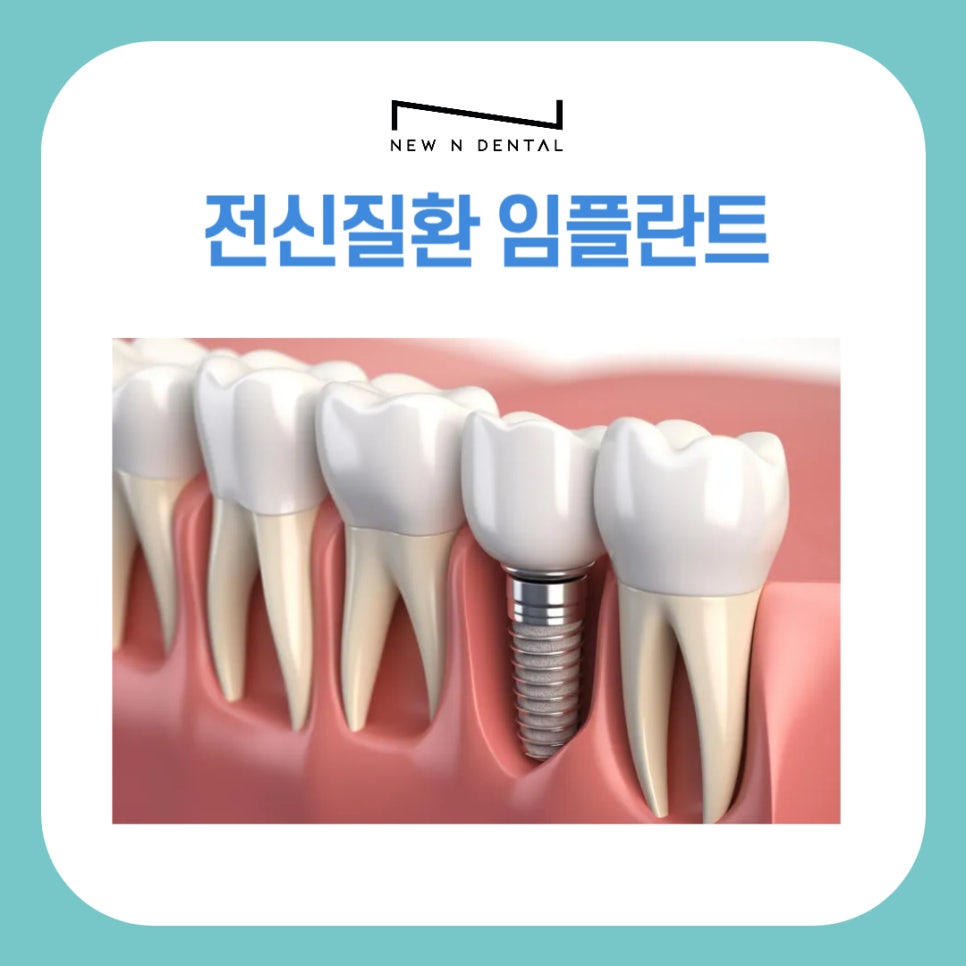
Hello, this is Gangnam NewN Dental Clinic.
People with systemic diseases often worry a lot when receiving dental treatment.
Today, we will explain clearly whether patients with systemic diseases can receive implant procedures,
and what precautions should be taken for safe treatment.

Systemic diseases refer to conditions that affect multiple organs of the body at the same time.
Representative examples include diabetes, hypertension, heart disease, osteoporosis, liver disease, and kidney disease,
and these conditions affect dental treatment by causing changes in immunity, wound healing ability, and bone health.
Can patients with systemic diseases get dental implants?

Even if you have a systemic disease, implant treatment is possible.
However, the underlying condition must be well controlled,
and the history of medication use, the severity of the disease,
and whether complications are present must be comprehensively evaluated.
If necessary, we may work together with internal medicine or the specialist in charge of the condition
to determine the timing and method of surgery.
Common systemic diseases and precautions

(1) Hypertension
– Stress or pain during the procedure may cause a sudden rise in blood pressure.
– Blood pressure medication is often taken even on the day of treatment,
and real-time monitoring is performed.
– Sedation may also be used to reduce severe anxiety.
(2) Diabetes
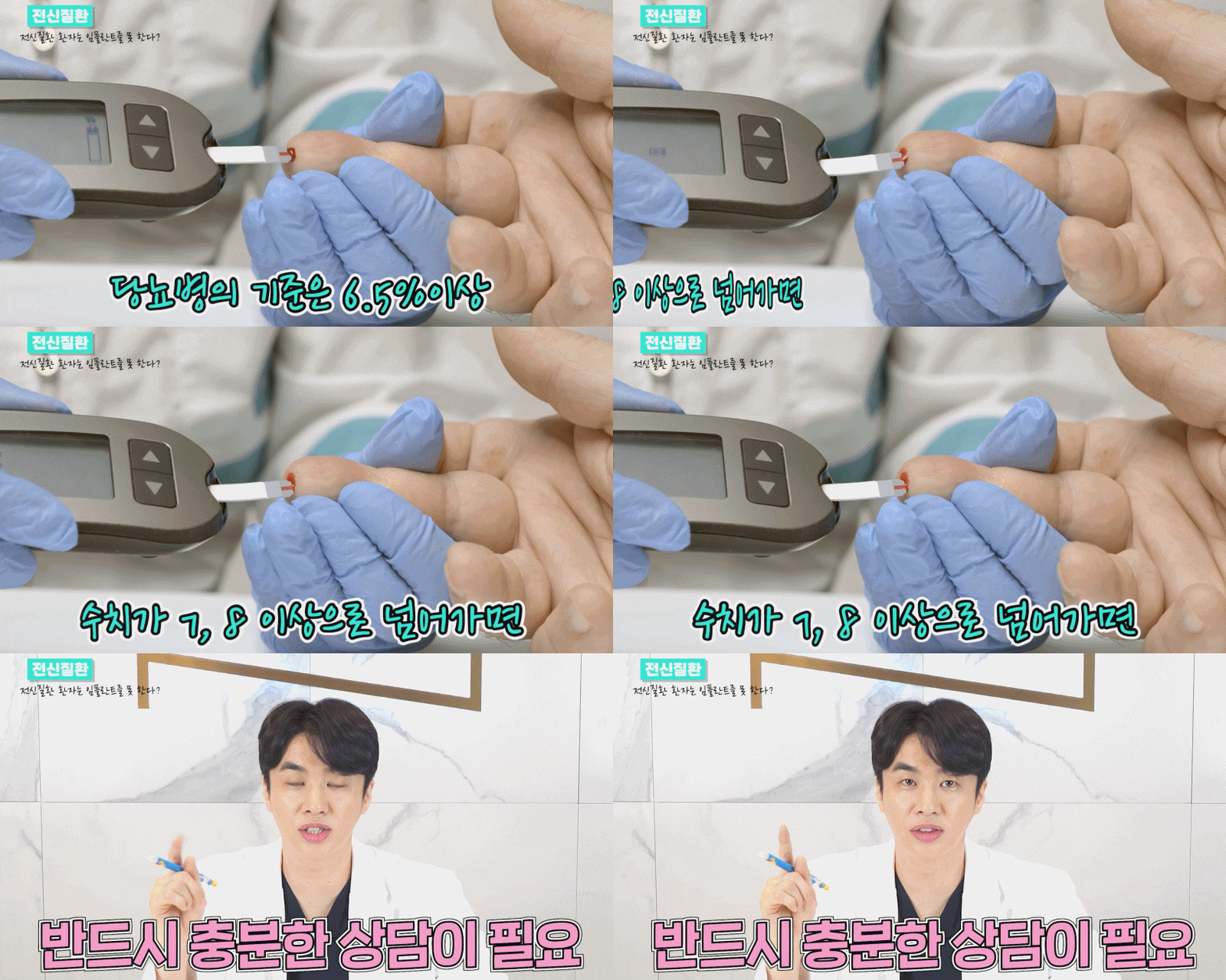
– When blood sugar is high, wound healing is slower and the risk of infection is greater.
– Before implant treatment, blood sugar levels and HbA1c are checked
to keep them within the appropriate range.
– After surgery, preventing inflammation and maintaining oral hygiene are very important.

(3) Osteoporosis
– Because the bones are weak, the osseointegration process may be unstable.
– The history of bisphosphonate use and bone density levels must be considered.
– The success rate is improved through appropriate bone grafting procedures and implant placement methods.
Implant procedures for patients with systemic diseases

(1) Preoperative detailed examination and collaboration
– The history of systemic disease, medication use, and recent test results are reviewed.
– If necessary, collaboration with internal medicine, cardiology, endocrinology, and other departments helps improve safety.
(2) Oral condition assessment
– The condition of the jawbone, the presence of periodontal disease, and oral hygiene status are checked.
– Accurate diagnostic equipment such as 3D CT is used to determine the placement site and implant type.
(3) Implant surgery
– Local anesthesia or sedation is used to reduce anxiety.
– Surgery is performed safely while checking blood pressure, pulse, and other vital signs through real-time monitoring.
– If there is insufficient bone, bone grafting is performed at the same time.
(4) Healing period and prosthesis placement
– To ensure the implant integrates well with the bone, attention must be paid to preventing inflammation and maintaining oral care.
– Because wound healing may be slower due to systemic disease, it is important to follow the medical staff's instructions carefully.
– Once integration is complete, a prosthesis is attached to restore tooth function and aesthetics.
(5) Regular checkups and aftercare
– Even after implant treatment, regular checkups and scaling help minimize the occurrence of inflammation.
– Management of the systemic disease should not be neglected, and regular internal medicine checkups should also be maintained.

Gangnam NewN Dental Clinic is equipped with a specialized collaboration system and precise diagnostic equipment
to help patients with various systemic diseases receive implant treatment safely.
Through customized treatment plans tailored to each patient's condition,
we strive to provide more stable and satisfying implant results.
– 1:1 consultation
We carefully review the history of systemic disease and medication use,
and provide a personalized schedule.
– Systematic collaboration
If necessary, we work with internal medicine and cardiology,
considering the overall systemic condition comprehensively.
– Accurate diagnostic equipment
We use 3D CT and other tools to plan safe placement positions and angles.
– Thorough aftercare
Even after surgery, regular checkups and oral care guidance
help reduce the risk of inflammation and complications.
Having a systemic disease does not mean you have to give up implant treatment.
If the underlying condition is managed and treatment is performed in a safe environment,
you can regain a healthy and comfortable oral condition.










Previous image
Next image










Previous image
Next image
#SystemicDiseaseImplant #Implant #GangnamNewNDentalClinic