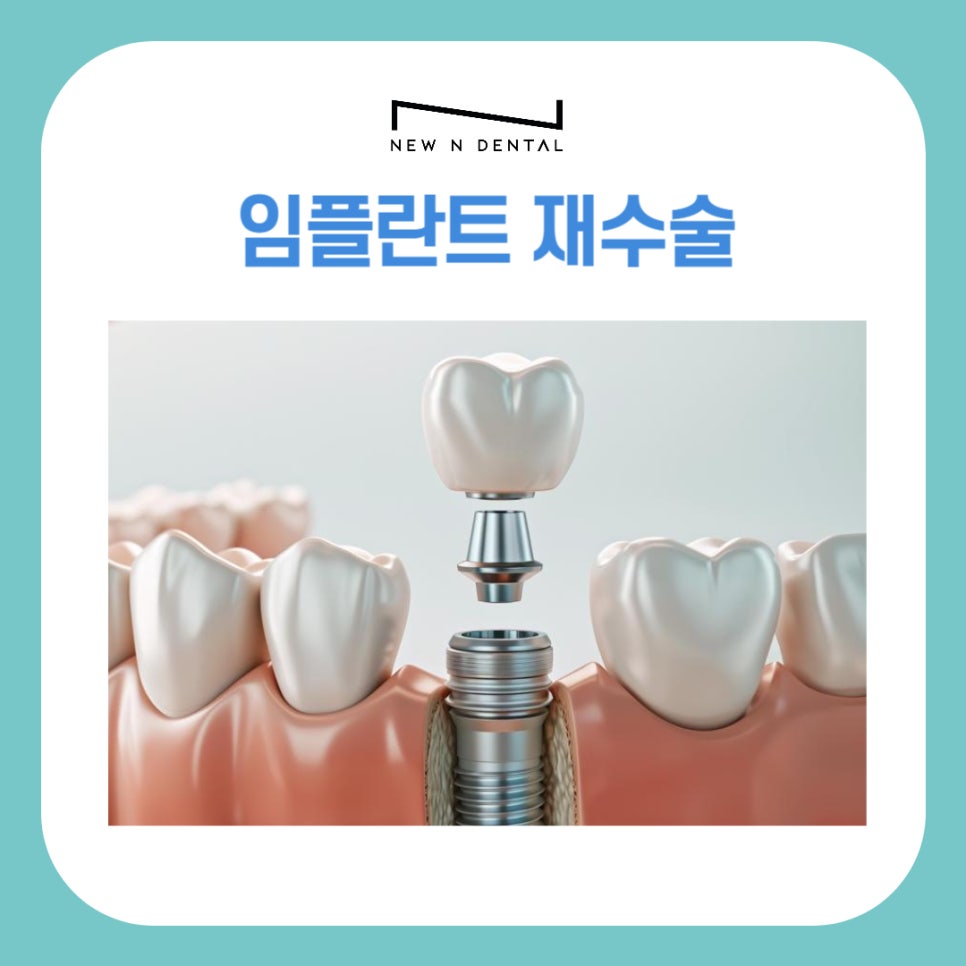
Implant Reoperation
Should Be Performed Only When It Is Truly Necessary
Hello. This is Gangnam Newen Dental Clinic.
One of the dental procedures that requires the most caution is implant surgery. Since it must take into account both the function and aesthetics of a natural tooth replacement, a precise diagnosis and surgical plan must come first for a successful outcome. However, in some cases, implants fail or cause problems, and a situation may arise in which reoperation is necessary. Today, we will take a detailed look at when implant reoperation is needed, why it is needed, and what to watch out for.
What is implant reoperation?
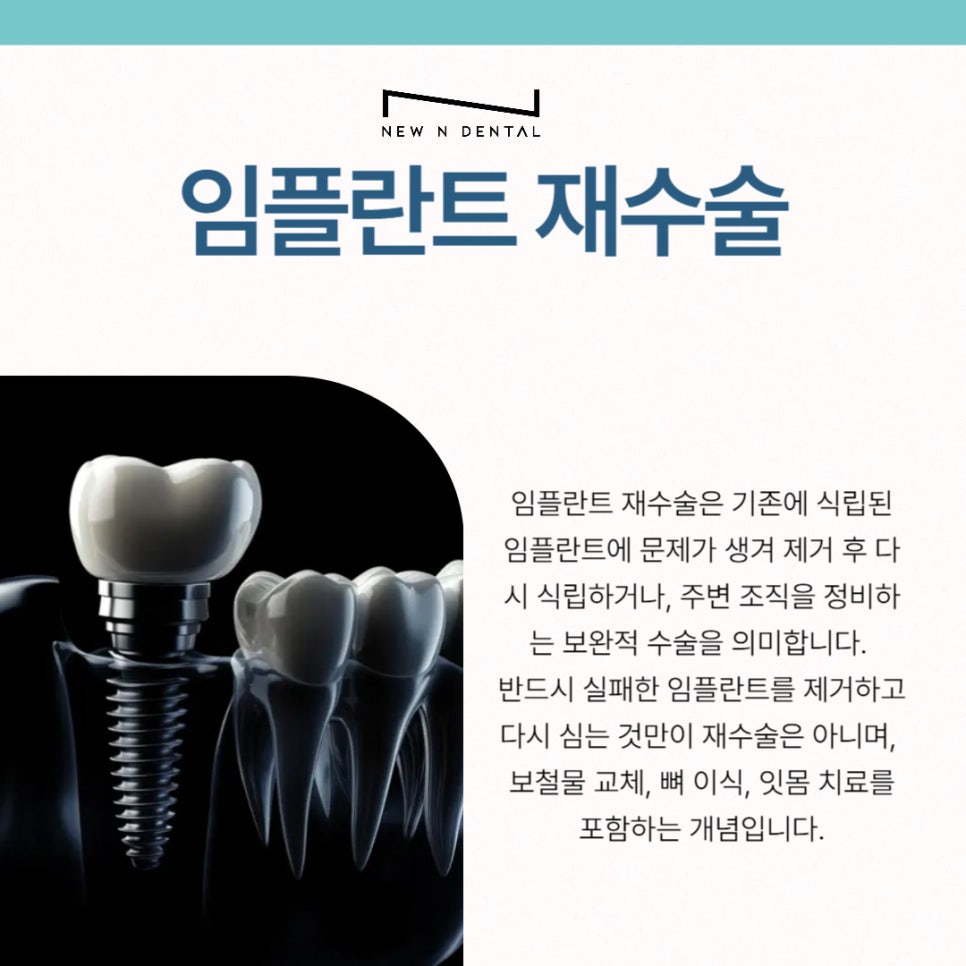
It refers to a corrective procedure in which a previously placed implant is removed and reinserted after problems occur, or surrounding tissues are repaired. Reoperation does not only mean removing a failed implant and placing it again; it is a broader concept that includes prosthesis replacement, bone grafting, and gum treatment.
Typical cases where implant reoperation is needed
- Peri-implantitis
-
This is a condition in which the gums swell and bleed, and the bone around the implant is resorbed. If left untreated, the implant may become loose or fall out, so early treatment is important.
-
If the inflammation is severe, it may be necessary to remove the existing implant and place a new one.
- Initial fixation failure
-
This occurs when the bone and the implant do not properly integrate within a certain period after placement.
-
It can happen when the bone condition is weak or when the implant is used too soon. In such cases, the implant is removed, a recovery period is observed, and then another attempt is made.
- Prosthesis damage or misfit
-
If damage occurs due to strong chewing forces or a prosthesis that does not fit well, prosthesis replacement or readjustment is needed.
-
In severe cases, the implant itself may need to be removed and re-treated.
- When the implant is placed in an inaccurate position
This can cause functional and aesthetic problems, and the position may need to be corrected through reoperation.
- Failure due to patient-related factors
-
Frequent smoking, diabetes, and poor oral hygiene can be causes.
-
If reoperation is performed without addressing the cause, the likelihood of recurrence is high.
What must be checked before reoperation
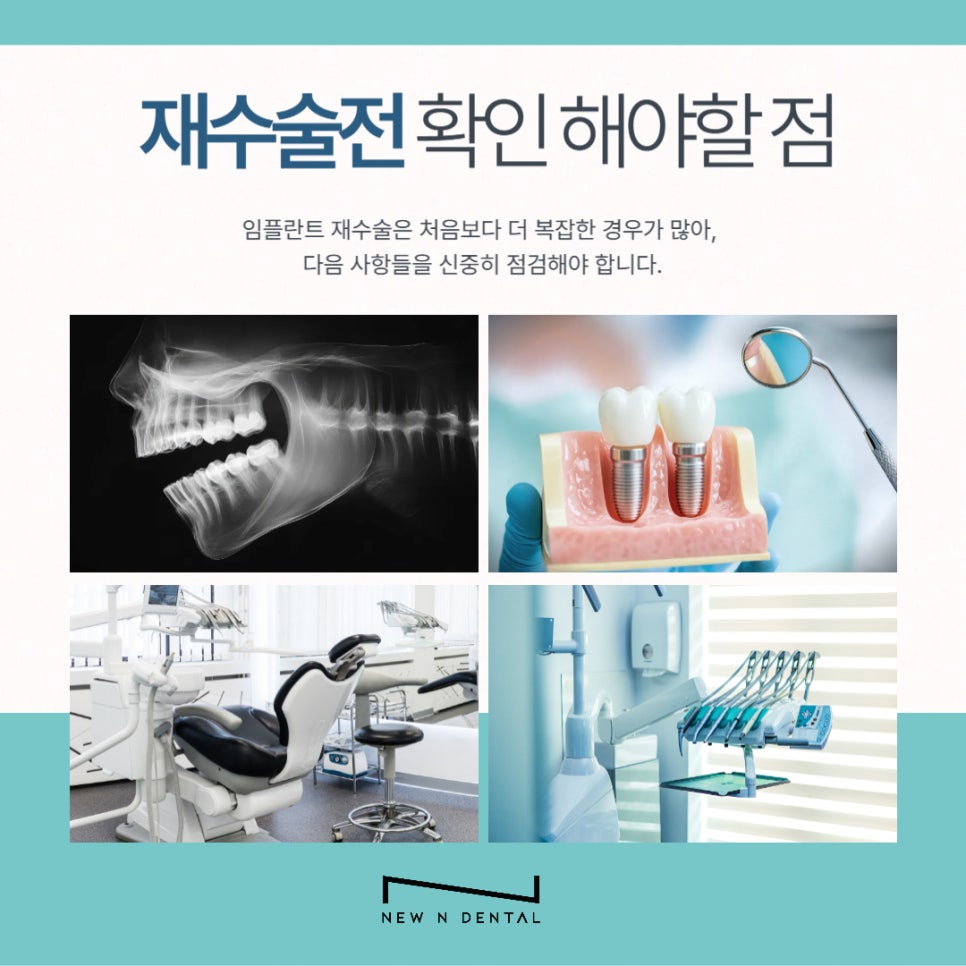
Because it is often more complex than the first procedure, the following points must be carefully evaluated.
The condition of the bone, the extent of inflammation, and the position of the existing implant must be accurately checked through 3D CT imaging and similar examinations.
- Check the condition of the remaining bone
The bone may have been lost due to the existing implant, and in many cases, bone grafting is required.
- Assess overall health status
Diabetes, osteoporosis, immune disorders, and similar conditions can affect the success rate of implant reoperation, so sufficient consultation beforehand is necessary.
Points to be careful about during reoperation
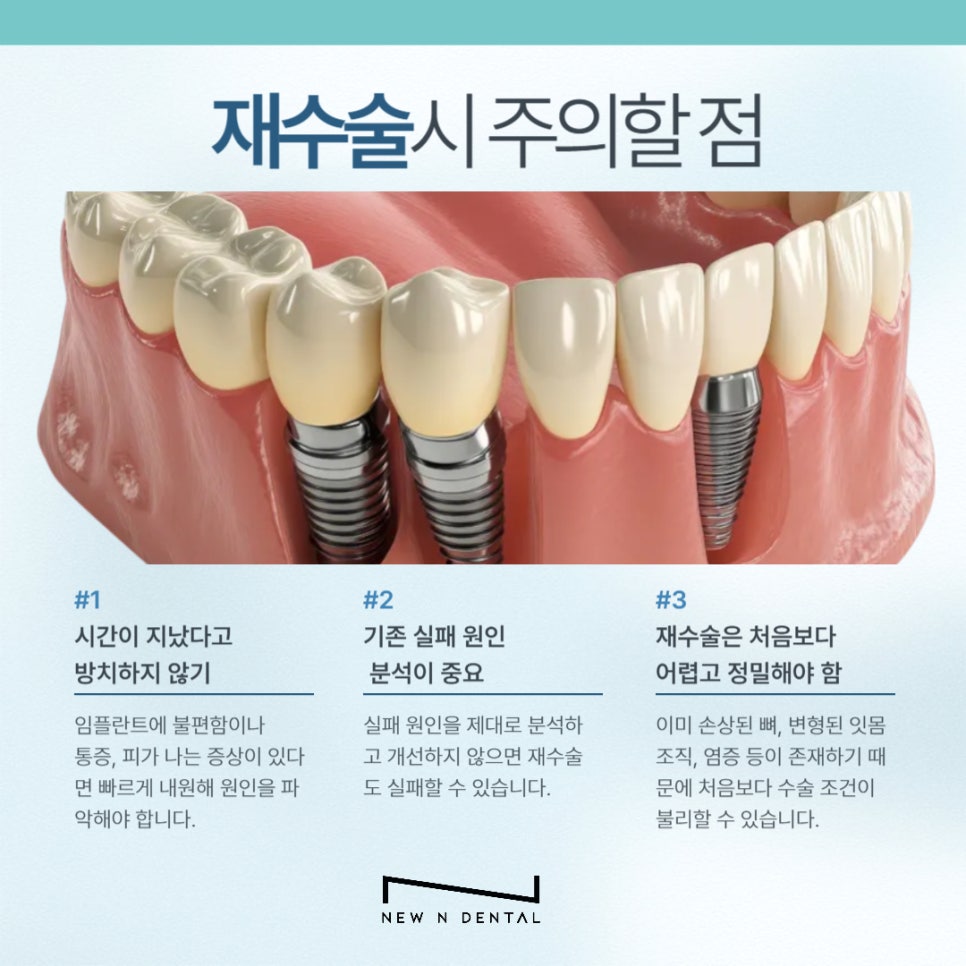
- Do not leave it alone just because time has passed
If you have discomfort, pain, or bleeding around an implant, you should visit the clinic quickly to determine the cause.
Taking action before the problem grows is the way to reduce the burden of reoperation.
- Analyzing the cause of the previous failure is important
If the cause of failure is not properly analyzed and improved, reoperation can also fail.
Gum care, eating habits, and prosthesis-use habits should also be checked.
- Reoperation is more difficult and requires greater precision than the first procedure
Because there may already be damaged bone, deformed gum tissue, and inflammation, the surgical conditions may be less favorable than during the initial procedure.
Accurate diagnosis and planning by an experienced medical team are important.
Care after reoperation
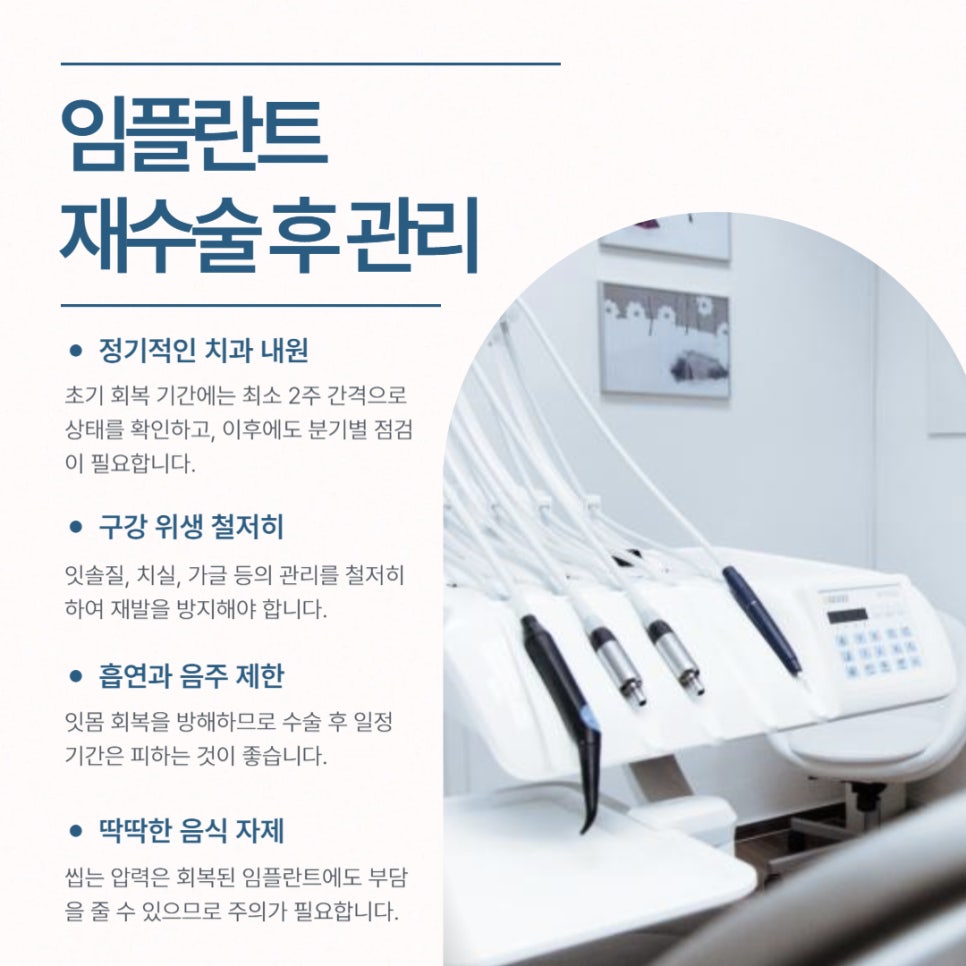
- Regular dental visits
During the early recovery period, the condition should be checked at least every two weeks, and quarterly checkups are needed afterward as well.
- Maintain thorough oral hygiene
You should prevent recurrence by diligently caring for your teeth and gums with toothbrushing, dental floss, and mouthwash.
- Limit smoking and alcohol
They interfere with gum healing, so it is best to avoid them for a certain period after surgery.
- Avoid hard foods
Chewing pressure can place a burden even on a healed implant, so caution is needed.
Implants are an effective treatment method for replacing natural teeth, but problems can occur if care is neglected or if the diagnosis is insufficient. If reoperation is necessary, simply placing a new implant is not always the answer.
It is important to identify the cause accurately and to establish a diagnosis and treatment plan that also takes the patient’s oral condition and lifestyle habits into account. Do not ignore even small discomforts, and if symptoms occur, visit the dental clinic promptly to receive proper diagnosis and consultation. That is the way to maintain the implant for a long time.










Previous image
Next image
#Implant #ImplantReoperation