
Gangnam implant reoperation
In what cases is it needed?
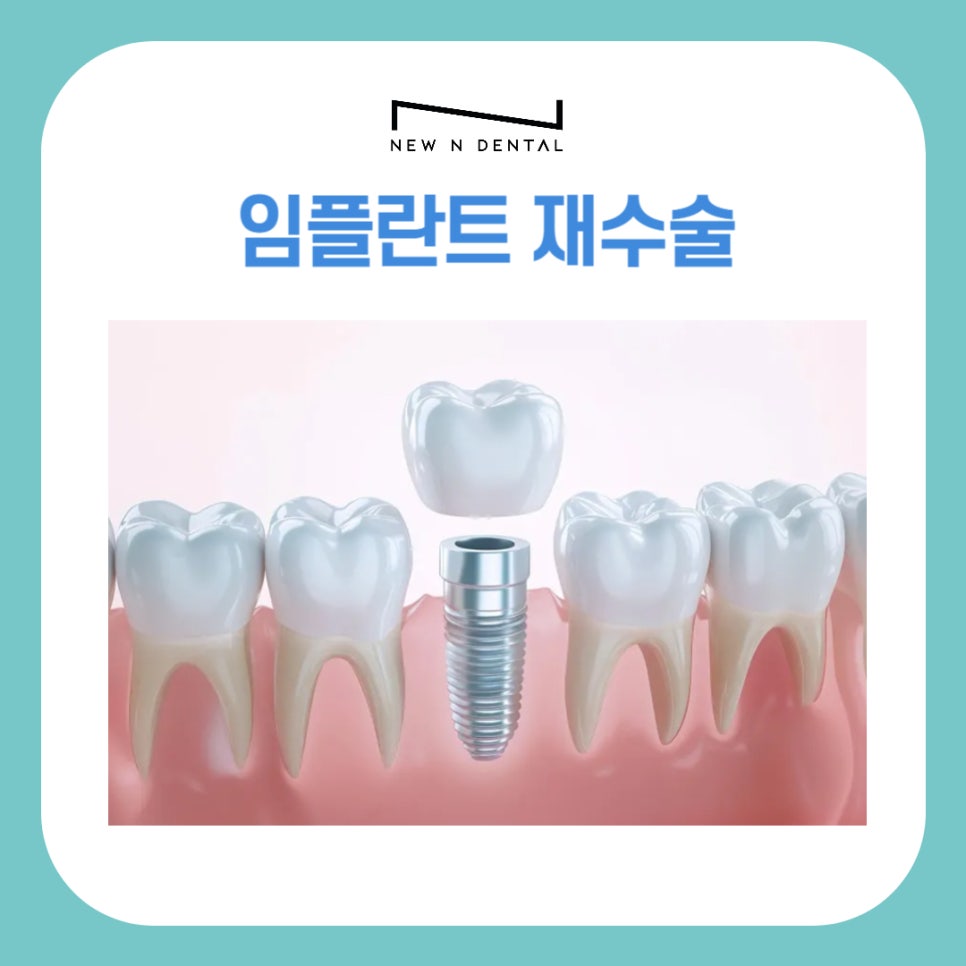
Hello, this is Gangnam New N Dental Clinic.
Today, we’ll take a look at implant reoperation. Implants are a functional treatment method that replaces natural teeth and tend to have high user satisfaction. However, for various reasons, there are cases where reoperation becomes necessary after an implant procedure. Not every reoperation means failure, and with an accurate diagnosis and plan, recovery to a healthy state is possible, so there is no need to worry too much.
Cases in which Gangnam implant reoperation is needed
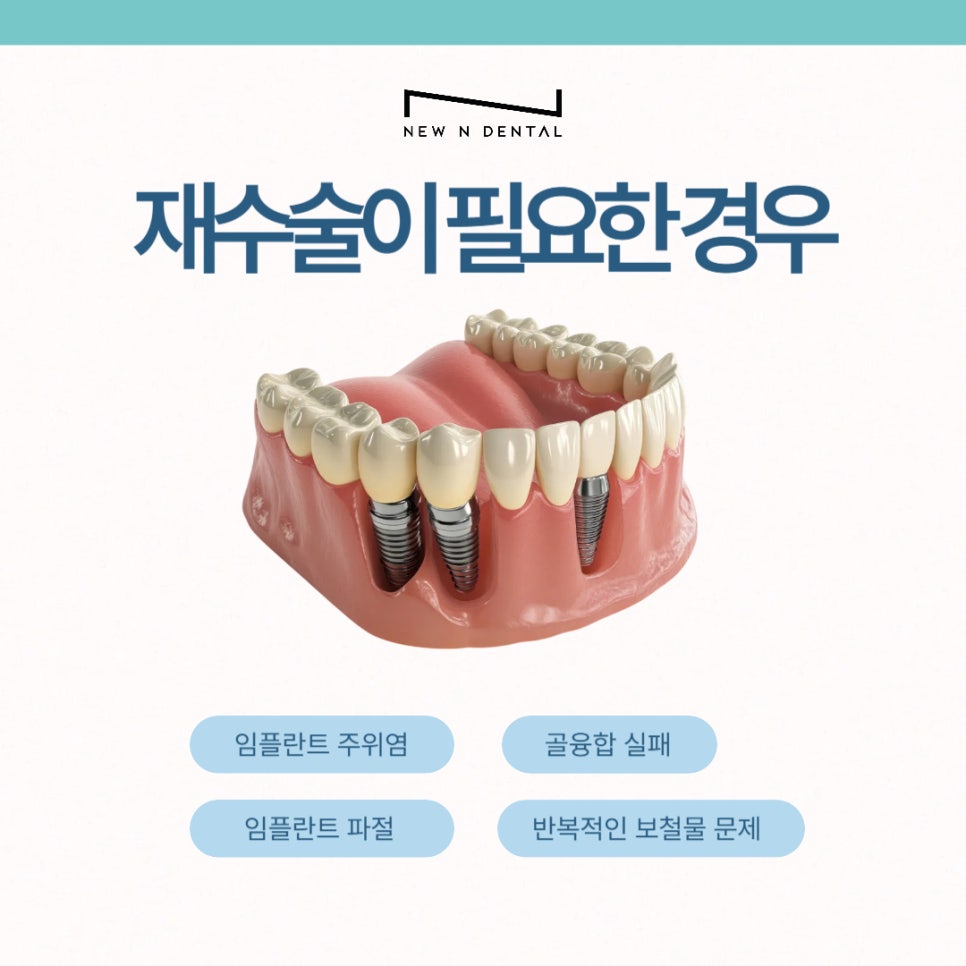
● Peri-implantitis
This refers to inflammation around the placed implant that causes the bone to dissolve.
In the early stages, conservative treatment such as scaling or antibiotics may be possible, but if the inflammation becomes severe, the fixture itself must be removed, and in that case reoperation may be necessary.
● Osseointegration failure
For an implant to be used stably, it must firmly integrate with the jawbone.
However, if there is insufficient jawbone, infection, excessive movement, or other causes, and fusion with the bone fails, re-placement is required.
● Implant fracture
This is when the fixture itself breaks.
It can occur due to repeated strong force, an imbalance in the bite, or problems with the product itself. In such cases, the fractured part must be removed and a new implant placed through reoperation.
● Repeated prosthetic problems
If the artificial tooth (crown) frequently comes off or breaks, there may be an issue with the fixture angle.
In this case, simply replacing the prosthesis may not solve the problem, and the fixture position may need to be readjusted.
How is implant reoperation performed?
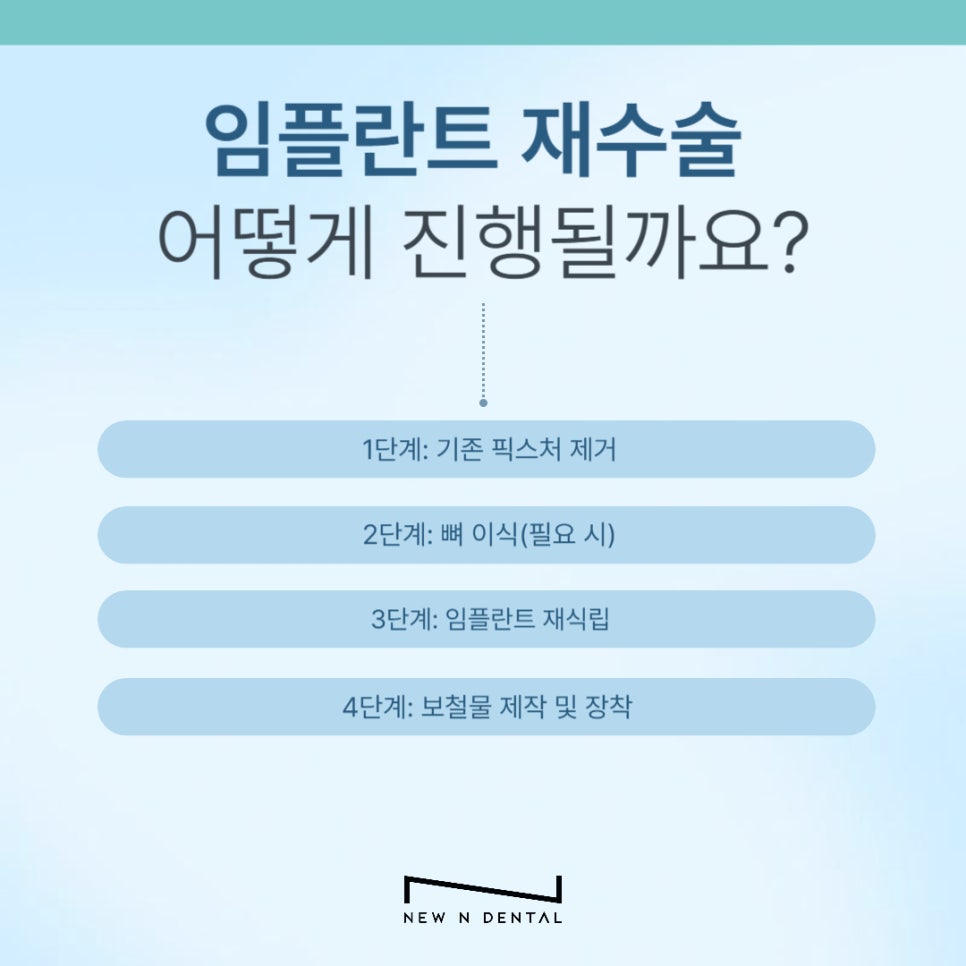
Reoperation is often more complex than a regular implant procedure.
In particular, when removing an existing implant, bone damage must be minimized, so precise skill and experience are required.
▶ Step 1: Removal of the existing fixture
The infected fixture or the one that failed to integrate is removed.
This process must be carried out carefully to minimize bone loss.
▶ Step 2: Bone grafting (if needed)
If bone damage is severe after removal or the amount of bone is insufficient, bone grafting is performed at the same time.
Autograft, synthetic bone, or allograft materials are used, and a certain recovery period is needed for the bone to settle in place.
▶ Step 3: Re-implantation
After the bone has recovered sufficiently, a new fixture is precisely positioned and placed.
▶ Step 4: Prosthesis fabrication and placement
A new prosthesis is fabricated and placed, taking gum condition and bite into account.
Recovery and care after reoperation
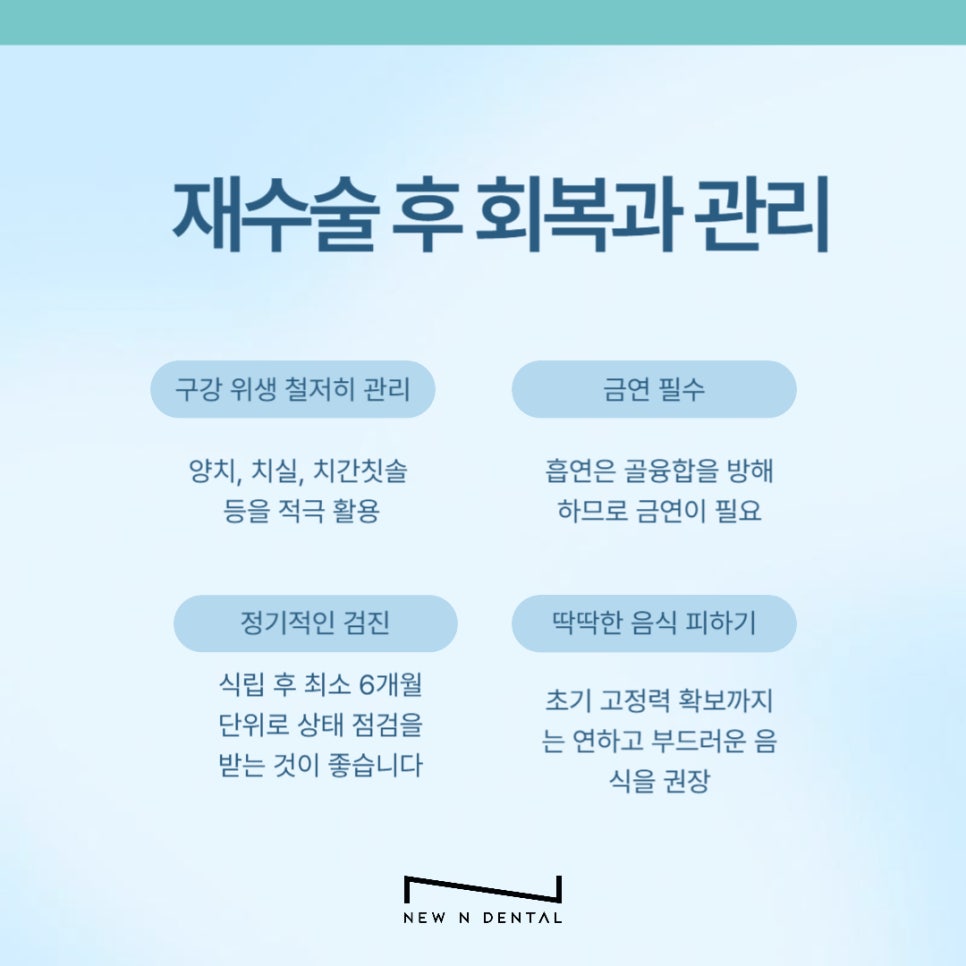
After reoperation, the following care is needed.
-
Maintain oral hygiene thoroughly: actively use brushing, floss, and interdental brushes
-
Quitting smoking is essential: smoking interferes with osseointegration, so quitting is necessary
-
Avoid hard foods: soft, gentle foods are recommended until initial stability is secured
-
Regular checkups: it is advisable to have the condition checked at least every 6 months after placement
Proper basic care like this is necessary to extend the lifespan of the implant.
Things you must check before reoperation
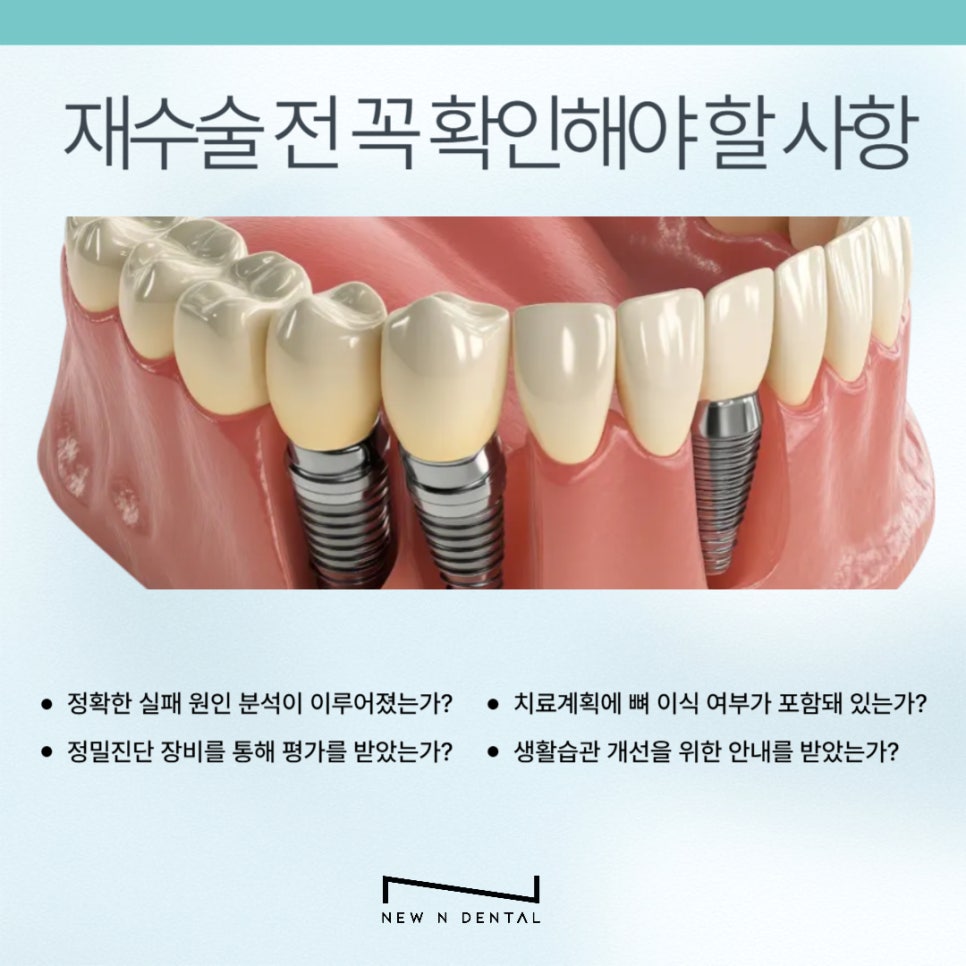
If you are preparing for implant reoperation, check the following.
Has the exact cause of failure been analyzed?
Rather than simply placing the implant again because it feels loose, it is important to clearly determine why it failed. Multiple factors such as bite problems, lifestyle habits, and the condition of the jawbone are analyzed.
Has the evaluation been done using precise diagnostic equipment?
A reoperation plan should be established only after the jawbone and surrounding structures have been precisely examined through CT scans and other imaging.
Does the treatment plan include bone grafting?
If there is bone loss, bone grafting is necessary, and it is advisable to receive a full explanation in advance about the associated recovery period and costs.
Have you been given guidance for improving your lifestyle habits?
Smoking, teeth grinding, and similar habits increase the risk of implant failure, so these factors should also be managed together to prevent recurrence.
Because implants are a very precise treatment, there are times when a repeat procedure becomes necessary due to unexpected problems.
But please don’t worry too much. If the cause is accurately analyzed and reoperation is performed after the oral condition has sufficiently recovered, you can return to a healthy oral state.
However, because it requires more delicate technique than a regular implant procedure, it is important to consult with medical staff who have precise diagnostic capabilities and extensive clinical experience. Above all, after treatment, regular checkups and thorough care must be maintained together in order to preserve a healthy condition for a long time.










Previous image
Next image
#implant reoperation #implant #Gangnam implant reoperation