
5 Things You Must Know Before Full-Mouth Implant Treatment

Hello. This is Gangnam New N Dental Clinic.
In the past, when teeth were lost across the mouth or lost their function, dentures were mostly the only alternative. Recently, however, full-mouth implants are becoming increasingly popular because they can satisfy both function and aesthetics.
Full-mouth implants are an important treatment that can change facial shape, chewing function, and even quality of life, so there is a lot of information you should know before the procedure.
Today, if you are considering full-mouth implants, I’ll organize the 5 key points you must check. If you are considering implants, please be sure to review this post before choosing a medical institution.
- What Are Full-Mouth Implants?
Understanding the Difference from Dentures
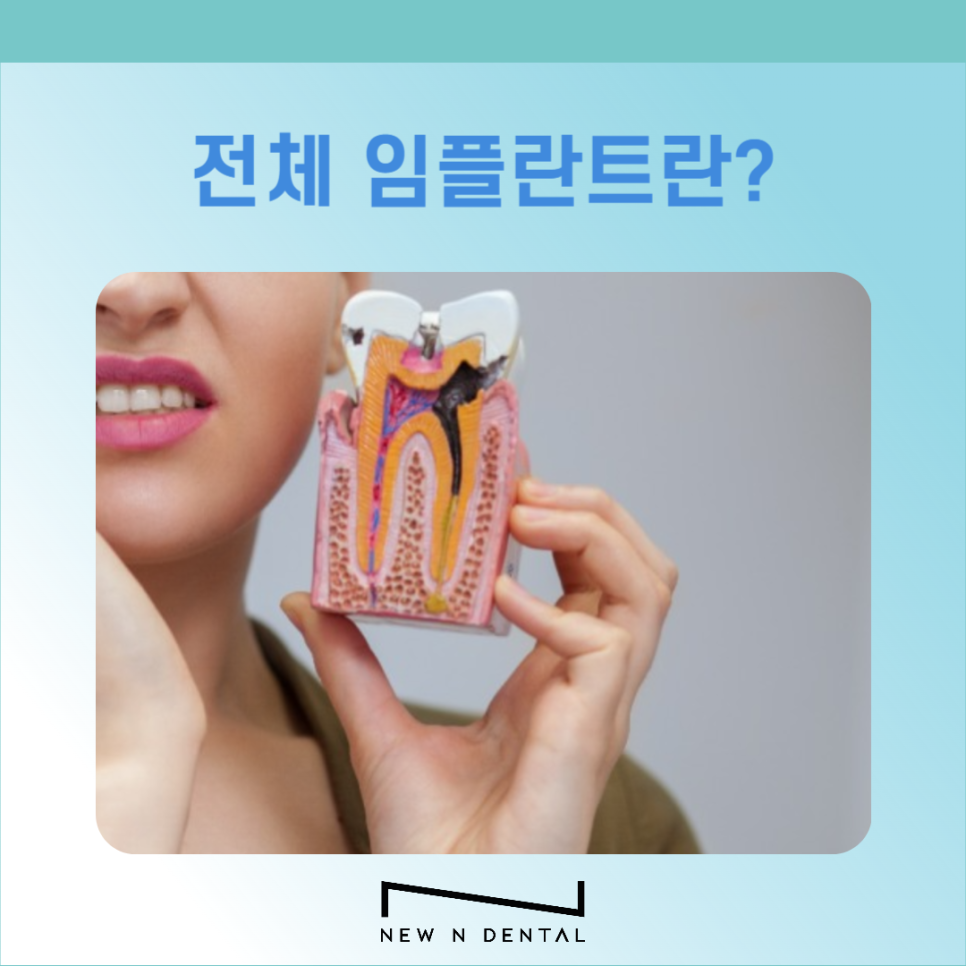
Full-mouth implants are a procedure that replaces all teeth in the upper or lower jaw with implants. However, it is not limited to placing one implant for each individual tooth.
Recently, placing 4 to 6 implants and connecting a fixed prosthesis has become a preferred option because it is efficient in terms of time, cost, and recovery, which is why many people consider full-mouth implants. The biggest advantage of this method is that it is securely fixed without the worry of coming loose or falling out like dentures. In addition, because it is directly placed into the gums, it provides excellent chewing force and reduces food trapping. Since it can also be made to look very similar to natural teeth, aesthetic satisfaction is also very high.
Above all, full-mouth implants help people confidently smile, speak, and eat even when aging has weakened the gums and bone, so they have become a new option for those who have experienced the inconvenience of dentures.
- How Do the Procedure Methods and Types Differ?
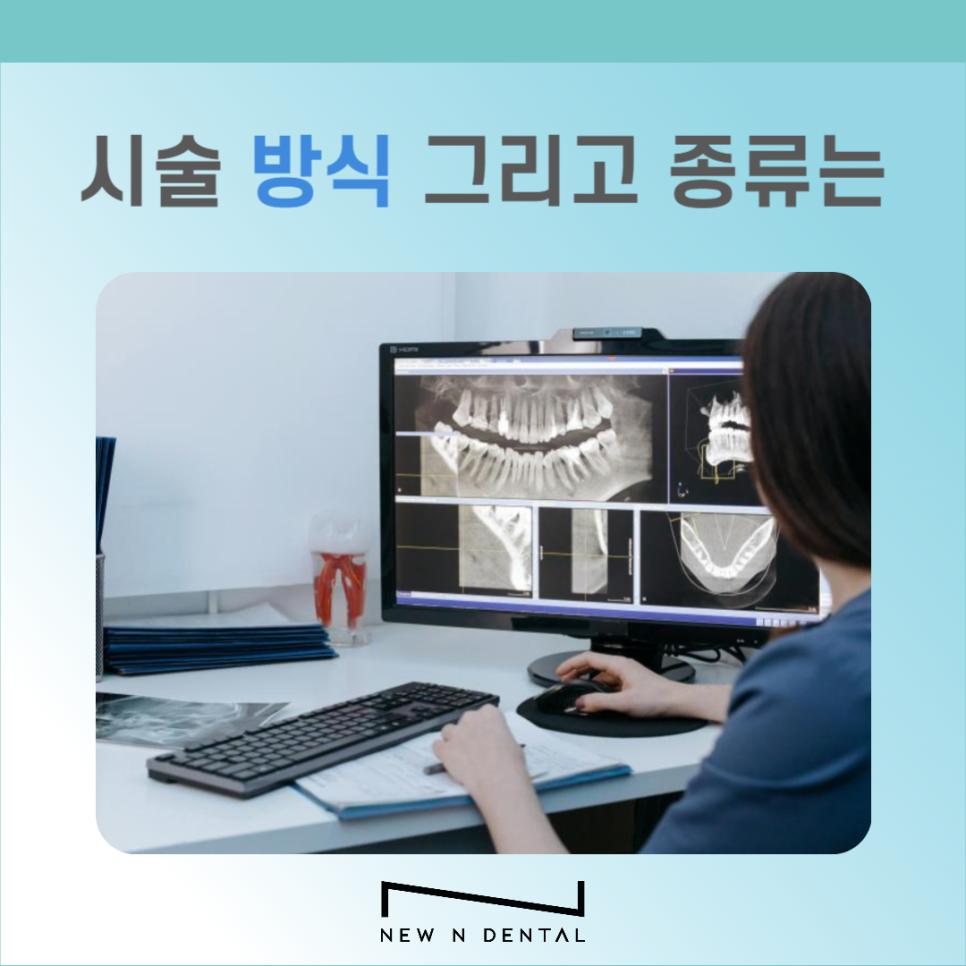
Full-mouth implants are broadly divided into two methods depending on the approach.
The first is, as the name suggests, a method in which implants are individually placed for each missing tooth.
The second is a method in which a small number of implants are placed and then a prosthesis is fixed onto them.
If the bone is strong and sufficient in quantity, individual placement is possible. However, when bone is lacking or resorption is severe due to age, a method with less surgical burden and faster recovery is preferred.
In particular, this method has a shorter surgery time and faster recovery, so it can be a less burdensome option for older patients or those with systemic diseases.
However, whichever method is used, the most important thing is to choose the appropriate approach through CT imaging and a precise diagnosis before the procedure. Rather than choosing simply because it is cheaper or faster, a decision should be made after comprehensively considering the individual’s gum structure, health status, budget, and more.
- Health Conditions and Tests to Check Before the Procedure
You should keep in mind that full-mouth implants are more than a simple dental procedure; they are surgery closely connected to overall health.
In particular, if you have chronic conditions such as diabetes, high blood pressure, heart disease, or osteoporosis, they can affect bone grafting or the recovery process after placement, so consultation with your primary doctor and a diagnosis beforehand are essential. Usually, hospitals perform 3D CT scans before the procedure to precisely analyze bone density, height, thickness, and the position of nerves, and prepare by conducting blood tests and an overall health check to increase the success rate with a safety-oriented procedure.
Smokers, immunocompromised individuals, and those with a history of cancer treatment may have a higher possibility of infection or delayed recovery after the procedure, so prior consultation with the dental clinic is necessary. In this way, the procedure should be planned not by looking only at the tooth condition, but by comprehensively checking overall health first; this can reduce recovery time and help prevent post-procedure side effects.
- How Much Do Full-Mouth Implants Cost and How Long Do They Take?
The first thing many people wonder about when considering full-mouth implants is the cost.
The cost varies significantly depending on the number of implants, the materials used, the clinic’s equipment and expertise, and the procedure method. Generally, the price ranges from around 6 million KRW to 15 million KRW for either the upper or lower jaw.
Individual placement methods are more expensive and take longer, while the All-on-4 method has the advantage of reducing costs and shortening the treatment period.
In particular, these days,
Diagnosis → placement → temporary prosthesis connection on the same day
Many clinics are now able to provide this process, and many dental clinics operate a one-day implant system.
Of course, this is only possible when the patient’s oral condition is sufficiently stable. Therefore, to confirm the exact treatment plan, estimated duration, and cost, it is advisable to carefully review the treatment plan provided during the initial consultation and compare options. Rather than simply looking for the cheapest place, it is wise to consider aftercare and warranty systems as well.
- What You Must Know About Recovery and Care After the Procedure

Implant treatment is important, but post-procedure care determines the success rate.
In the case of full-mouth implants, because the placement area is large, swelling, pain, and dizziness may occur for the first few days.
During this period, you should avoid strenuous activity or eating too much, and you need to take the prescribed medication and get plenty of rest.
Also, even after the prosthesis is connected, hard or chewy foods should be avoided for at least one month so that the gums and implants can bond well. When brushing, use a soft toothbrush so as not to irritate the gums. Smoking, drinking alcohol, and strenuous exercise interfere with recovery, so they should be avoided for at least 2 to 3 weeks. Most importantly, regular checkups and scaling are necessary to prevent inflammation around the implants and to maintain long-term stability.
Surprisingly, many people think it is over after the procedure and neglect care, but you should not forget that for full-mouth implants, the real beginning is after they are placed.
Full-mouth implants involve many considerations, and because the entire process, from pre-treatment preparation to post-procedure care, must be carefully planned, it is important to approach the choice of dental clinic cautiously. Be sure to check the five points summarized today and choose according to your own oral health condition.










Previous image
Next image
Full-mouth implants #Implants #ImplantProcedure