Non-surgical underbite orthodontics
Recommended for these people
Hello, this is Gangnam New N Dental Clinic.
An underbite is one of the issues that greatly affects facial contours and expressions, so many people consider ways to improve it.
Traditionally, underbites have often been corrected through surgery, but recently non-surgical underbite correction, which uses orthodontic appliances without surgery, has been getting attention. Because it can be a good alternative for people who are worried about surgery or a long recovery period, today we will take a detailed look at when non-surgical correction is appropriate and which people it is recommended for.
What is non-surgical underbite correction?
Non-surgical underbite correction refers to a treatment method that improves underbite symptoms using only orthodontic appliances, without surgery.
It mainly works by correcting tooth alignment and bite condition to relieve the visible issues of an underbite. Because it does not directly operate on the skeletal structure itself, the recovery period is short and the physical burden is small. However, not all underbites can be treated this way, and whether it is suitable depends on the cause and severity of the underbite.
What kind of condition is an underbite?
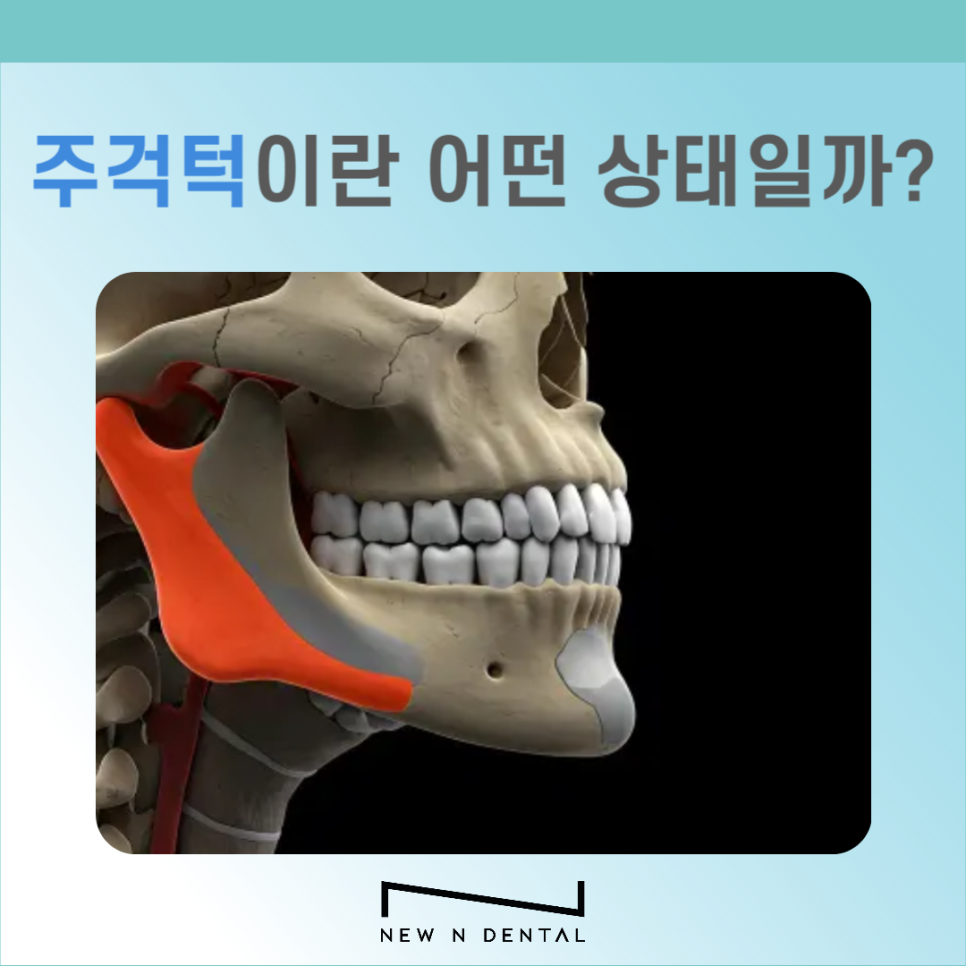
An underbite refers to a condition in which the lower jaw appears more protruded than the upper jaw, and it can be caused by differences in skeletal structure, problems with tooth alignment, or a combination of both.
If there is a severe skeletal deformity, surgery may be necessary. But if the skeletal difference is relatively small and the main cause is tooth alignment imbalance, non-surgical correction can be enough to improve it.
Types of underbites that can be corrected non-surgically
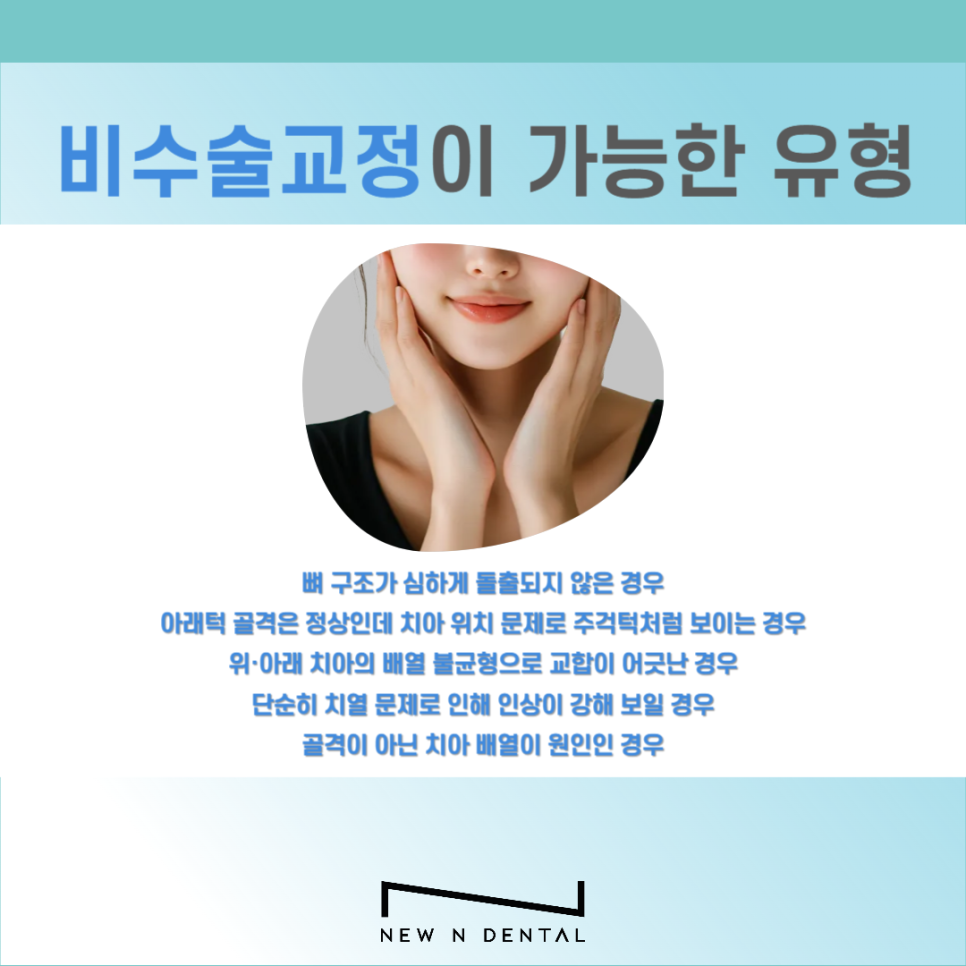
Underbite types that can be corrected non-surgically are those with no severe skeletal abnormality.
If the lower jaw is significantly protruded or the balance of the face is clearly disrupted, a surgical approach may be needed. But if the condition is relatively mild, improvement can often be achieved with tooth movement alone. For example, the lower jaw bone itself may be close to the normal range, but the upper and lower teeth may be imbalanced in position, making the person look as if they have an underbite.
In such cases, simply correcting the tooth alignment can make the overall face shape and side profile look much softer. In addition, non-surgical correction can be effective when the lower teeth are positioned more forward than the upper teeth or when the bite does not fit properly because the teeth are protruded. In this way, if the underbite is caused not by skeletal structure alone but by tooth alignment or bite problems, it can often be improved sufficiently with relatively low-burden orthodontic treatment.
We recommend non-surgical underbite correction for these people

Non-surgical underbite correction is a good alternative for people who feel burdened by surgery.
Surgery involves considering various factors such as general anesthesia, recovery time, and restrictions on daily life, so it is not a suitable treatment for everyone. In particular, non-surgical correction can be a practical choice for office workers, students, and parents raising children who find it difficult to create a long gap in daily life for postoperative recovery.
It is also often preferred by older adults or people with chronic conditions such as cardiovascular disease or diabetes, since the surgical risk is higher for them and they may want a safer non-surgical treatment.
Even when aesthetic improvement is needed, if surgery feels burdensome, orthodontics alone can still provide satisfactory results. Of course, the degree of improvement may vary depending on the individual’s condition, but there are now less noticeable options such as clear aligners, which can reduce psychological 부담 as well. Overall, if there is no severe skeletal problem but you are worried that your jaw looks protruded, it is best to first get a diagnosis to see whether non-surgical correction is possible.
Advantages and disadvantages of non-surgical underbite correction
Because non-surgical underbite correction is performed without surgery, it has the advantage of causing less pain and fewer side effects, and it does not greatly interfere with daily life. It is also less costly than surgery and has a shorter recovery period, so treatment can be started without as much burden. However, it is important to understand that the treatment period may be somewhat longer, and that it has limitations in completely resolving severe skeletal problems.
Treatment process and precautions
The treatment process begins with an initial consultation and a detailed examination. After diagnosing the condition of the teeth and skeletal structure, a customized orthodontic plan is created, and the teeth are gradually moved while wearing orthodontic appliances.
During treatment, you should follow the wearing schedule carefully and maintain thorough dental and oral hygiene. You should also visit the dental clinic regularly to check the progress of treatment.
Non-surgical underbite correction is not a universal treatment that applies to every underbite patient, but when appropriate, you can expect a safe and satisfaction-oriented procedure with good results.
For those considering treatment, it is most important to have a thorough consultation with a specialist medical team and systematically understand your condition and treatment possibilities.
We hope non-surgical underbite correction helps reduce the burden and restore a natural facial line.










Previous image
Next image
#Tooth alignment #Underbite correction #Non-surgical tooth alignment