
Nonhyeon Station Dental Clinic
The Effects of Drinking Alcohol After Tooth Extraction on Recovery
Hello. This is Gangnam Newen Dental Clinic.
After having a tooth extracted, one of the most common questions people ask is, “When can I drink alcohol?” Drinking in everyday life is often not easy to avoid at company dinners or social gatherings, but
it is something you must be careful about during the recovery process. Today, based on Nonhyeon Station Dental Clinic standards,
we will look at how drinking alcohol after tooth extraction affects recovery and summarize
guidelines for a safe recovery.

Natural reactions after tooth extraction
After an extraction, everyone experiences a certain level of discomfort.
-
Bleeding at the extraction site
-
Swelling and pain in the gums
-
A foreign-body sensation like a lump
-
Chewing discomfort for several days
These symptoms are part of the normal healing process and will gradually improve over time.
However, if you drink alcohol, the natural healing process can be disrupted and lead to complications.
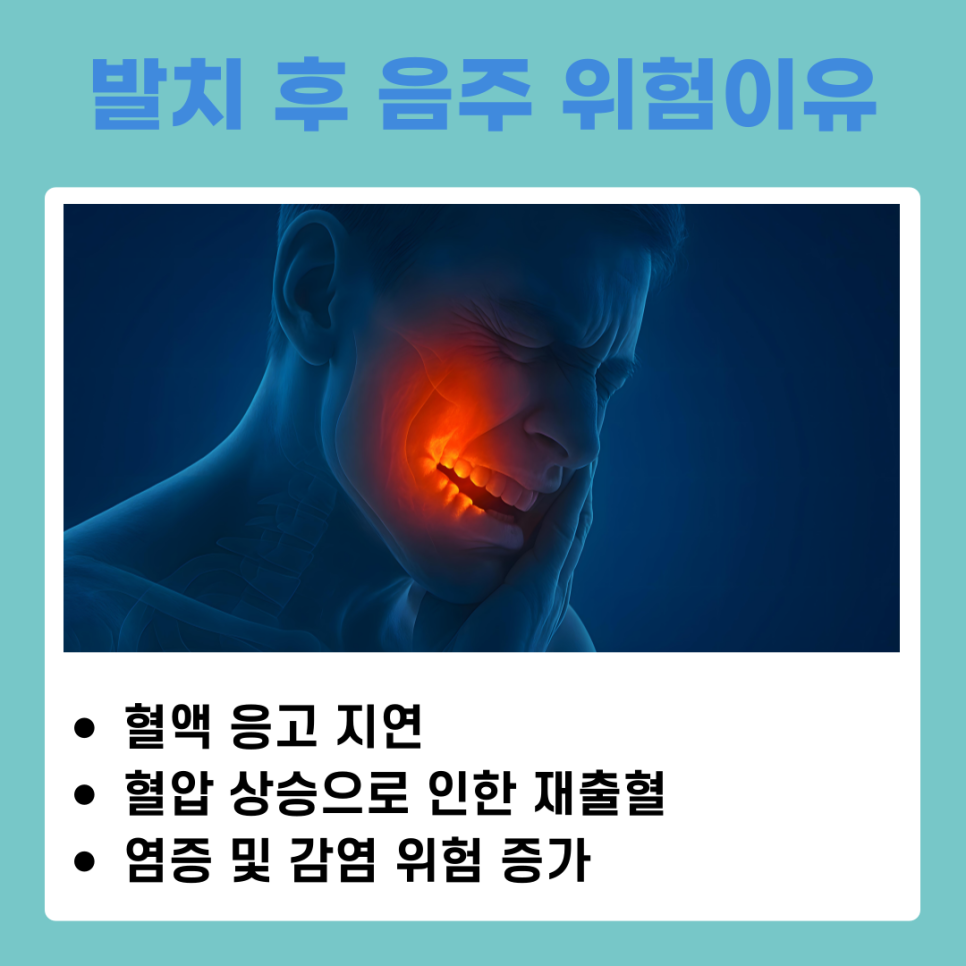
Why drinking alcohol after tooth extraction is risky
- Delayed blood clotting
Alcohol has a blood-thinning effect. Stopping bleeding is very important at the extraction site,
and if blood clotting is delayed due to drinking, the bleeding may not stop and can continue for a long time.
- Rebleeding due to increased blood pressure
Alcohol causes blood vessels to expand and temporarily raises blood pressure.
When you drink,
a vessel that has already closed may reopen, causing rebleeding,
and this can become severe enough to require additional treatment.
- Increased risk of inflammation and infection
Alcohol weakens the body’s immune response. The extraction site is a wound where bacteria can easily enter,
so if immunity drops after drinking, bacterial infection can occur easily.
This can lead to pus formation or severe pain.
- Delayed recovery
Alcohol stimulates liver and kidney function, reducing the body’s ability to recover.
As a result, the wound may take longer than normal to heal, and recovery of the gum bone may also be delayed.
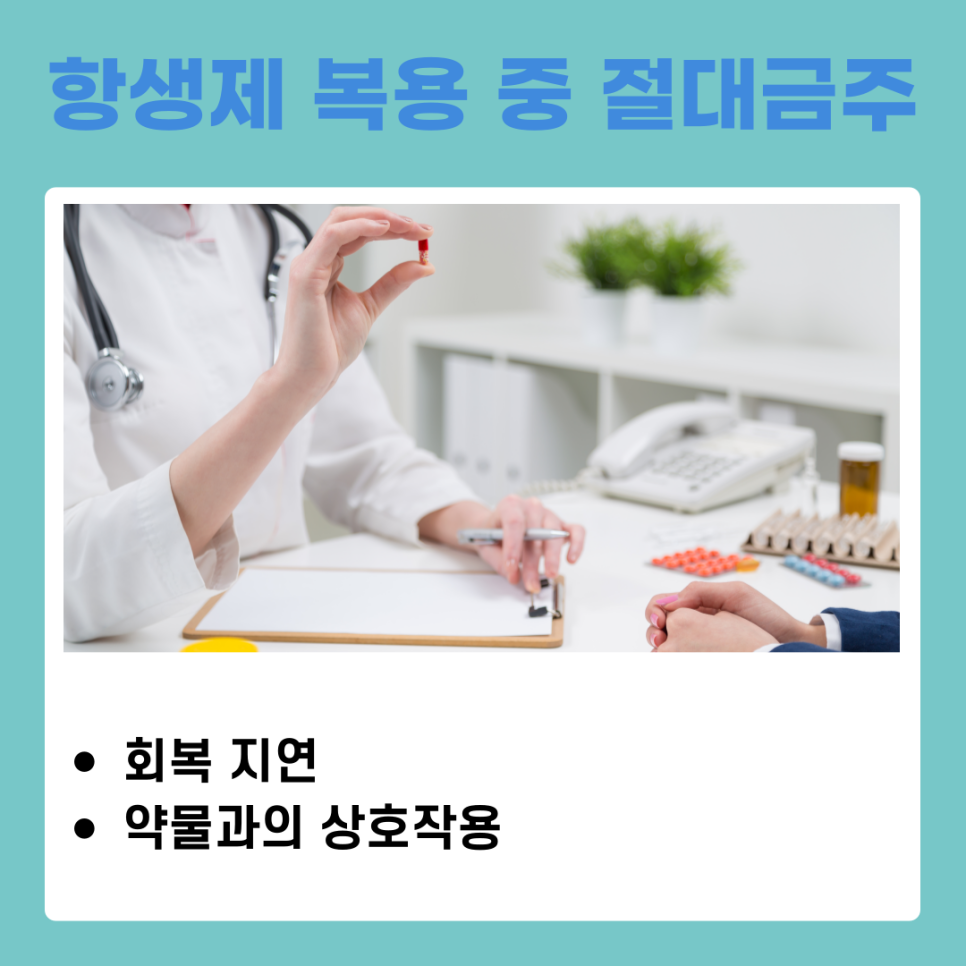
- Interaction with medications
After an extraction, most patients are prescribed anti-inflammatory pain relievers or antibiotics.
If these medications are taken together with alcohol, side effects such as stomach problems, liver damage, or reduced effectiveness may occur.
In particular, antibiotics and alcohol should never be taken together.
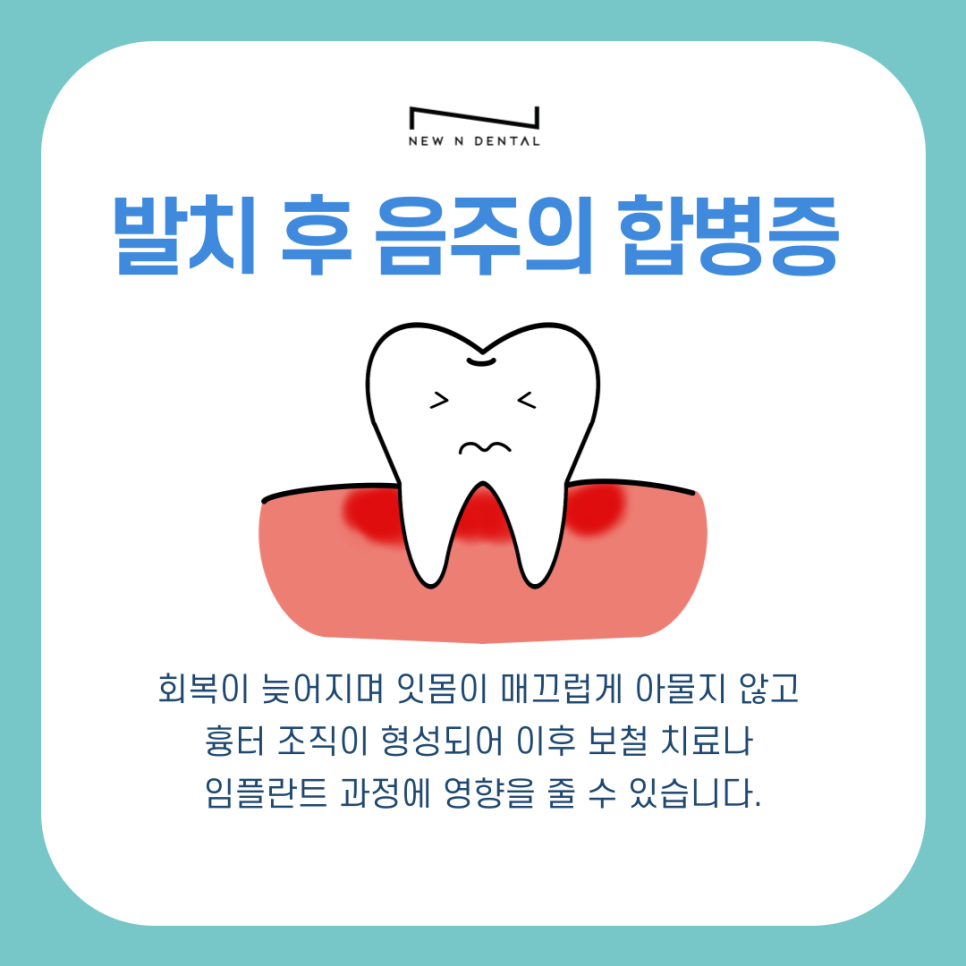
Common complications that can occur after drinking following an extraction
- Dry socket
If the blood clot does not form properly or comes off, the bone becomes exposed and severe pain occurs.
Alcohol weakens the clot and is one of the main causes of this condition.
- Abscess caused by infection
If a bacterial infection develops at the extraction site, the gums may swell and develop into an abscess filled with pus.
This cannot be resolved with simple pain relievers alone and requires additional disinfection and antibiotic treatment.
- Delayed healing and scar tissue formation
If recovery is delayed, the gums do not heal smoothly and scar tissue may form,
which can affect later prosthetic treatment or implant procedures.
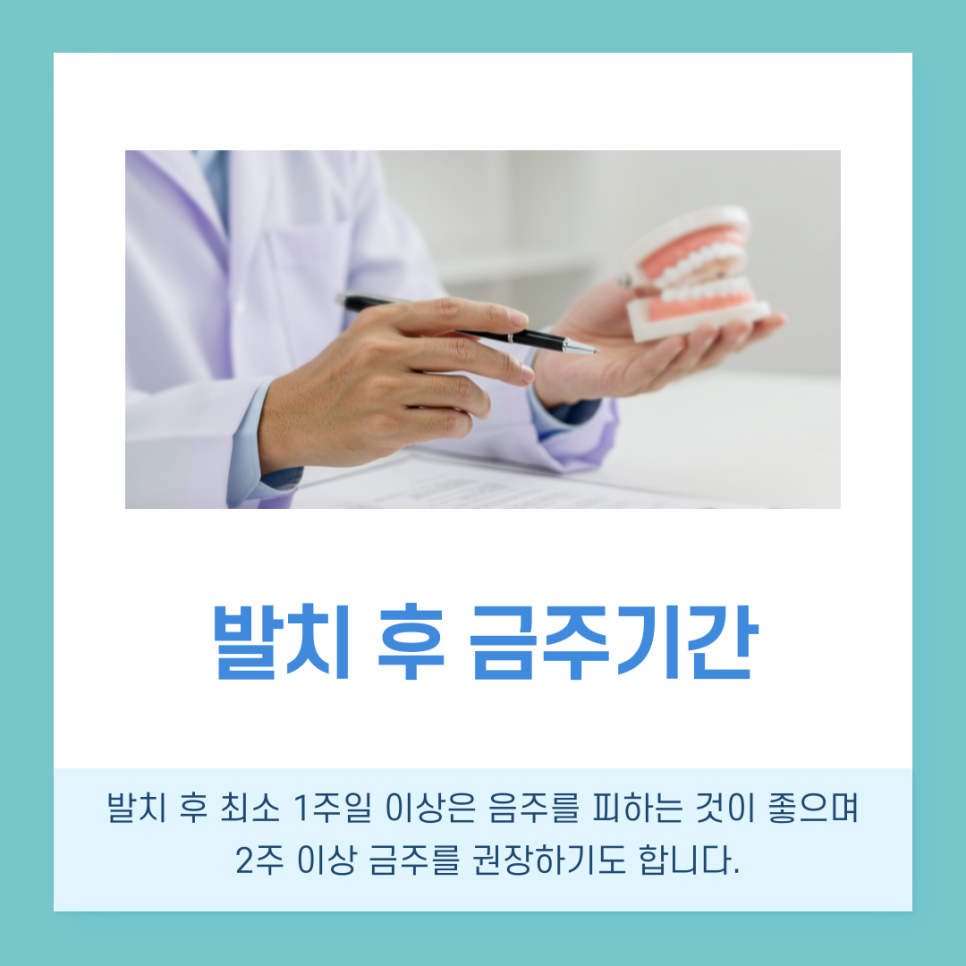
Drinking alcohol after tooth extraction: when is it possible?
In general, it is best to avoid alcohol for at least one week after an extraction.
Although this varies depending on individual healing speed, in complex cases such as wisdom teeth, where gum incision or bone removal is involved,
avoiding alcohol for more than two weeks may be recommended.
Even if the extraction site appears to have healed completely, if you are still taking antibiotics, it is safest to avoid alcohol until after you have finished the medication.
Therefore, the exact timing for returning to alcohol should be decided only after consulting your dentist.

Lifestyle care tips for safe recovery
- Avoid alcohol and smoking
The most basic recovery rule is to avoid alcohol and cigarettes.
Smoking interferes with blood supply and slows gum healing, so it must be stopped.
- Food management
On the day of the procedure, soft foods such as porridge or lukewarm food are better than hot or irritating foods.
Food that is too hot or too hard can cause bleeding and pain.
- Oral hygiene management
Rather than brushing forcefully, brush gently and lightly rinse with the prescribed mouthwash or saline to keep the area clean.
- Adequate rest
When your body is fatigued, recovery also slows down. After surgery, it is important to avoid strenuous activity and rest.
Tooth extraction is a common procedure, but if aftercare is not properly managed,
it can lead to complications. In particular, alcohol is a factor that has a direct negative effect on the recovery process,
so caution is essential.
At Nonhyeon Station Dental Clinic, we provide detailed guidance on the alcohol-free period and lifestyle precautions according to each patient’s extraction difficulty and health condition.
We also regularly check the progress to prevent complications early.

Drinking alcohol after tooth extraction is not just a matter of daily habit; it is an important factor that determines whether recovery is successful.
To prevent unnecessary complications such as bleeding, infection, and delayed healing, you should avoid alcohol for at least one week.
Nonhyeon Station Dental Clinic provides attentive care from extraction through aftercare,
helping patients recover without discomfort.
Even in a busy daily life, please remember that small precautions are the greatest help in protecting healthy teeth and gums.







Previous image
Next image
#Nonhyeon Station Dental Clinic #DrinkingAfterToothExtraction