
Meals After Implant Placement
Tooth loss affects not only convenience, but also food intake, speech, and aesthetics. In such cases, the method that can restore the function of natural teeth most closely is an implant. It is not simply a procedure that places an artificial tooth; the key lies in the precise placement process and the recovery management that follows. In particular, many people wonder, when can I eat after implant placement? Today, we will look at the entire placement process and post-procedure meal management step by step.
Implant Placement Process
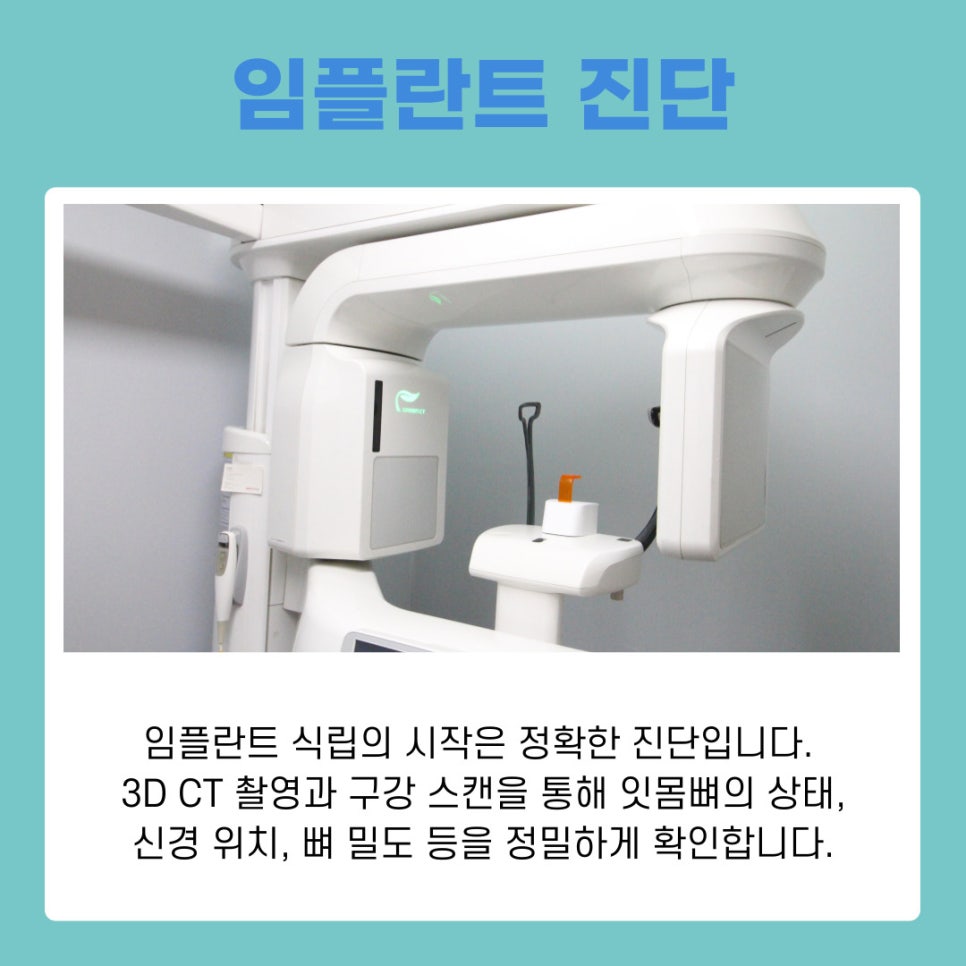
The beginning of implant placement is an accurate diagnosis. Through 3D CT imaging and oral scanning, the condition of the jawbone, the location of nerves, and bone density are checked in detail. If the jawbone is not sufficient, bone grafting must be performed together for stable placement, and if there are systemic conditions such as diabetes or high blood pressure, prior control is necessary. Through this pre-evaluation, the safest and most efficient placement plan is established for each individual. Using a digital guide system minimizes the incision area and allows for much faster recovery.
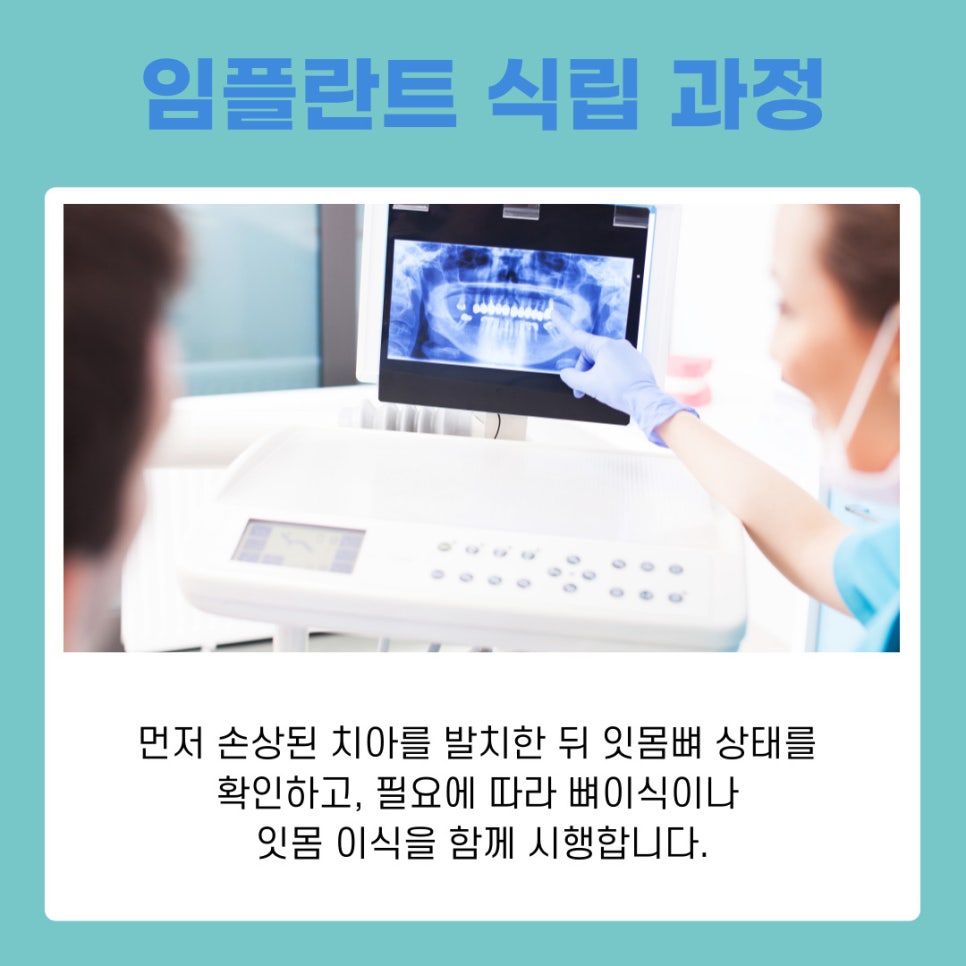
The implant placement process proceeds precisely through several stages. First, the damaged tooth is extracted, and then the condition of the jawbone is checked; if necessary, bone grafting or gum grafting is performed at the same time. Next, the gum is incised and a titanium artificial root is placed into the bone, and this part serves as the actual tooth root.
After placement, there is a 2 to 3 month osseointegration period during which the implant and bone are firmly bonded. During this time, care must be taken to avoid excessive force, and once recovery is stable, an abutment is connected to prepare for combining with the prosthesis. Finally, when a custom-made artificial tooth (crown) suited to the patient’s oral condition is attached, the placement is complete. Because all of these processes require precision, the skill and experience of the medical team are especially important.
Meals After Implant Placement: When Can You Eat?
After the implant procedure, the foods you can eat vary depending on the recovery stage. On the day of the procedure, there may be bleeding and swelling, so you should only consume soft, non-irritating foods such as water or thin rice porridge. Avoid hot or hard foods, and smoking and drinking delay recovery, so they must be strictly avoided. On days 2 to 3, it is best to chew soft foods such as porridge, soup, and yogurt on the opposite side.
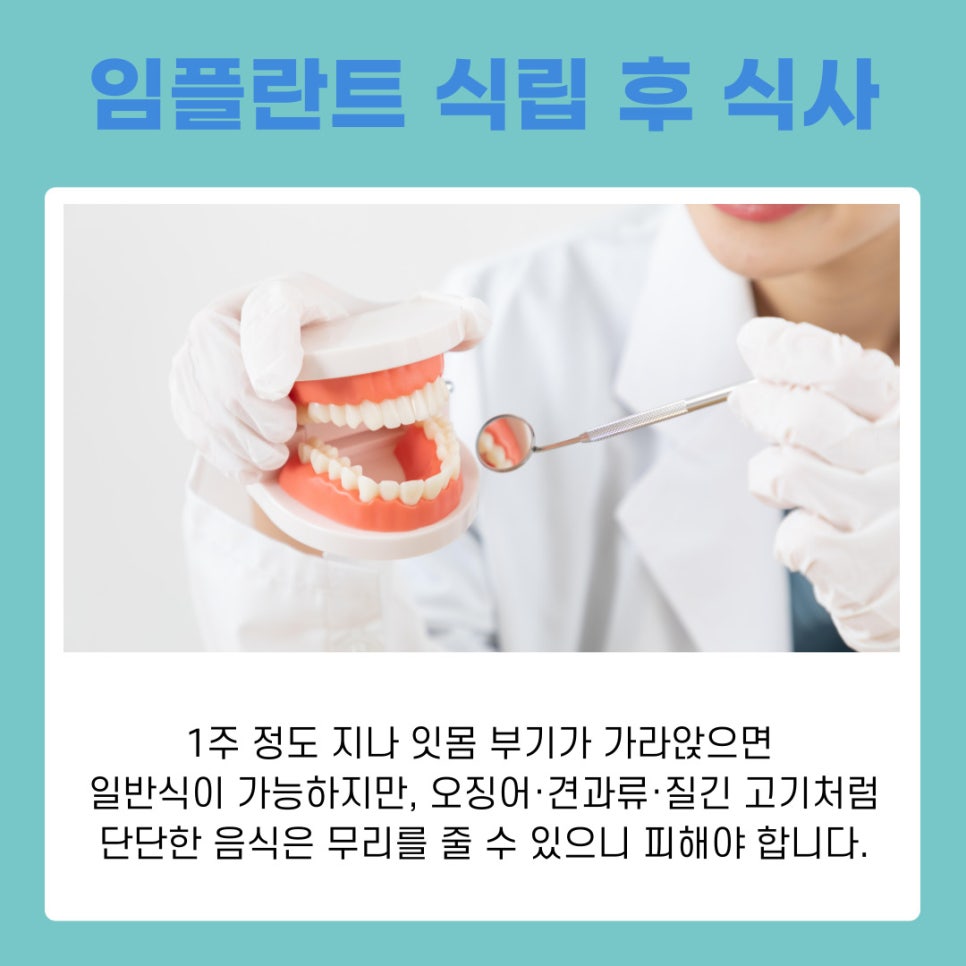
After about one week, once the gum swelling has subsided, normal meals are possible, but hard foods such as dried squid, nuts, and tough meat can strain the implant, so they should be avoided. After 3 weeks, eat mainly soft side dishes, and after meals, keep the mouth clean with brushing and a Waterpik. In particular, the osseointegration period, when the implant and bone are bonding (about 2 to 3 months), is a critical stage that determines the success rate, so it is best to manage it carefully without overdoing it.
Care After Implant Placement
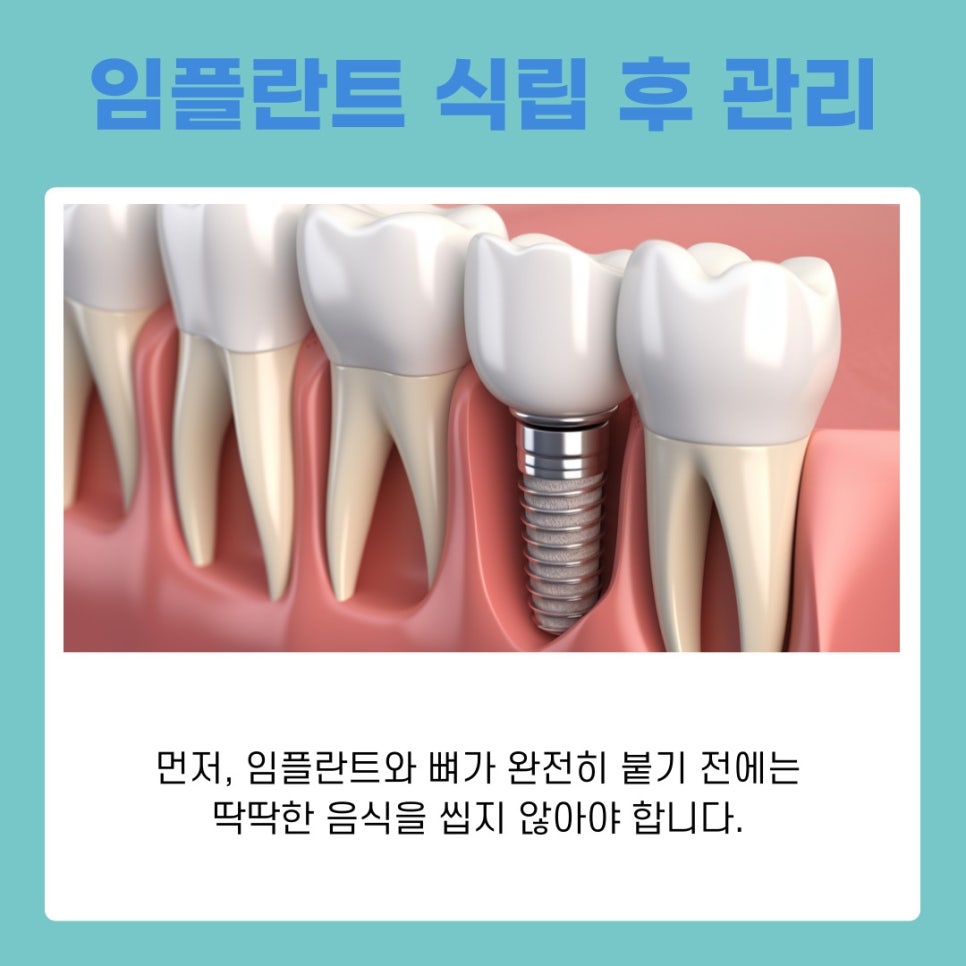
First, before the implant and bone have fully bonded, do not chew hard foods. Hard foods can place excessive pressure on the implant and cause fracture or failure. Also, hot or spicy foods can cause gum inflammation, so during the early recovery period, it is best to choose as mild and soft foods as possible.
Smoking and drinking interfere with blood flow and slow recovery, and can be major causes of osseointegration failure, so they must be avoided. After the procedure, it is important to have regular checkups at 1 week, 1 month, and 3 months to monitor the condition and detect problems early. After meals, use interdental brushes or a Waterpik to make sure food debris does not remain around the area; this helps maintain long-term health.
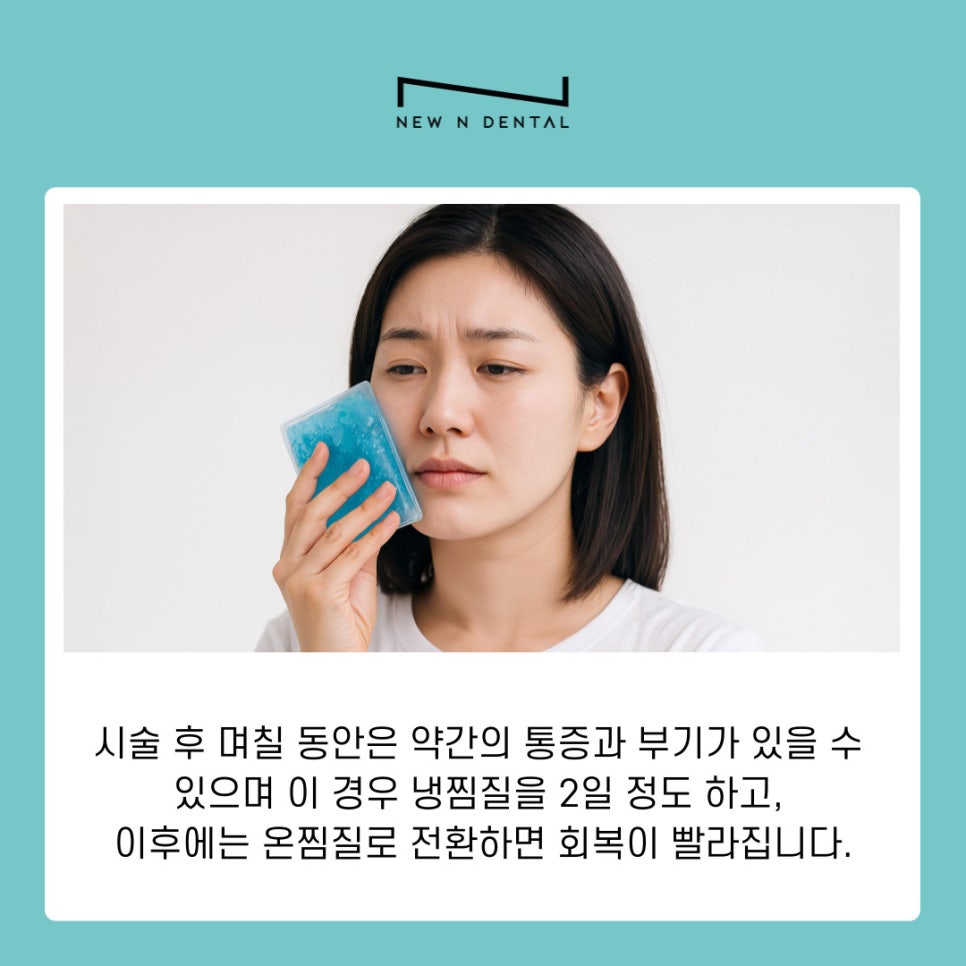
For a few days after the procedure, there may be some pain and swelling. In this case, apply cold compresses for about 2 days, then switch to warm compresses to speed up recovery. If bleeding does not stop, or if the gums are severely swollen and pain persists, you must visit the clinic. Leaving it unattended with self-diagnosis can allow inflammation to spread and lead to implant failure.
Care after placement and eating habits are more important than the procedure itself. Even if the implant has been placed properly, if careful management after meals is lacking, the surrounding gums can weaken due to inflammation. Brushing right after meals and managing your mouth regularly at least three times a day is basic.
Above all, you need to consistently check the condition of the implant and gums through regular checkups for stable long-term use. The placement process is the first step in restoring tooth function, and meal management after implant placement is the final gateway to maintaining that function for a long time. With an accurate diagnosis and careful management, we hope you can maintain a healthy smile for a long time.










Previous image
Next image
#GangnamStationDentalClinic #MealsAfterImplantPlacement #ImplantPlacementProcess