
At a Gangnam Station dental clinic
Implant steps and types
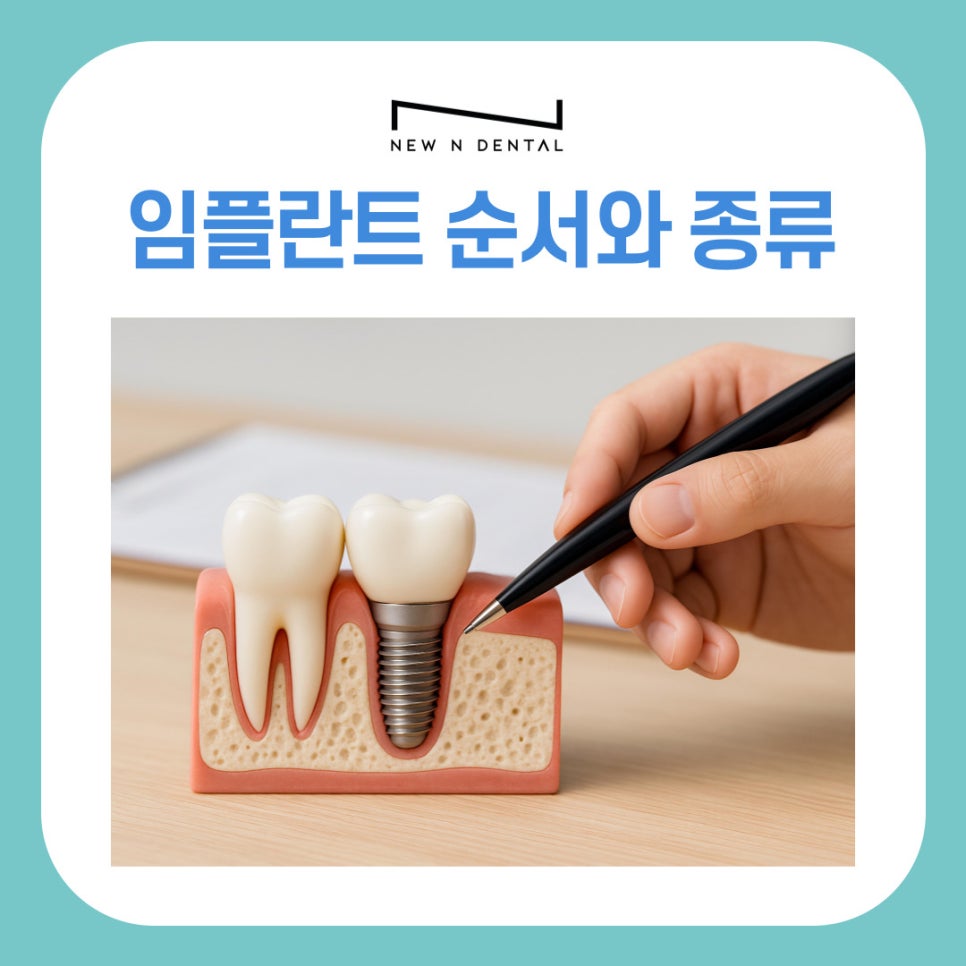
When you lose a tooth, it is not simply inconvenient from an appearance standpoint; chewing function also declines, and as the jawbone is gradually resorbed, even the shape of the face can change. In such cases, the representative treatment that can restore both the function and aesthetics of natural teeth is an implant. Today, we will organize the implant process step by step and explain the differences between implant types, which many people are curious about.
What Is an Implant?
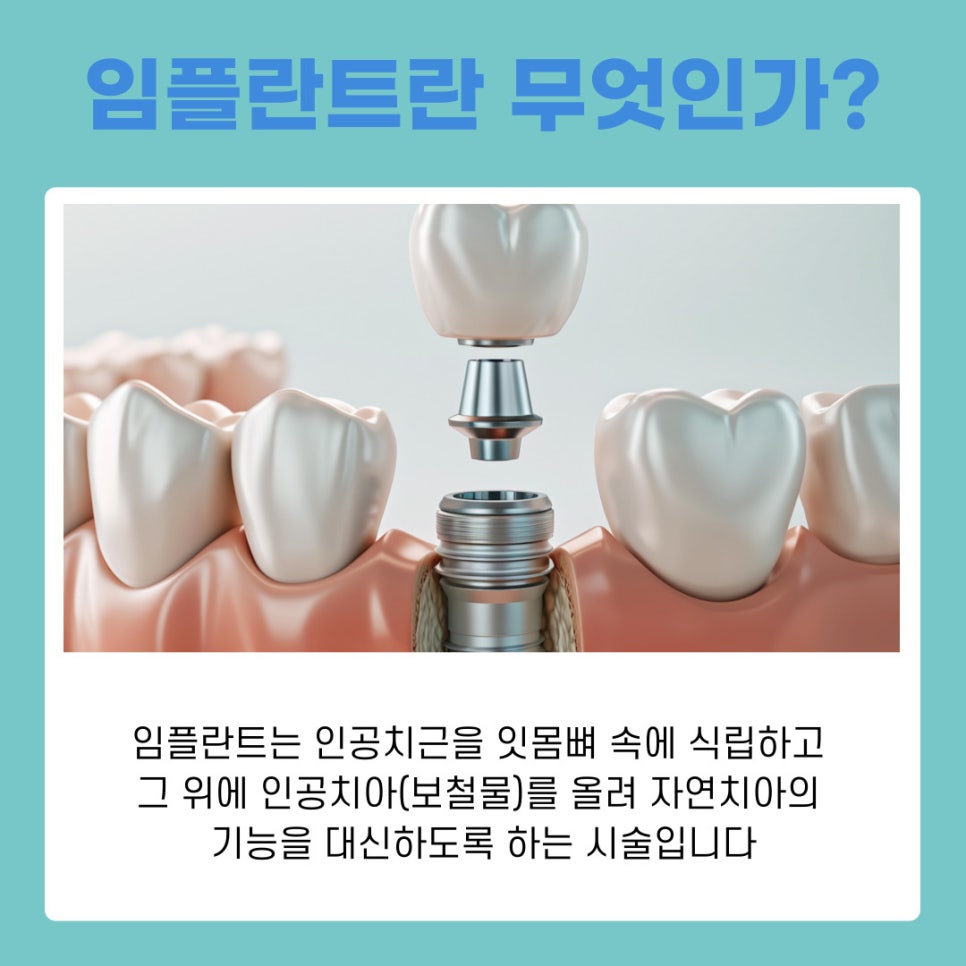
An implant is a procedure in which an artificial root is placed into the jawbone, and an artificial tooth (prosthesis) is mounted on top of it to replace the function of a natural tooth. Unlike conventional dentures or bridges, it is firmly fixed without damaging the surrounding teeth, and aesthetically it is also difficult to distinguish from a natural tooth. In addition, it can be maintained for a long time and causes less pain when eating, which is why many patients choose it. Differences in type are divided according to structure, placement method, and material, and each method has its own advantages and disadvantages. A precise diagnosis must be performed first in order to choose the type that is right for you.
Implant Steps
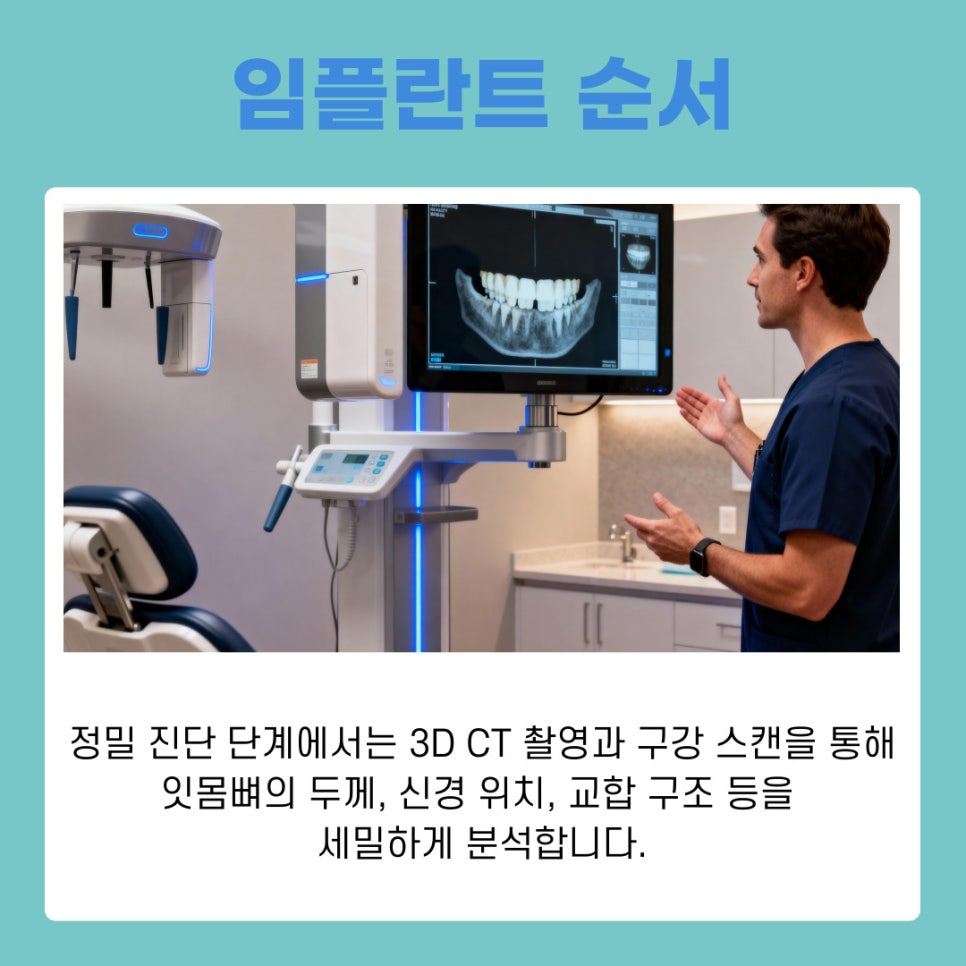
Implant treatment must go through a precise, step-by-step process to achieve stable results. First, during the detailed diagnosis stage, 3D CT imaging and oral scanning are used to closely analyze the thickness of the jawbone, the location of nerves, the occlusal structure, and more. Based on the data obtained in this way, the location and angle for placing the artificial root are determined accurately, increasing the success rate of the procedure.
Next comes the placement surgery stage. After local anesthesia, the gums are minimally incised and a titanium artificial root is placed. Recently, digital guide systems that minimize the incision area have been widely used to reduce bleeding and pain.

After placement, an osseointegration period of about 2 to 4 months is needed. During this time, sufficient time must be allowed for the implant and jawbone to firmly bond, and excessive chewing or strong impact should be avoided. Once osseointegration is complete, the treatment moves on to the prosthesis (crown) fabrication and placement stage. A abutment is connected above the gum, and a customized prosthesis is made to precisely match the individual’s tooth color, shape, and occlusion, completing a natural appearance and comfortable chewing function.
Finally, during the post-treatment care and maintenance stage, regular checkups are performed to confirm the condition of the gums and the fit of the prosthesis, and scaling and occlusal adjustments are carried out about once every 6 months to a year. If this care is carried out consistently, it can be used healthily for more than 10 years.
Differences Between Implant Types
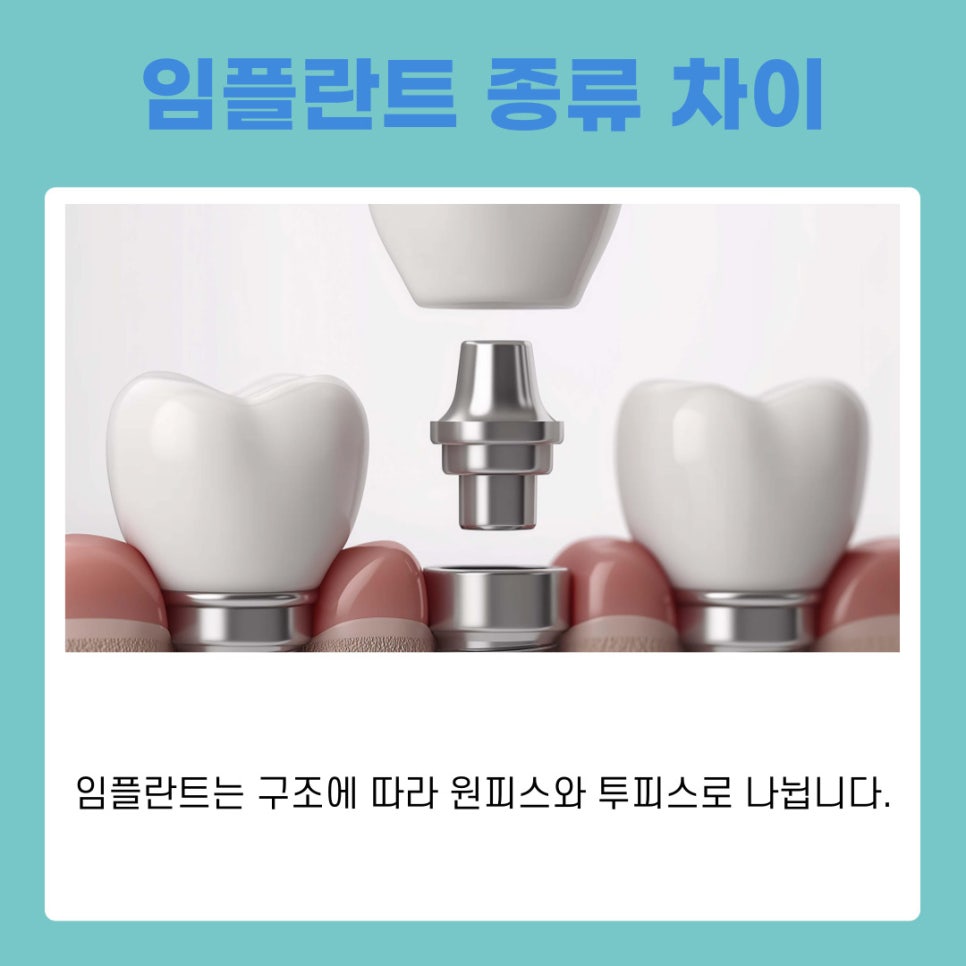
Implants are divided into one-piece and two-piece types according to structure. A one-piece implant is a form in which the artificial root and abutment are connected as one, and it has the advantage of a simpler surgical process and faster recovery. Because it requires fewer incisions, there is less bleeding and less initial pain, so it is suitable for simple cases or patients with good gum conditions. However, because it is an integrated structure, it is difficult to make fine adjustments to the placement angle, and the range of occlusal adjustments after treatment is limited.
On the other hand, a two-piece implant has a structure in which the artificial root and abutment are separate, allowing for higher procedural precision and application to a variety of oral structures. Because the angle and position can be adjusted freely, treatment can take both aesthetics and function into account, but the treatment period may be somewhat longer because an additional assembly step is required.
Classification by Material
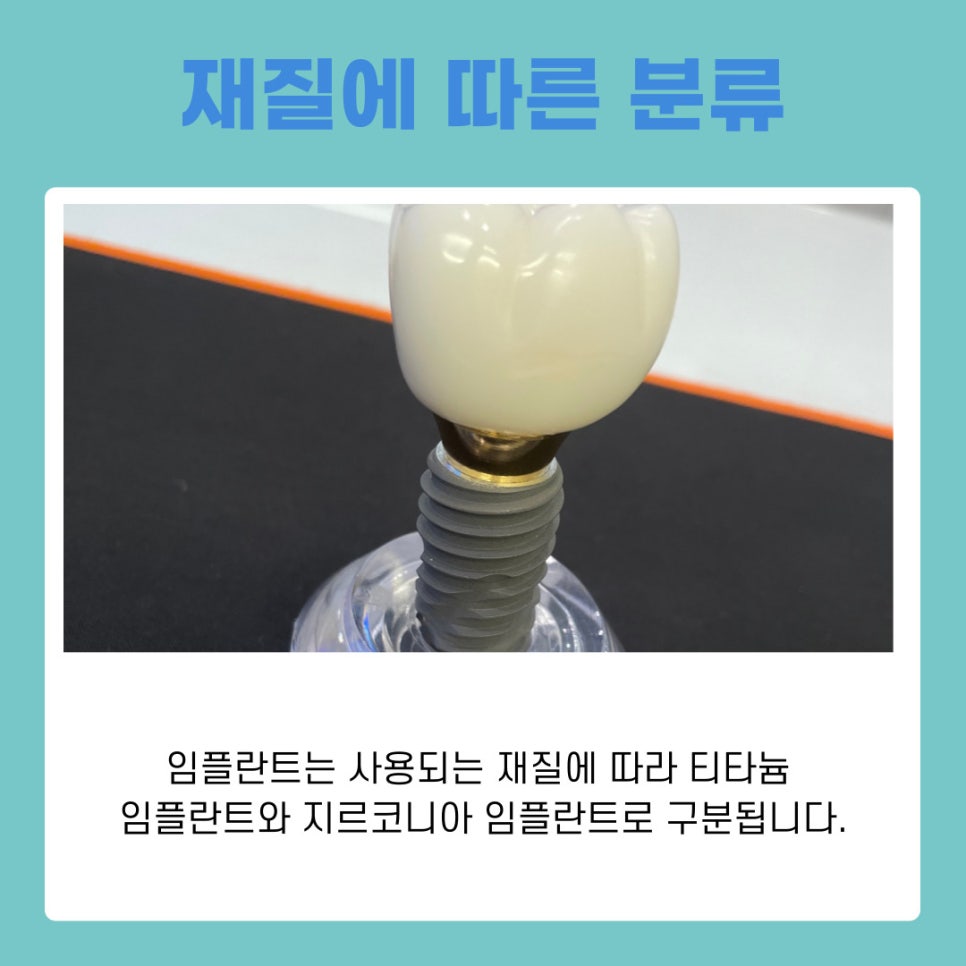
Depending on the material used, implants are divided into titanium implants and zirconia implants. Titanium is highly biocompatible and bonds well with bone, so it is the standard method used in most dental clinics. Its clinical stability has been proven over a long period of time, and it is highly durable, making it excellent for maintaining chewing force. For these reasons, it is the most widely used material for most patients.
On the other hand, zirconia is made from a non-metal ceramic material and offers excellent aesthetics. It can reproduce a color similar to natural teeth, making it suitable for cosmetic areas such as the front teeth, and it can also be safely used in patients with metal allergies.
How to Care After an Implant
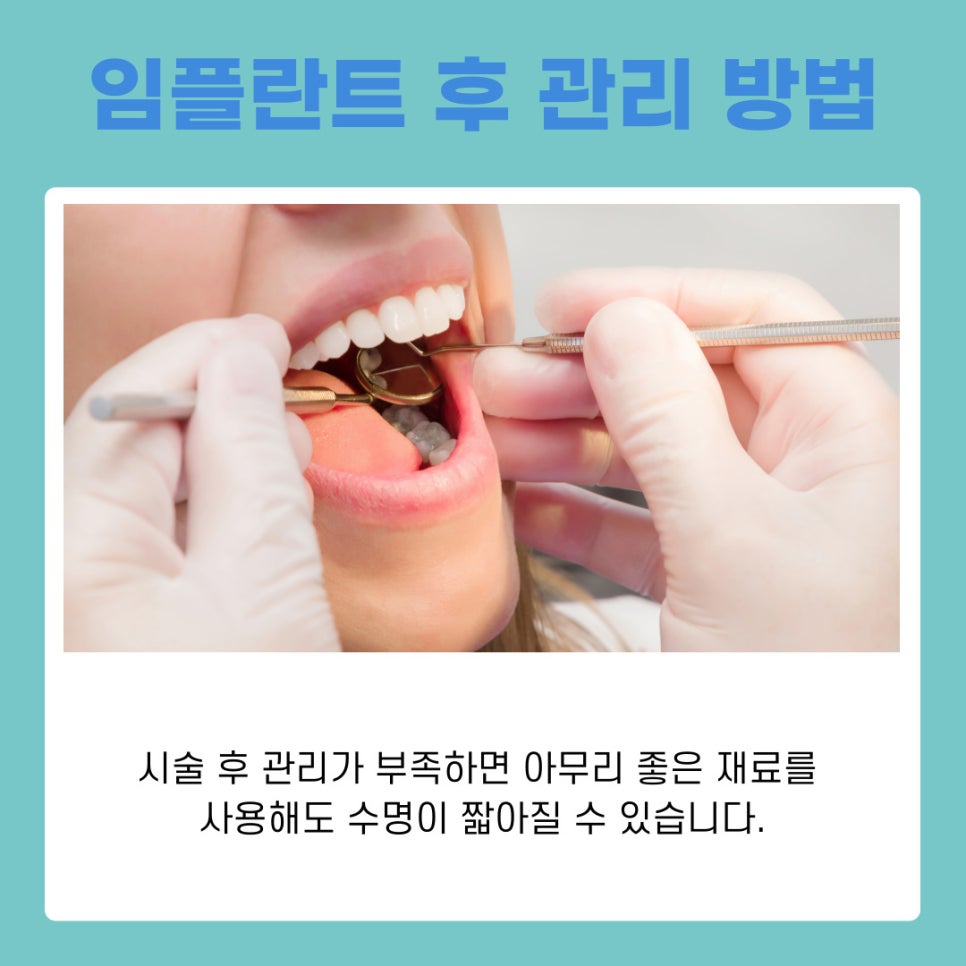
If post-procedure care is insufficient, even the best materials may have a shorter lifespan. Immediately after the procedure, it is better to eat soft foods such as porridge and rice porridge, and avoid hot or hard foods. After meals, you should use a water flosser or oral rinse to keep the area around the gums clean. In addition, regular scaling helps prevent gum inflammation, and the position of the prosthesis should be checked periodically.
An implant is not simply a procedure to replace a lost tooth; it is the process of creating a new tooth that can be used for a long time. Therefore, it is important to clearly understand the differences in the procedure steps and types, and to have sufficient consultation with an experienced specialist.










Previous image
Next image
#GangnamStationDentalClinic #ImplantSteps #ImplantTypeDifferences