
After scaling at a Sinsa-dong dental clinic
Summary of care methods and precautions
Scaling is a treatment that cleans the teeth, but
depending on how you care for them after the procedure,
the duration of its effects and
gum condition can change significantly.
Sensitivity right after the procedure is a natural response,
and how you get through this period
affects your future oral health.
Following proper care and precautions
is the most important thing.
After scaling, your teeth feel much smoother
and your mouth feels refreshed.
However, many people also experience
a feeling of sensitivity or irritated gums.
This is because tartar that has built up over a long time
has been removed, leaving the gums
directly exposed to external stimulation.
In most cases, this is a temporary reaction,
so there is no need to worry excessively.
The most important thing immediately after the procedure
is to minimize irritation.
On the day of scaling, it is best to avoid food that is too hot
or too cold.
Temperature刺激 can cause discomfort
to sensitive teeth and gums.
Choosing soft, low-irritation meals
can be helpful.
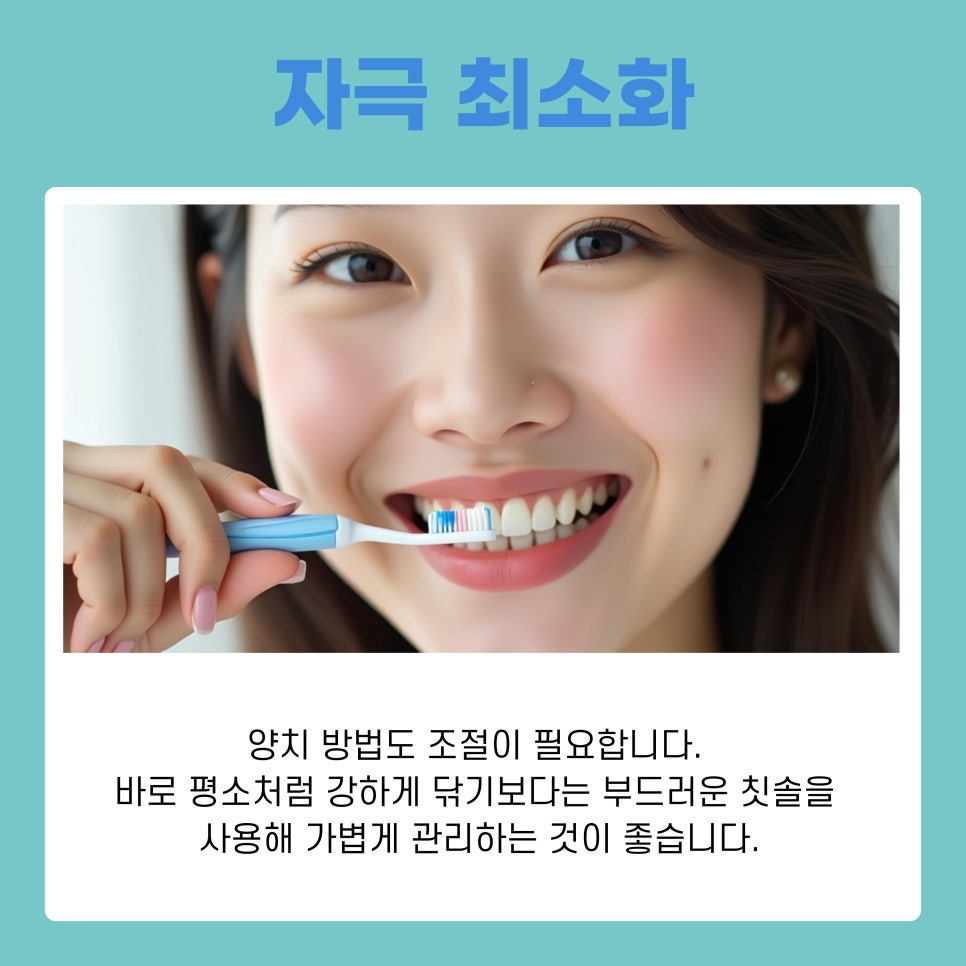
You also need to adjust how you brush.
Rather than brushing strongly as usual right away,
it is better to use a soft toothbrush and
gently care for your teeth.
After scaling, the gum surface becomes more sensitive,
so strong force can actually
interfere with recovery.
The key is to care for them gently and thoroughly.
Your teeth may feel sensitive,
but this is a normal reaction.
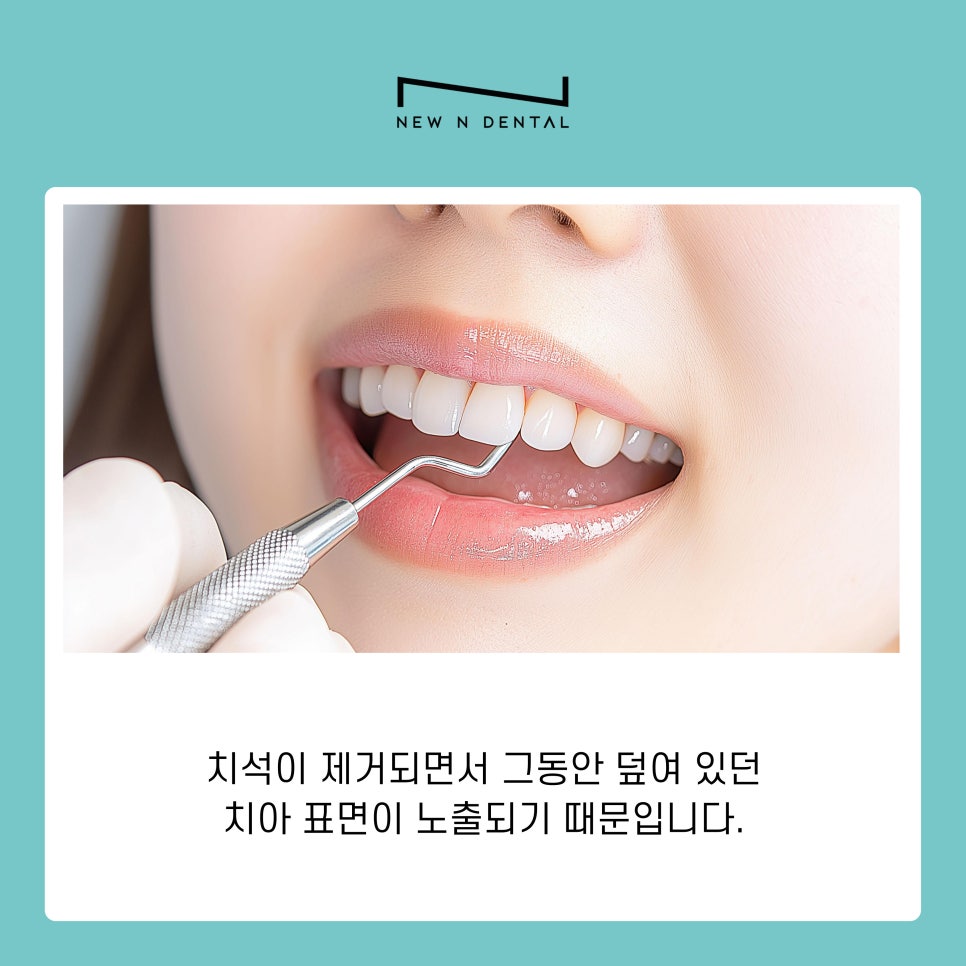
It happens because the tooth surface that had been covered
is exposed once the tartar is removed.
In most cases, it improves within a few days,
and you will naturally adapt over time.
Simply avoiding overly irritating foods during this period
can reduce discomfort.
A small amount of gum bleeding may also occur.
This can happen more easily in areas that had inflammation.
This can be seen as part of the healing process
after tartar removal.
However, if the bleeding continues for a long time
or the pain becomes severe, it should be checked.
An important part of after-scaling care is
maintaining hygiene.
The goal is to manage it so that tartar does not build up again
after it has been removed.
What matters more than how often you brush is how you brush,
and you should pay attention to the areas between the teeth
and along the gum line.
Correcting your care habits from this point onward
is effective.
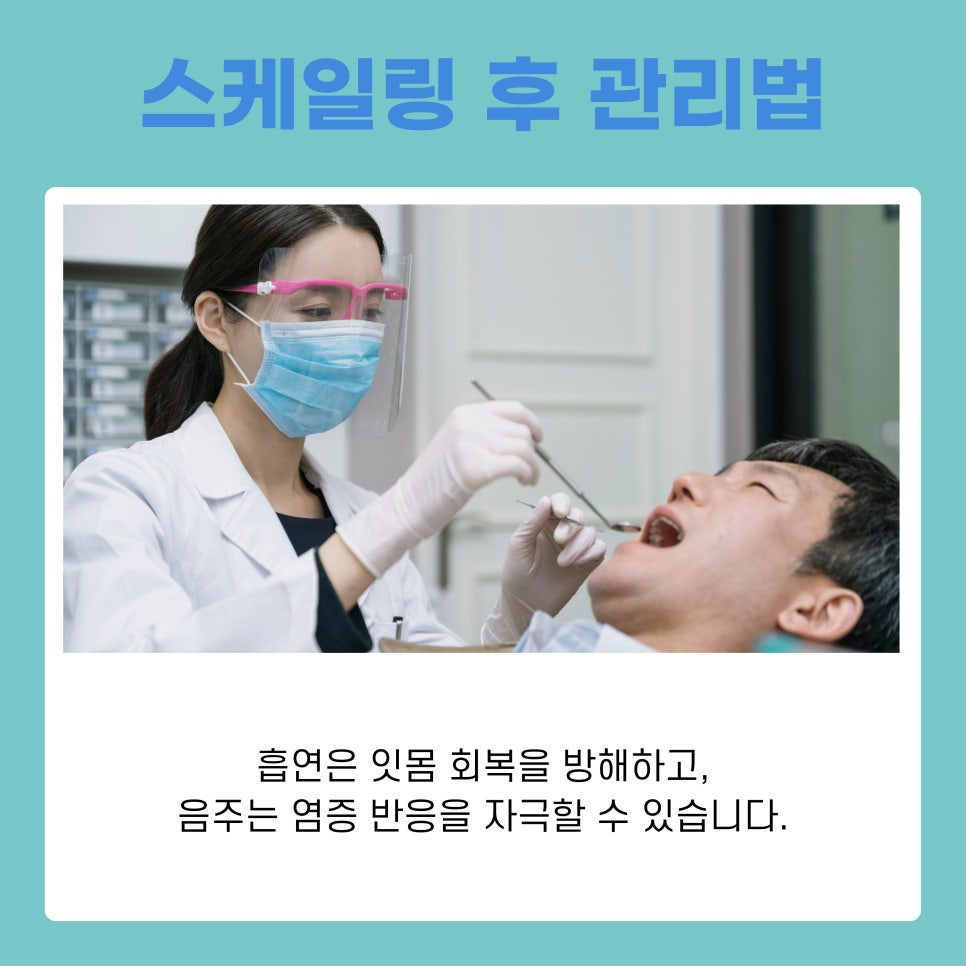
It is best to avoid smoking and drinking alcohol
right after scaling.
Smoking interferes with gum recovery,
and alcohol can stimulate inflammatory responses.
In particular, it is advisable to give your gums time to stabilize
on the day of the procedure and until the next day.
A short period of caution leads to
long-term health.
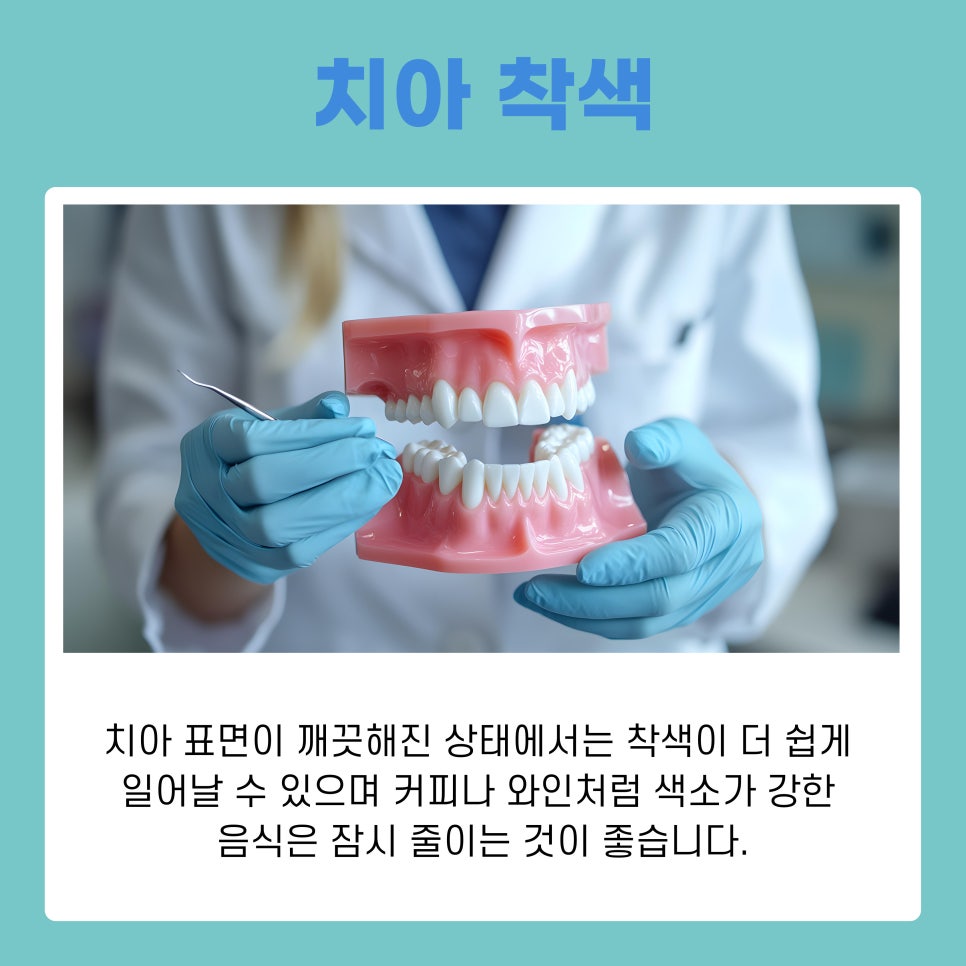
When the tooth surface is clean,
staining can occur more easily.
It is best to temporarily reduce foods and drinks with strong pigments,
such as coffee or wine.
Simply rinsing with water right after consuming them
can help prevent staining to some extent.
Small habits make a difference.
Scaling is not a treatment that ends in one session.
It requires repeated care at regular intervals.
The interval may vary depending on each person's gum condition
and care habits.
The more consistent the regular care,
the more stably gum health can be maintained.
Sometimes pain may occur after scaling.
In most cases, it is closer to temporary sensitivity,
but if the pain gradually worsens or lasts a long time,
there may be another cause.
In such cases, it is better to get checked
rather than endure it.
Early response helps reduce unnecessary discomfort.
Q. Can I brush my teeth right after scaling?
A. Yes, you can. However, it is best to use a soft toothbrush
and minimize irritation.
Q. If there is bleeding after scaling, does that mean there is a problem?
A. A small amount of bleeding can appear during the recovery process, but if it continues, it should be checked.
Q. Can scaling alone solve gum problems?
A. It helps with early care,
but additional treatment may be needed depending on the condition.
After-scaling care is an extension of the treatment.
The effect depends on how well you maintain
the condition after tartar removal.
Rather than simply getting through this period as an uncomfortable one,
it is better to use it as an opportunity to review your care habits.
Even after receiving scaling at a Sinsa-dong dental clinic,
ongoing care should continue.
When regular checkups and proper lifestyle habits
work together, gum health
can be maintained stably.
Ultimately, the best way to preserve the effects of scaling
for a long time is continuous care.
#신사동치과 #스케일링후관리