
Periodontal disease treatment at a Samsung-dong dental clinic
Problems That Can Arise If Left Untreated

Periodontal disease is a progressive condition.
If it is not managed early,
gum damage and reduced tooth support accumulate.
The longer it is left untreated,
the greater the discomfort becomes,
and the wider the scope of treatment gets.
It is key not to overlook early signs such as
bleeding, bad breath, and sensitivity.
Early response is the most reliable prevention.
Periodontal disease is often misunderstood as a problem
that naturally occurs as people get older.
However, in reality, it is a disease caused by bacterial inflammation
that progresses step by step.
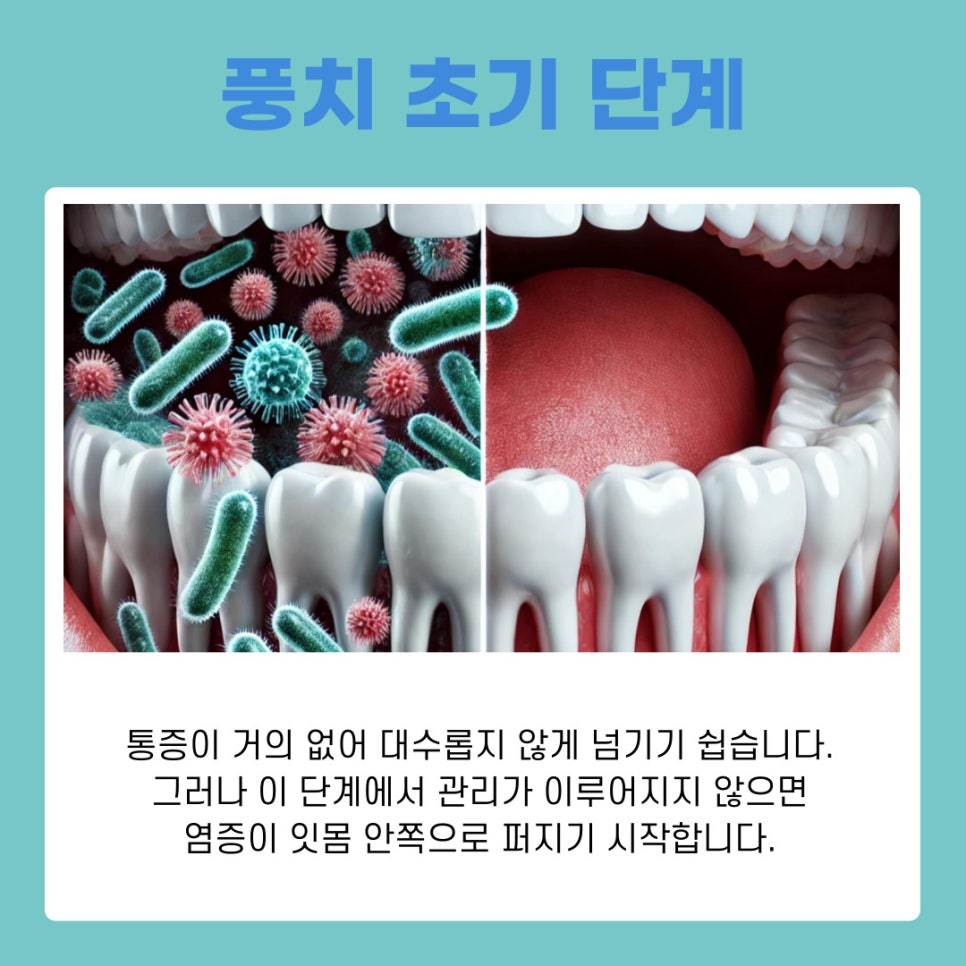
At the earliest stage, the gums may swell easily
or bleed when brushing.
Because there is almost no pain at this stage,
it is easy to dismiss it as nothing serious.
However, if care is not provided at this stage,
the inflammation begins to spread deeper into the gums.
This is the period when changes that are not visible
to the eye accumulate.
As it progresses, the space between the gums and teeth
becomes deeper, creating an environment where food particles
can easily get trapped.
From this point on, bad breath becomes more frequent, and even after brushing,
a refreshed feeling does not last.
Surface-level care alone is difficult to improve,
and it is highly likely that internal inflammation has taken hold.
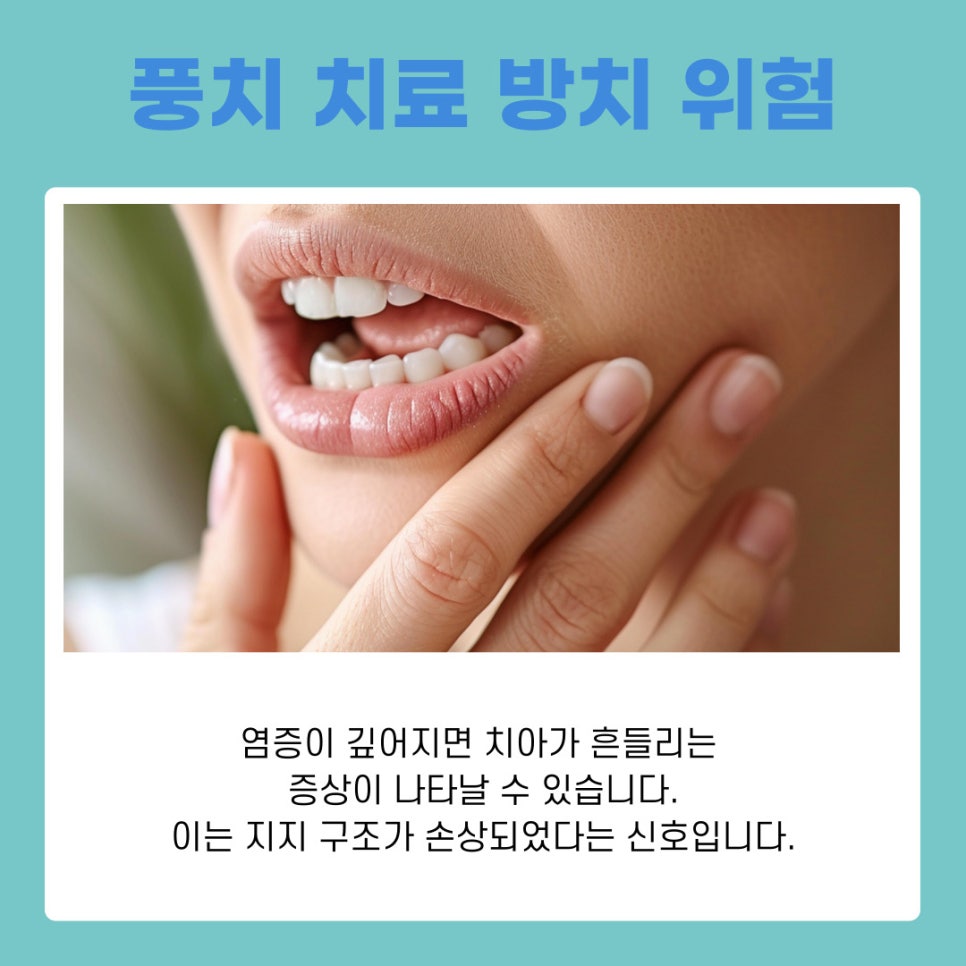
If it is left untreated further, the tissues
that support the teeth begin to weaken.
You may feel discomfort while chewing, or even feel
that a particular tooth is loose.
At this stage, discomfort can increase even during everyday meals.
It goes beyond a simple gum problem
and leads to functional issues.
As the inflammation deepens, symptoms such as
tooth mobility may appear.
This is a sign that the supporting structures have been damaged.
At this stage, the burden of treatment increases,
and recovery also takes time.
It is the result of accumulated changes that could
have been prevented with early care.

If periodontal disease is left untreated, it can also
affect neighboring teeth.
That is because inflammation that starts in one area
can spread to adjacent areas.
Eventually, the overall balance of the mouth breaks down,
and discomfort can occur across multiple teeth.
It is a pattern in which a localized problem expands into a broader one.
If gum condition worsens, it can also affect the stability
of prosthetic treatments.
If you already have prosthetics or are planning treatment in the future,
gum health is an essential condition.
If the gums are unstable, no treatment can be maintained
well over the long term.
That is why periodontal care is important both before and after treatment.

Daily habits also affect the progression of periodontal disease.
Smoking, irregular oral care,
and habits such as clenching the teeth can worsen inflammation.
When these factors overlap, the progression becomes faster.
There is a need to recognize that lifestyle management
is an extension of treatment.
The longer it is left untreated, the more complicated treatment becomes.
In the early stage, a management-focused approach is possible,
but in advanced cases, step-by-step treatment becomes necessary.
As the scope and duration of treatment increase,
the burden can also grow.
This is where the value of early response becomes clear.
Changes caused by periodontal disease also affect appearance.
As the gums recede, the teeth may look longer,
or the alignment may appear different.
This can also affect your smile and confidence.
It is important to consider that function and aesthetics can both be affected.
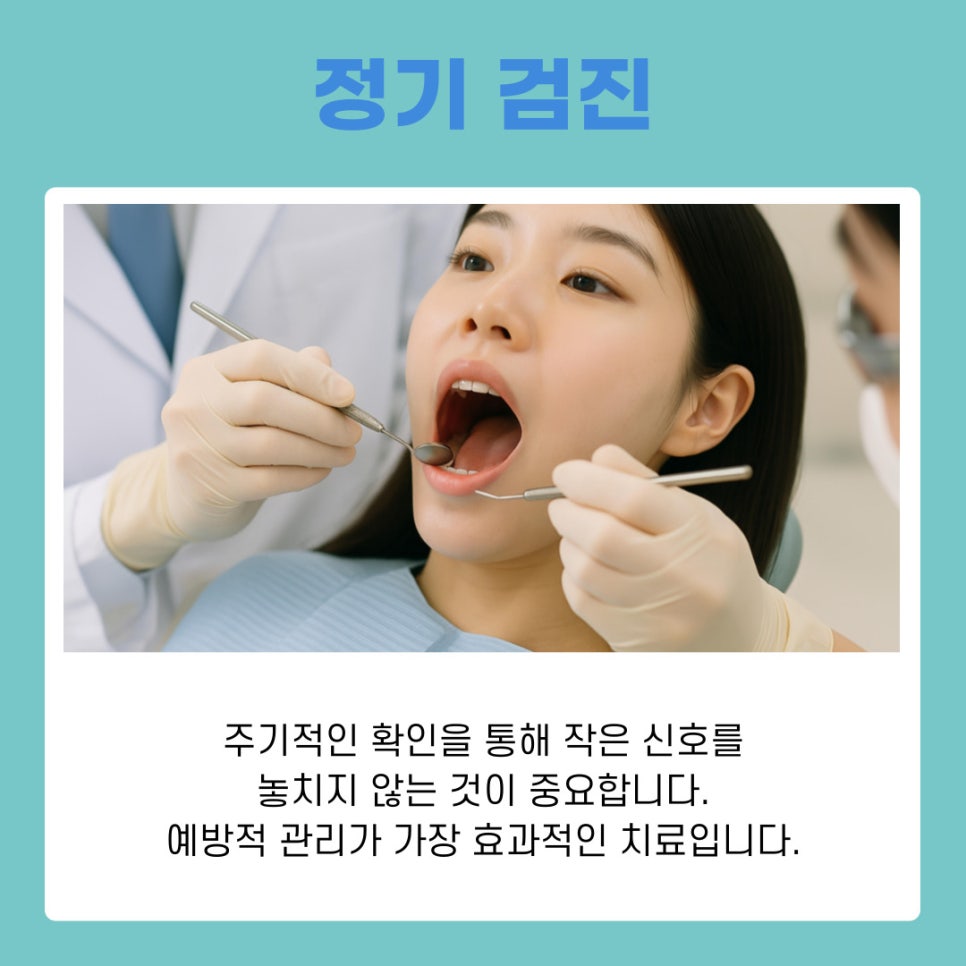
Regular checkups are the most reliable way
to prevent neglect.
Even if things look fine on the surface,
changes may be progressing internally.
Through periodic examinations, it is important not to miss small signs.
Preventive care is the most effective treatment.
Post-treatment care is also important.
Just because inflammation has subsided does not mean
care is over.
Consistent hygiene care and habit checks help prevent recurrence.
The continuity of care determines the outcome.
Q. I only have a little bleeding. Do I still need treatment?
A. It may be an early sign, so it needs to be checked.
If managed at this stage, progression can be prevented.
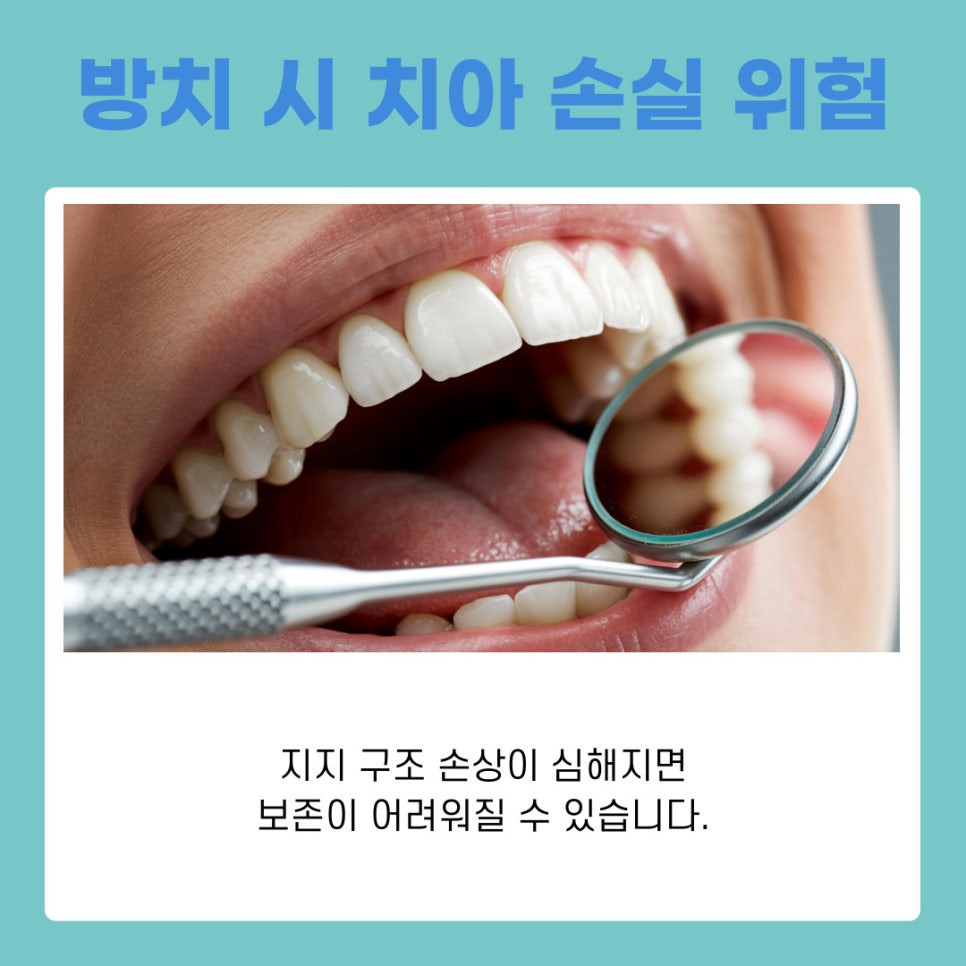
Q. Can I lose teeth if I leave it untreated?
A. If damage to the supporting structures becomes severe,
preservation may become difficult.
When discussing periodontal disease treatment at a Samsung-dong dental clinic,
there is a common regret.
It is a case where, if it had been checked just a little earlier,
it could have been managed much more simply.
The attitude of not overlooking small signs
is the most important thing.
Periodontal disease does not develop in a short period of time.
That is why neglecting it may also not feel like a major problem
all at once.
But accumulated changes eventually become noticeable
as discomfort.
To avoid reaching that point sooner, early management is needed.
Periodontal disease treatment is closer to a necessity than a choice.
If you understand in advance the problems that can arise from neglect
and respond accordingly, you can reduce unnecessary
pain and complicated treatment.
In the end, the most practical way to protect oral health is
to accurately check your current condition.
#삼성동치과 #풍치치료