Gangnam Nonhyeon-dong Implant Dental Clinic
Precautions to Post-Procedure Care

�
Recovery after implant treatment depends much more on post-procedure care than on the procedure itself.
�
Management during the initial stabilization period, lifestyle adjustments,
a nd hygiene care directly affect recovery speed and long-term maintenance.
�
Following small precautions is the key to reducing unnecessary pain and problems.
Once the implant procedure is finished, many people
easily think, “It’s over now.”
But in reality, this is where
recovery and care begin.
�
For a certain period after the procedure, the gums and bone
need time to stabilize,
and how you spend this period
clearly affects the outcome.
Recovery care is not optional; it is essential.
�
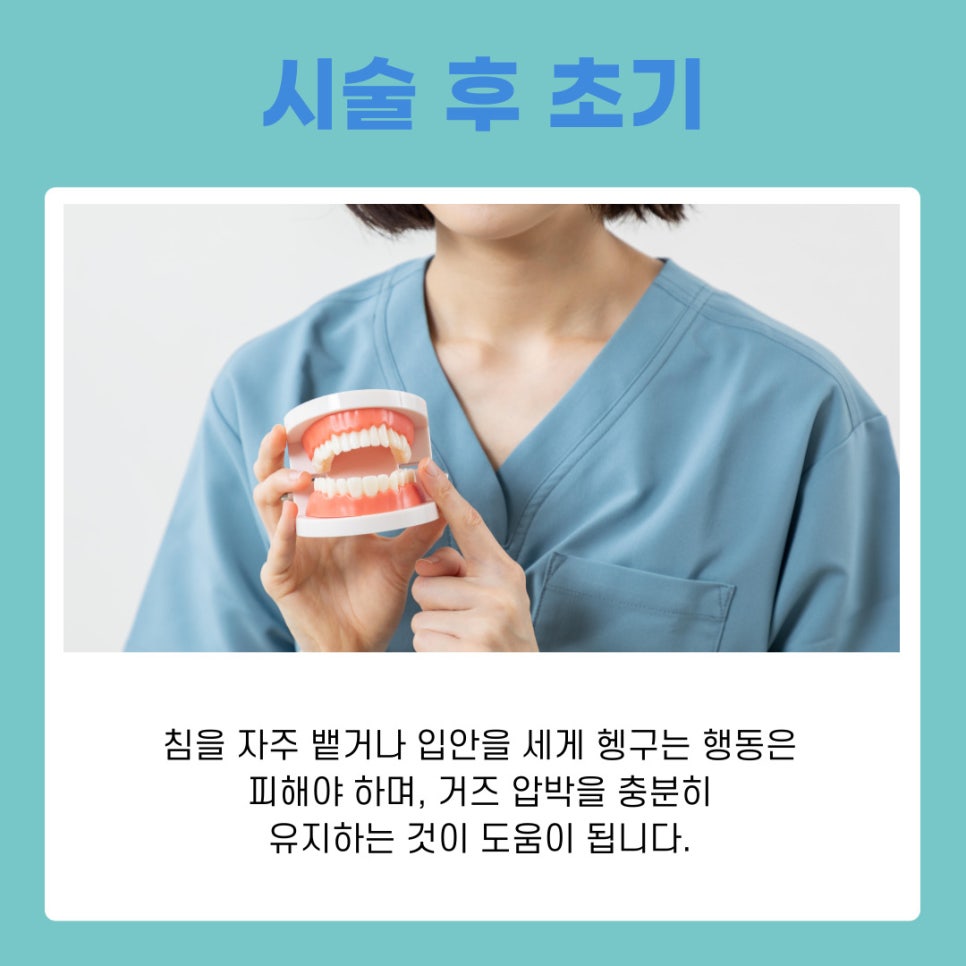
The first 24 hours after the procedure are the most important stabilization period.
During this time, the key is to minimize bleeding
and avoid irritating the gums.
�
You should avoid frequently spitting or rinsing your mouth forcefully,
and it helps to maintain pressure with gauze sufficiently.
Prioritizing rest over strenuous activity is advisable.
For 2 to 3 days after the procedure, swelling and
pain may occur.
�
This is a natural process in which the body shows a recovery response.
�
During this period, brief repeated cold compresses can
help reduce discomfort.
However, excessive cooling or long periods of application
may actually interfere with recovery,
so caution is needed.
�
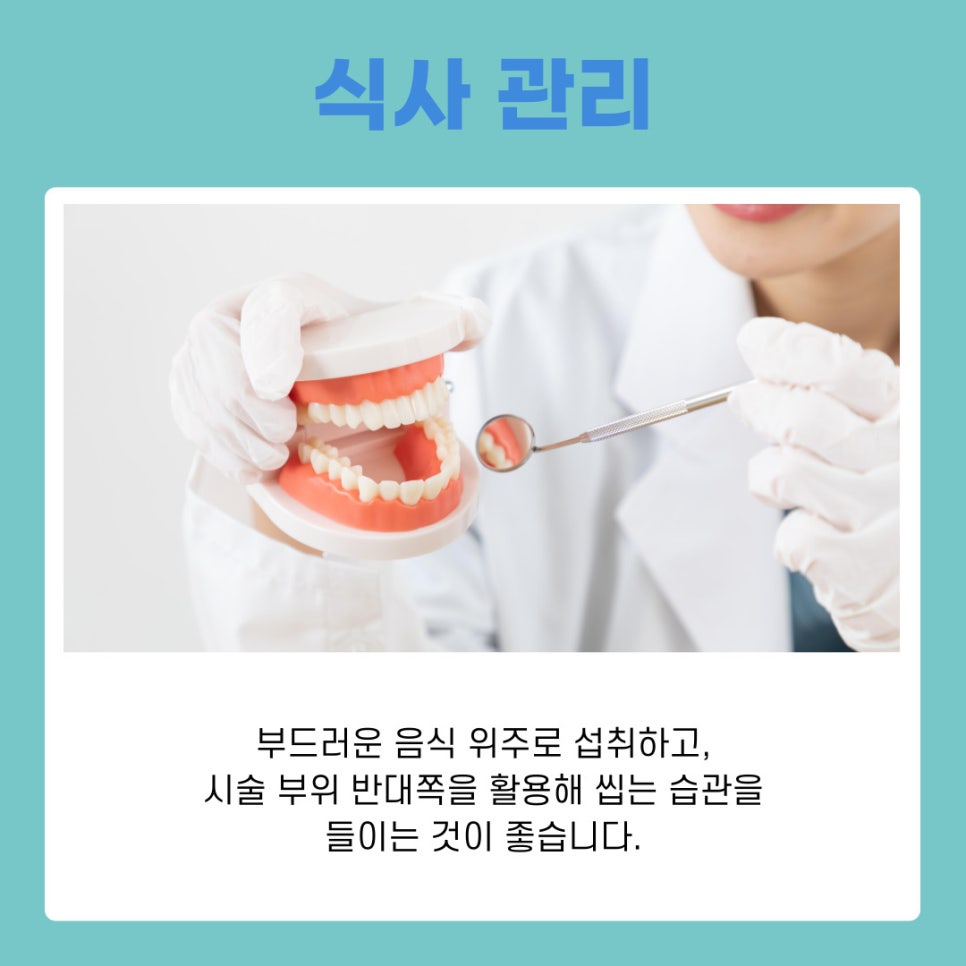
Food management is also important in the early recovery period.
Very hard or hot foods can put strain on the gums.
�
It is better to eat mostly soft foods,
and develop the habit of chewing on the side opposite the procedure site.
Small adjustments to eating habits affect
recovery stability.
Brushing and hygiene care are indispensable parts
of recovery after the procedure.
�
On the day of the procedure, avoid vigorous brushing,
and from the next day, it is generally recommended to gently care for the surrounding teeth,
avoiding the procedure site.
�
As time passes and the gums stabilize, it is better
to gradually expand the scope of care.
Smoking and drinking are major factors that delay recovery.
�
Smoking reduces blood flow,
which interferes with gum healing,
and alcohol can stimulate bleeding and inflammatory reactions.
�
Especially during the early recovery period,
it is best to avoid them completely.
Lifestyle habits during this period
determine the results that follow.
During recovery, you should also be careful about
clenching your teeth or chewing only on one side.
�
If force is repeatedly applied to a specific area,
it can affect the stabilization process.
You need to check your unconscious habits in daily life
and make a conscious effort to control them.
The timing for returning to daily life varies by individual,
but for most people, light activities
are possible relatively quickly.
�
However, activities that sharply increase blood flow,
such as intense exercise or saunas,
can delay recovery.
It is safest to resume activities gradually.
After a certain period following the procedure,
the process continues to the prosthetic stage.
�
This is the stage in which the part that actually performs chewing
is completed.
Even after the prosthesis is placed,
care is not over;
rather, maintenance for long-term use
begins in earnest.
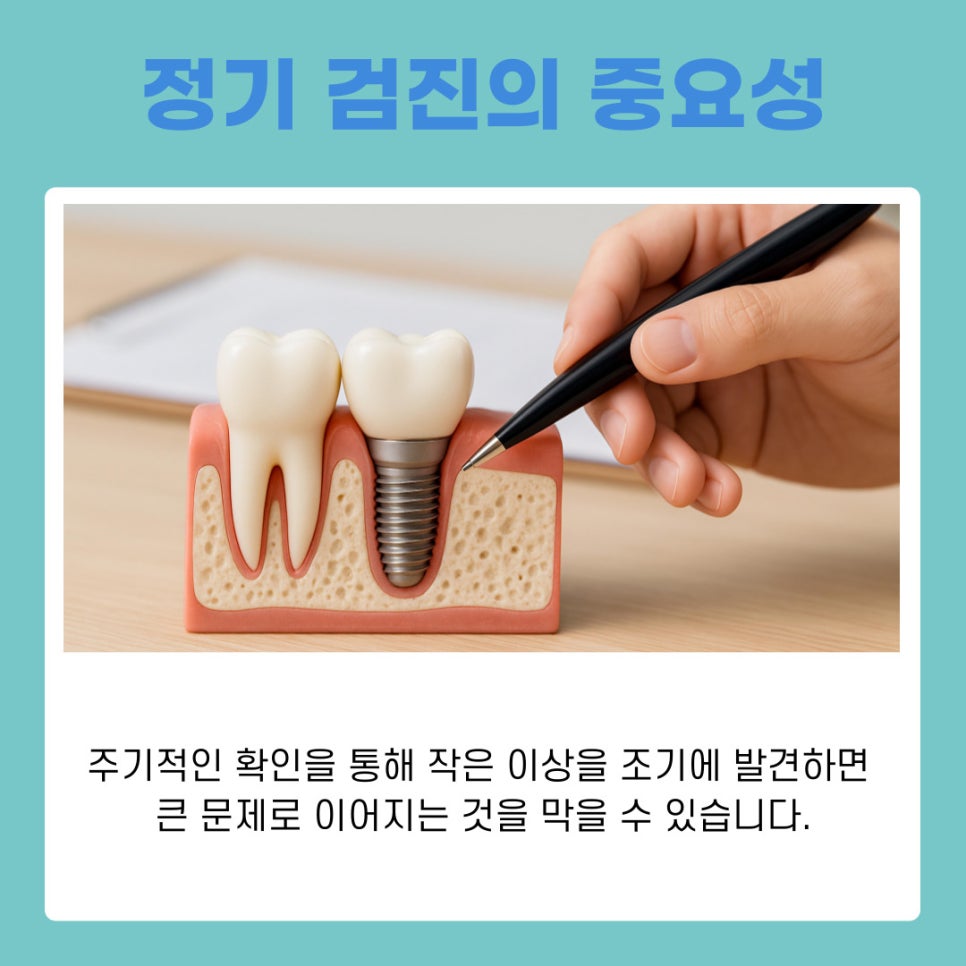
Regular checkups are an extension of recovery care.
Even if there is no discomfort on the surface,
changes may be occurring internally.
�
By identifying small abnormalities early through periodic checkups,
you can prevent them from developing into major problems.
Enduring discomfort during recovery unconditionally
is not advisable.
�
If the pain gradually worsens,
or if the swelling seems to increase again,
a checkup is needed.
�
A quick response helps reduce the burden of recovery.
Q. What is the most important thing to be careful about
immediately after implant treatment?
A. Managing bleeding and staying calm are the most important.
�
After the procedure, keep gauze in place for a certain period
to maintain hemostasis, and avoid repeatedly spitting saliva
or using a straw.
These actions can dislodge the blood clot
and delay recovery.
Recovery after implant treatment
is not a process that ends in the short term.
�
Even if discomfort decreases on the outside, internal recovery may still be ongoing.
At this stage, it is important not to suddenly lower the level of care.
Following post-procedure precautions is not a hassle,
but the most reliable way to protect the treatment results.
�
A single small habit can make a big difference in recovery speed
and long-term satisfaction.
The key to implant recovery
is careful management without rushing.
�
If you understand the step-by-step recovery flow
and put the care methods into practice,
you can expect a more stable and comfortable result.
In the end, good results are completed by
post-procedure care.
#Nonhyeon-dongImplant