
A Complete Look at Yeoksam-dong Implant Inflammation, from Early Causes to Prevention
If implant inflammation is found early,
it can usually be stabilized with care and treatment,
but if left untreated,
recovery may become difficult.
Understanding the early causes and signs,
and practicing prevention in daily life,
is key to maintaining long-term stability.
Organizing it all at once can reduce
unnecessary worry.
After implant treatment is completed and some time has passed,
most people can use it in daily life
without much inconvenience.
But if the gums swell later on or
if you notice bleeding, it is natural to feel uneasy.
These changes may simply be irritation,
but they can also be early signs of inflammation.
That is why it is important not to brush off
even small changes.
Implant inflammation
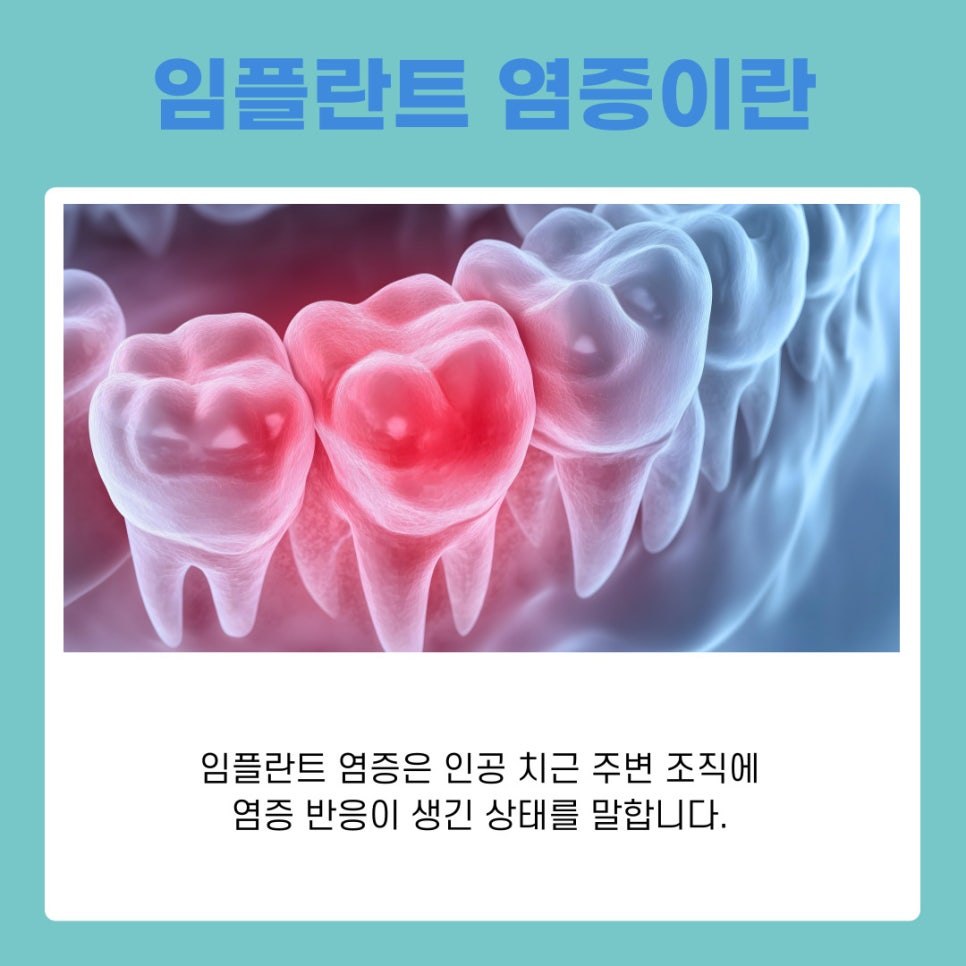
Implant inflammation refers to a state in which
an inflammatory response occurs in the tissues
around the artificial root.
In the early stage, it often starts with symptoms such as
gum swelling or bleeding when brushing.
Because pain is almost absent or very mild,
it can be easy to dismiss.
But if this period is missed, the problem can worsen.
As inflammation progresses, changes may occur not only on the
gum surface but also in deeper tissues.
At this stage, the gums may swell more easily,
and discomfort can become more noticeable.
You may feel a strange sensation when chewing,
or notice a feeling that is different from before.
Recognizing the difference between the early and
progressed stages is important.
Causes of implant inflammation
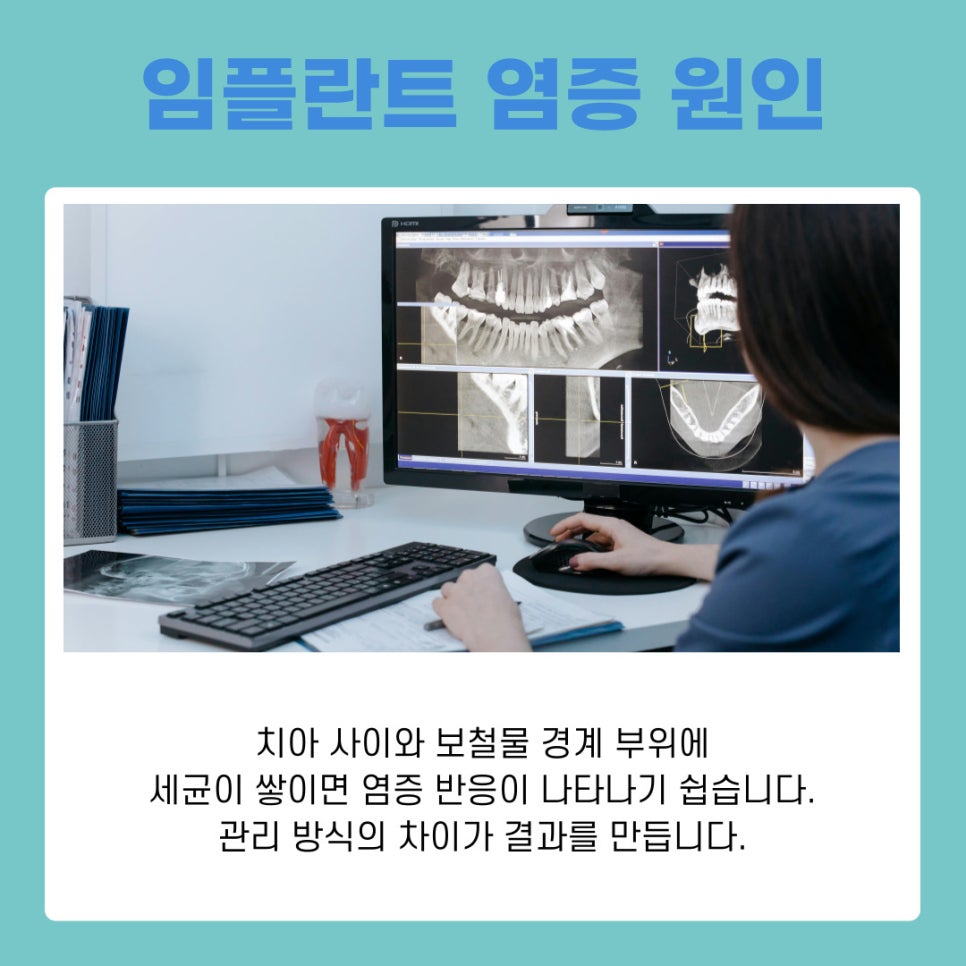
The most common cause is poor oral hygiene.
Unlike natural teeth, controlling bacteria
around implants can be more difficult.
If bacteria build up between the teeth and at
the border of the prosthesis,
inflammation is more likely to occur.
Differences in care methods create different results.
Lifestyle habits also have a major impact.
Smoking and frequent alcohol consumption
can interfere with gum recovery and worsen
inflammatory responses.
In particular, smoking reduces blood flow and
acts as a factor that lowers the gums’ defense.
Habits accumulate in ways you cannot see.
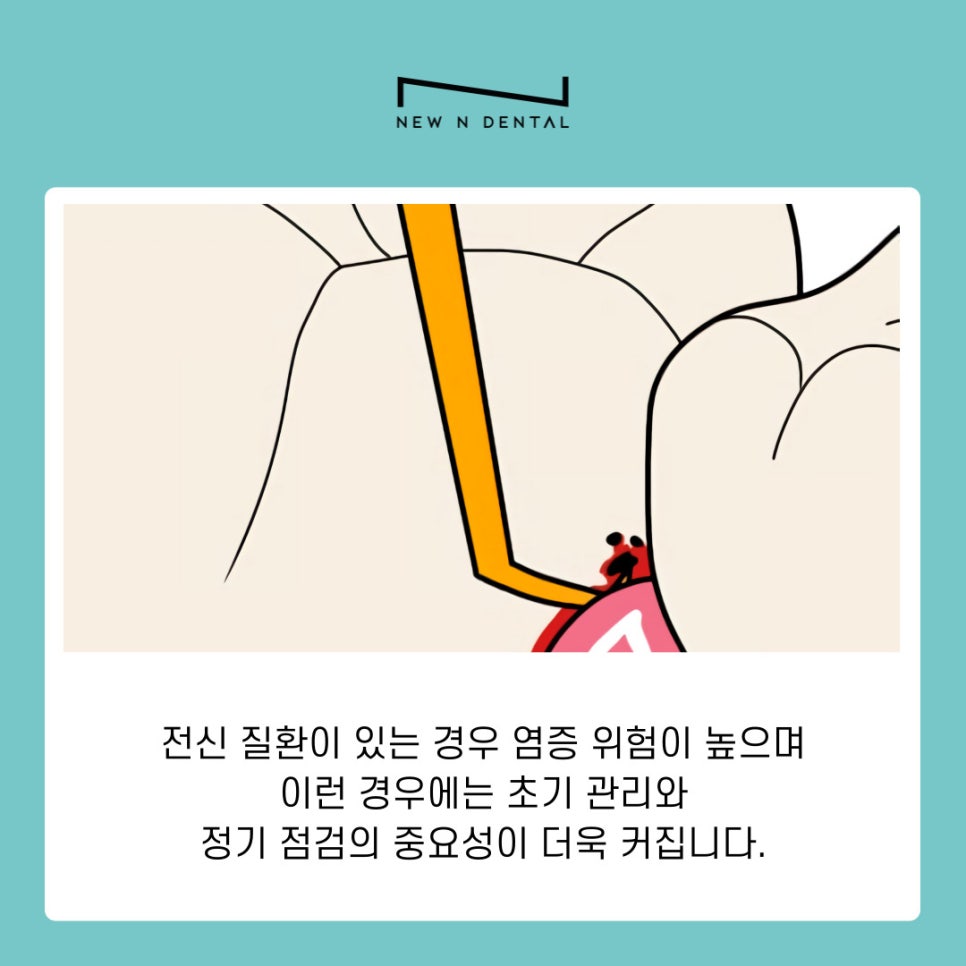
Underlying conditions are also not unrelated to inflammation.
If you have a history of gum disease,
or if you have a systemic condition,
the risk of inflammation may be higher.
In such cases, early management and
regular checkups become even more important.
Care tailored to individual conditions is needed.
Even if the bone condition at the time of the procedure
was not sufficient,
problems may appear later.
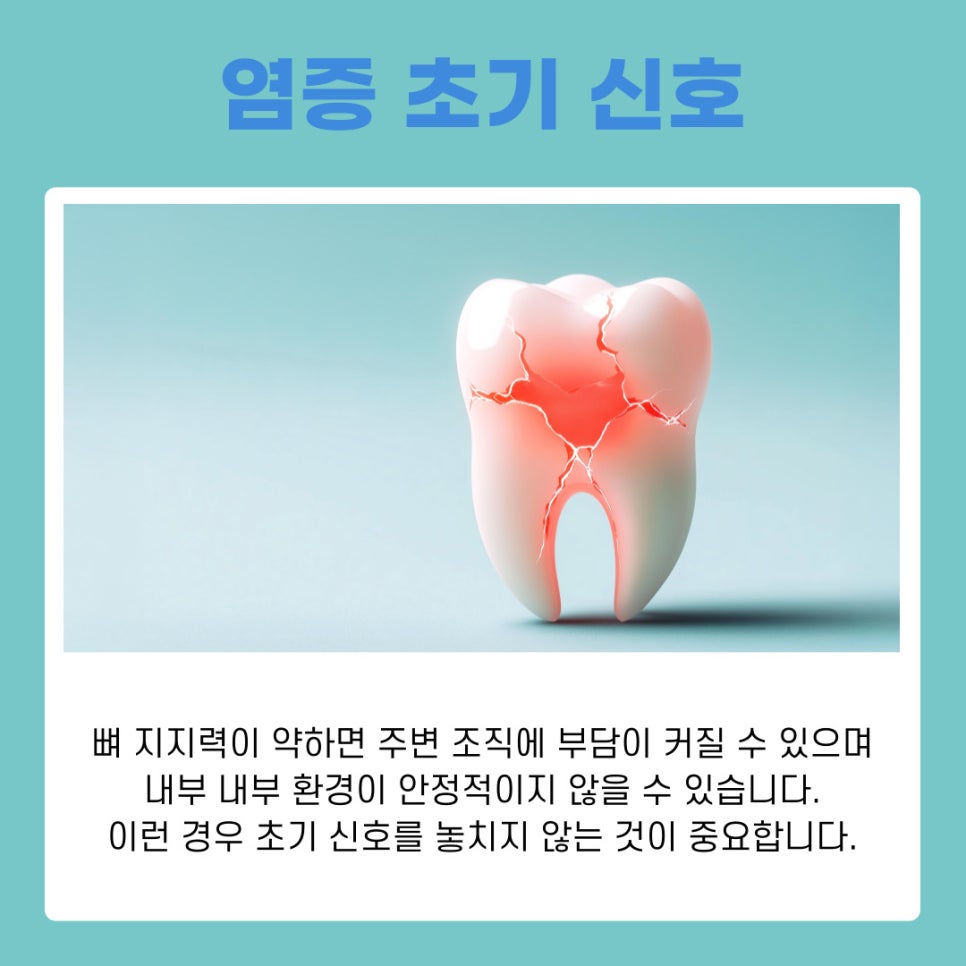
This is because weak bone support can place
a greater burden on surrounding tissues.
Even if everything looks fine on the outside,
the internal environment may not be stable.
In such cases, it is important not to miss
the early signs.
If inflammation is confirmed, treatment
suited to the condition is necessary.
In the early stage, improvement may be expected
through care and local treatment.
However, the scope of treatment may vary
depending on how far it has progressed.
That is why responding early is the
least burdensome choice.
The treatment process is not simply about
eliminating inflammation.
The goal is to create a stable environment
around it.
For this, surface care or structural adjustment
may be necessary.
Treatment plans vary depending on the situation.
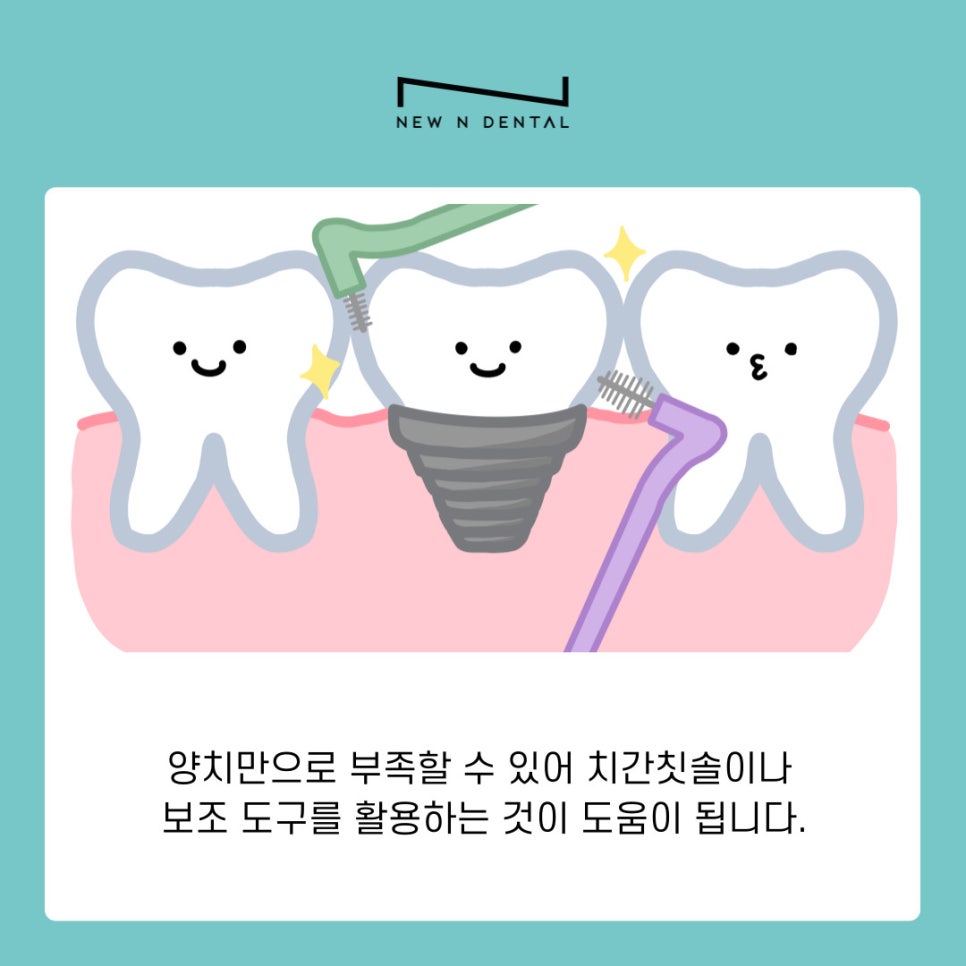
The key to prevention is consistent care.
Brushing alone may not be enough,
so using interdental brushes or other
supportive tools can help.
In particular, careful care is needed around prosthetic parts.
It is important to know the proper care methods
and put them into practice.
Regular checkups and scaling are the basics
of prevention.
Even if there are no noticeable symptoms,
checking the internal condition can provide peace of mind.
Checking before problems arise is the
most effective way to manage them.
Prevention places less burden on you than treatment.
Food choices also affect early recovery
and maintenance.
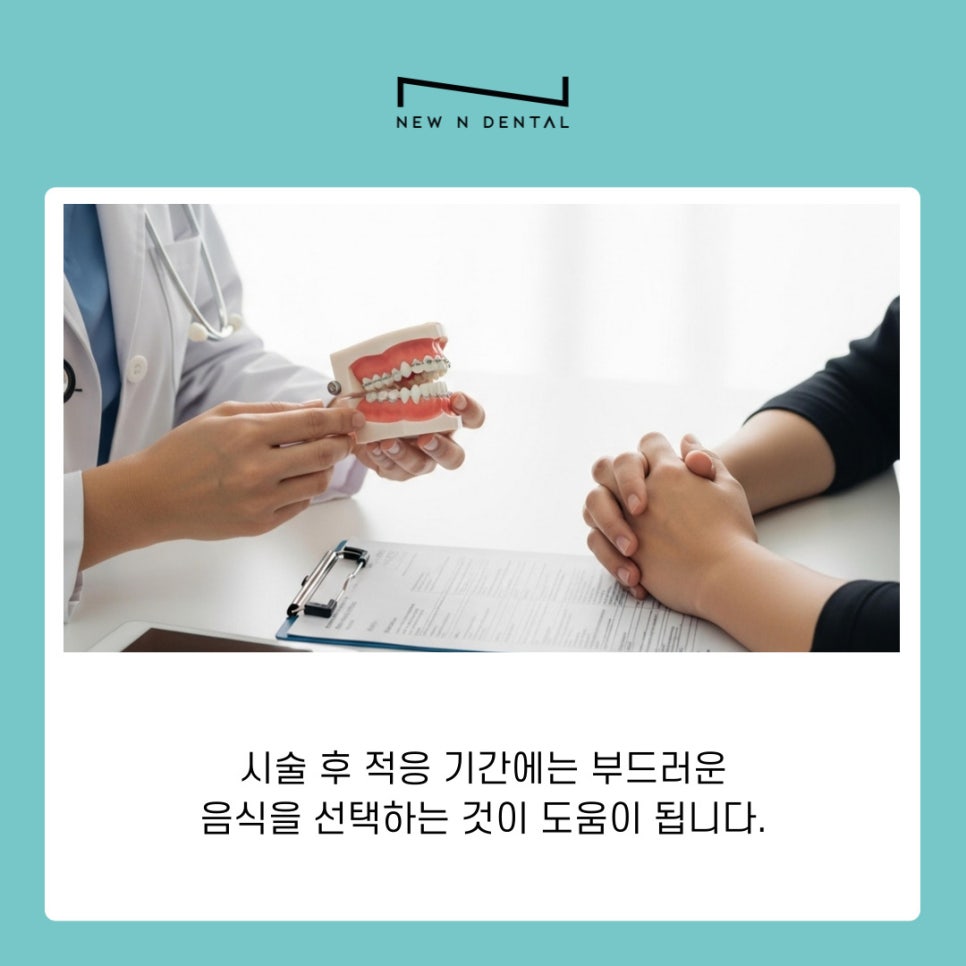
During the adjustment period after the procedure,
choosing soft foods can be helpful.
It is best to avoid excessive irritation.
Small considerations help recovery.
An implant is not a treatment that ends
with a single procedure.
It should be seen as one process,
including the care that follows.
The longer it is used,
the more important management becomes.
Stability is determined by care.
Inflammation may feel as if it appeared suddenly,
but in most cases it progresses gradually.
That is why it is important to notice
early signs.
When you feel discomfort, you need the attitude
of not delaying action.
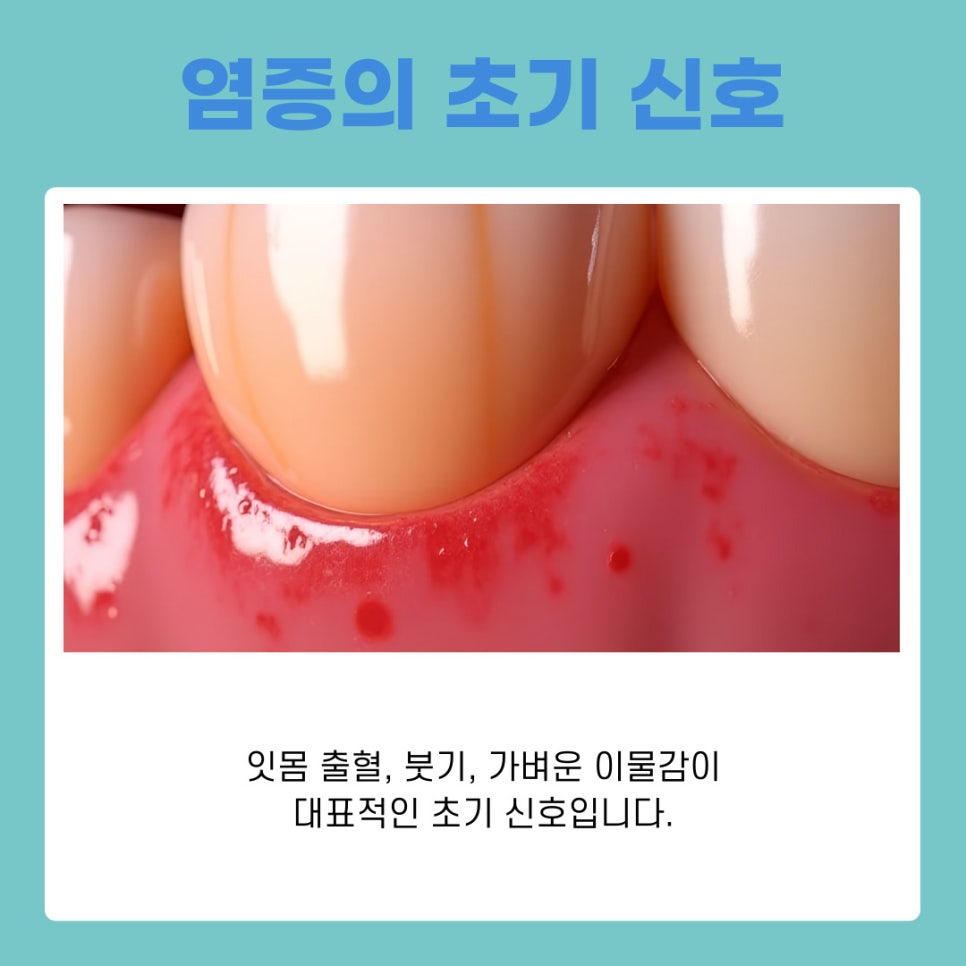
Q. What are the early signs of implant inflammation?
A. Gum bleeding, swelling, and a mild foreign-body sensation
are the representative early signs.
Even if there is almost no pain,
if it feels different from before,
it is better to treat it as a signal.
In particular, if discomfort keeps recurring in a specific area,
it needs to be checked.
Implant inflammation is a problem that can
be managed sufficiently if you prepare for it in advance.
What matters most is not to leave it untreated.
Not missing small signs helps protect
long-term stability.
Prevention of inflammation does not require
a special method.
Basic care and regular checkups alone can
greatly reduce the risk.
Consistency is the most powerful prevention.
If you now understand implant inflammation from
early causes to prevention,
what remains is putting it into practice.
Just by correcting the direction of care,
the outcome can change.
In the end, the most important thing is
continuous attention and care.
#임플란트염증